
 Worksheets
Unit 2: Evolution Ch12-14 Review
Total questions: 80
Worksheet time: 3570secs
In population genetics, what does a population refer to?
A species within one geographic area at a given time
A group that never exchanges genetic information
Individuals with the same phenotype in any region
All organisms living worldwide across habitats
What does population genetics primarily study?
Only physical traits shared among individuals
The exact DNA sequence of a single organism
Kinds of genes, their frequencies, and change over time
Behavioral interactions excluding genetic factors
In regions with intense sunlight, which explanation best accounts for high frequency of dark-skin alleles?
Greater value under bright sun exposure
Founder effects from small groups
Complete dominance over all alleles
Linkage to hair curliness genes
A large gene pool with high diversity is more likely to:
Contain combos aiding adaptation
Maintain identical allele sets
Eliminate all harmful mutations
Prevent sexual reproduction events
A population founded by a few colonizing organisms tends to have which outcome over generations?
High introduction of novel alleles from outsiders
Expanded gene pool through frequent migration
Reduced gene flow and allele reshuffling
Immediate restoration of original allele frequencies
Which statement best describes selective breeding in domesticated animals like chickens?
Parents with desired traits are prevented from mating
Parents with desired traits are mated to increase those traits
Offspring are produced only by asexual cloning methods
New traits arise solely from random mutations during mating
For successful crossing of different populations to combine traits in one organism, what genotype condition is emphasized?
Populations must be polyploid and sterile
Each variety should have homozygous genotypes
Parents should be heterozygous at most loci
Genomes must be identical between populations
Which example illustrates an interspecific hybrid conceptually similar to tiger × lion?
Mating two different species to produce hybrids
Cloning a single plant variety repeatedly
Red rose crossed with yellow rose
Self-fertilization within one plant
What is a primary goal of genetic engineering in agriculture?
Manipulate DNA pieces to confer valuable traits
Prevent any gene transfer between organisms
Eliminate all heterozygosity in crop plants
Increase random mutations across the genome
Why were gene banks established for crops and domesticated animals?
To preserve primitive ancestors with genetic diversity
To eliminate competition among wild organisms
To store fertilizers and herbicides for emergencies
To maintain clones of modern uniform varieties
Which statement best describes the human gene pool?
It consists of one homogeneous subgroup
It contains many subgroups with diverse traits
It is fixed and unchanging across generations
It excludes rare alleles from all subgroups
What historical event around 1900 influenced public expectations about genetics?
Completion of the Human Genome Project
Establishment of modern bioethics committees
Rediscovery of Mendel’s laws of heredity
Darwin’s original publication on evolution
Why can extravagant reproduction facilitate natural selection?
It stabilizes population without phenotypic change
It guarantees equal reproductive success for all
It prevents elimination of maladaptive traits
It decreases genetic diversity among offspring
It creates a surplus enabling selection to act
Why are small populations more susceptible to genetic drift?
Natural selection is absent in small populations
Random changes have larger proportional effects
Gene flow always compensates for drift
They experience fewer random events overall
Which consequence can occur in very small populations due to genetic drift?
Guaranteed reproductive success for all individuals
Immediate speciation after a single event
Increase in intermediate phenotypes only
Loss of vital genes without adaptive benefit
Which condition is REQUIRED for Hardy–Weinberg equilibrium?
Strong natural selection favoring traits
Small population size with drift
No migration into or out of the population
Nonrandom mating within subpopulations
Why does random mating rarely occur in natural populations?
Mutations disrupt mate recognition behaviors
Genetic drift eliminates choice of mates
Populations are subdivided by geographic or social isolations
Individuals always prefer rare phenotypes
What is the consequence when population size is small regarding gene frequencies?
Mutation rates decrease due to limited genomes
Random events have greater impact on allele frequencies
Selection pressures become uniformly stronger
Migration effects are eliminated by sampling
What happens to the source and recipient populations when emigration and immigration occur?
Genes are removed from one pool and added to another
Allele frequencies remain unchanged across both pools
Both populations gain identical alleles equally
Only recessive alleles move between populations
Which statement best defines a species in modern biology?
A population sharing common ancestry yet reproductively apart
Organisms living in the same habitat with similar appearances
Any group with identical traits and identical DNA sequences
Individuals that never show sterile offspring under any conditions
Which observation would indicate two populations likely belong to the same species?
Regular gene flow between generations across regions indicating successful mating
Complete sterility in all intergroup matings
Identical phenotypes regardless of environment
Absolute absence of shared ancestry in fossil records
What does gene flow describe in population genetics?
Selective advantage of traits arising from environmental pressure
Movement of genes across generations or regions via reproduction
Loss of genetic information through mutation accumulation
Random changes in allele frequency due to sampling error
Which scenario exemplifies geographic isolation leading to speciation?
Uniform selection across a stable range without barriers
Random mating within a single continuous population
Immediate polyploidy in asexual organisms only
Colonization of a distant area preventing reproduction
How can extinction of intermediate populations promote speciation?
It increases gene flow across the entire species range
It forces all subpopulations to share identical traits
It leaves remaining groups reproductively isolated long enough
It eliminates geographic barriers and merges populations
Which statement best explains genetic divergence during speciation?
Gene flow always increases similarity between species
Mutations and selection cause accumulating differences
Random drift instantly creates identical populations
Hybridization removes all genetic differences quickly
What defines polyploidy in organisms?
Exhibiting duplicated mitochondrial genomes
Displaying mixed haploid and diploid tissues
Having multiple full sets of chromosomes
Possessing extra copies of single genes only
Biochemical isolating mechanisms block mating primarily because:
Geographic barriers limit contact permanently
Polyploid individuals cannot undergo meiosis
Temporal separation of mating seasons only
Molecular incompatibility at egg–sperm interaction
Which statement best describes a species in evolutionary terms?
A unit that frequently reverts states
A group that can evolve backward
Smallest irreversible unit of evolution
Smallest reversible unit of evolution
Convergent evolution leads to which observation at first glance?
Organisms look different but are identical genetically
Organisms look similar and are closely related
Organisms look different and share ancestry
Organisms look very similar yet are unrelated
Which process most directly increases genetic variation within a population?
Elimination of all heterozygotes
Random mutations introducing new alleles
Cloning of individuals with identical genotypes
Complete reproductive isolation from all other groups
What is a likely outcome when two populations are separated by a physical barrier for many generations?
They may accumulate differences leading to speciation
They will remain genetically identical indefinitely
Both populations will immediately go extinct
Gene flow between them will increase rapidly
Which factor can prevent two closely related species from producing fertile offspring?
Sharing the same food sources
Living in the same geographic area
Behavioral differences in mating rituals
Identical chromosome numbers
Which of the following is used to describe how subsequent generations differ from previous generations?
inheritance of acquired characteristics
natural selection
descent with modification
adaptation
Which of the following says that organisms with the best traits for the environment will live longer, reproduce more & pass on those traits making our species better adapted over time?
inheritance of acquired characteristics
natural selection
descent with modification
adaptation
________ are the ultimate source of new alleles in any population.
sexual selection
mutations
chromosomes
natural selection
If an organism has an adaptation it will always be an advatage for that organism even if its environment changes.
True
False
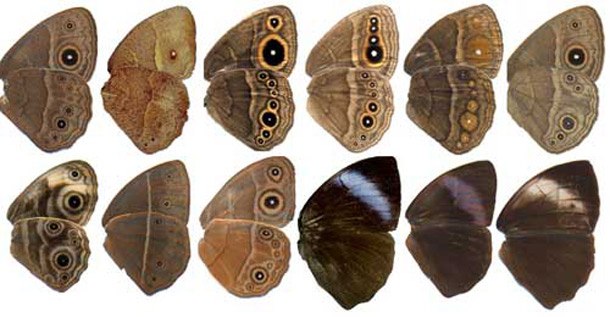
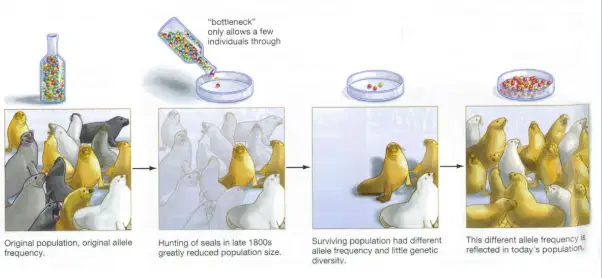
What is the main effect of a genetic bottleneck on a population?
Increase in genetic diversity
Formation of polyploid organisms
Loss of rare alleles and reduced variation
Immediate speciation of all individuals
Which mechanism most directly introduces new genetic variation into a population?
Nonrandom mating
Natural selection
Genetic drift
Mutation
Not having molar teeth is dominant to having molars. In a population of 1,000 people, 36% do not have molars. How many people would you expect to have each of the genotype aa?
640
40
320
360
Not having molar teeth is dominant to having molars. In a population of 1,000 people, 36% do not have molars. How many people would you expect to have each of the genotype AA?
640
40
320
360
Not having molar teeth is dominant to having molars. In a population of 1,000 people, 36% do not have molars. How many people would you expect to have each of the genotype Aa?
640
40
320
360
What is a group of organisms that MATES NATURALLY & produces FERTILE OFFSPRING?
(a)
Which of these is an example of a subspecies? SELECT ALL THAT APPLY
breed
race
variety
strain
Why would a subspecies develop? SELECT ALL THAT APPLY
genetic bottleneck
the founder effect
barriers to movement
adaptation to the local environment
Define interspecific hybrid and give an example.
They are the product of mating between 2 different species, like mixing lion X tiger=liger.
They come from mating 2 different subspecies, like mixing a lab & a poodle & getting a labradoodle.
They are the product of mating between 2 different species, like mixing a lab & a poodle & getting a labradoodle.
They come from mating 2 different subspecies, like mixing lion X tiger=liger.
What are the mechanisms that introduce genetic variety? SELECT ALL THAT APPLY
asexual reproduction
sexual reproduction
migration
mutation
What are the processes we use to get specific genetic combinations in order to produce more food for our species? SELECT ALL THAT APPLY
monocultures
cloning
genetic engineering
selective breeding
natural selection
It is difficult to remove _____________ genes from the gene pool because they are often hidden.
dominant
recessive
interspecific
homozygous
USE ALL 5 PARTS of the Modern Concept of Evolution to explain why most modern day domesticated house cats now have less fur than the much hairier version from a couple centuries ago.
Differentiate between microevolution and macroevolution. Make sure to include what each has as a final product as well as what drives each of those products.
What are the types of sexual selection? CHOOSE ALL THAT APPLY
Natural selection
Stabilizing selection
Directional selection
Disruptive selection
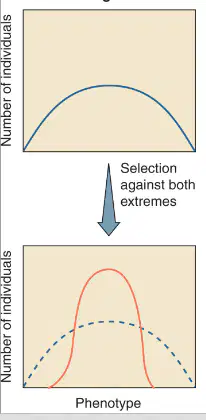
Which is the type of sexual selection that results in the average trait always being chosen as a mate?
Directional selection
Stabilizing selection
Disruptive selection
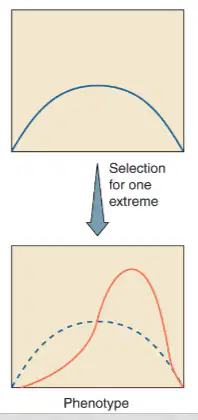
Which is the type of sexual selection that results in one extreme OR the other being chosen as a mate?
Directional selection
Stabilizing selection
Disruptive selection
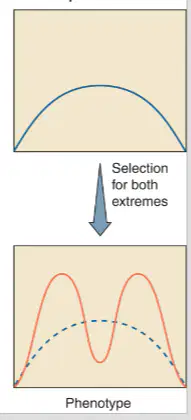
Which is the type of sexual selection that results in BOTH extremes of a trait being chosen as a mate?
Directional selection
Stabilizing selection
Disruptive selection
Who was the scientist who first expressed curiosity about evolution occurring?
Buffon
deLamarck
Darwin & Wallace
Mendel
Who was the 1st to create a theory showing how evolution occurs-but he based it on acquired traits?
Buffon
deLamarck
Darwin & Wallace
Mendel
Who proposed natural selection?
Buffon
deLamarck
Darwin & Wallace
Mendel
Some birds contain an extra joint in their necks. This joint provides the bird with extra flexibility so that it may pick off and eat small bugs that normally embed themselves in the bird’s skin and cause a nasty disease that results in death 90% of the time. What is the selecting agent?
the small bug or the disease
the extra joint
the extra flexibility
the bird
What are the condition(s) necessary for the Hardy-Weinberg equation to work? SELECT ALL THAT APPLY
random mating
mutations are not possible
no migration is occuring
infinitely large population
no natural selection is occurring
Some lizards have the ability to lose their tail to escape predators. Lizards that cannot lose their tails are eaten by predators more often that those who can detach their tails. What is the selecting agent in the scenario?
the predator
the tails
detached tails
the type of lizard
What is defined as genetic differences among members of a population?
adaptation
speciation
genetic diversity
natural selection
Define geographic isolation. List the 3 ways (3 examples) to accomplish geographic isolation
What is defined as: members of the same species can’t mate due to distance
behavioral isolation
sexual selection
natural selection
geographic isolation

Which of these is a type of genetic drift that occurs when genetically distinct local population established by a few colonizing organisms carry with them alleles that differ in frequency that those already in the population?
genetic bottleneck
founder effect
natural selection
sexual selection
____________ is when the same variety of a species is extensively planted over large expanses of land
monoculture
agriculture
natural selection
genetic engineering
When evolution occurs in spurts of rapid change followed by long periods with little evolutionary change
punctuated equilibrium
gradualism
adaptive radiation
convergent evolution
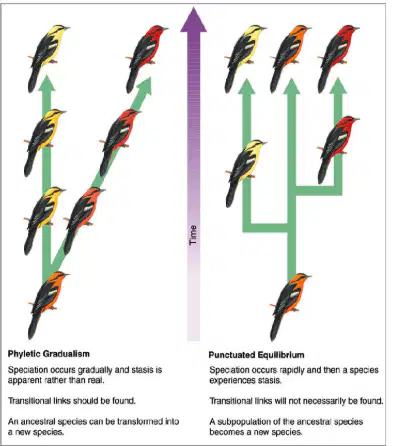
When evolution occurs in spurts of rapid change followed by long periods with little evolutionary change
punctuated equilibrium
gradualism
adaptive radiation
convergent evolution
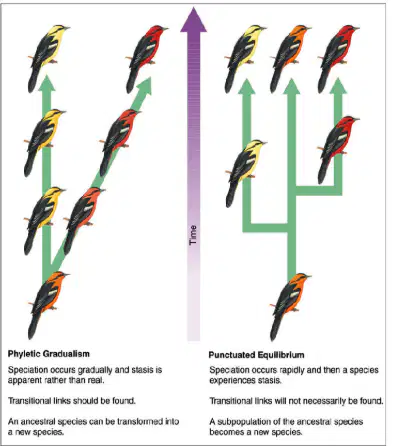
The idea that evolution occurred slowly by accumulating small changes over a long period of time
punctuated equilibrium
gradualism
adaptive radiation
convergent evolution
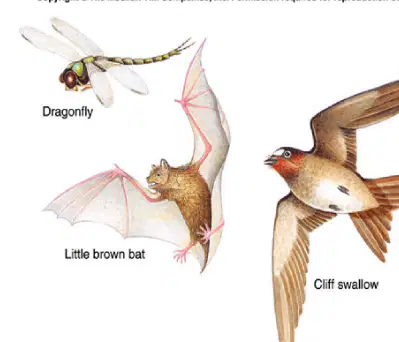
An evolutionary pattern that involves the development of similar traits in organisms of widely different evolutionary backgrounds that often leads people to misinterpret the evolutionary history of organisms
punctuated equilibrium
gradualism
adaptive radiation
convergent evolution
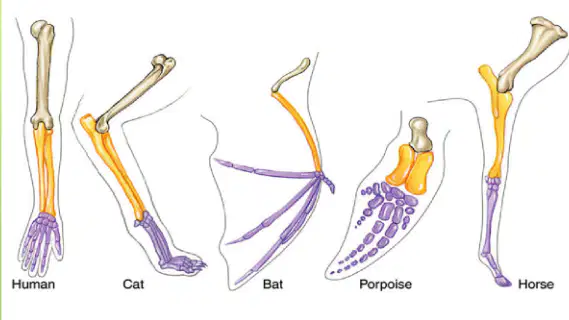
___________________ are similar structures in different species that have the same general function, meaning they have come from a common ancestor.
Analogous structures
Homologous structures
Adaptive structures
Divergent structures
___________________ have the same function but different evolutionary backgrounds, These are the result of convergent evolution. EX: butterfly wing VS bird wing
Analogous structures
Homologous structures
Adaptive structures
Divergent structures
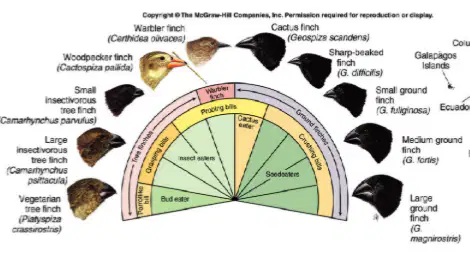
_____________ is evolution with a rapid increase in the # of kinds of closely related species. It is an evolutionary explosion of new species from a common ancestor.
Adaptive radiation
Convergent evolution
Extinction
Analogous evolution
What is reproductive isolation (aka genetic isolation)?
process of generating a new species
condition of having multiple sets of chromosomes
mechanisms that prevent mating between members of 2 different species
when a part of a species becomes completely separated from the rest of the species by geographic distance
What is speciation?
process of generating a new species
condition of having multiple sets of chromosomes
mechanisms that prevent mating between members of 2 different species
when a part of a species becomes completely separated from the rest of the species by geographic distance
What is polyploidy?
process of generating a new species
condition of having multiple sets of chromosomes
mechanisms that prevent mating between members of 2 different species
when a part of a species becomes completely separated from the rest of the species by geographic distance
When do you know that reproductive/genetic isolation has occurred?
if the genetic differences become so great that reproduction can’t occur between the 2 populations even if they are brought back together
if two individuals show variation such as eye color, height, or skin color
if two populations of the same species have different fur colors
If populations of the same species are living in two different environments
What are the types of genetic isolation? SELECT ALL THAT APPLY
Behavioral; such as frog mating calls
Seasonal; such as plants flowering in the spring VS plants flowering in the fall
Biochemical; such as when molecular incompatibility prevents successful mating with pollen and flowers of different species
Hybrid inviability; which prevents the offspring of 2 different species from continuing to reproduce
None of these
What are the steps needed for geographic isolation to lead to speciation? SELECT ALL THAT APPLY
population isolation
increased population growth
genetic divergence
sexual reproduction
reproductive/genetic isolation
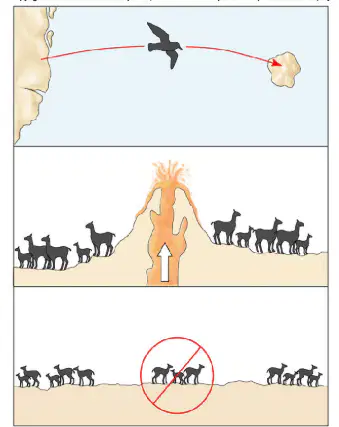
Name the 3 ways for populations to be geographically isolated?

