
 Worksheets
Civics Final Exam - 2025/26
Total questions: 80
Worksheet time: 56mins
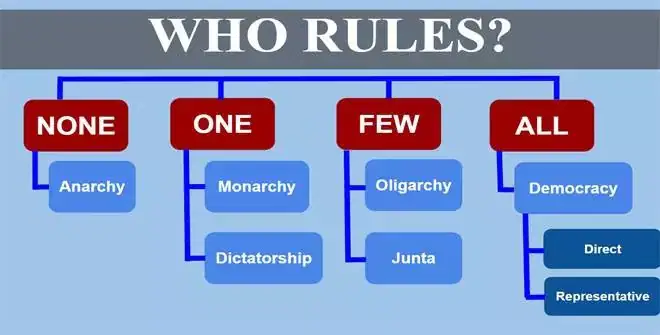
What type of government is the United States?
Monarchy
Republic
Dictatorship
Oligarchy
In most governments, how does the power flow?
From the people to the government
From the government to the people
From the military to the people
From the wealthy to the government

Which states gain more importance due to the Electoral College system?
Only the largest states
Middle and lower-populated states
Only the smallest states
Only coastal states
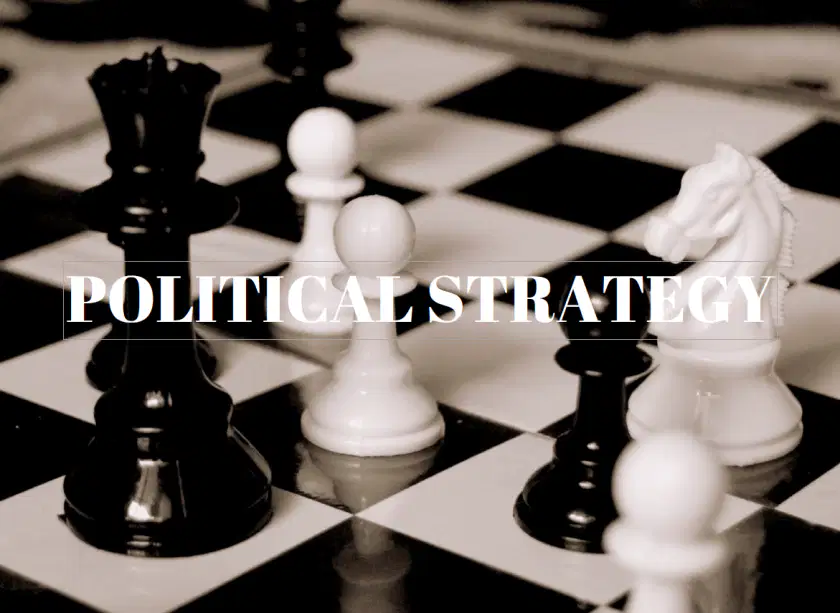
How does the Electoral College affect campaign strategies?
It allows candidates to ignore small states
It requires a focus on a broad range of states
It simplifies the campaign process
It eliminates the need for advertising
Which of the following is TYPICALLY the number one issue influencing swing voters?
Economic policies
Ideological beliefs
Media influence
Religious beliefs

If you are running for Governor in Michigan. Identify a successful strategy for you to win the election.
Win Detroit metro, and either Lansing or Grand Rapids.
Focus on Detroit Metro, the U.P. and the Thumb.
Run as a partisan Republican and you will win.
Run as a partisan Democrat and you will win.

How can a state like California that is voting overwhelmingly Democrat the last decade possibly elect Republicans to the House of Representatives (one of the two national houses of Congress)?
It CANNOT. It is too "blue" (partisan democrat)
The Democrat Governor appoints a Republican to the House
Because the House is based on districts and California has some that are majority conservative.
Californians are still voting for Republicans more than Democrats.
Which of the following national elected officers is MOST likely to be Centrist in today's political environment?
President
Vice President
House Representative
Senator
In today's national politics, where (what region or regions) are most partisan "safe" Democratic states for the Presidential elections located?
The two "coasts". East and West. Includes California and New York
Middle of the country. North and South. Includes Texas and Florida
Extreme southern part of the country. Includes Alabama and Indiana.
Extreme northern part of the country. Includes Idaho and New Mexico.
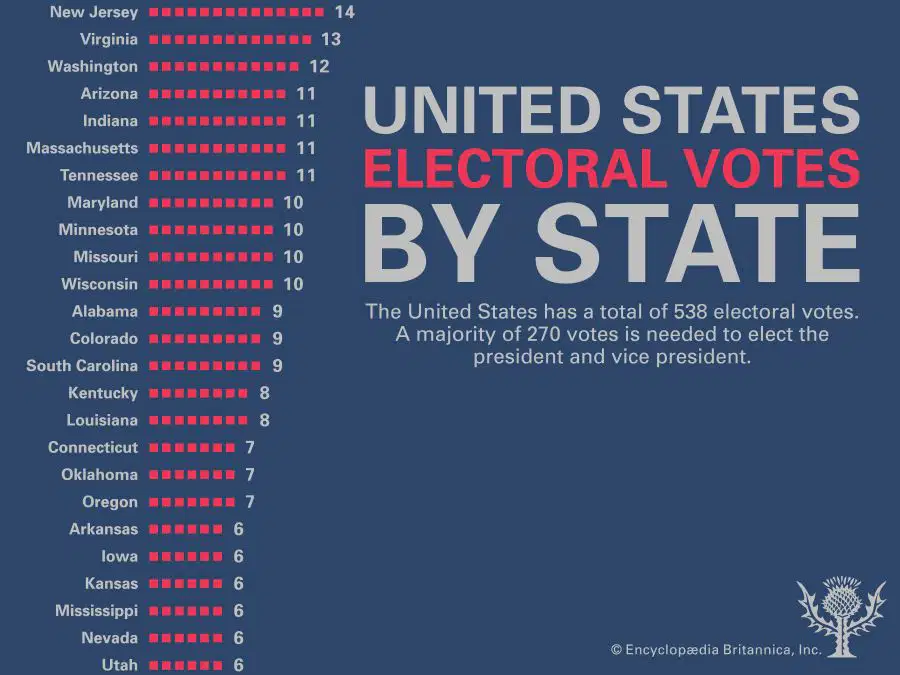
Why isn't the Presidential Election simply a matter of getting the most overall votes (popular vote winner) in the election?
This is a trick question. The overall popular vote winner is always the President!
Because in our Republic the 50 states should each have a significant say in choosing the President. Not just the most populated states.
The Forefathers created this complex system that has no real reasoning behind it.
Because it is determined by the "Electoral College" which gives EVERY COUNTY in the country electoral votes.

Who "adopted" the Declaration of Independence? When?
The Continental Congress adopted it on July 4, 1776.
The British Parliament adopted it on July 4, 1776.
The United Nations adopted it on July 4, 1776.
The French Assembly adopted it on July 4, 1776.
What is the structure of the Declaration of Independence?
D) It starts with the philosophical basis for government, then lists the grievances, and ends with the declaration of independence
C) It starts with the declaration of independence, then lists the grievances, and ends with the philosophical basis for government
B) It starts with the preamble, then outlines the philosophical basis for government, lists grievances against the British crown, and finally declares independence
A) It starts with the list of grievances, then outlines the philosophical basis for government, and ends with the preamble
John Adams is considered the "Great ______" of the Declaration of Independence, while Thomas Jefferson was the great ______.
writer, orator
orator, writer
complainer, silent partner
compromiser, uncompromiser
What important contribution did John Dickinson bring to the founding of our nation that remains important for its survival today?
Pacifism (against all war)
Contrasting point of view. "Argue for arguments sake" so that we always have different viewpoints.
His ability to put his nation before his own viewpoints by accepting a decision that did not go his way.
Staying steadfast (some say stubborn) and not ever compromising on his beliefs.
Who was probably the most important statesman at the Second Continental Congress because he was a "bridge builder" that helped disagreeing sides find common ground?
George Washington
John Adams
Benjamin Franklin
John Dickinson
What were the Articles of Confederation?
A type of democracy with a strong central government
America's first constitution
A military alliance between the states
A plan to unify the colonies
What was the main problem with the Articles of Confederation?
Weak centralized power
Lack of financial resources
Interstate disputes
Shays' Rebellion
What were the Federalist Papers?
Letters to the Editor arguing against the ratification of the Constitution
Letters to the Editor arguing for the ratification of the Constitution
Letters written by George Washington during the Constitutional Convention
Letters written by Thomas Jefferson advocating for a strong central government
What does the Supremacy Clause state?
State and local laws are supreme over national laws
National laws are supreme over state and local laws
State laws are supreme over local laws
Local laws are supreme over state and national laws
What is the purpose of the Amendment Process?
To make the Constitution a living document
To establish a more perfect union
To protect individual liberties
To ensure domestic tranquility
Which amendment protects the right to bear arms?
1st Amendment
2nd Amendment
4th Amendment
13th Amendment
What is the legacy of the Constitution?
A rigid and unchanging document
Adaptability over time
A hindrance to progress
A symbol of tyranny
What would happen if two states had a dispute during the Articles of Confederation?
The national government would decide who was right and the states were bound to honor the national government's decision.
They would appeal to the national court system for a ruling.
The two states would take their dispute to the President who would then render a decision.
Nothing. The national government was weak and could not force any state to do what it wanted.
Which of the following was NOT a leading figure during the Constitutional Convention?
Alexander Hamilton
James Madison
George Washington
John Adams
Which of the following BEST describes the U.S. Constitution?
A set of detailed laws that include most of the laws and regulations we following today.
A guideline of principles of the national government and an outline of its structure that can be amended to fit later generations.
A document that gives ultimate power to the 50 states over the United States
A document solely focused on individual rights. What they are, how they are protected and how they are determined.
This branch of government CREATES THE LAWS.
Legislative branch
Executive branch
Judicial branch
This branch of government ENFORCES the law.
Legislative branch
Executive branch
Judicial branch
This branch of government INTERPRETS the law (making sure they follow the Constitution)
Legislative branch
Executive branch
Judicial branch
Which founding father was a federalist supporter, 4th president and considered , "Father of the Constitution"
Benjamin Franklin
James Madison
Roger Sherman
George Washington
What is the ultimate authority in the United States?
the President
the Supreme Court
the Congress
the Constitution

How many articles are there in the Constitution?
(a)Twelve
Ten
Five
Which article outlines the amendment process, or, in other words, how the Constitution can be changed?
Article II (2)
Article IV (4)
Article V (5)
Article VI (6)
Which article outlines the executive branch of the government, which is headed by the president and the vice-president?
Article II (2)
Article III (3)
Article VII (7)
Article VI (6)
Which article outlines the process of how the Constitution would be ratified?
Article I (1)
Article II (2)
Article V (5)
Article VII (7)
Which article outlines the the judicial branch, whose job is to interpret the laws and see to it they are fairly applied through the Supreme Court and lower court systems?
Article I (1)
Article III (3)
Article V (5)
Article VII (7)
Which article outlines Federal Powers and declares the Constitution as the supreme law of the land of the United States of America?
Article II (2)
Article IV (4)
Article VI (6)
Article VII (7)
Which article outlines the legislative branch of the United States, also known as Congress?
Article I (1)
Article III (3)
Article IV (4)
Article VI (6)
Which article explains States Powers and the relationship between the states and the relationship between the federal government and the states, in turn expressing the idea of federalism?
Article I (1)
Article II (2)
Article III (3)
Article IV (4)
Which action represents the principle of checks and balances?
A state changes the way its school system is run .
A Cabinet member resigns, because he doesn't like a law that the President has signed.
A court strikes down a law, because it is found to be unconstitutional.
Voters decide not to re-elect their district's House of Representatives member.
In the Preamble to the U.S. Constitution, what is the meaning of the phrase “We the People”?
The people express their will through political parties.
The people express their will by directly creating laws.
Government receives taxes from the people and exists to support them.
Government receives its power from the people and exists to serve them.
Supreme Court justices are appointed by who?
Legislature (Congress)
Executive (President)
State legislatures
Judicial
(Other Supreme Court Justices)
Which article of the Constitution says that the President is "commander and chief?"
Article 1
Article 2
Article 4
Article 7
What is the separation of powers?
The president has his own house to live in, while Congress members live separately around Washington D.C.
The different checks that each branch has on the others
An overarching principle in the Constitution that lays out the separation between different branches of government so they constrain one another.
The separation between the government and religion
What does Article 4 of the Constitution deal with?
States forming and how they interact with each other
The national government formation
The Executive branch
The judicial branch
Which three (3...mark all three) individuals wrote the Federalist Papers?
George Washington
John Jay
Alexander Hamilton
James Madison
Which of the following is NOT true concerning "impeachment"?
It is a process outlined in the Constitution of how to remove an elected official from office.
In the Constitution, it is a two-part process that includes the House and the Senate
When the House "impeaches" an elected official, he/she is removed from office.
When an elected official is impeached, the Senate holds a trial to determine if he/she will be removed.
Article 1 Section 8 of the Constitution outlines the "Powers" of Congress. Which one of these powers is found in this section that Congress has that no other branch or state government has?
Declaration of war
Ability to tax
Determine who the President's Cabinet will be.
Ability to regulate business
Which part of Congress has the "power of the purse", meaning it initiates bills on how we will spend our tax dollars?
House
Senate
Which of the two parts of Congress has EQUAL representation (same number of congressmen from each state regardless of the state's size)?
House
Senate
Which part of Congress has a role in making treaties and the power to remove impeached elected officials?
House
Senate
The Federalists defend the Judicial Branch having lifelong appointments for Supreme Court Justices by stating it creates what?
An Independent judiciary - that does not have to face elections or a limited term.
A dictatorial judiciary - that does not have to answer to any other branch, nor voters.
A fairly elected judiciary - that voters can determine who they want on the Supreme Court
Which amendment protects the freedom of speech, religion, and the press?
Amendment II
Amendment I
Amendment V
Amendment X
Which amendment prohibits the quartering of soldiers in private homes without the owner's consent?
Amendment III
Amendment IV
Amendment V
Amendment VI
Amendment IV protects citizens from what type of government action?
Cruel and unusual punishment
Unreasonable searches and seizures
Double jeopardy
Excessive bail
Which amendment ensures that no person shall be compelled to be a witness against themselves in a criminal case?
Amendment VI
Amendment VII
Amendment V
Amendment IX
The right to a speedy and public trial is guaranteed by which amendment?
Amendment IV
Amendment VI
Amendment VIII
Amendment X
In which amendment is the right to trial by jury in civil cases preserved?
Amendment VII
Amendment IX
Amendment V
Amendment III
Which amendment prohibits excessive bail and fines, as well as cruel and unusual punishment?
Amendment II
Amendment VIII
Amendment VI
Amendment X
Which amendment reserves powers not delegated to the United States to the states or the people?
Amendment X
Amendment IX
Amendment VII
Amendment V
The right to petition the government for a redress of grievances is found in which amendment?
Amendment I
Amendment III
Amendment V
Amendment VII
Which amendment addresses the rights of individuals in criminal prosecutions, including the right to counsel?
Amendment II
Amendment VI
Amendment VIII
Amendment X
In order to vote on a bill, a quorum, or _____ of its members, must be present.
1/3
3/4
all
1/2
Government officials can be _____, or charged with a crime, by the House of Representatives.
indicted
filibustered
impeached
jailed
The vice-president of the United States also serves as _____.
Speaker of the House
Chief Justice of the Supreme Court
president pro tempore
president of the Senate
The "Elastic Clause allows Congress to establish laws that are ________ & _______ to carry out vested duties.
constitutional and rational
necessary and proper
proper and rational
constitutional and proper
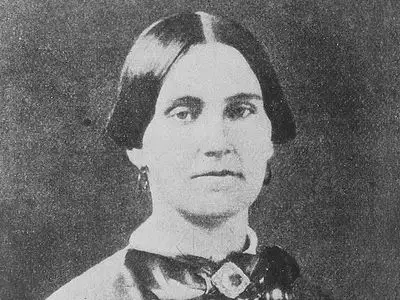
In the case of Mary Suratt, what was the issue with the court it was tried in?
It was held in a different district then the alleged crime was committed.
The jury was full of all men creating an air of sexism
It was a military tribunal and not a jury of peers.
It lacked a judge to mediate differences between the prosecution and defense
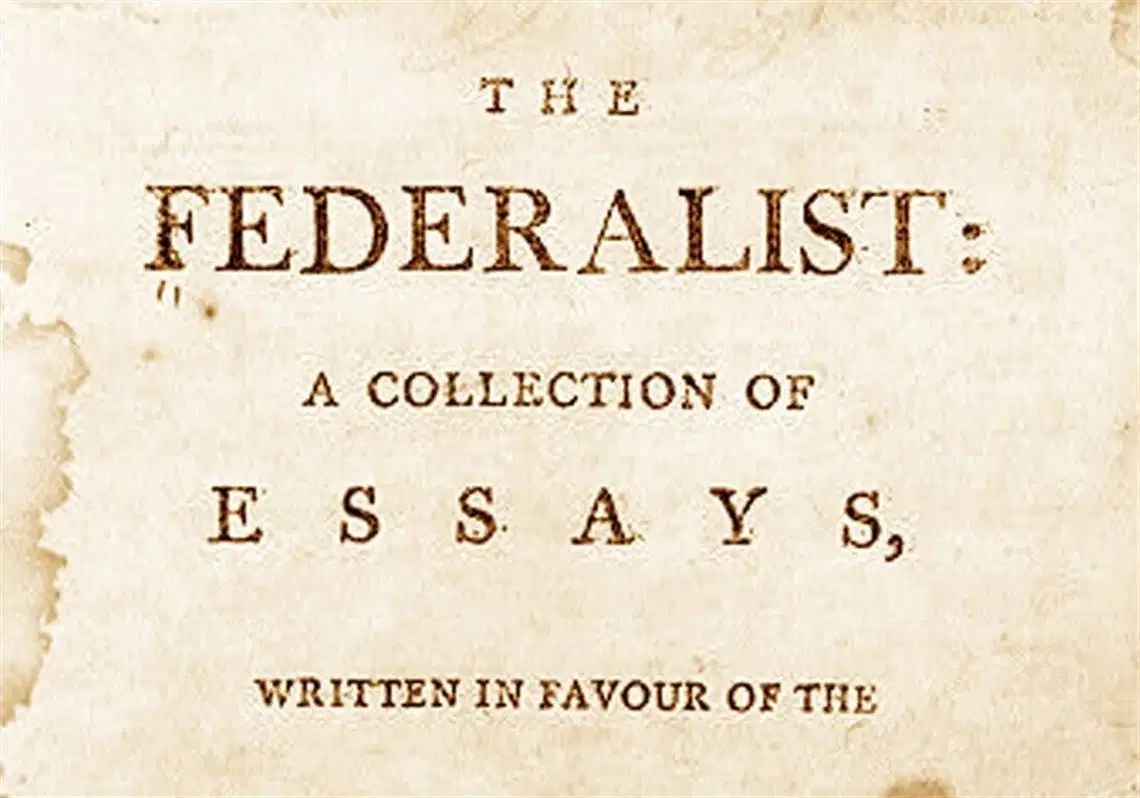
In the Federalist Papers, what "evidence" did the writers use to prove that pure democracy was not an appropriate system for the United States?
Not one nation in the world at the time was a pure democracy
Ancient "pure democracies" all ended in failure and collapse
Polls at the time showed Americans were not in favor of pure democracy
World leaders throughout history were opposed to pure democracy.
What contemporary (happening at the time it was written) evidence was used in the Federalist Papers against pure democracies?
The failure of the American states during the Confederate period.
The wars pure democracies were involved in
The failure of Britain's Constitutional Monarchy
Colonialism
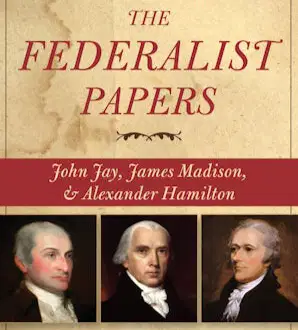
According to the Federalist Papers, what in the Constitution would protect against elected, representative leaders being tyrannical or not reflecting the "will of the people"? (multiple answers are correct). Must choose ALL that apply
Checks and Balances
Eminent Domain
Separation of Powers
Frequent Elections

Which issue did the framers of the Constitution not fully deal with that most historians feel would lead to the Civil War 70 years later?
Poverty
States Rights
Slavery
Paper Currency
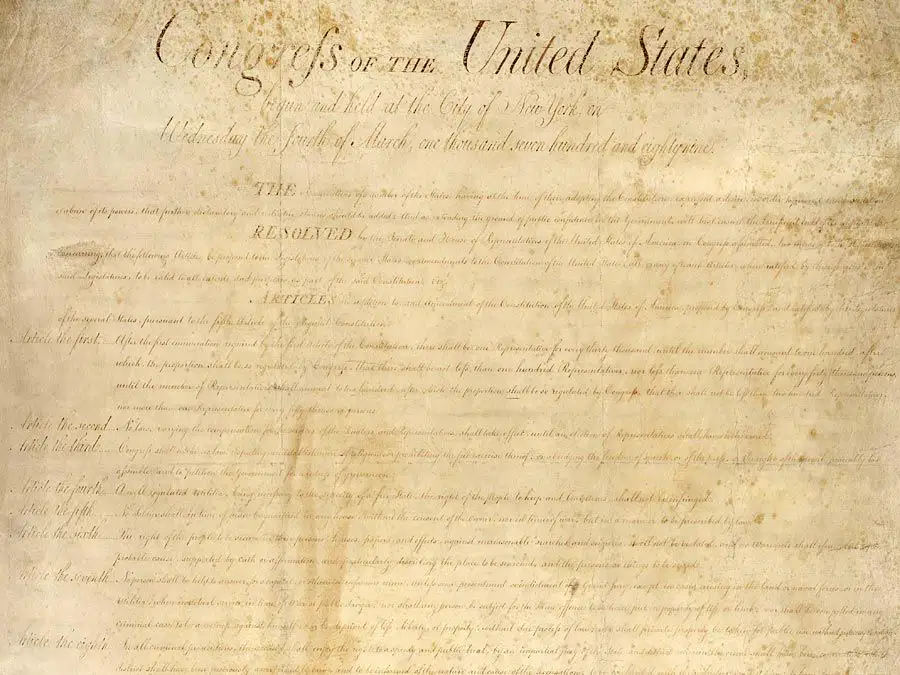
Identify the "right" not addressed in the AMENDMENTS (1-27) of the Constitution
Free Speech
Abolition of Slavery
Women's right to vote
Abolition of Military Tribunals
Election of Vice President
Identify the "right" not addressed in the AMENDMENTS (1-27) of the Constitution
Right to Bear Arms
Limit on terms for the Presidency
Double Jeopardy
Corporate Monopolies
Due Process of Law
Identify the "right" not addressed in the AMENDMENTS (1-27) of the Constitution
Right to Privacy
Washington DC can vote for President
Right to vote at age 18
Free Speech Online
Direct election of U.S. Senate
Identify the "right" not addressed in the AMENDMENTS (1-27) of the Constitution
Consumption of Alcohol
Trial by jury of peers
Protection against unreasonable searches
National government makes all election decisions
Freedom to Assemble
Identify the "right" not addressed in the AMENDMENTS (1-27) of the Constitution
Clear presidential succession in case of death or resignation
Right to petition the government
Protection against unreasonable searches
Protection against eminent domain
Free Exercise of Religion

