
 Worksheets
Grade 9 Physics Final Exam Review for Part B and C MCQ
Total questions: 90
Worksheet time: 49mins
An object weighs 60 N on Earth. On a planet with gravity 1.5× Earth's, its weight is:
40 N
60 N
90 N
120 N
A box weighs 49 N on Earth. On the Moon (g = 1.6 m/s²), its weight is:
5 N
8 N
49 N
245 N
A liquid has mass 45 g and volume 30 cm³. Its density is:
0.67 g/cm³
1.5 g/cm³
75 g/cm³
1350 g/cm³
If 500 cm³ of oil has mass 400 g, its density in kg/m³ is:
0.8
800
1250
800,000
A cyclist rides 400 m uphill in 80 s and 400 m downhill in 40 s. Average speed is:
5.0 m/s
6.7 m/s
10 m/s
15 m/s
A runner completes 200 m in 25 s, then 200 m back in 15 s. Average speed is:
8 m/s
10 m/s
13.3 m/s
20 m/s
A speed-time graph shows increasing speed then horizontal line. This means:
Constant acceleration then constant speed
Deceleration then stop
A speed-time graph slopes downward then levels out. This shows:
Deceleration then constant speed
Acceleration then stop
Constant speed then acceleration
Stop then deceleration
James has a uniform square-shaped piece of cardboard with its center of gravity marked at the centre. If James cuts away the right half of the cardboard, in which direction does the center of gravity move?
Up
Down
Left
Right
From a circular disk, a small circle is cut from top right. Center of mass moves:
Down left
Down right
Up left
Up right
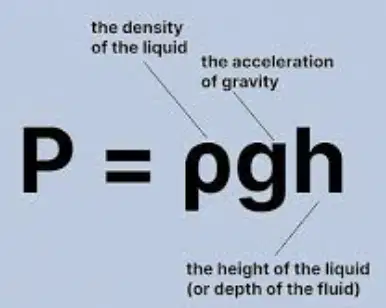
Two identical beakers: one water, one oil (less dense). Pressure at same depth is:
Same in both
Greater in water
Greater in oil
Zero in both
When a rocket is launched, what are the primary forms of energy wasted during the process?
Light
Sound
Thermal
Kinetic
A loudspeaker converts electrical to sound. Wasted energy is mainly:
Light
Thermal
To calculate power of lifting machine, need:
Mass and height
Force and distance
Work and time
Speed and time
David is running upstairs in his house. The power he uses depends on:
Weight and height
Mass and speed
Work done and time
Force and acceleration
Which stores gravitational potential energy?
Nuclear
Hydroelectric Power
Geothermal
Biomass
Which directly uses Sun's radiation?
Wind
Hydroelectric
Solar
Fossil fuels
Which of the following is a non-renewable resource?
Wind
Hydroelectric
Coal
Solar
Which of the following is a renewable resource?
Coal
Natural Gas
Solar
Petroleum
Why does the pressure inside a tire rise when it gets warmer?
Gas molecules hit the tire surface more frequesntly
KE of the Gas molecules decreases
Tire volume shrinks
Air volume inside the tire shrinks
At constant volume, gas pressure decreases when:
Temperature decreases
Molecules increase
Container expands
Gas condenses
Water droplets form on the outside of a cold glass of lemonade. This process is an example of:
Evaporation
Condensation
Boiling
Sublimation
Under microscope Grace observes that tiny pollen grains jiggle when she places them in a glass of water. This movement is due to:
Water molecules are hit by the pollen grains
Water molecules hit pollen grains
Gravity changes frequently
Light energy hit the pollen grains
In a quiet room, smoke particles move randomly, deviating from a short, straight path because:
They are lighter than air
Air molecules hit them unevenly
They are heated
Convection currents
The lower fixed point on the Celsius scale is:
Boiling water
Melting ice
Human body
Absolute zero
You want to find the upper fixed point of a thermometer, which is the temperature of:
Ice water
Boiling water
Room
Sun
For an equal increase in temperature, which state of matter shows the greatest increase in volume?
Solid
Liquid
Gas
All expand equally
Aria notices that there are small gaps between sections of railway tracks during a train ride. Why are these gaps left?
Steel contracts when hot
Steel expands when hot
Concrete expands
Gaps contract
Why is the bulb of a clinical thermometer made small?
It responds quickly to temperature changes
It requires more heat to expand
It prevents leakage
It can measure cold temperatures
Why should you choose a thermometer with a liquid that has low heat capacity?
Need more time to record T
Is more accurate
It requires less heat to expand
It requires more heat to expand
Evaporation mainly takes place at which part of a liquid?
At the bottom
At the surface
In the middle
At the sides
Evaporation causes cooling because:
Molecules gain energy
Higher KE molecules escape
Pressure increases
Volume decreases
Why does a bimetallic strip curve when heated?
Different metals expand at different rates
Both metals shrink
It is magnetic
It is pulled by weight
A solid substance melts at constant temperature because:
Heat is used to break intermolecular bonds
Heat increases kinetic energy
Pressure changes
Volume decreases

The flat parts of a heating curve show:
Temperature rising
Phase change or change of state
Cooling
Boiling point

During the melting and boiling of pure water, the average kinetic energy of its particles:
A) Increases continuously.
B) Decreases significantly.
C) Remains constant.
D) First increases, then decreases.
As liquid gold is heated from its melting point to its boiling point, the potential energy of its particles:
A) Decreases due to increased motion.
B) Increases slightly because the average separation between particles increases.
C) Remains constant, as it does in a solid.
D) Increases dramatically when it starts to boil.
Jackson starts from rest and drives his car, accelerates at 3 m/s² for 5 s, then continues for 10 s at constant speed. What is the total distance Jackson covers?
37.5 m
75 m
187.5 m
150 m
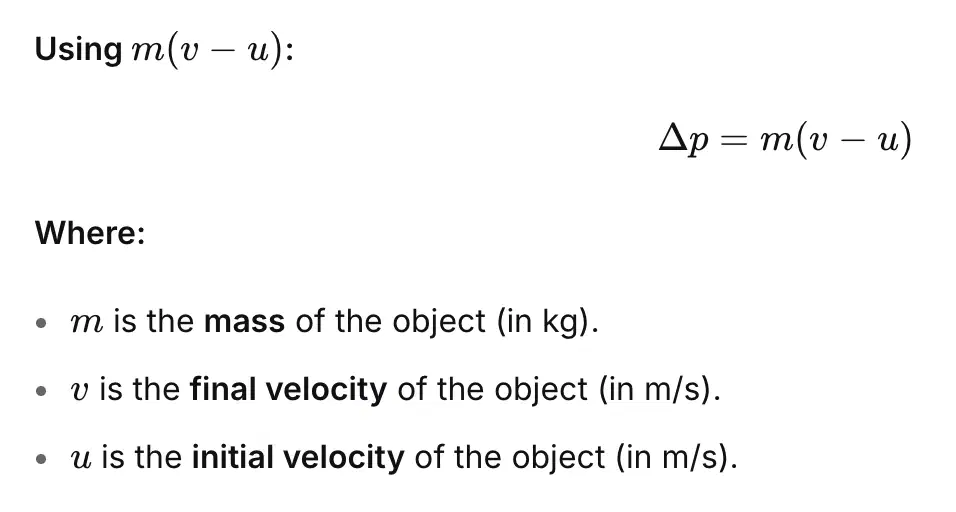
4 kg object changes from +5 m/s to –3 m/s. Calculate the change in momentum Δp =
–32 kg·m/s
–8 kg·m/s
36kg
8kg
A ball (0.2 kg) hits a wall at 10 m/s for 0.5 seconds, and rebounds at 8 m/s. Calculate impulse and force applied.
–0.4 N·s, -8.2N
–3.6 N·s, -7.2N
+0.4 N·s, -72N
-36 N·s, -0.72N
Choose the correct answer: When an object is dropped in a vacuum:
Acceleration increases, speed constant
Acceleration constant, speed increases
Both increase
Both constant
When a free-falling object reaches terminal velocity, which of the following is true?
The force of gravity is balanced by air resistance
The object continues to accelerate
Air resistance is zero
The object stops moving
A rock weighs 98 N on Earth and 16.3 N on Planet Xion. What is the value of g on Planet Xion?
1.6 m/s²
3.3 m/s²
6.0 m/s²
9.8 m/s²
Henry is on Mars where g = 3.7 m/s². If he picks up a 10 kg mass, how much does it weigh?
3.7 N
37 N
0.37N
370N
53. William pushes a 2 kg box so that its speed increases from 4 m/s to 10 m/s. If William applies a force of 12 N, how much time does he push the box?
0.5 s
1.0 s
1.5 s
2.0 s
Liam pushes a 5 kg box with a force of 10 N, causing its velocity to change from rest to 10 m/s. What is the time taken?
1 s
2 s
5 s
10 s
You are holding a uniform beam (length = 100 cm, weight = 40 N) that is pivoted at 30 cm. He places a 20 N load at the right end. What force F must Rohan apply at the left end to balance the beam?
20 N
40 N
60 N
80 N
See-saw: child (200 N) 2 m from pivot. Parent (400 N) sits 1 m from pivot on other side. Beam weight 100 N (center at pivot). System is:
Balanced
Tips to child
Tips to parent
Needs more info
A spring extends 4 cm when a force of 12 N is applied. What is the value of k (spring constant)?
3 N/cm
8 N/cm
16 N/cm
48 N/cm
Abigail is setting up a science experiment with a spring. The spring has a natural length of 10 cm, but when she hangs an 8 N weight from it, the spring stretches to a length of 14.5 cm. What is the value of k in SI unit (N/m)?
17.8 N/m
177.8 N/m
0.178 N/m
1.78 N/m
For a motor that is 80% efficient, if the useful output is 400 J, what is the total input?
320 J
500 J
480 J
2000 J
Aria uses a heater that consumes a total of 2000 J of energy and wastes 600 J. What is its efficiency?
30%
60%
70%
140%
An object experiences a net force of 4 N and is moved from rest to a height of 5 m. What is its gain in kinetic energy? (Assume gravitational potential energy can be completely converted to kinetic energy.)
9 J
20 J
25 J
100 J
A 0.5 kg ball is moving at 12 m/s. What is its kinetic energy (KE)?
6 J
36 J
72 J
144 J
A car (800 kg) is moving at 15 m/s. What is its kinetic energy (KE)?
6 kJ
12 kJ
90, kJ
180 kJ
A crane lifts a mass m through a height h in time t, with power P. To lift a mass of 2m through h/2 in t/2, what is the power?
P
4P
2P
8P
Machine A does work W in time T. Machine B does 3W in 2T. What is the power ratio B:A?
2:3
3:2
1:1
6:1
An object is dropped from a height of 20 m (g = 10 m/s²). What is its speed when it reaches the ground? (Hint: mgh = 0.5mv2)
10 m/s
20 m/s
30 m/s
40 m/s
A stone falls 45 m. What is its speed after falling 45 m?
9.8 m/s
21 m/s
30 m/s
44 m/s
Anika fills a 2 L balloon with an ideal gas at 100 kPa. She then compresses the balloon to a volume of 0.5 L at constant temperature. What is the new pressure?
25 kPa
100 kPa
200 kPa
400 kPa
A piston compresses a gas to 1/3 of its original volume. What happens to the pressure?
1/3 of the original
The same
3 times the original
9 times the original
Noah is scuba diving and notices a gas bubble at a depth where the pressure is 2×10⁵ Pa and the bubble's volume is 5 cm3. As the bubble rises to the surface, where the pressure is 1 atm, what is the new volume of the bubble?
2.5 cm3
5 cm3
10 cm3
20 cm3
Diver at 30 m depth (P= 4×10⁵Pa ) releases 8 cm3 bubble. At 10 m depth (P = 2×10⁵Pa ), volume =
4 cm3
8 cm3
16cm3
32 cm3
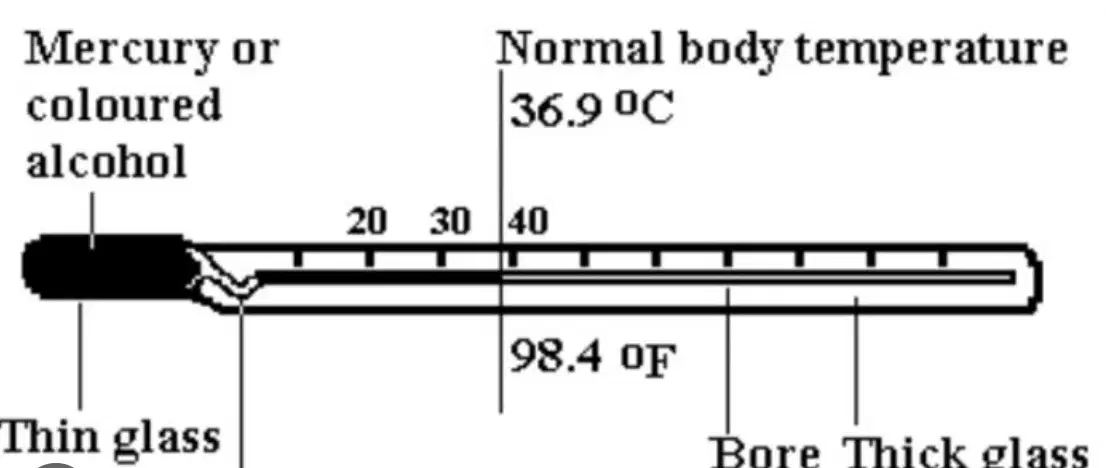
Which of the following features increases the sensitivity of a thermometer?
Thicker stem
Longer stem
Narrower bore
Wider bore
Liquid-in-glass thermometer sensitivity increased by:
Larger bulb, narrower bore
Smaller bulb, wider bore
Thicker glass
Longer capillary
Henry is conducting an experiment in his lab and cools a sample down to absolute zero. What happens at this temperature?
All motion stops
Particles still vibrate
Pressure is maximum
Volume is zero
What is the value of absolute zero on the Kelvin scale?
0 K
273 K
100 K
373 K
3 kg metal requires 630 J to increase its temperature by 5°C. What is the specific heat capacity (c)?
84 J/(kg°C)
42 J/(kg°C)
168 J/(kg°C)
420 J/(kg°C)
0.5 kg of water (c = 4200 J/(kg°C)) is heated by 20°C. What is the energy required?
2100 J
42 kJ
8400 J
42 kJ
Water boils at 100°C, yet temperature remains constant because:
Heat is used to break intermolecular bonds
Pressure is constant
Volume increases
All of the above
A 5 kg mass weighs 49 N on Earth. On the Moon (g = 1.6 m/s²), what is its weight?
0.8N
8N
160N
16N
A liquid has mass 45 g and volume 30 cm³. Its density is:
0.67 g/cm³
1.5 g/cm³
75 g/cm³
1350 g/cm³
If 500 cm³ of oil has mass 400 g, its density in kg/m³ is:
0.8
800
1250
800,000
A cyclist rides 400 m uphill in 80 s and 400 m downhill in 40 s. Average speed is:
5.0 m/s
6.7 m/s
10 m/s
15 m/s
A runner completes 200 m in 25 s, then 200 m back in 15 s. Average speed is:
8 m/s
10 m/s
13.3 m/s
20 m/s
A speed-time graph shows increasing speed then horizontal line. This means:
Constant acceleration then constant speed
Deceleration then stop
Constant speed then acceleration
Stop then acceleration
A spacecraft coasts (moves) with its engines off. If no forces act, it:
Slows down
Speeds up
Changes direction
Moves at constant velocity
A uniform square has center at middle. If right half is removed, center moves:
Up
Down
Left
Right
From a circular disk, a small circle is cut from top right. Center of mass moves:
Down left
Down right
Up left
Up right
Two identical beakers: one with water, one with oil (less dense). Pressure at the same depth is:
Same in both
Greater in water
Greater in oil
Zero in both
In an electric motor, the main wasted energy is:
Light
Sound
Thermal
Kinetic
A loudspeaker converts electrical to sound. Wasted energy is mainly:
Light
Thermal
Potential
Nuclear
The Power" of a man running upstairs depends on:
Weight and height
Mass and speed
Work done and time
Force and acceleration
Which stores gravitational potential energy?
Hydro-electric
Nuclear
Geothermal
Biomass

I began to walk, then increased my pace and kept it constant for a period of time, and then slowly decreased my pace. Which graph models this situation?
A
B
C
D


What is this graph showing?
Two objects speeding up constantly
Two objects slowing down constantly
Two objects accelerating
Two objects at rest

What is this graph showing?
Constant speed
Gradually speeding up
Gradually slowing down
At rest

What is the graph showing?
Constant high speed
Stopped
Accelerating
Constant low speed

What is the graph showing?
Speeding up moving away from start
Speeding up moving towards start
Slowing down moving towards start
Slowing down moving away from start

