
 Worksheets
LCDC
Total questions: 25
Worksheet time: 14mins
All come under paucibacillary leprosy except:
BT
TT
BB
I
All of the Above
None of the above
Pick out the wrong statement about leprosy.
Childhood cases indicates active disease transmission
A single dose Rifampicin is the prophylactic drug for Leprosy contacts
LCDC is applicable for all population above 02 years
The Grade 02 deformity cases following Leprosy are NIL in Alappuzha
There are childhood cases in Alappuzha
What is the most common mode of transmission?
What are the early symptoms of leprosy?
Skin lesions
Joint pain
Headache
Fever

Which parts of the body can leprosy affect?
The teeth
The finger nails
The hair
The nerves, skin, eye, and the lining of the nose (nasal mucosa).
How can leprosy be diagnosed?
Physical examination
Biopsy
Microscopic examination
All of the above
Is leprosy also called Hansen's disease?
True
False
Diagnosing leprosy patients as early as possible and promptly treating them is NOT essential to interrupting the transmission of this devastating disease.
True
False
Which of the statement is not true for Leprosy
Leprosy can cause blindness
Leprosy can cause numbness in skin
It can't be cured
leprosy can cause thickness in nerves
World Leprosy Day is observed on
Last Sunday of April
Last Sunday of January
First week of February
Last Sunday of December
Leprosy is a disease that causes
Nerve damage
Loss of feeling in limbs
Loss of limbs
All of these
Leprosy is caused by
A virus
Bacteria
It's cause is unknown, but includes genetic factors
After contracting leprosy, it can take ____ for symptoms to appear.
5 - 10 monts
up to 5 years
up to 20 years
What percent of the population CANNOT contract leprosy?
95%
5%
Anyone can contract leprosy. It does not discriminate.
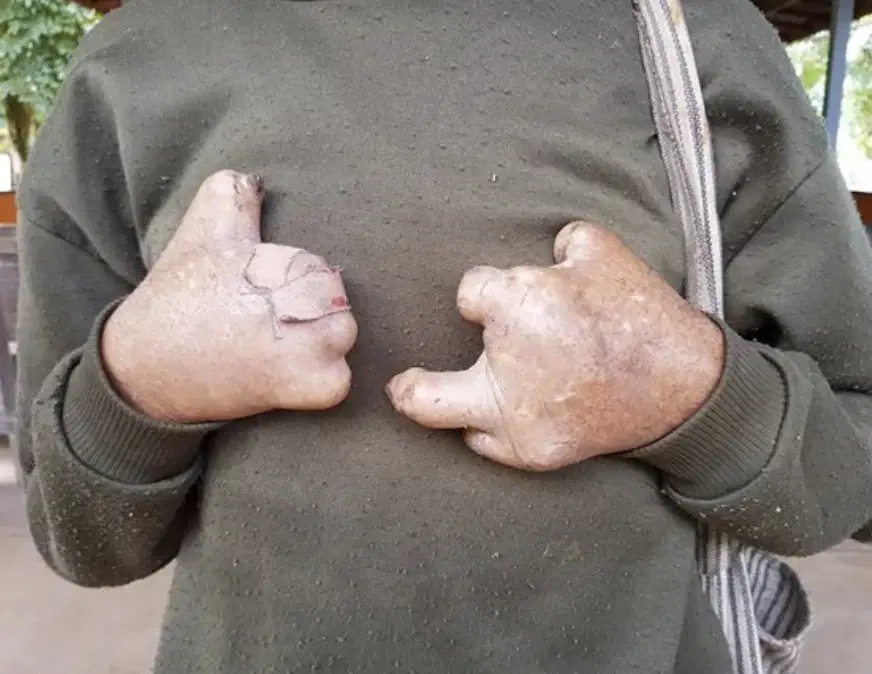
Pick out the wrong statement.
Leprosy is spread through respiratory droplets between people who are in close contact for months or years. So it is safe to touch someone with leprosy.
Leprosy may not be transmitted by sharing food
Leprosy may not be transmitted among couples
Leprosy may not be transmitted by simple hug
How did Father Damien first suspect that he had contracted leprosy?
When he fed a leper
Someone had sneezed on him
He had seen a blemish on his hand
While soaking his feet in hot water and he did not feel pain
Which of the following is a common misconception about leprosy?
It primarily affects the skin
It can be cured with antibiotics
It is highly contagious
What is the main purpose of the WHO's leprosy elimination strategy except?
To reduce the incidence to less than 1 case per 10,000 population
To eradicate the disease completely
To avoid grade 2 deformity
to avoid childhood cases
What is the main reason for the stigma associated with leprosy?
Historical misconceptions
It is a terminal illness
It is caused by poor hygiene

