
 Worksheets
QRU3193. Therapeutic Exercise For Sports Rehabilitation
Total questions: 40
Worksheet time: 40mins
Choose the answer that is mostly correct when talking about getting Osteoporosis.
Men are a higher risk than women
Men and women are at equal risk
Women are at greater risk than men
Neither men or women are at risk
All of the above
One of the best types of cardiovascular training for older adults are ________.
High intensity interval training
Powerlifting
Plyometric exercise
Stationary cycling
When performing a flexibility training, the stretch should be held until ________.
point of mild tightness
point of numbness
point of pain
reaching 180 degrees
Palpitations is defined as:
forcible or irregular pulsation of the heart, perceptible to the individual, usually with an increase in frequency or force, with or without irregularity in rhythm
rapid beating of the heart, typically over 100 beats per minute at rest
a condition caused by lack of blood flow and oxygen to the leg muscles, characterized by attacks of lameness and pain, brought on by walking
acute difficulty in breathing appearing suddenly at night, usually waking the patient after an hour or two of sleep
discomfort in breathing which is brought on or aggravated by lying flat
Orthopnea is defined as:
forcible or irregular pulsation of the heart, perceptible to the individual, usually with an increase in frequency or force, with or without irregularity in rhythm
rapid beating of the heart, typically over 100 beats per minute at rest
a condition caused by lack of blood flow and oxygen to the leg muscles, characterized by attacks of lameness and pain, brought on by walking
acute difficulty in breathing appearing suddenly at night, usually waking the patient after an hour or two of sleep
discomfort in breathing which is brought on or aggravated by lying flat
Paroxysmal nocturnal dyspnea is defined as:
forcible or irregular pulsation of the heart, perceptible to the individual, usually with an increase in frequency or force, with or without irregularity in rhythm
rapid beating of the heart, typically over 100 beats per minute at rest
a condition caused by lack of blood flow and oxygen to the leg muscles, characterized by attacks of lameness and pain, brought on by walking
acute difficulty in breathing appearing suddenly at night, usually waking the patient after an hour or two of sleep
discomfort in breathing which is brought on or aggravated by lying flat
Tachycardia is defined as:
forcible or irregular pulsation of the heart, perceptible to the individual, usually with an increase in frequency or force, with or without irregularity in rhythm
rapid beating of the heart, typically over 100 beats per minute at rest
a condition caused by lack of blood flow and oxygen to the leg muscles, characterized by attacks of lameness and pain, brought on by walking
acute difficulty in breathing appearing suddenly at night, usually waking the patient after an hour or two of sleep
discomfort in breathing which is brought on or aggravated by lying flat
Intermittent claudication is defined as:
forcible or irregular pulsation of the heart, perceptible to the individual, usually with an increase in frequency or force, with or without irregularity in rhythm
rapid beating of the heart, typically over 100 beats per minute at rest
a condition caused by lack of blood flow and oxygen to the leg muscles, characterized by attacks of lameness and pain, brought on by walking
acute difficulty in breathing appearing suddenly at night, usually waking the patient after an hour or two of sleep
discomfort in breathing which is brought on or aggravated by lying flat
Which term describes rapid beating of the heart, typically over 100 beats per minute at rest?
Tachycardia
Intermittent claudication
Paroxysmal nocturnal dyspnea
Orthopnea
Which term describes a condition caused by lack of blood flow and oxygen to the leg muscles, characterized by attacks of lameness and pain, brought on by walking?
Intermittent claudication
Tachycardia
Orthopnea
Paroxysmal nocturnal dyspnea
Which term describes acute difficulty in breathing appearing suddenly at night, usually waking the patient after an hour or two of sleep?
Paroxysmal nocturnal dyspnea
Orthopnea
Intermittent claudication
Tachycardia
Which term describes discomfort in breathing which is brought on or aggravated by lying flat?
Orthopnea
Paroxysmal nocturnal dyspnea
Intermittent claudication
Tachycardia
Which of the following are the risk stratification levels for LOW risk to exercise?
Men <45, and women <55 years of age, who are asymptomatic and meet no more than one risk factor threshold.
Men >= 45 and women >= 55 years of age or those who meet the threshold for two or more risk factors
Individuals with one or more signs or symptoms or with known cardiovascular, pulmonary, or metabolic disease including diabetes mellitus
Which of the following are the risk stratification levels for HIGH risk to exercise?
Men <45, and women <55 years of age, who are asymptomatic and meet no more than one risk factor threshold.
Men >= 45 and women >= 55 years of age or those who meet the threshold for two or more risk factors
Individuals with one or more signs or symptoms or with known cardiovascular, pulmonary, or metabolic disease including diabetes mellitus
Which of the following are the risk stratification levels for a MODERATE risk to exercise?
Men <45, and women <55 years of age, who are asymptomatic and meet no more than one risk factor threshold.
Men >= 45 and women >= 55 years of age or those who meet the threshold for two or more risk factors
Individuals with one or more signs or symptoms or with known cardiovascular, pulmonary, or metabolic disease including diabetes mellitus
The concept of neutral spine is ________.
Maximal knee and hip bend to lower the body down
Turning through transverse plane to produce force
The cervical, thoracic and lumbar curves are present and in good alignment.
Combination of multiple movements which contribute to walking technique
The following are the fundamental movement patterns EXCEPT:
Squat
Lunge
Sit-Up
Bend
The movement competency screening (MCS) which combined two movement patterns are:
Squat & Press
Lunges & Row
Bend & Pull
Sit to Stand
Movement competency is described as ________.
Ability to carry heavy loads for short duration.
Ability to sustain lifting light loads for long duration.
Ability to move free of dysfunction or pain.
Ability of the heart to pump efficiently.
In ________ chain exercises, “the distal segment is mobile and not fixed”.
Isokinetic
Closed Kinetic
Open Kinetic
Isotonic
In ________ chain exercises, “the distal segment is stabilized and fixed”.
Isokinetic
Closed Kinetic
Open Kinetic
Isotonic
The following are closed kinetic chain exercises EXCEPT ________.
Squats
Lunges
Leg/ Knee Extension
Terminal Knee Extension
The following are open kinetic chain exercises EXCEPT ________.
Biceps Curl
Leg/ Knee Extension
Leg Curl
Chair Squats
In ________ chain exercises, “apply significant resistance and isolate the muscle.”.
Isokinetic
Closed Kinetic
Open Kinetic
Isotonic
In ________ chain exercises, “encourage neuromuscular control, as the patient is expected to balance”.
Isokinetic
Closed Kinetic
Open Kinetic
Isotonic
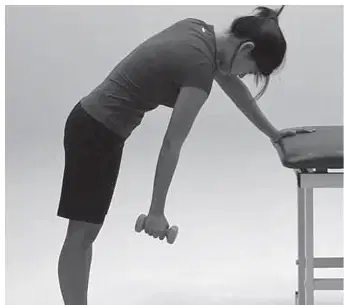
The figure above shows the ________ exercise.
Codman’s circumduction
Sawing
Lateral raise (shoulder abduction)
Fly (shoulder horizontal adduction)
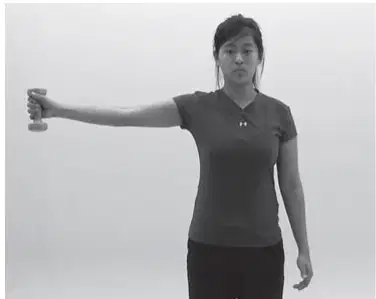
The figure above shows the ________ exercise.
Codman's circumduction
Sawing
Lateral raise (shoulder abduction)
Fly (shoulder horizontal adduction)
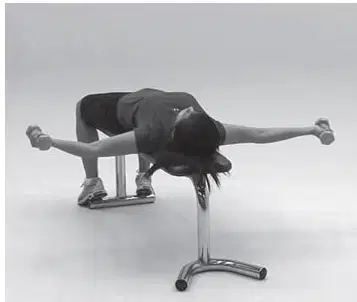
The figure above shows the ________ exercise.
Codman's circumduction
Sawing
Lateral raise (shoulder abduction)
Fly (shoulder horizontal adduction)
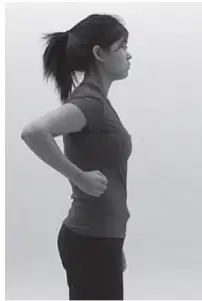
The figure above shows the ________ exercise.
Codman’s circumduction
Sawing
Lateral raise (shoulder abduction)
Fly (shoulder horizontal adduction)
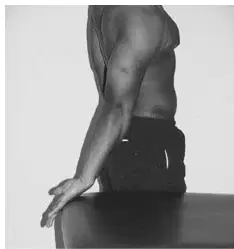
The figure above shows the ________ stretch.
Bicep brachii
Triceps brachii
Wrist Extensors
Wrist Flexors
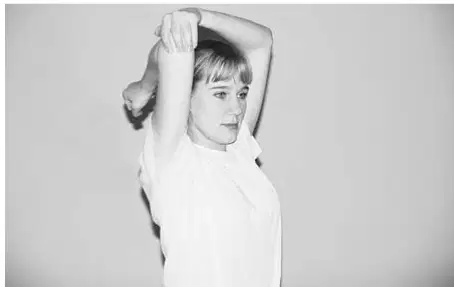
The figure above shows the ________ stretch.
Bicep brachii
Triceps brachii
Wrist Extensors
Wrist Flexors
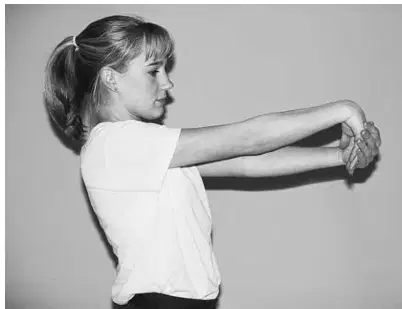
The figure above shows the ________ stretch.
Bicep brachii
Triceps brachii
Wrist Extensors
Wrist Flexors
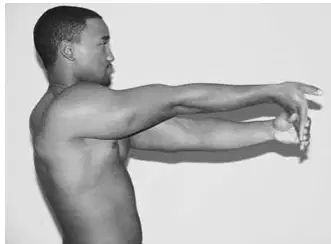
The figure above shows the ________ stretch.
Bicep brachii
Triceps brachii
Wrist Extensors
Wrist Flexors
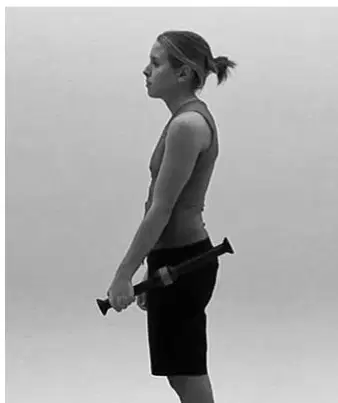
The figure above shows weighted wrist _________ exercise.
radial deviation
extension
flexion
ulnar deviation
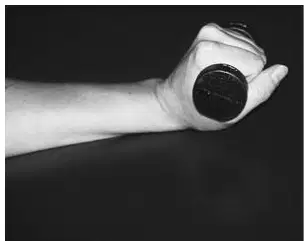
The figure above shows weighted wrist _________ exercise.
radial deviation
extension
flexion
ulnar deviation
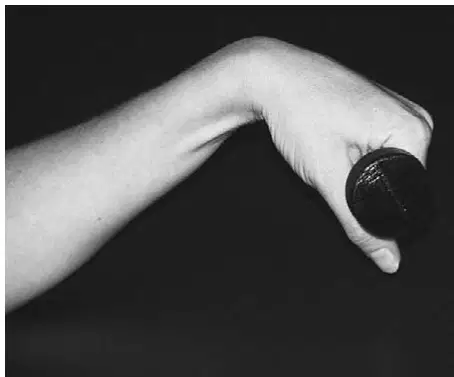
The figure above shows weighted wrist _________ exercise.
radial deviation
extension
flexion
ulnar deviation
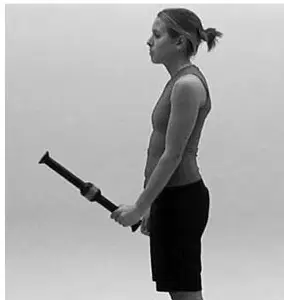
The figure above shows weighted wrist _________ exercise.
radial deviation
extension
flexion
ulnar deviation
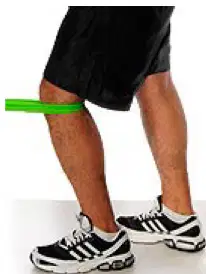
The figure above shows _________ exercise.
Terminal knee extension
Leg extension
Leg curl
Nordic Hamstring Curl
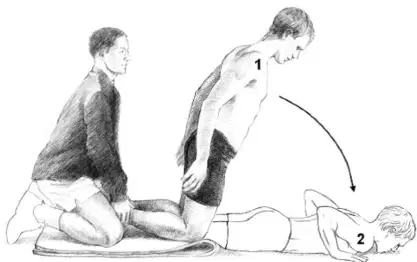
The figure above shows _________ exercise.
Terminal knee extension
Leg extension
Leg curl
Nordic Hamstring Curl
Which exercise is primarily focused on strengthening the core muscles?
Squat
Bench press
Plank
Deadlift

