
Font size
 Worksheets
8.1 Basic Types of Chemical Bonds
Total questions: 108
Worksheet time: 54mins
Which statement best describes ionic bonding in sodium chloride (NaCl)?
Electrons are shared equally between Na and Cl
Protons move from Na to Cl to make neutrality
Electrons are transferred from Na to Cl forming ions
Metal atoms share a sea of delocalized electrons
The reaction Na(s) + ½ Cl2(g) → NaCl(s) releases energy. What does this indicate about the process?
It is endothermic and absorbs heat energy
It is exothermic and releases heat energy
It is photochemical requiring light energy
It is isothermal with no heat change
In a metallic bond, what holds the metal atoms together?
Hydrogen bonds between nuclei
Attraction to a sea of mobile electrons
Shared pairs of localized electrons
Attraction between oppositely charged ions
Which scenario most likely forms a covalent bond?
A noble gas attracting many electrons
Two metal atoms transferring electrons
Two nonmetal atoms sharing electrons
A metal atom reacting with a nonmetal atom
Breaking solid NaCl into Na+ gas and Cl− gas has ΔH = +788 kJ/mol. What does the positive sign indicate about this process?
Energy is absorbed, endothermic process
Energy is released, exothermic process
No energy change, neutral process
Energy is stored, spontaneous process
Which statement best describes lattice energy for an ionic solid?
Energy released when covalent bonds form
Energy required to separate ions to gases
Energy produced by electron excitation
Energy needed to melt metallic crystals
Using E_el = κ(Q1Q2)/d, which change increases lattice energy the most?
Doubling charges and halving distance
Reducing charges with same distance
Halving charges and doubling distance
Keeping charges and increasing distance
For ions in an ionic compound, how does lattice energy vary with ion size?
Smaller ions increase lattice energy
Larger ions increase lattice energy
Ion size has no effect
Only cation size matters
Which pair would have greater lattice energy: MgO or NaCl?
NaCl, due to larger ion sizes
Both equal, same crystal structure
NaCl, due to lower ionic charges
MgO, due to higher ionic charges
According to the table, which compound likely has the largest lattice energy among alkali halides listed?
KBr, moderate value among listed
CsCl, mid-range among listed
NaI, lowest value among listed
LiF, highest value among listed
If the distance d between ions decreases while charges remain the same, what happens to E_el?
E_el increases because ions attract stronger
E_el decreases because ions repel less
E_el stays constant regardless of distance
E_el becomes zero at small distances
An ionic solid forms from gaseous ions. Which statement about energy is accurate?
Energy remains unchanged during formation
Energy is absorbed when lattice forms
Energy only depends on ion masses
Energy is released when lattice forms
What is lattice energy in an ionic solid?
Energy released when gaseous ions form a crystal
Energy absorbed when atoms share electrons
Energy absorbed when molecules condense
Energy released when covalent bonds break
Which pair of ions would generally produce the greatest lattice energy?
Large ions with low charges
Small ions with equal charges
Small ions with high charges
Large ions with opposite charges
Coulomb's Law relates lattice energy mainly to which two factors?
Ion charges and distance between ions
Bond order and bond polarity
Atomic mass and electron number
Temperature and pressure of the solid
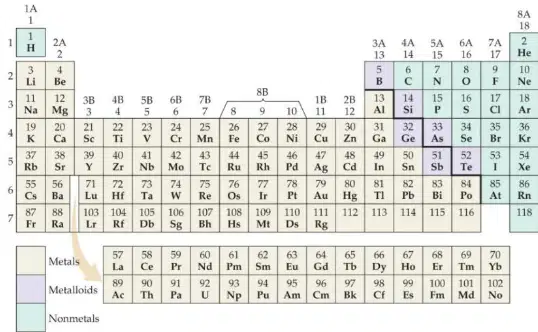
When separating an ionic crystal into its gaseous ions, the process is best described as
Endothermic because energy must be input
Exothermic because heat is released
Endothermic because heat is released
Exothermic because energy must be input
Two ionic compounds have the same charges on their ions. Compound A has shorter ion distances than Compound B. Predict which has higher lattice energy and why.
Compound B, weaker attraction at longer distance
Compound B, stronger attraction at longer distance
Compound A, stronger attraction at shorter distance
Compound A, weaker attraction at shorter distance
Which change typically increases lattice energy in an ionic compound?
Adding more covalent character
Increasing ionic charge magnitudes
Forming molecules instead of ions
Increasing ionic radii for both ions
Decreasing crystal coordination number
For ions with the same charges, how does lattice energy change as ionic radius changes?
Radius has no effect on energy
Larger radii increase lattice energy
Only cation radius matters
Smaller radii increase lattice energy
Only anion radius matters
Which pair would have the greatest lattice energy based on charge and size?
K+ and I− with larger radii
Ca2+ and Br− with very large radii
Na+ and Cl− with large radii
Mg2+ and O2− with small radii
Li+ and F− with very large radii
Two compounds have ions of similar size. One has charges +1 and −1, the other +2 and −2. Which has higher lattice energy and why?
Neither forms a lattice at all
They are equal because sizes match
The +1/−1 compound because smaller charge
The +1/−1 compound because fewer ions
The +2/−2 compound because greater charge
Arrange these ionic compounds from highest to lowest lattice energy: LiF, NaCl, KI.
NaCl > KI > LiF
KI > LiF > NaCl
LiF > NaCl > KI
KI > NaCl > LiF
NaCl > LiF > KI
A scientist replaces Cl− with Br− in an ionic crystal while keeping the cation the same. Predict the change in lattice energy.
It becomes zero due to neutrality
It fluctuates unpredictably
It decreases because Br− is larger
It stays the same regardless of size
It increases because Br− is larger
Which ionic compound is predicted to have the greatest lattice energy based on ion charge and size?
CaS, +2 and −2 larger ions
KBr, +1 and −1 larger ions
MgO, +2 and −2 small ions
NaCl, +1 and −1 small ions
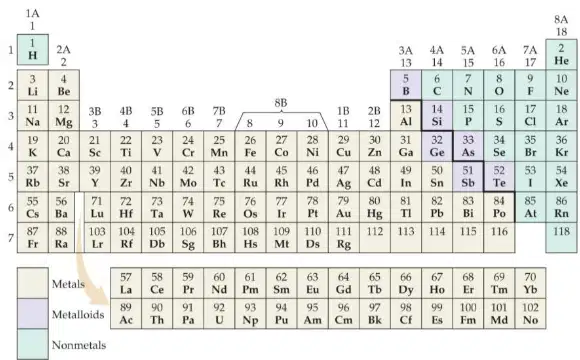
Arrange these ionic compounds from highest to lowest lattice energy: LiF, NaCl, KBr.
LiF > NaCl > KBr
KBr > NaCl > LiF
NaCl > LiF > KBr
NaCl > KBr > LiF
Which electrons are removed first when forming a transition metal cation from a neutral atom?
Core s-electrons are removed first
Valence s-electrons are removed first
Valence p-electrons are removed first
Inner d-electrons are removed first
A neutral Fe atom has electron configuration [Ar] 4s2 3d6. What is the electron configuration of Fe2+?
[Ar] 3d6 after losing two 4s
[Ar] 4s1 3d5 after losing one 4s
[Ar] 3d4 after losing two 3d
[Ar] 4s2 3d4 after losing two 3d
A neutral Cu atom is [Ar] 4s1 3d10. What is Cu+ after losing electrons?
[Ar] 3d9 after losing one 4s and one d
[Ar] 4s0 3d8 after losing two d
[Ar] 3d10 after losing the 4s
[Ar] 4s1 3d9 after losing one d
Which statement best explains why transition metals often form multiple cations like Fe2+ and Fe3+?
Large energy gap forces only s loss always
p-orbitals dominate cation formation completely
Core electrons are easily removed in metals
Similar energy of 4s and 3d allows variable loss
A neutral Ti atom is [Ar] 4s2 3d2. Predict Ti3+ configuration using the rule for cations.
[Ar] 3d2 after losing only 4s
[Ar] 4s1 3d2 after losing one 4s
[Ar] 3d1 after losing two 4s and one d
[Ar] 4s0 3d0 after losing all valence
In a Lewis dot structure, what does a single line between two element symbols represent?
No bonding interaction
One shared electron pair
Two shared electron pairs
A lone electron pair
Which statement best describes a single bond in covalent bonding?
Three shared pairs of electrons
Shared core electrons only
One shared pair of electrons
Two shared pairs of electrons
Hydrogen and chlorine form H–Cl. What is shared to make this bond?
Two electron pairs
Protons from nuclei
One electron pair
Entire valence shells
In Lewis structures, how are unshared electron pairs shown around an atom?
As pairs of dots
As double lines
As charges symbols
As triangles
Which molecule is correctly described as having a double bond between its atoms?
H2 with two shared pairs
H2S with two shared pairs
O2 with two shared pairs
Cl2 with two shared pairs
What term is used when more than one pair of electrons is shared between two atoms?
Multiple bonding
Ionic bonding
Hydrogen bonding
Metallic bonding
For hydrogen with electron configuration 1s1, how many electrons fill its valence shell when bonded?
Two electrons
Eight electrons
One electron
Four electrons
Which statement about Lewis dot symbols is accurate for covalent molecules like Cl2?
Shared pairs shown as crosses
Shared pairs shown as triangles
Shared pairs shown as lines
Shared pairs shown as charges
Which statement best describes the octet rule for main-group atoms?
Atoms gain or lose electrons to reach eight valence
Atoms arrange into eight bonds around each atom
Atoms share protons to reach eight in the nucleus
Atoms double their total electrons to become stable
In a Lewis structure, what do dots and lines represent?
Dots are protons, lines are electron paths
Dots are charges, lines are ionic attractions
Dots are lone pairs, lines are shared pairs
Dots are nuclei, lines are atomic radii

Nitrogen in N2 achieves stability by forming which type of covalent bond shown in the diagram?
A triple bond with three shared pairs
A single bond with one shared pair
A quadruple bond with four shared pairs
A double bond with two shared pairs
Which comparison of bond length and strength is correct?
Triple bonds are longer and weaker than single
Triple bonds are shorter and stronger than double
Double bonds are longer and weaker than single
Single bonds are shorter and stronger than triple
What is bond length defined as in molecular structures?
Distance between nuclei of bonded atoms
Distance between valence shells in a bond
Distance from nucleus to outermost electron
Distance between atoms and their lone pairs
Which statement best describes a single covalent bond between two atoms?
It transfers one electron to another
It transfers two electrons between atoms
It shares one pair of electrons
It shares two pairs of electrons
How is a double covalent bond typically represented in a structural formula?
By one dash between atoms
By three dots near atoms
By brackets around atoms
By two dashes between atoms
Which bond type involves three shared pairs of electrons between the same two atoms?
Single covalent bond
Ionic bond
Triple covalent bond
Double covalent bond
If a molecule has a triple bond, how many electrons are shared in that bond?
Six electrons shared
Eight electrons shared
Two electrons shared
Four electrons shared
Which comparison correctly matches bond types with relative bond strength and length?
Single: medium strength and length
Triple: strongest and shortest
Double: weakest and longest
Single: strongest and shortest
A student draws CO2 as O=C=O. What feature of this drawing indicates the type of bonding between C and O?
Dots show nuclear positions
Single dash shows one shared pair
Two dashes show two shared pairs
Brackets show charge separation
Which situation would most likely change a single bond into a double bond during a chemical reaction?
Decreasing the temperature of the system
Increasing the atomic mass of the atoms
Removing a lone pair to form another shared pair
Adding electrons to both nuclei
In nitrogen gas (N≡N), why is the bond considered a triple covalent bond?
It forms three ionic interactions
It transfers three electrons to nitrogen
It shows three shared pairs of electrons
It contains three nuclei in one bond
Which statement best describes the relationship between bond order and bond length in covalent bonds?
Higher bond order leads to longer bond length
Higher bond order leads to shorter bond length
Bond order does not affect bond length
Lower bond order leads to shorter bond length
Compare single, double, and triple bonds in terms of bond strength. Which is correct?
Single bonds are strongest among the three
Double bonds are stronger than triple bonds
Triple bonds are strongest among the three
Strength is the same for all three
A molecule has a very short bond length between two atoms. What does this most likely indicate about the bond?
It has high bond order but low strength
It has low bond order but high strength
It has high bond order and high strength
It has low bond order and weak strength
Two similar molecules differ only by having a single bond in one and a double bond in the other. Which property will most likely be greater for the double-bonded molecule?
Bond length between the atoms
Bond strength between the atoms
Number of atoms in the molecule
Electronegativity of the atoms
Which Lewis symbol correctly shows nitrogen’s valence electrons?
N with two dots around
N with five dots around
N with three dots around
N with seven dots around

Fluorine forms a polar bond with hydrogen. In a Lewis symbol, how many valence electrons are shown around a single fluorine atom?
Seven electrons around F
Eight electrons around F
Six electrons around F
Five electrons around F
Which statement best defines electronegativity?
Atom’s ability to increase atomic radius
Atom’s capacity to emit light photons
Atom’s tendency to lose outer electrons
Atom’s ability to attract shared electrons
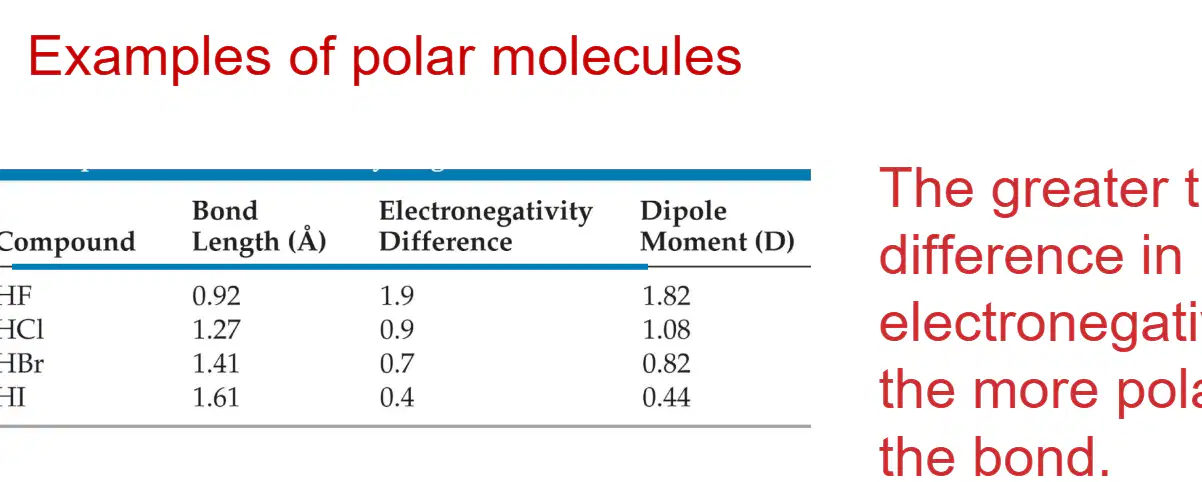
Based on the table, which HF property most explains its largest dipole moment among HX molecules?
Largest molecular volume value
Highest atomic number value
Shortest bond length value
Greatest electronegativity difference value
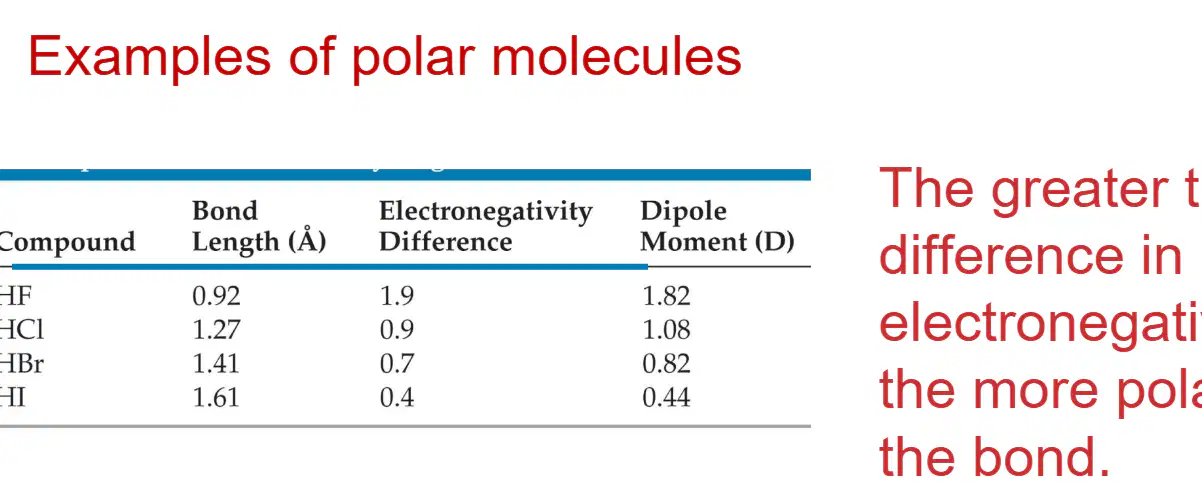
Arrange HCl, HBr, and HI from most polar to least polar using the diagram and table.
HCl > HI > HBr
HBr > HCl > HI
HI > HBr > HCl
HCl > HBr > HI
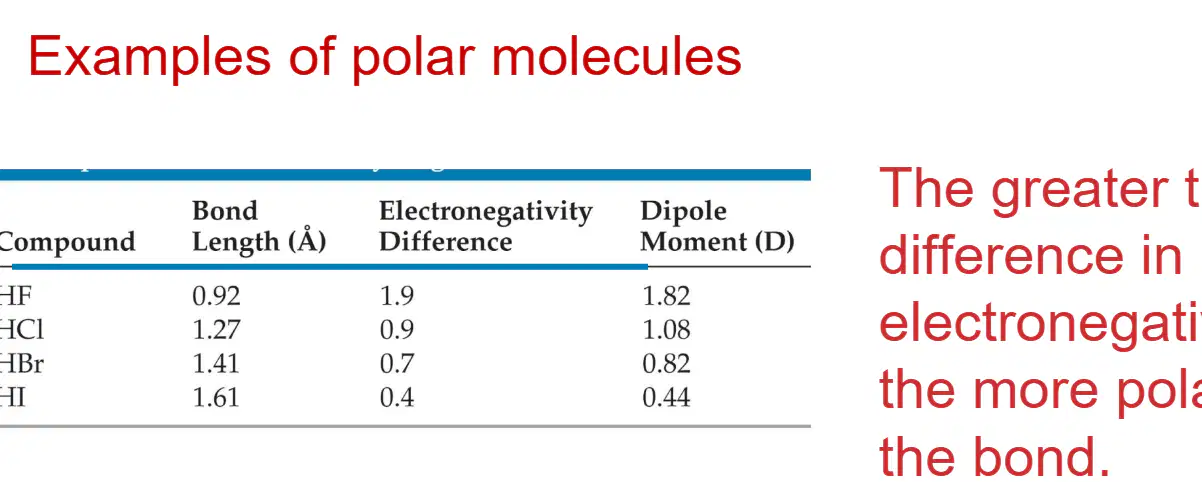
If an unknown HX has an electronegativity difference of 1.5, what is the best prediction about its bond polarity compared with HCl?
Less polar than HCl overall
More polar than HCl overall
Equal polarity to HCl overall
Unrelated to electronegativity
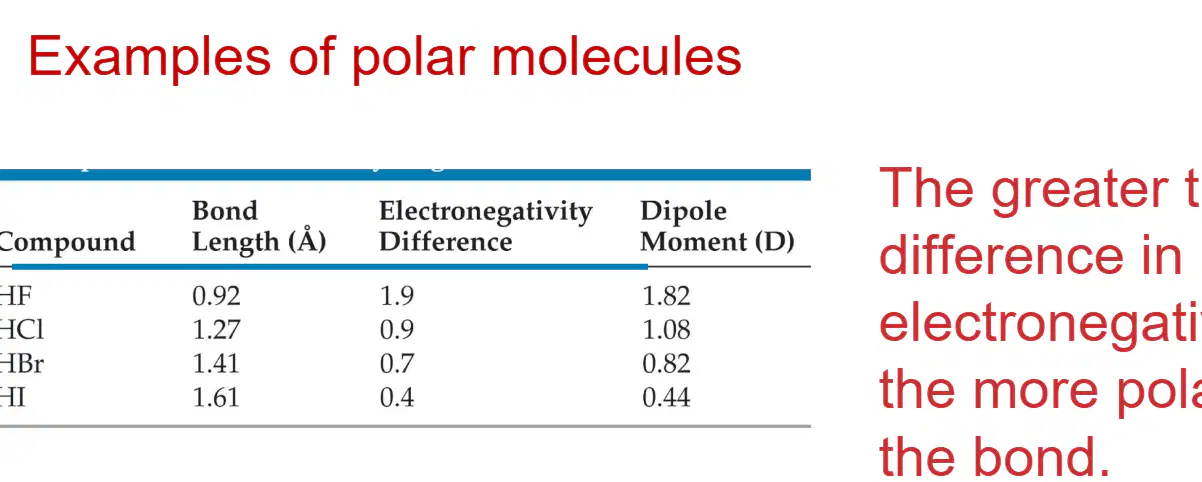
Which trend across the series HF → HCl → HBr → HI is correctly supported by both numbers and shapes?
Dipole moment decreases steadily
Bond length decreases steadily
Electronegativity difference increases steadily
Electron density becomes perfectly uniform
Which statement best describes bond polarity in a covalent bond?
Electrons transfer completely between atoms
Protons move to balance electron sharing
Equal electron sharing creates full charges
Unequal electron sharing creates partial charges
What electronegativity difference (ΔEN) most likely indicates a non‑polar covalent bond between two identical atoms?
ΔEN ≈ 2 for identical atoms
ΔEN ≈ 1 for identical atoms
ΔEN ≈ 3 for identical atoms
ΔEN ≈ 0 for identical atoms
Two atoms form a bond with ΔEN = 0.4. How is this bond classified?
Slightly polar covalent bond
Perfectly non‑polar bond
Metallic lattice bond
Strongly ionic bond
A bond has ΔEN = 1.8. What is the most appropriate classification at the grade‑level boundary?
Ionic character likely dominates
Covalent character strictly dominates
Non‑polar character dominates
Metallic character dominates
Which pair is most likely to form an ionic bond based on electronegativity?
Nitrogen and oxygen in NO
Carbon and hydrogen in CH4
Sodium and chlorine in NaCl
Chlorine and chlorine in Cl2
Which statement compares polar and non‑polar covalent bonds correctly?
Polar bonds occur only in metals; non‑polar in nonmetals
Polar bonds have equal sharing; non‑polar have unequal
Polar bonds have unequal sharing; non‑polar have equal
Polar bonds transfer electrons; non‑polar share them
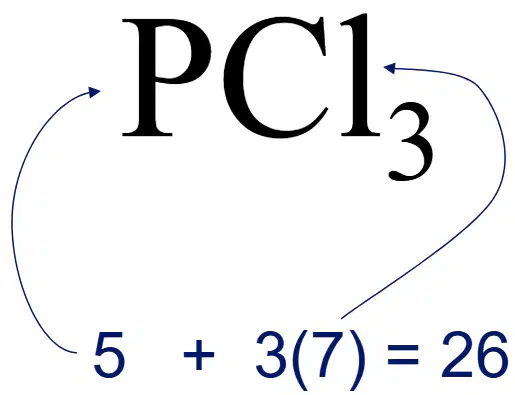
Calculate ΔEN for a bond between phosphorus (EN = 2.1) and chlorine (EN = 3.0). Classify the bond.
ΔEN = 0.9, polar covalent
ΔEN = 0.9, non‑polar covalent
ΔEN = 1.9, ionic
ΔEN = 0.3, non‑polar covalent
A molecule has several polar bonds but is overall non‑polar. Which explanation fits best?
Metallic bonding averages electron sea
Electrons transfer making full charges
Atoms have identical electronegativities
Symmetrical shape cancels bond dipoles
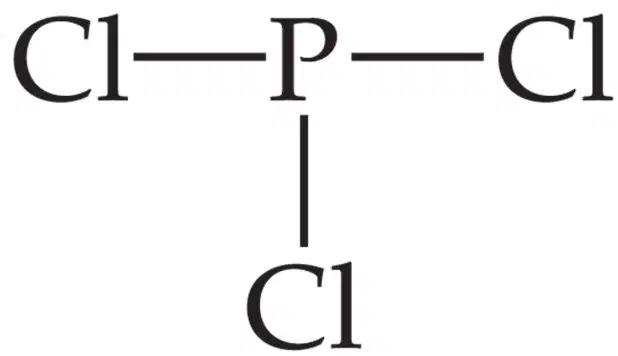
Which single bond in the PCl3 structure shown is more polar due to greater electronegativity difference?
P–P bond is more polar than P–Cl
P–Cl bond is more polar than Cl–Cl
Cl–Cl bond is more polar than P–Cl
P–Cl bond is more polar than P–P
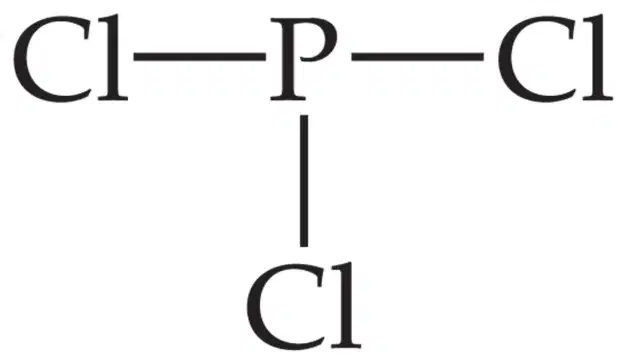
Using electronegativity trends, which atom is least electronegative and therefore the central atom in the displayed molecule?
Both chlorine and phosphorus are equally least
Hydrogen would be least if present
Phosphorus is least electronegative and central
Chlorine is least electronegative and central
Which statement best describes a dipole moment in a molecule?
Total number of shared electrons
Quantitative measure of bond polarity
Speed of electron movement in bonds
Overall molecular mass in grams
What symbol is commonly used to represent dipole moment in equations?
mu (μ) symbol
lambda (λ) symbol
delta (Δ) symbol
sigma (σ) symbol
Which unit is typically used to express molecular dipole moments?
Debye (D) units
Newton (N) units
Mole (mol) units
Kelvin (K) units
If a bond has greater charge separation, what happens to its dipole moment value?
It stays constant
It becomes larger
It becomes negative
It becomes smaller
Which pair of words best completes the idea: Dipole moment depends on ______ and ______ between charges?
magnitude, distance
mass, volume
pressure, temperature
speed, acceleration
A molecule shows zero net dipole moment. Which conclusion fits best?
Electrons stop moving entirely
Molecule contains no polar bonds
All bonds are ionic only
Bond dipoles cancel by symmetry
Which choice is the clearest example of a polar bond creating charge separation?
One atom pulls electrons more strongly
Both atoms share electrons equally
Atoms have identical electronegativities
Bonding involves only metallic atoms
Which statement about Debye units is most accurate for grade 8 science?
They track reaction rate changes
They count valence electron totals
They measure atomic radius lengths
They quantify molecular polarity size
Which equation defines formal charge on an atom in a Lewis structure?
Valence electrons minus lone pairs and half bonds
Valence electrons plus lone pairs minus full bonds
Valence electrons minus bonding electrons minus charge
Valence electrons plus bonding pairs minus lone pairs
In drawing HCN, why is a triple bond formed between C and N?
To convert the molecule into a charged species
To complete carbon’s octet when electrons run out
To reduce hydrogen’s valence shell to zero
To give nitrogen five shared electron pairs
Which step comes first when calculating a molecule’s dipole moment from its partial charges?
Determine partial charges using electronegativity
Identify bond length and charge separation
Convert units to Debye after computing
Sum vector components of individual bond dipoles
A bond shows a partial negative charge on the more electronegative atom. What does this imply about the dipole direction?
Points from atom with more formal charge
Points from atom with fewer valence electrons
Points from negative to positive end
Points from positive to negative end
Which statement best describes how electronegativity (EN) difference relates to bond polarity?
Greater EN difference means more polar bond
Smaller EN difference means more polar bond
EN difference has no effect on bond polarity
Bond polarity depends only on bond length
A bond shows an EN difference of about 0.0. What type of bond is most likely?
Nonpolar covalent bond
Polar covalent bond
Ionic bond
Metallic bond
On an electrostatic potential map, which region indicates where electrons are most concentrated?
Red or negative potential regions
Blue or positive potential regions
Green or neutral potential regions
Yellow or slightly positive regions
Which pair of atoms is most likely to form an ionic bond based on EN difference?
Chlorine and bromine
Carbon and hydrogen
Sodium and chlorine
Nitrogen and oxygen
Which step comes first when drawing a Lewis structure for a molecule like CO2?
Check octet or duet rules
Count total valence electrons
Choose the central atom carefully
Place lone pairs on outer atoms
What is typically chosen as the central atom in a covalent molecule?
The most electronegative atom
The atom with fewest valence electrons
The least electronegative atom
The smallest atomic radius
How do you calculate total valence electrons for H2O?
Multiply atoms then divide by two
Add bonds then subtract lone pairs
Add each atom’s valence electrons
Use atomic numbers then subtract two
Why is hydrogen never the central atom in Lewis structures?
Hydrogen forms three bonds
Hydrogen always carries negative charge
Hydrogen prefers high electronegativity
Hydrogen achieves a duet only
Which choice shows a correct skeleton structure for NH3 before adding lone pairs?
H–N–H–H linear chain
N double bonded to three hydrogens
N center with three H single bonds
H center with three N single bonds
You are drawing SO2. After counting valence electrons, which atom should be placed in the center?
Sulfur because highest valence
Sulfur because less electronegative
Oxygen because it has lone pairs
Oxygen because smaller radius
A student sums valence electrons for COCl2. Which method is correct?
Use group numbers for each atom
Use atomic masses for each atom
Use core electrons only for each
Use ionic charges for the atoms
When making the initial skeleton structure, what should you do with the outer atoms first?
Remove extra electrons early
Place them around the center
Assign formal charges quickly
Add double bonds immediately
You select the central atom incorrectly as oxygen in H2SO4. What issue might this cause later?
Impossible bond angles everywhere
Too few valence electrons counted
Difficulty satisfying outer octets
Duet rule violation for sulfur
Which is the best immediate next step after choosing a central atom for CH4?
Place triple bonds to each hydrogen
Assign formal charges to atoms
Distribute lone pairs to the center
Arrange hydrogens around the center
When completing a Lewis structure, which atoms should have their octets filled first?
Atoms with the lowest electronegativity
Outer atoms before central atoms
Central atoms before outer atoms
Atoms that form multiple bonds first
After the outer atoms reach octets, what is the next step for the central atom?
Create coordinate covalent bonds
Remove electrons from outer atoms
Check and fill the central atom octet
Add lone pairs to central atom
Which situation most often requires forming double or triple bonds in a Lewis structure?
The central atom has fewer than eight electrons
Too many electrons remain after octets
Odd-electron molecules always need multiple bonds
Outer atoms exceed eight electrons
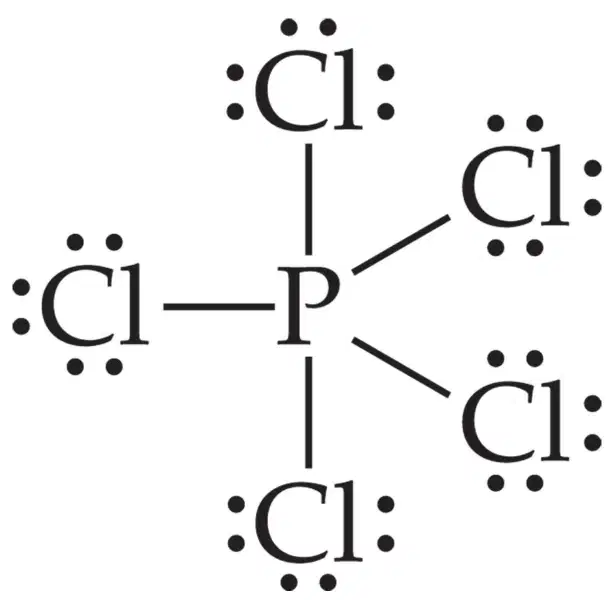
In PCl5, phosphorus is surrounded by 10 electrons. What rule does this illustrate?
Resonance stabilization
Odd-electron exception
Expanded octet exception
Incomplete octet exception

Elements that can have expanded octets are typically found in which part of the periodic table?
Noble gases only
Transition metals only
Period 3 or below
Period 2 only
Which molecule is an example of having fewer than eight electrons around the central atom?
NO
PF5
BF3
SF6
Which molecule is an example of an expanded octet?
PF5
AlCl3
NO
BCl3
What is the best approach when the central atom has fewer than eight electrons after distributing lone pairs?
Remove lone pairs from central atom
Switch to ionic bonding model
Form multiple bonds with outer atoms
Add electrons to outer atoms
Which species is an example of an odd-electron molecule?
PF5
NO
BF3
SF6
When completing Lewis structures, which statement is true about outer atom octets?
They must always become expanded beyond eight
They are ignored for third-period elements
They should be completed before adjusting the central atom
They may be left incomplete if central atom needs electrons

