
Font size
 Worksheets
Science Review
Total questions: 104
Worksheet time: 3hrs 14mins
What is the smallest unit of matter? It is composed of protons and neutrons, held together in the nucleus, and electrons around the nucleus in different electron orbitals, which form an electron cloud.
cell
nucleus
atom
electron
What are any of the various self-contained units of matter or energy that are fundamental parts of all matter. These particles include electrons, protons, and neutrons.
subatomic particles
elements
nucleus
electron cloud
What is a subatomic particle with a positive charge that is in the nucleus of an atom?
neutron
proton
electron
valence electron
What is a subatomic particle without an electric charge, located in the nucleus of an atom?
neutron
proton
electron
valence electron
What is a subatomic particle with a negative charge? It is found in the electron cloud surrounding the nucleus.
neutron
proton
electron
electron cloud
What is the system of electrons surrounding the nucleus of an atom?
valence electrons
nucleus
electrons
electron cloud
What is the center of an atom containing protons and neutrons?
nucleus
neutron
proton
electron cloud
What is the number of protons in the nucleus of an atom that determines the chemical properties of an atom?
mass number
atomic mass
atomic number
atomic symbol
What is the combined mass of all the protons and neutrons of an atom and is approximately equal to the number of protons and neutrons?
atomic mass
atomic number
subatomic particles
nucleus weight
What is material that has mass and takes up space?
volume
mass
matter
density
Subatomic particles with a negative charge
Electrons
Neutrons
Protons
Quarks
What is the atomic number?
the number of protons in the nucleus
the number of protons and neutrons in the nucleus
the number of neutrons in the nucleus
the number of protons in the energy levels
What is the mass number?
the number of protons in the nucleus
the number of protons and neutrons in the nucleus
the number of neutrons in the nucleus
the number of protons and electrons in the atom
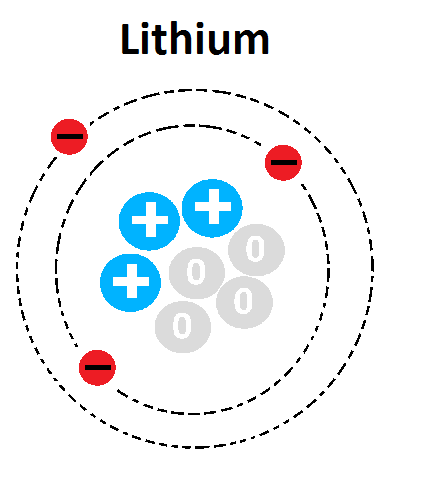
What is the atomic number of this atom?
1
3
4
7
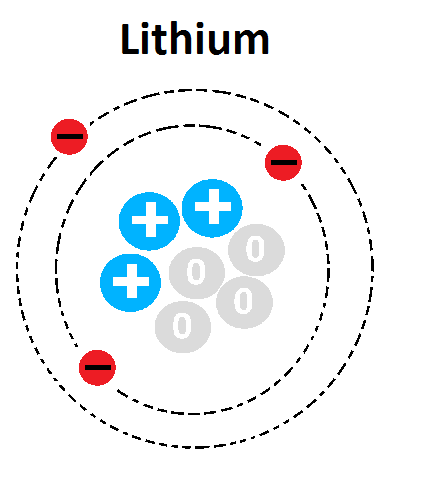
What is the mass number of this atom?
1
3
4
7
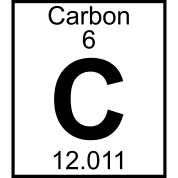

What does the 6 represent?
Atomic mass
atomic number
chemical symbol
element name
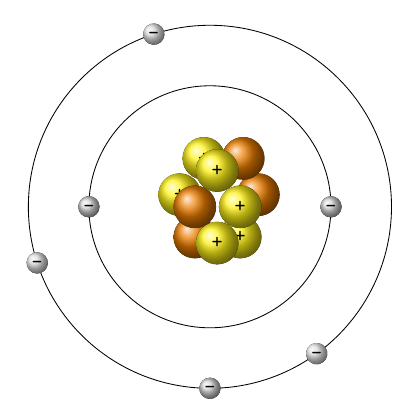
How many electrons does this atom have?
2
4
6
10


USE THE PERIODIC TABLE
How many valence electrons does sodium have?
1
2
3
4
USE THE PERIODIC TABLE
How many valence electrons does Phosphorus have?
31
5
15
4
Which elements have the most similar chemical properties?
boron and carbon
oxygen and sulfur
aluminum and bromine
argon and silicon
H2O
three hydrogen (H)
one sulfur (S)
four oxygen (O)
H2SO4


How many nitrogen atoms are there?
4
8
10
20

How many oxygen atoms are there?
3
6
8
16

How many atoms of carbon are there?
3
6
18
24

What are the reactants?
What are the products?
Mg(NO3)2
Mg(NO3)2
Mg(NO3)2

What law is best described
A person not paying attention while skateboarding hits a rock. The skateboard stops...they don't.
The Law of Inertia (1st law)
The Law of Acceleration (2nd law)
The Law of Conservation of Momentum
Action Reaction Law (3rd law)

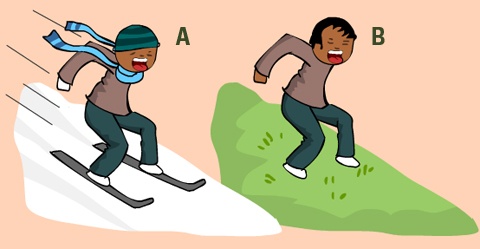
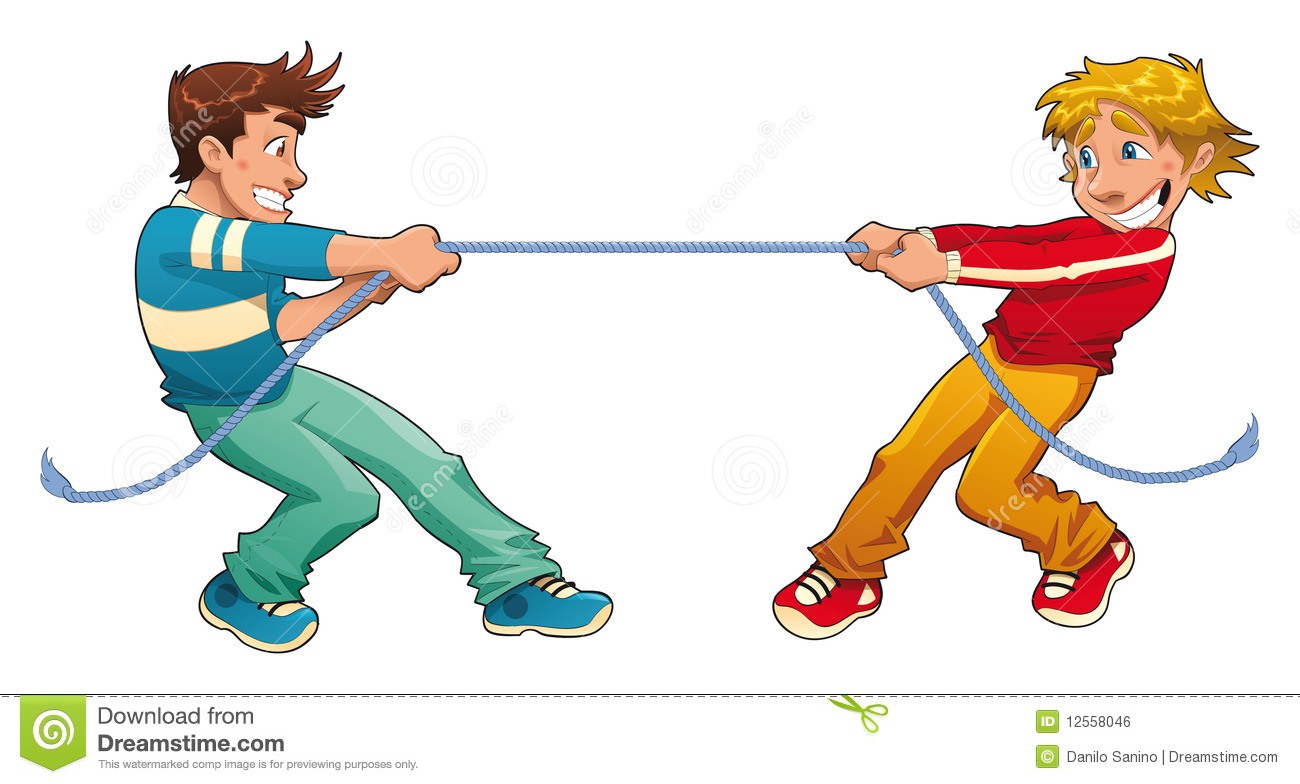

When a student runs and kicks a ball, they have applied an ___________ force to move the ball.
Balanced
Magnetic
Spring
Unbalanced
When the teacher rearranges the desks in the classroom, she must apply ____________ to push and pull the desks around.
acceleration
force
weight
magnets
A 20 kg bike accelerates at 10 m/s2. what was the force
F = m x a
25 Newtons
20 Newtons
200 Newtons
10 Newtons
8 N to the left , and 4 N to the right. Find the net force. Is this balanced
12 N Right No
4 N Left No
12 N Right Yes
4 N Left Yes

What is this graph representing?
Constant Speed
Acceleration (speeding up)
Deceleration (slowing down)
No motion
Which is NOT a physical change?
Cutting a pizza into equal slices.
Ice cubes melting back into liquid. water
Baking cupcakes.
A chocolate bar melting.
Which is an example of the law of inertia?
A rocket taking off from Earth
A crash test dummy flies through the windshield in a collision
A small rock skips on a pond faster than a large rock
Which is an example of the law of acceleration?
A rocket taking off from Earth
A crash test dummy flies through the windshield in a collision
A small rock skips a pond faster than a large rock
What is the formula for the law of acceleration?
M = F x A
F = M x A
A = F x M
Your car has a mass of 2500 kg and a force of 5000 N. How fast will it accelerate?
1 m/s2
2 m/s2
3 m/s2
4 m/s2
What is the force of a baseball that has a mass of 142 kg and has an acceleration of 30 m/s2?
1 N
2 N
4260 N
3 N
Which is an example of the law of action/reaction?
A rocket taking off from Earth
A crash test dummy flies through the windshield in a collision
A small rock skips a pond faster than a large rock


Earth's plates meet at ____________.
plate tectonics
plate boundaries
continental drift
oceans
Breaks in the crust called __________ form where plates meet.
mountains
rift valleys
faults
trenches
Plates slide past each other at _________________ boundaries.
divergent
convergent
transform
universal
A __________ forms where plates diverge on land.
rift valley
mid-ocean ridge
mountain
trench
Plates slide apart along _____________ boundaries.
convergent
divergent
transform
universal
Which theory describes the motion of the force driving Earth's Plates?
continental drift
plate tectonics
first law of motion
third law of motion
What is the motion of Earth's plates like?
fast and in stages
slow and in stages
fast and constant
slow and constant
Which feature forms at convergent boundaries?
trench
rift valley
mountain range
mid-ocean ridge
The San Andreas fault is an example of which type of boundary?
transform
divergent
convergent
universal
The San Andreas fault is an example of which type of boundary?
transform
divergent
convergent
universal
A map that shows elevation on a flat piece of paper.
general map
topographic map
navigation map

What type of slope is from A to B?
steep
gentle

What is the elevation at line C?
800
780
760

What is the contour interval on this map?
50
10
100

What landform is represented at letter B?
river
hill
valley

Which letter represents the highest point on the map?
F
B
D

Which letter represents a steep slope?
Q
E
F
C

Look at the contour image of the mountain range and pick the correct side view (profile)


A contour interval is the
difference in distance between one contact line and the next
difference in color between one contour line and the next
difference in elevation between one contour line and the next
If the contour lines on a map are closer together the hill would have a
steep
gradual

This is the big island of Hawaii. If the sea levels rise by a couple of inches, which of the following would not be a change that would occur?
The island would grow
The beaches would erode away
The coastal cities will be underwater

What is the probable reason that the coastline has changed so drastically
sharks
wave erosion
people moving onto the coast

