wayground logo

Free Printable Worksheets

Font size

S
M
L
XL
Worksheets

Electricity and magnetism

Total questions: 85

Worksheet time: 59mins

Name
Class
Date
1.

Found in the nucleus of an atom. This particle has a positive charge.

a)

Neutron

b)

Proton

c)

Electron

d)

Decepticon

2.

Found orbiting outside the nucleus, this subatomic particle has a negative charge.

a)

Neutron

b)

Proton

c)

Electron

d)

Idontknowatron

3.

Found in the nucleus of an atom, this subatomic particle has a neutral (or no ) charge

a)

Neutron

b)

Proton

c)

Electron

d)

Whattheheckatron

4.
In order for an atom to be neutral what has to be true?
a)
The atom has more protons than neutrons
b)
The atom has more neutrons than protons
c)
The atom has the same number of protons and neutrons
d)
The atom has the same number of protons and electrons
5.
If an atom has 12 positively charged subatomic particles, which of the following must it also have to be considered a neutral atom?
a)
12 neutrons
b)
12 electrons
c)
12 protons
d)
24 protons and neutrons
6.

If an atom has more protons than electrons it will have a

a)

neutral charge

b)

positive charge

c)

negative charge

7.

If an atom has more electrons than protons it will have

a)

a neutral charge

b)

a positive charge

c)

a negative charge

8.

Opposite charges

a)

attract

b)

repel

9.

Like charges

a)

attract

b)

repel

10.

Charge

a)

can be positive or negative and is measured in Joules (J)

b)

can be positive or negative and is measured in Coulombs (C)

c)

can only be positive and is measured in Joules (J)

d)

can only be positive and is measured in Coulombs (c)

11.

The amount of charge flowing per second is the

a)

voltage

b)

electric current

c)

resistance

12.

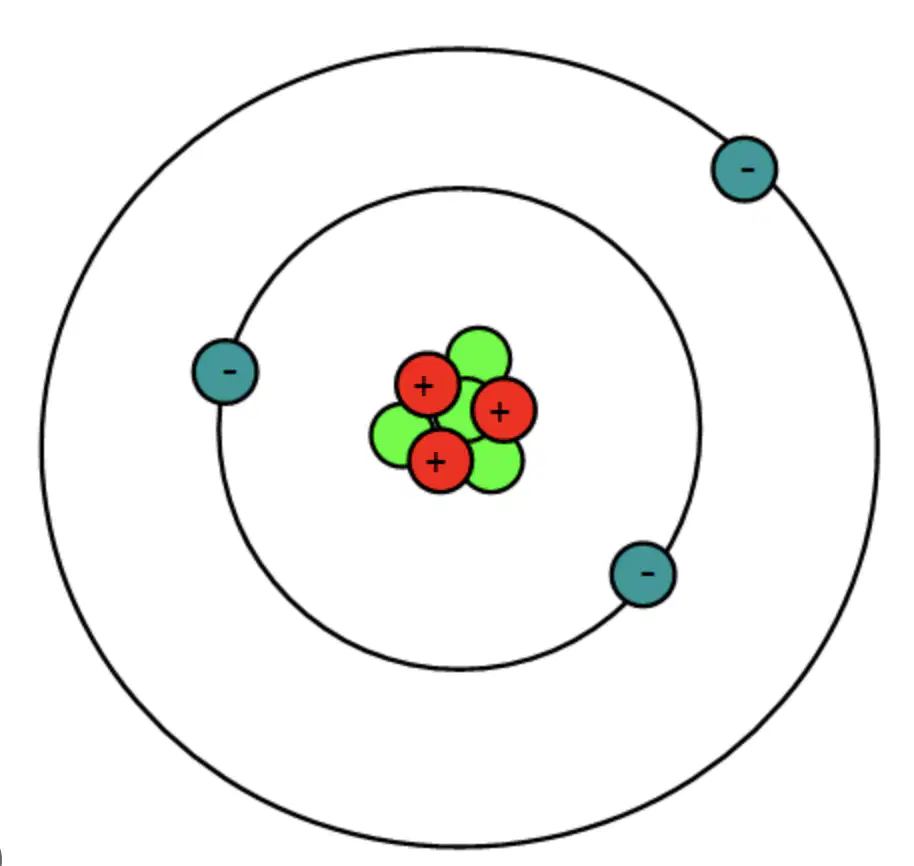
This is

a)

positive

b)

negative

c)

neutral

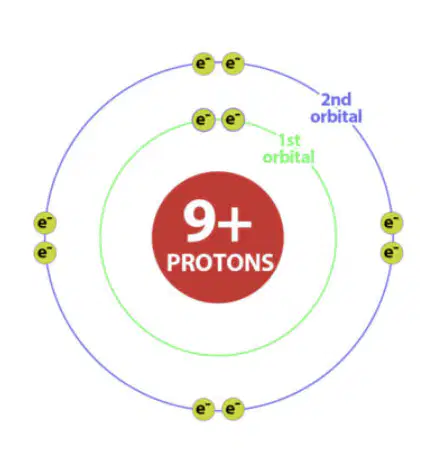
13.
a)

positive

b)

negative

c)

neutral

14.

An atom has 12 electrons, 13 neutrons and 12

protons. What is its charge?

a)

positive

b)

negative

c)

neutral

15.
What subatomic particle causes magnetism in an atom? 
a)
protons
b)
neutrons
c)
electrons
d)
nucleus
16.
What will happen when these magnets are brought close together?
a)
They will attract each other.
b)
They will repel each other.
c)
Both magnets will turn to the left
d)
Both magnets will turn to the right
17.

Electrostatic force is a

a)

contact force

b)

non contact force

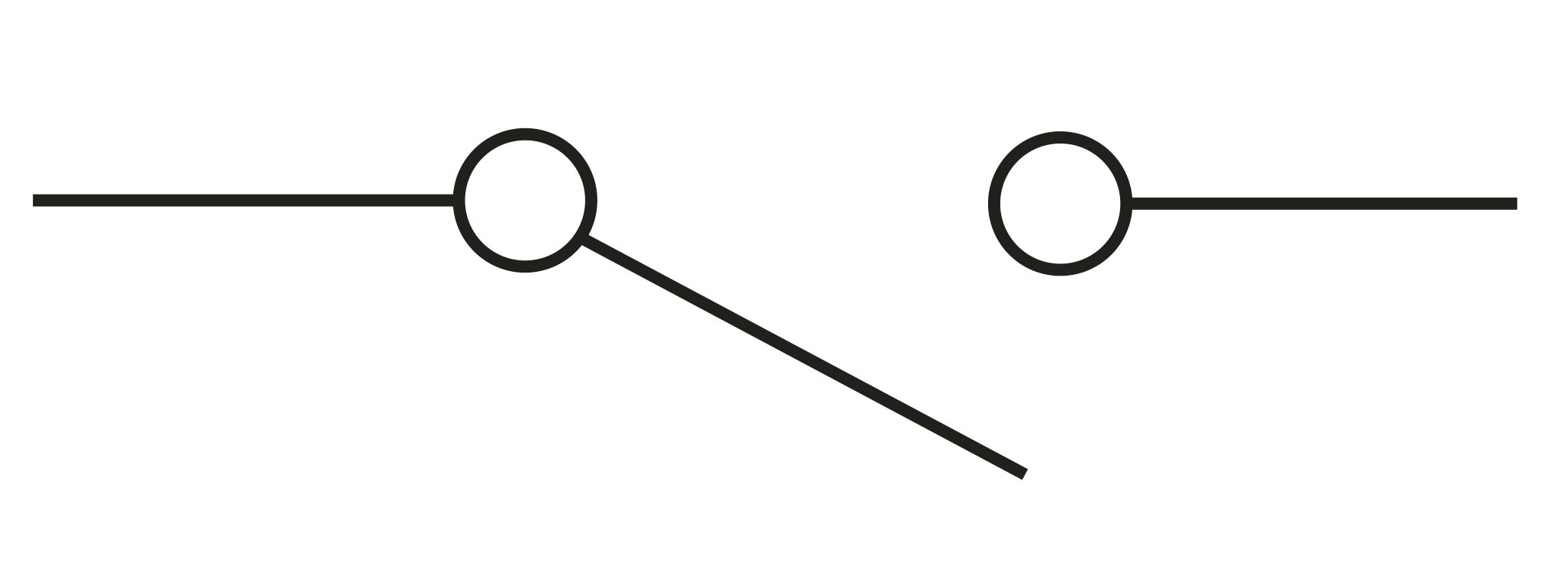
18.
this is the symbol for a _____?
a)
switch
b)
light 
c)
battery
d)
wires
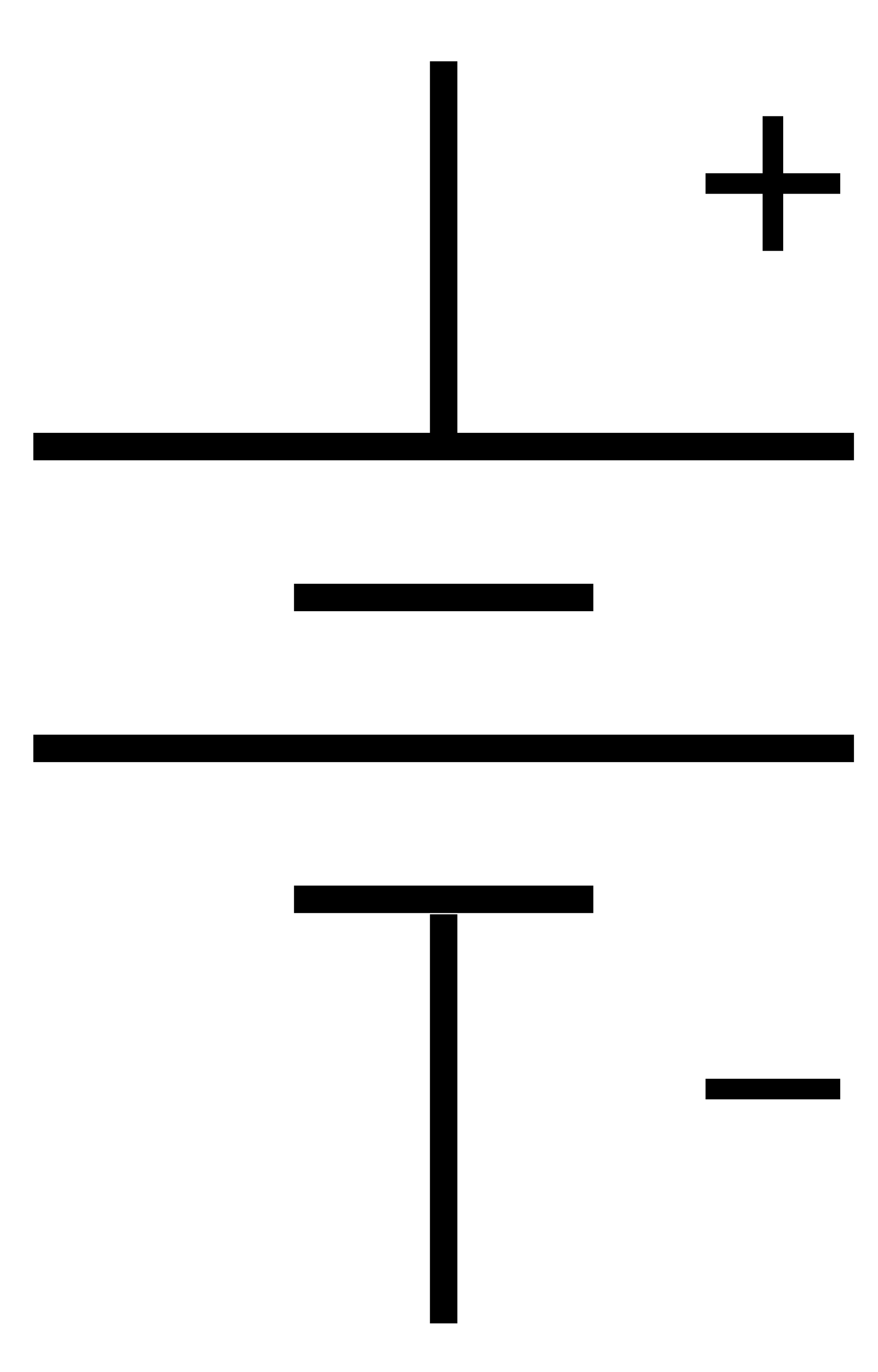
19.
what is this symbol for?
a)
light bulb
b)
switch
c)
battery
d)
resistor
20.
A series circuit has ____ path(s) that the electric current can take. 
a)
One
b)
Two 
c)
Three 
d)
Four
21.
What 'flows' in a wire?
a)
Protons
b)
Neutrons
c)
Atoms
d)
Electrons
22.

Current is measured in

a)

Volts

b)

Watts

c)

Seconds

d)

Amps

23.
Current is...
a)
moving protons
b)
moving electrons
c)
measured in volts
d)
measured in ohms
24.

Charged particles that flow continuously through material is called

a)

Insulator

b)

Electric Current

c)

Flashlight

d)

closed circuit

25.

What is the symbol for current

a)

𝝮

b)

A

c)

V

d)

W

26.
Which best describes a series circuit? 
a)
It has two light bulbs. 
b)
The same current flows through both light bulbs. 
c)
It uses a single battery.
d)
The current is divided between the light bulbs. 
27.
In an electrical circuit, electrons move from the __________.
a)
Negative pole to negative pole
b)
Negative pole to positive pole
c)
Positive pole to positive pole
28.
Will the light bulb in this circuit light and why/why not?
a)
yes, because it has two batteries
b)
no, because the switch is open
c)
yes, because it is in a circuit
d)
no, because the bulb is burned out
29.

---------- is a group of cells.

a)

Battery

b)

Ammeter

c)

wires

d)

circuit

30.

__________ is a conductor of electicity.

a)

Copper

b)

Plastic

c)

Wood

d)

Cloth

31.

__________ measures electric current flowing through a circuit.

a)

Voltmeter

b)

Ammeter

c)

Resistor

d)

Battery

32.
In a Series circuit the more lightbulbs you add the brighter they get 
a)
False 
b)
True 
33.

The type of batteries and bulbs are identical in the circuits shown. Which circuit above would have the brightest bulbs?

a)

Circuit A

b)

Circuit B

c)

Circuit A and B bulbs would all have the same brightness.

34.

In Series Circuit, which of the following quantity remains same through out the circuit

a)

current

b)

voltage

c)

resistance

35.
If I add more light bulbs to a series circuit what happens?
a)
The current speeds up and the lights get brighter
b)
The current slows down and the lights dim lower
c)
The current speeds up and the lights dim lower
d)
The current slows down and the lights get brighter
36.

This is the symbol for a_____.

a)

Motor

b)

Wire

c)

Bell

d)

Bulb

37.

This is the symbol for a...

a)

Bulb

b)

Voltmeter

c)

Ammeter

d)

Motor

38.

This is the symbol for a...

a)

Fuse

b)

Cell

c)

Fixed Resistor

d)

Variable Resistor

39.

This is the symbol for a...

a)

Battery

b)

Thermistor

c)

Motor

d)

Fuse

40.
a)

resistor

b)

Ammeter

c)

Voltmeter

d)

Switch

41.

Which schematic circuit matches this circuit picture?

a)
b)
c)
42.

7. Choose the correct symbol of a wire.

a)
b)
c)
d)
43.
This is an example of a _______ circuit
a)
open
b)
series
c)
parallel
d)
square
44.
This is an example of a ______ circuit
a)
Series
b)
Parallel
c)
Open
d)
Dihexihedral
45.
what is this symbol for?
a)
light bulb
b)
switch
c)
battery
d)
resistor
46.
a)
all bulbs are lit equally
b)
the two top bulbs are brighter
c)
the single lower bulb is brighter
d)
the single bulb does not light and the other two are dim
47.
In a parallel circuit, if one connection is broken, all of the connections stop working.
a)
True
b)
False
48.

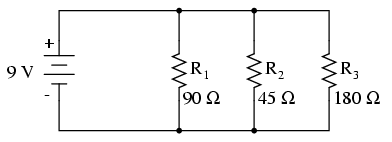
Predict with circuit will have the brightest lamp (or lamps).

a)

Circuit 1

b)

Circuit 2

c)

Circuit 3

d)

Circuit 4

49.

What is a Conductor?

a)

A Parallel circuit

b)

A material that allows heat and electricity to flow through it

c)

The pathway through which electric current (electron) flows.

d)

A series current

50.
What 'flows' in a wire?
a)
Protons
b)
Neutrons
c)
Atoms
d)
Electrons
51.
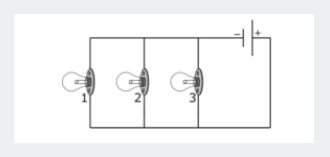
If bulb 1 burns out, what will occur?
a)
bulbs 2 and 3 will go out
b)
bulbs 2 and 3 receive more volts
c)
bulbs 2 and 3 will stay lit
d)
nothing will happen
52.
The force that pushes the electricity through a circuit is called...
a)
resistance
b)
voltage
c)
current
d)
switch
53.
In a parallel circuit which of the following is the same value throughout the circuit?
a)
Voltage
b)
Current
c)
Resistance
d)
Charge
54.
What is a benefit of using a parallel circuit?  
a)
It gets confusing.
b)
There are no problems.
c)
If one light goes out, it does not affect the others. 
d)
If one light goes out, they all go out. 
55.

A measure of the energy that a power source can supply

a)

current

b)

potential difference

c)

charge

d)

resistance

56.

A device for measuring potential difference

a)

ammeter

b)

voltmeter

c)

resistor

d)

motor

57.

If current is calculated as charge divided by time. What is the current when 180 Coulombs pass every 120 seconds?

a)

1.5 A

b)

0.33A

c)

1A

d)

3A

58.

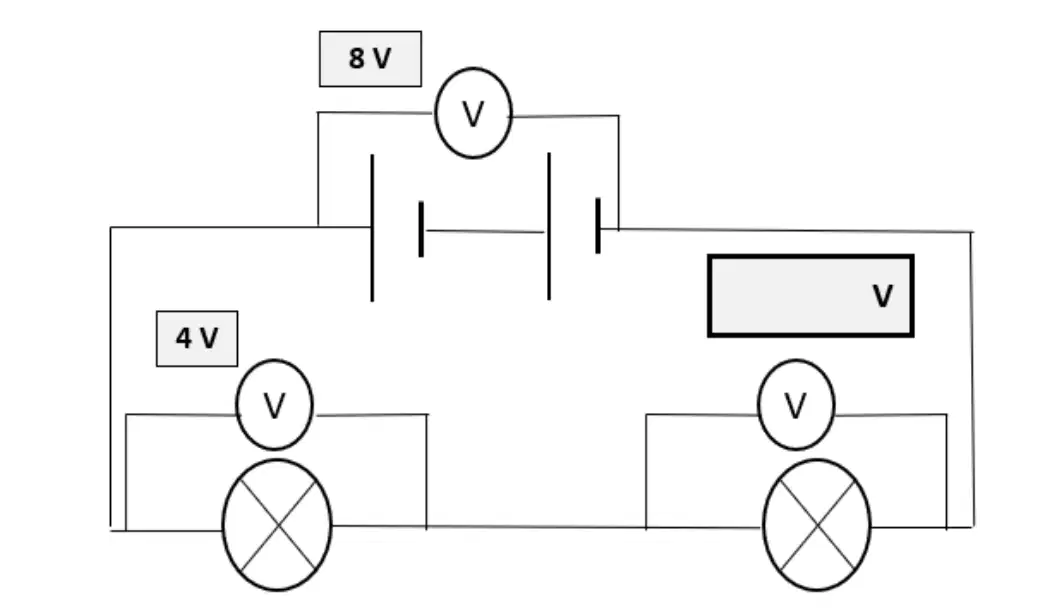
What is the missing reading on the voltmeter?

a)

8V

b)

4V

c)

12V

d)

6V

59.
As the resistance of a circuit increases, the current will
a)
increase
b)
decrease
c)
stay the same
60.
If the current through a circuit is 2 A and the resistance of a light bulb in the circuit is 10 Ohms, what is the voltage difference across the light bulb?
a)
5 V
b)
12 V
c)
0.2 V
d)
20 V
61.
What would the circuit resistance be if a 7.5 Amp draw was present with the engine running and the charging system producing 15 Volts
a)
15 Ohms
b)
4 Ohms
c)
0.3333 Ohms
d)
2 Ohms
62.

Which equation can be used to calculate the resistance R of a resistor?

a)

V = I / R

b)

I = V x R

c)

R = V x I

d)

V = I x R

63.

Which symbols are used for the units of current and of resistance?

a)

A

b)

B

c)

C

d)

D

64.

A bulb draws 0.5 amperes from a 120-volt supply. What is the resistance of the bulb?

a)

200 Ω

b)

240 Ω

c)

250 Ω

d)

300 Ω

65.

What is the unit of measurement for resistance?

a)

Voltage

b)

Ampere

c)

Watts

d)

Ohms

66.
How does resistance affect current?
a)
less resistance - less current
b)
more resistance - less current
c)
more resistance - more current
d)
resistance does not affect current
67.

If the current through a resistor is 2A and the voltage across it is 12V, what is the resistance

a)

12Ω

b)

c)

24Ω

d)

0.167Ω

68.
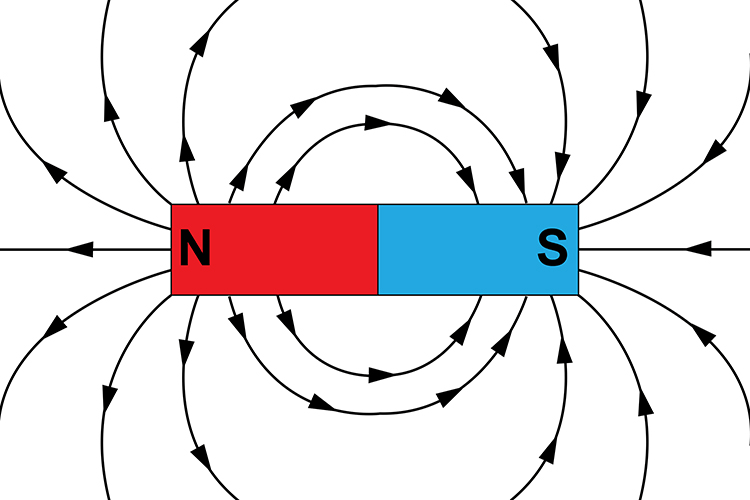
Where is the strongest attraction force of the magnet?
a)
at the poles
b)
in the middle
c)
above the magnet
d)
below the magnet
69.
As the distance between two magnets increases (they get farther apart), the force between them:
a)
Increases
b)
Decreases
c)
Stays the Same
70.
True or False: All metals stick to magnets.
a)
True
b)
False
71.
Iron, Nickel and cobalt are all __________________ materials
a)
Shiny
b)
poles
c)
magnetic
d)
cold
72.
Which metals are attracted to magnets? 
a)
iron, nickel, cobalt
b)
gold, silver, platinum
c)
copper, magnesium, aluminum
73.

The area around a magnet in which magnetic forces can act is ?

a)

motor

b)

magnetic field

c)

magnet

d)

magnetic poles

74.

A ________ is a device that has a magnet on a needle that spins freely. It is used for navigation because its needle usually points north.

a)

calculator

b)

ruler

c)

compass

d)

map

75.

Where is the magnetic field the strongest around a bar magnet?

a)

far away from the magnet

b)

at the side of the magnet

c)

at the poles

d)

above the magnet

76.
What kind of magnet can be turned on and off?
a)
refrigerator magnet
b)
electromagnet
c)
magnetite
d)
iron
77.
If you wrap more coils around an electromagnet, it will become 
a)
brighter
b)
stronger
c)
weaker
d)
invisible
78.
The picture is an example of an:
a)
Electric circuit
b)
Electromagnet
c)
Electric nail
d)
Electric power cell
79.

To make this electromagnet stronger you could:

a)

use less wire

b)

have fewer wire coils around the nail

c)

have more wire coils around the nail

d)

use a plastic core

80.
Electric current flowing through a wire produces
a)
static electricity
b)
an open circuit
c)
a permanent magnet
d)
a magnetic field
81.

When running a current through a wire, what do the blue lines represent?

a)

The wire spinning

b)

A magnetic field that was created

c)

Electrons leaving

d)

Electricity

82.

What happens when an electric current flows through a wire?

a)

The wire begins to spin.

b)

Nothing happens.

c)

A field of gravity is created around the wire.

d)

A magnetic field is created around the wire.

83.

A _______________ is a current-carrying coil of wire with many loops.

a)

magnet

b)

electromagnet

c)

solenoid

d)

compass

84.

What three minerals are attracted to a magnet?

a)

Gold, copper, cobalt

b)

Cobalt, aluminum, silver

c)

Iron, copper, aluminum

d)

Iron, nickel, cobalt

85.

Which of these forces can be used in a motor?

a)

magnetism

b)

wind

c)

friction

d)

gravity