
NEW
Font size
 Worksheets
Unit 6: Nucleic Acids & Protein Synthesis
Total questions: 77
Worksheet time: 39mins
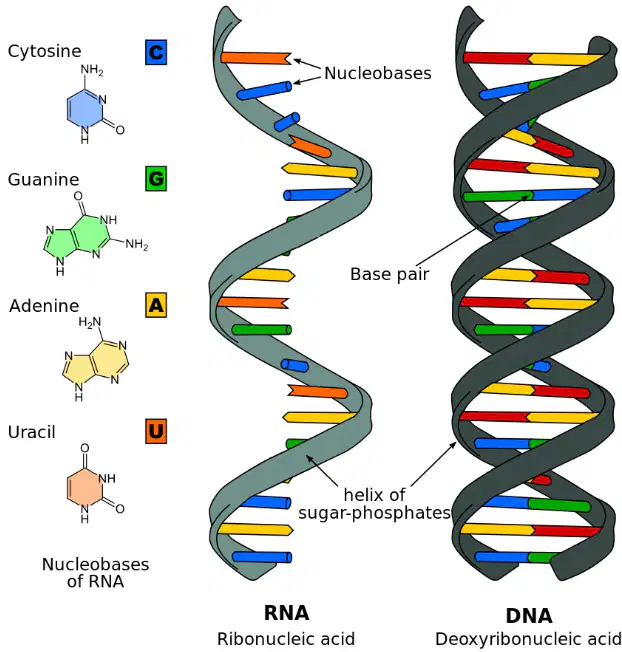
Which statement best defines the primary role of DNA in cells?
Catalyzes most metabolic reactions in cytoplasm
Stores heritable instructions for cellular functions
Generates ATP during oxidative phosphorylation directly
Forms structural components of ribosomes predominantly
During cell division, why must genetic information be copied accurately?
To maintain identical instructions with no loss
To allow proteins to fold more efficiently
To increase variability in daughter cells
To shorten S phase for faster replication
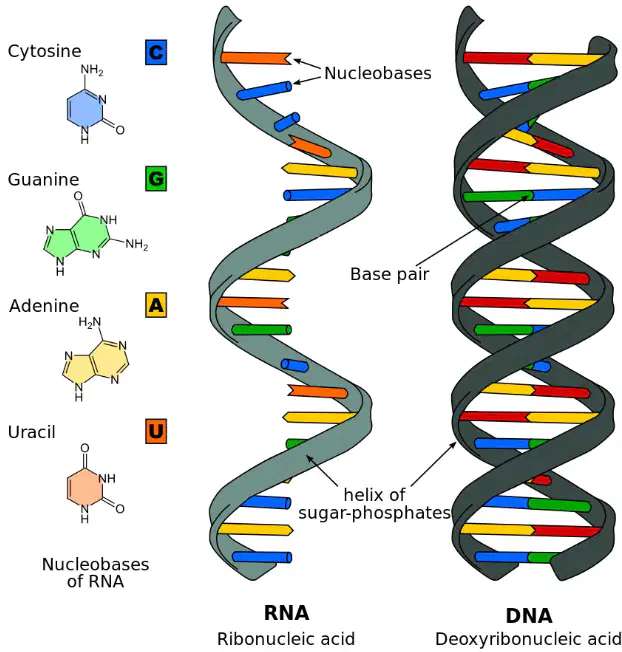
Which base is found in RNA but not in DNA?
Uracil replaces thymine in RNA
Thymine replaces adenine in RNA
Cytosine replaces guanine in RNA
Adenine replaces cytosine in RNA
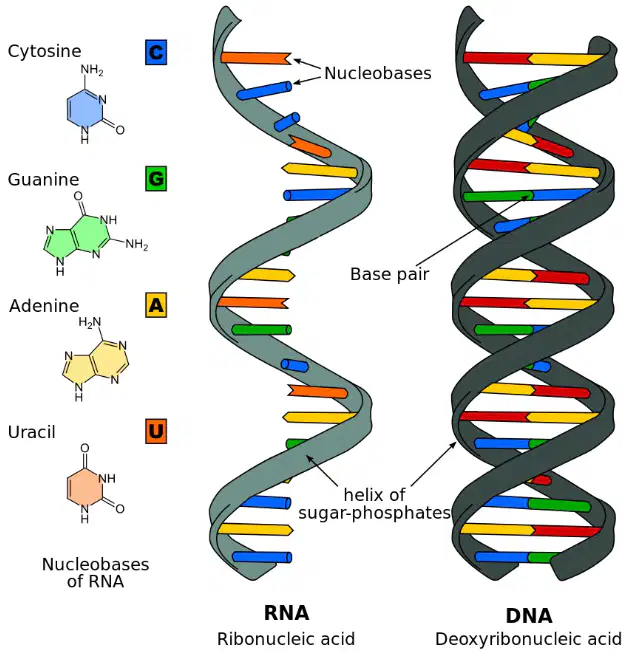
Identify the pairing pattern shown for nucleobases in the helices.
Adenine pairs with thymine or uracil; guanine with cytosine
Adenine pairs with cytosine; guanine with thymine
Adenine pairs with guanine; cytosine with thymine
Adenine pairs with uracil; cytosine with thymine
Early scientists thought proteins were genetic material. Which reasoning aligns with that view?
Proteins contained sugar-phosphate backbones
Proteins were considered sufficiently complex
Proteins replicated more quickly than DNA
Proteins had four consistent nucleobases
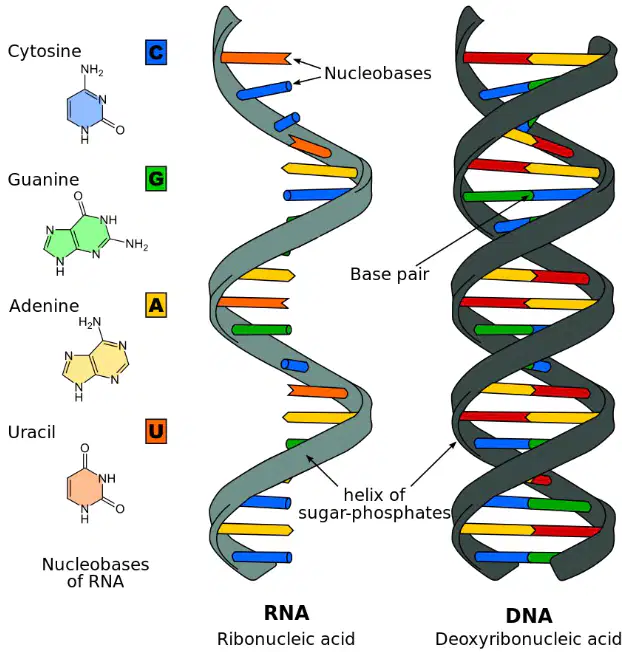
Compare DNA and RNA structures depicted. Which description fits both?
Polymers with sugar–phosphate helices
Double-stranded molecules always
Contain thymine as a shared base
Localized only in the nucleus always
Which component is NOT one of the three main parts of a nucleotide?
Nitrogenous base
Pentose sugar
Phosphate group
Sulfur side chain
Which bases are purines in nucleic acids?
Uracil and cytosine
Cytosine and thymine
Thymine and uracil
Adenine and guanine
Which bases are pyrimidines across DNA and RNA?
Guanine and adenine
Adenine and guanine
Thymine and cytosine
Cytosine and uracil
Which base is found in RNA but not in DNA?
Thymine
Uracil
Guanine
Adenine
Which base is found in DNA but not in RNA?
Thymine
Cytosine
Uracil
Adenine
What distinguishes purines from pyrimidines structurally?
Two ring structures
No ring structures
Single ring structures
Three ring structures
Which sugar is present in RNA nucleotides?
Glucose
Fructose
Deoxyribose
Ribose
Which sugar is present in DNA nucleotides?
Deoxyribose
Sucrose
Galactose
Ribose
What property does the phosphate group impart to nucleic acids?
Hydrophobic character
Neutral character
Basic character
Acidic character
ATP is best described as which of the following?
A dipeptide
A nucleotide
A disaccharide
A fatty acid
What is formed when adenine combines with a pentose sugar?
Adenosine diphosphate
Adenylate cyclase
Adenosine
Adenine triphosphate
Two nucleotides joined by a phosphodiester bond create which structure?
Dinucleotide
Disaccharide
Dipeptide
Diglyceride
In a phosphodiester linkage, how many ester bonds are contributed by the phosphate group?
Three ester bonds
Two ester bonds
One ester bond
No ester bonds
Which statement best describes the backbone of DNA and RNA?
Alternating peptide-sugar
Alternating base-base
Alternating sugar-phosphate
Alternating lipid-protein
Which set accurately lists the bases present in DNA?
Adenine, thymine, guanine, cytosine
Adenine, thymine, cytosine, uracil
Adenine, uracil, guanine, cytosine
Thymine, uracil, guanine, cytosine
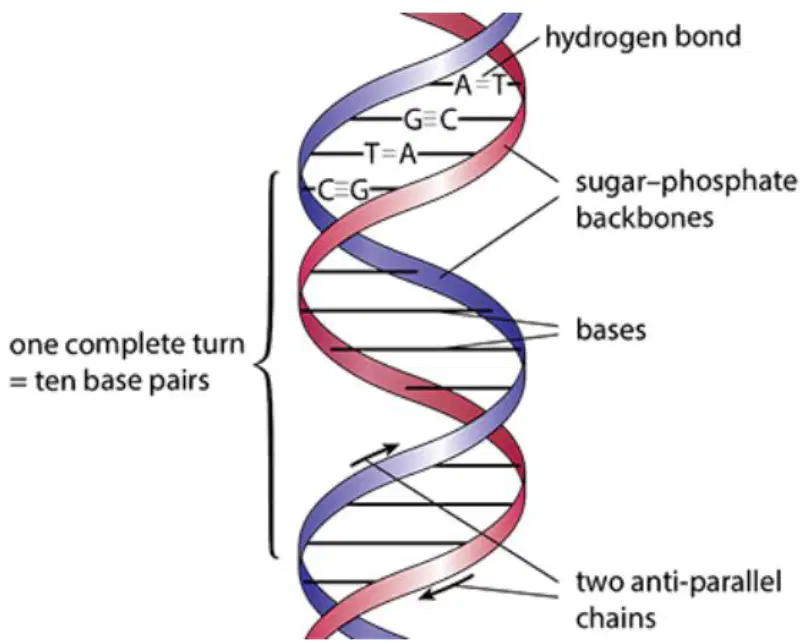
In the DNA diagram, the two sugar–phosphate backbones twist to form a right-handed double helix. Which feature best explains how the paired bases align across the helix?
Hydrophobic backbones force bases to face outward
Parallel strand orientation promotes identical 5'→3' direction
Ionic bonds between sugars fix bases at equal angles
Antiparallel strands orient bases for complementary pairing
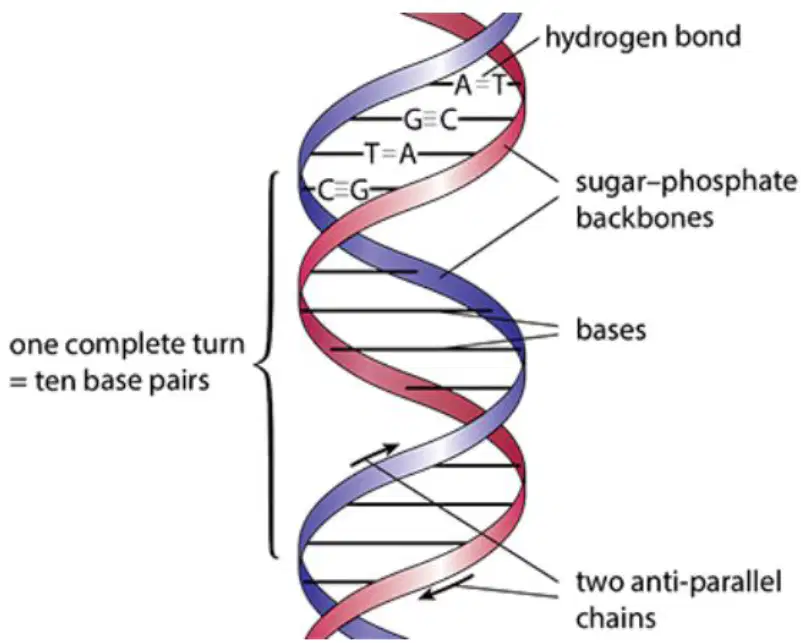
One complete turn of the DNA double helix corresponds to how many base pairs as indicated on the diagram?
Fourteen base pairs per helical turn
Eight base pairs per helical turn
Ten base pairs per helical turn
Twelve base pairs per helical turn
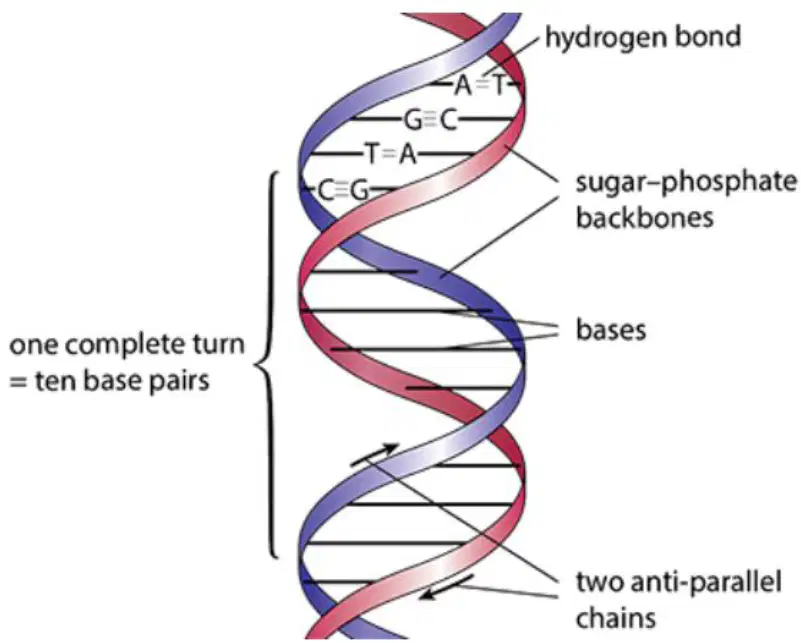
Which statement about hydrogen bonding between DNA bases is correct according to the figure?
A–T and G–C both form two hydrogen bonds
A–T forms two hydrogen bonds, G–C forms three
A–T forms one hydrogen bond, G–C forms one
A–T forms three hydrogen bonds, G–C forms two
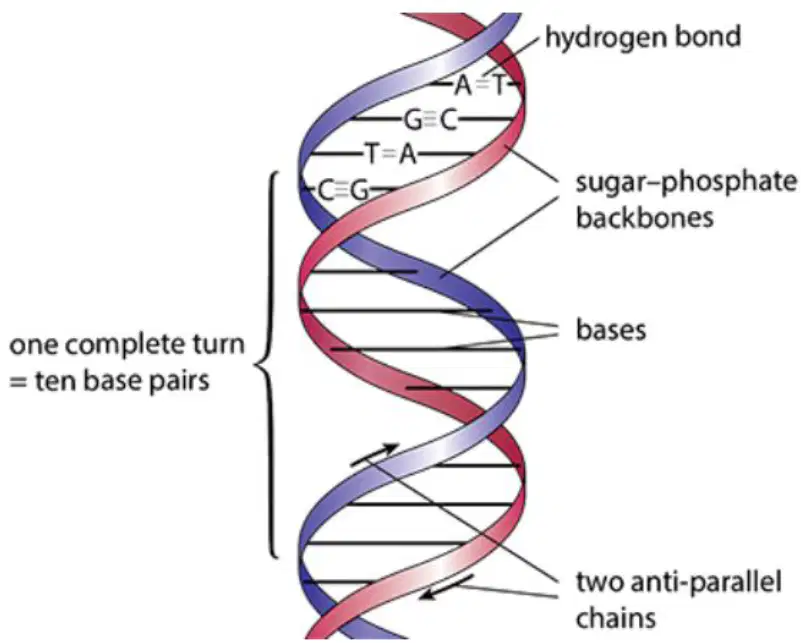
In the DNA structure shown, which pairing reflects purine–pyrimidine complementarity?
A pairs with U, G pairs with C
A pairs with T, G pairs with C
A pairs with G, C pairs with T
A pairs with C, G pairs with T
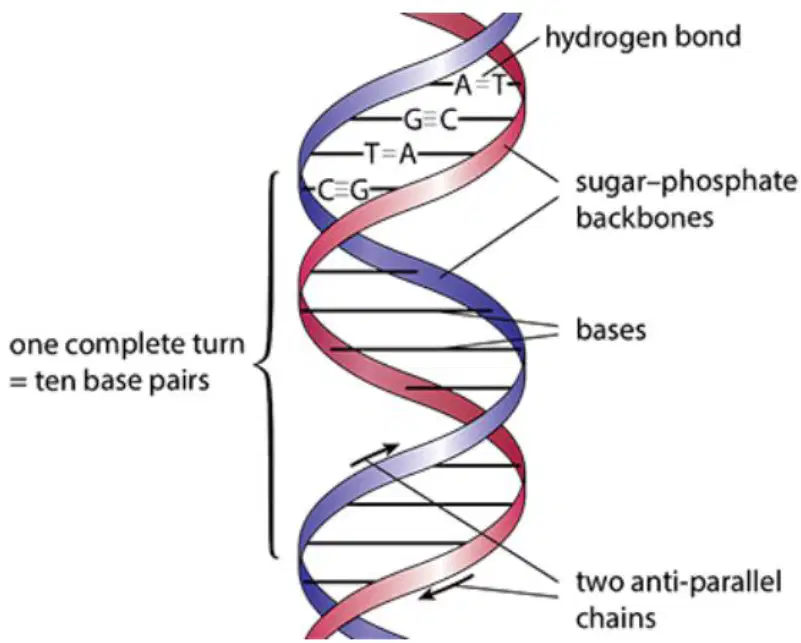
The DNA diagram labels the strands as running in opposite directions. What term describes this orientation?
Orthogonal strand orientation
Antiparallel strand orientation
Coaxial strand arrangement
Isopolar alignment of strands
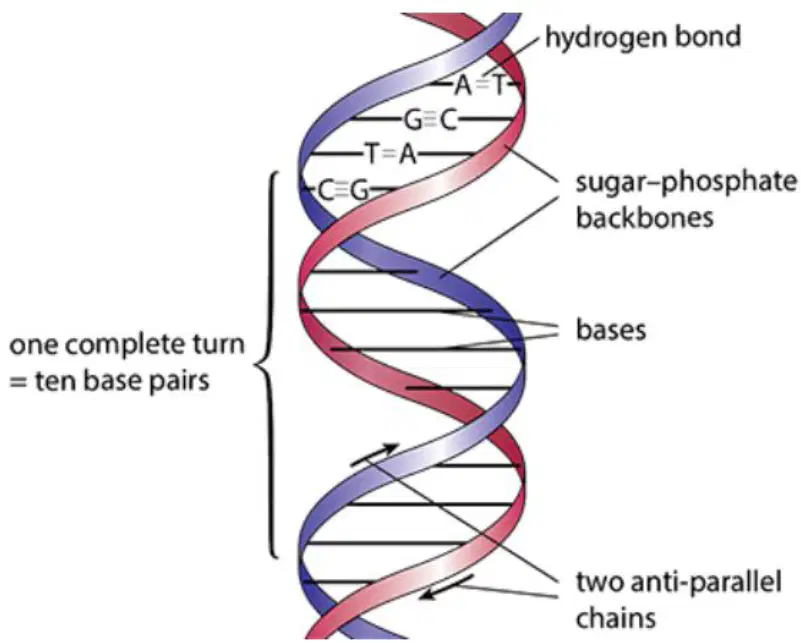
Which feature of the DNA diagram explains why bases project inward at right angles from the backbone?
The bases attach directly to phosphate groups
The hydrophobic bases avoid the aqueous environment
The backbones are composed of alternating bases
The bases are covalently linked across the helix
Which RNA type is depicted as a relatively unfolded linear chain in the RNA figure?
Messenger RNA (mRNA) remains mostly linear
Transfer RNA (tRNA) remains mostly linear
Ribosomal RNA (rRNA) remains mostly linear
All RNA types remain mostly linear
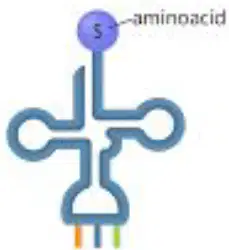
In the RNA diagram, which molecule is shown adopting a cloverleaf-like secondary structure capable of carrying an amino acid?
rRNA binds amino acids via active site
DNA binds amino acids via hydrogen bonds
tRNA binds amino acids via acceptor stem
mRNA binds amino acids via codons
Which statement best contrasts DNA and RNA structures?
DNA backbones are proteins; RNA backbones are lipids
DNA is double-stranded; RNA is single polynucleotide
DNA has uracil; RNA has thymine bases
DNA is single-stranded; RNA is double-stranded
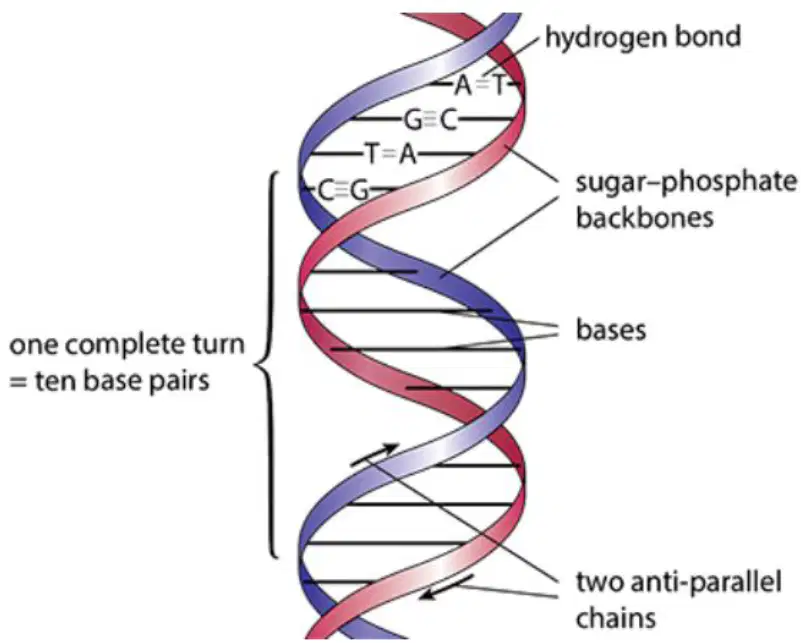
Using the DNA diagram, predict the complementary strand sequence directionally for the segment 5'-AGCT-3'.
3'-TCGA-5' demonstrating antiparallel
3'-AGCT-5' with antiparallel pairing
5'-TCGA-3' with parallel orientation
5'-TCAG-3' demonstrating antiparallel
During which phase of the cell cycle does DNA replication occur?
G1 phase of growth
M phase of mitosis
S phase of synthesis
G2 phase of repair
Which enzyme unwinds the DNA double helix by breaking hydrogen bonds?
DNA polymerase enzyme
DNA ligase enzyme
Helicase enzyme
Topoisomerase enzyme
What is the required direction of DNA polymerase activity when adding nucleotides?
Random orientation direction
3′ to 5′ direction
5′ to 3′ direction
Both directions equally
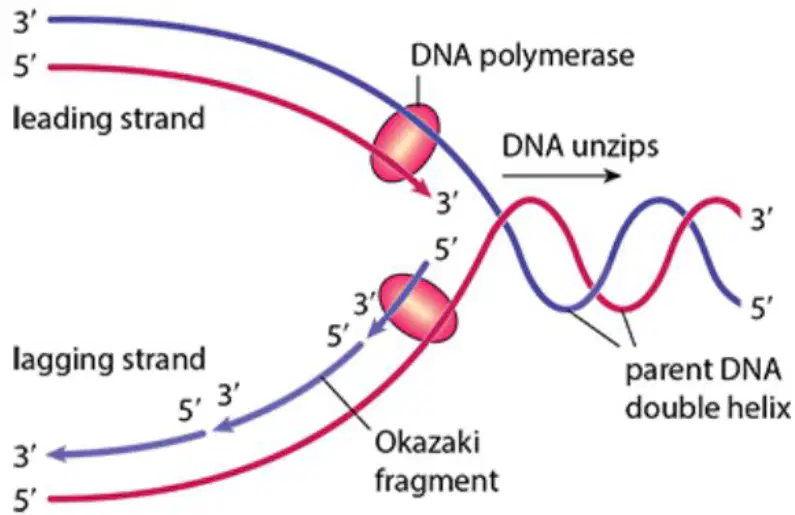
Which statement correctly describes the leading strand during replication?
Synthesized after ligase finishes
Synthesized randomly with pauses
Synthesized continuously toward
Synthesized discontinuously away
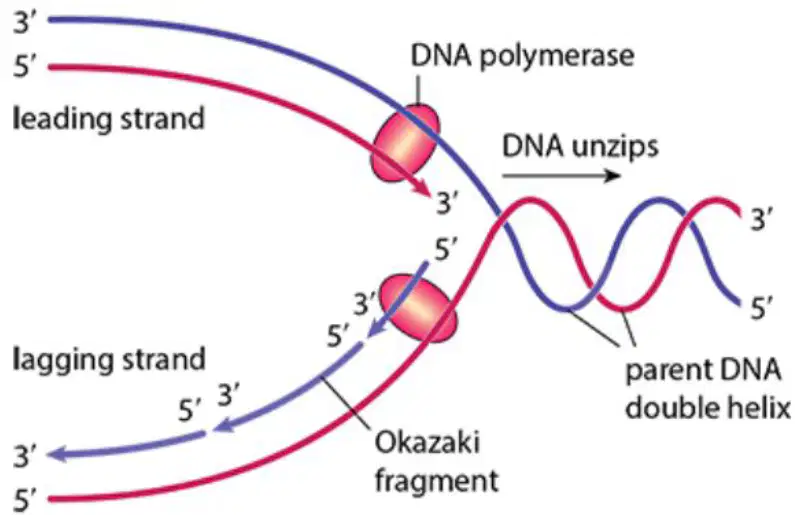
On the lagging strand, short DNA segments formed during replication are called what?
Centromere fragments
Okazaki fragments
Exon fragments
Promoter fragments
Which enzyme seals the sugar‑phosphate backbone by reforming phosphodiester bonds?
Helicase enzyme
DNA ligase enzyme
RNA polymerase enzyme
DNA primase enzyme
In semi‑conservative replication, how much of the original DNA is retained in each new molecule?
All of the original double
A quarter of the original
Half of the original strand
None of the original half
What does helicase specifically disrupt to unzip the DNA?
Covalent bonds in bases
Ionic bonds in backbone
Hydrogen bonds between bases
Peptide bonds in histones
Why must the lagging strand be synthesized in fragments?
Polymerase cannot join bases
Polymerase works 5′→3′
Polymerase moves with fork
Polymerase only binds RNA
Which description best matches DNA polymerase function during replication?
Moves fork to opposite end
Copies one nucleotide sequentially
Cuts bases to open helix
Reconnects backbone segments
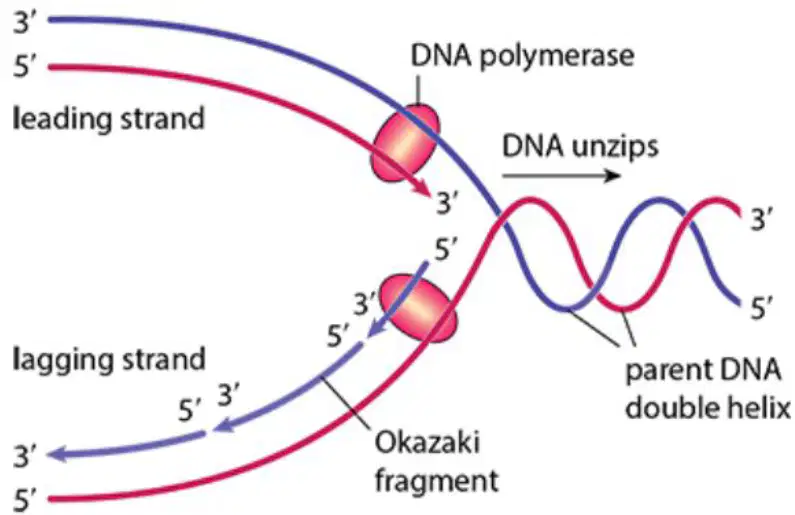
At a replication fork, the leading strand is oriented how relative to DNA polymerase synthesis direction?
Opposite 3′ to 5′ orientation
Same 5′ to 3′ orientation
Variable orientation each fork
Circular orientation around fork
Which immediate product must be joined by ligase to complete replication on the lagging strand?
RNA primers chains
Okazaki fragment ends
Centromere repeats
Telomere hairpins
A student proposes that replication is conservative. Which outcome would that predict?
Each new molecule half original
Each new molecule all original
Each new molecule mixed strands
Each new molecule no original
If DNA polymerase could synthesize 3′→5′, what immediate change at the fork would occur?
Helicase becomes unnecessary
Okazaki fragments increase
Leading strand forms slower
Lagging strand disappears
Which statement best defines a gene in molecular biology?
A whole chromosome directing cellular metabolism
An RNA molecule catalyzing all cell reactions
A protein sequence storing hereditary traits
A segment of DNA coding one polypeptide chain
How many different amino acids are incorporated into proteins in most organisms?
Thirty-two amino acids in the triplet table
Ten amino acids for basic enzymes
Sixty-four amino acids in total genes
Twenty amino acids in cellular proteins
Why does the genetic code require a triplet of bases for each amino acid?
Triplets prevent mutations during replication
Doublets cannot specify start or stop signals
Single bases cannot be read by ribosomes
Four bases need combinations to encode twenty
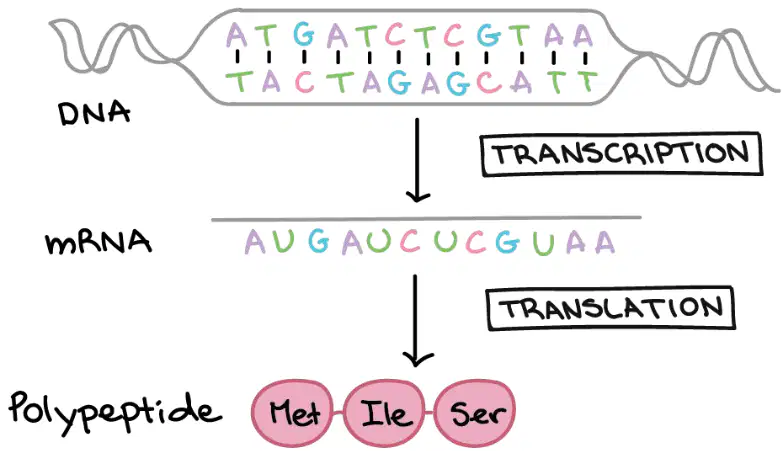
Which process converts DNA information into an mRNA sequence?
Transcription from DNA to mRNA
Translation of codons to proteins
Replication of DNA strands
Splicing of introns from RNA
What does AUG most commonly function as in protein synthesis?
Start codon initiating translation
Stop codon ending polypeptide
Universal code for any amino acid
Signal for DNA replication origin
Which phrase correctly describes the genetic code being universal?
Only bacteria share identical codons
Same codon maps to same amino acid
Codons vary between cell types widely
Each species uses unique codon sets
What does it mean that the genetic code is redundant?
One codon specifies multiple amino acids
Redundancy arises only in noncoding DNA
Each amino acid uses a single codon
Multiple codons specify one amino acid
Given 64 possible triplet codons and 20 amino acids, which inference is valid?
Most amino acids are unassigned codons
Every codon specifies a unique amino acid
Several amino acids have multiple codons
There are forty-four stop codons overall
A stop codon serves which role during translation?
Signals attachment of RNA polymerase
Marks termination of a gene’s coding region
Adds a terminal amino acid residue
Initiates assembly of ribosomal subunits
If a DNA triplet is TAC, which amino acid is specified after transcription and translation?
Serine specified by TAC codon
Glycine specified by TAC codon
Isoleucine specified by TAC codon
Methionine specified by TAC codon
Which enzyme synthesizes mRNA by reading the DNA template strand in eukaryotic nuclei?
Ribosomal protein complex in cytosol
RNA polymerase in the nucleus
DNA polymerase III in mitochondria
Topoisomerase at nuclear envelope
During transcription, which DNA base is replaced by uracil in RNA?
Guanine converts into uracil
Cytosine changes to uracil
Thymine is replaced by uracil
Adenine becomes uracil
What is the correct directional flow of genetic information for protein production?
Protein to RNA to DNA
RNA to DNA to protein
DNA to protein to RNA
DNA to RNA to protein
Which strand does RNA polymerase use to build a complementary mRNA sequence?
Coding strand of DNA
Template strand of DNA
Non-transcribed RNA strand
Lagging strand of mRNA
Where are proteins synthesized after mRNA exits the nucleus?
On lysosomal membranes
Within the nucleolus region
At ribosomes in cytoplasm
Inside nuclear pores
Which pairing correctly represents RNA base pairing with a DNA template?
G pairs with T in RNA
C pairs with T in RNA
A pairs with U in RNA
U pairs with G in RNA
What event terminates transcription, leading to mRNA release?
Exons are removed by splicing
Ribosome reaches an AUG codon
Stop message is encountered
Helicase completes unwinding
What is the primary role of mRNA in protein synthesis?
Catalyzes peptide bond formation
Conveys DNA code to ribosomes
Forms ribosomal subunits for translation
Carries amino acids to ribosomes
Which statement best distinguishes introns from exons in eukaryotic pre-mRNA?
Introns code for proteins directly
Exons are noncoding regions retained
Exons are removed during splicing
Introns are noncoding segments removed
After transcription, which modification protects the 5′ end of eukaryotic mRNA?
Telomerase extension
RNA editing by deamination
5′ guanine cap
Poly-A tail addition
What happens to mRNA after processing is complete?
It binds DNA at promoters
It exits through a nuclear pore
It degrades inside the nucleus
It is translated within nucleolus
Splicing ensures what outcome before translation?
Introns create more codons
Only exons remain joined
mRNA becomes double-stranded
Ribosomes attach to DNA
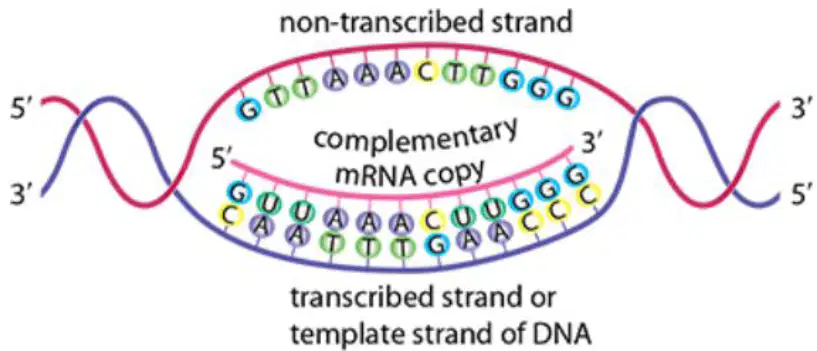
In the diagram showing mRNA synthesis, which DNA strand serves as the template for creating the complementary mRNA copy?
Transcribed strand oriented 3′ to 5′ direction
Either DNA strand depending on splicing pattern
Non-transcribed strand paired through intron removal
Non-transcribed strand with 5′ to 3′ direction
Which modification is described when sections called introns are removed from the primary RNA transcript?
Ribosomal assembly with rRNA
Polyadenylation at the 3′ end
RNA splicing of the transcript
RNA capping at the 5′ end
What remains in the mature mRNA after splicing?
Introns retained for regulation
rRNA segments inserted
Exons joined into sequence
Promoters added to ends
What is one functional consequence of alternative splicing?
Eliminates codon reading frames
Prevents mRNA export permanently
Regulates gene activity in different ways
Generates identical proteins always
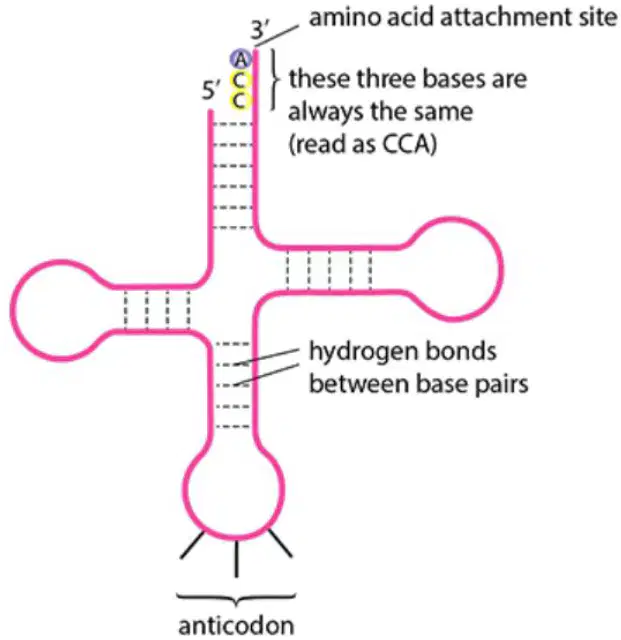
In the tRNA diagram, which three bases at the 3′ end form the universal amino acid attachment site?
AAA bases at the anticodon loop
CCA bases at the acceptor stem
GCU bases on the D-arm
UGG bases near hydrogen bonds
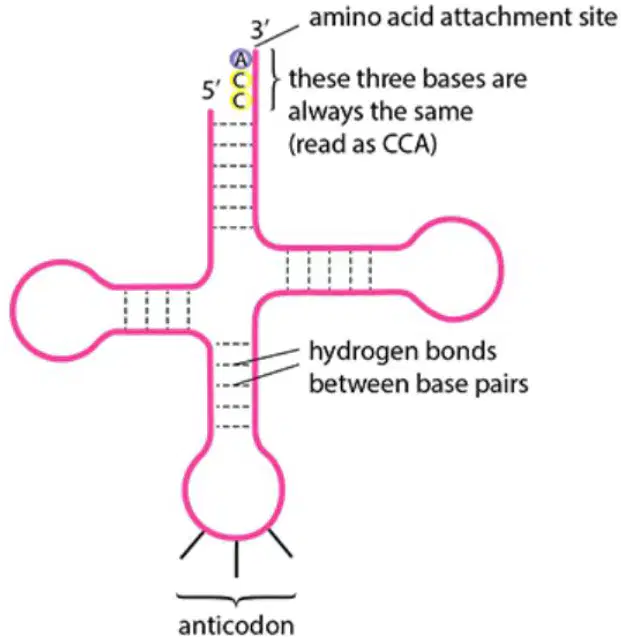
What role does tRNA play during translation as shown and described?
Transfers amino acids to polypeptide
Catalyzes DNA replication steps
Stores mRNA in the nucleus
Removes exons from pre-mRNA
Which statement correctly defines a codon in the context of translation?
Set of three bases on mRNA
Set of two bases on tRNA
Set of four bases on rRNA
Set of three bases on DNA promoters
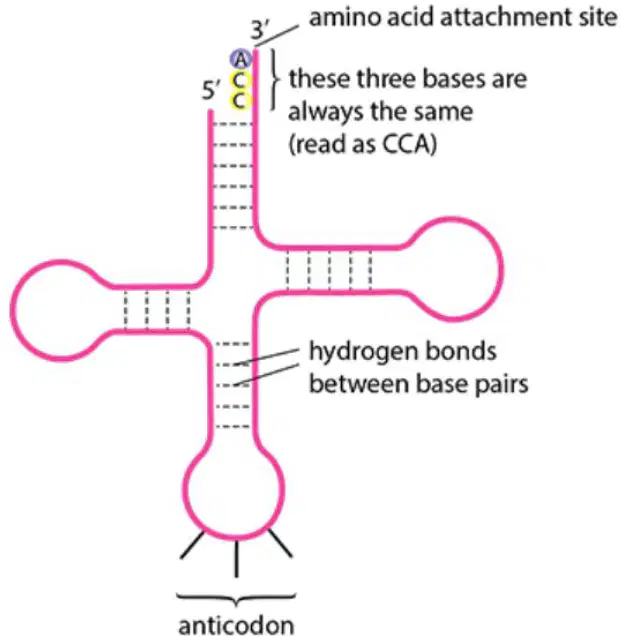
Where on the tRNA is the anticodon located, according to the diagram?
In the loop opposite the acceptor stem
Along the rRNA interaction helix
Within the hydrogen bond ladder on stem
At the 3′ amino acid attachment site
Which cellular structure brings mRNA, tRNA, and other molecules together for translation?
Nucleus composed of DNA and protein
Golgi apparatus sorting polypeptides
Ribosome made of rRNA and protein
Lysosome containing hydrolytic enzymes
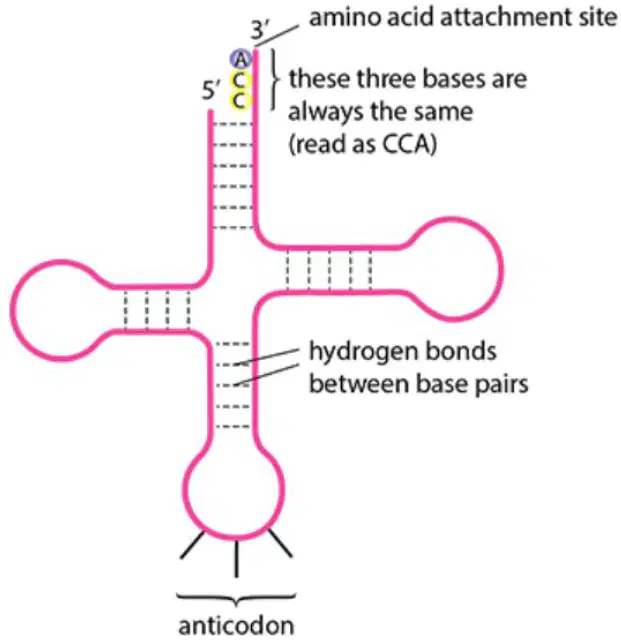
A tRNA has an anticodon complementary to an mRNA codon. Which outcome follows correct pairing?
Ribosomal RNA is transcribed
A specific amino acid is added
Exons are degraded in cytosol
Introns are excised from DNA

