
 Worksheets
Troy Biology Regents Midterm Review
Total questions: 86
Worksheet time: 4hrs 37mins
basic unit of structure and function in an organism
bacterial cell
eukaryote
prokaryote
cell wall
cell
only found in plant cells
bacterial cell
eukaryote
prokaryote
cell wall
cell
captures energy from the sunlight and uses it to produce food
endoplasmic reticulum
ribosome
golgi body
chloroplast
vacuole
rod-shaped cell structure that produce most of the energy needed to carry out the cell's function
nucleolus
cytoplasm
lysosome
mitochondria
the control center of a cell that directs the cell's activities
organelle
cell wall
cell membrane
nucleus
chromatin
the outside boundary of a cell, controls what substances come into and out of a cell
organelle
cell wall
cell membrane
nucleus
chromatin
a tiny cell structure that carries out a specific function within the cell
organelle
cell wall
cell membrane
nucleus
chromatin

What is a group of cells that are alike and work together?
a cell team
a tissue
a cell family

A group of tissues that work together is a(n) ______________________.
cell
organ
organ system

Organs that work together are part of a(n) ________________________.
cells
tissue
organ system
Organic molecules are those that contain
oxygen and carbon
hydrogen and oxygen
carbon and hydrogen
carbon and nitrogen
Which list contains only organic molecules
enzyme, starch, DNA and lipid
proteins, lipids, starch and water
simple sugars, proteins, oxygen and lipids
carbohydrates, carbon dioxide, Nucleic acids and proteins
Amino acids are the building blocks of
proteins
starch
DNA and RNA
lipids
Which of the following are inorganic molecules?
water
glucose
oxygen
carbon dioxide
What terms can be used to describe a biological catalyst?
enzyme
protein
glucose
DNA
Homeostasis is
the body's use of molecules for energy and growth
glucose
metabolism
energy
microbiome
a molecule that organisms can use to release energy, and that is made of carbon, hydrogen, and oxygen atoms (comes from starch)
amino acids
oxygen
protein
glucose
the chemical reaction between oxygen and glucose that releases energy into cells
metabolism
diabetes
cellular respiration
anemia
Plants do not usually need to eat other organisms because plants ___________________.
A. do not need food energy to live.
B. turn sunlight into food energy.
C. get all their food energy from soil.
D. keep food energy stored in their roots.
Carbon dioxide is removed from Earth's atmosphere by _____________________.
A. animal respiration
B. decaying organisms
C. plant photosynthesis
D. burning fossil fuels
Andre learned that plants survive through a process called photosynthesis. Which substance do plants produce during photosynthesis?
A. minerals
B. nitrogen
C. soil
D. sugar
Which molecule in plant cells first captures the radiant energy from sunlight?
A. glucose
B. carbon dioxide
C. chlorophyll
D. adenosine triphosphate
Which of the following gases do plants use in photosynthesis?
A. hydrogen
B. oxygen
C. carbon dioxide
D. carbon monoxide
In which part of a plant does photosynthesis take place?
A. bark
B. flowers
C. leaves
D. roots
From Earth's atmosphere, carbon dioxide is used by plants, algae, and cyanobacteria during the process of _____________.
A. photosynthesis
B. respiration
C. decomposition
D. nitrogen fixation
Which of the following materials are direct products of photosynthesis?
A. fats and starches
B. oxygen and sugar
C. proteins and amino acids
D. carbon dioxide and water
This macromolecule breaks down into sugars such as glucose.
Lipids/Fats
Nucleic Acids
Protein
Carbohydrates

Label Number 2
Substrate
Enzyme
Active Site

A caterpillar makes a chrysalis and becomes a butterfly. Which life function is this an example of?
reproduce
get and use energy
grow and develop
If organisms need to get and use energy as a life function, which cell organelle would be most involved with this process?
nucleus
mitochondria
cytoplasm
ribosomes
A heterotroph is an organism that
gets nutrients from other organisms
gets nutrients from the sun
gets nutrients from chemicals
An autotroph is an organism that
gets nutrients from other organisms
gets nutrients from the sun
gets nutrients from chemicals


Plants convert __________ into chemical energy during photosynthesis.
Glucose
Water
Oxygen
Sunlight
Animals use energy from the sun indirectly when they eat a plant or another animal.
True
False
Which is the correct equation for photosynthesis?
CO2 + H2O +Sunlight -> O2 + Glucose
CO2 + H2O -> O2 + Glucose
CO2 + O2 +Sunlight -> H2O + Glucose
Glucose + O2 -> CO2 + H2O + ATP
The products of photosynthesis are the reactants of cellular respiration.
True
False
Both plant and animal cells perform cellular respiration.
True
False
Which is the correct equation for cellular respiration?
CO2 + H2O +Sunlight -> O2 + Glucose
CO2 + H2O -> O2 + Glucose
CO2 + O2 +Sunlight -> H2O + Glucose
Glucose + O2 -> CO2 + H2O + ATP
The products of cellular respiration are the reactants of photosynthesis.
True
False
Chemical energy for the cell:
ATP
O2
CO2
Glucose
Food for the cell:
ATP
O2
CO2
Glucose
Which shows more biodiversity?
food chain
food web
In a food chain, 100% of energy is passed from one link to the next.
True
False

A photograph or picture of chromosomes grouped in ordered pairs is called a.....
Pedigree
Chromosome chart
Mitotic index
Karyotype
XX
Female
Male
XY
Female
Male

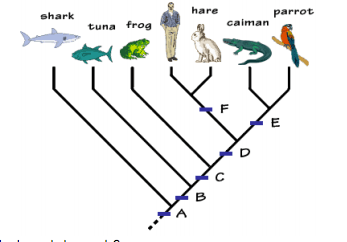
On the cladogram, which organism is the closest relative of the parrot?
Frog
Hare
Caiman
Parrot

What is the common ancestor of Letters C and E?
1
2
3
4

Which group of animals on this tree are most closely related to birds?
Saurischian dinosaurs
Ornithischian dinosaurs
Crocodiles
None of these are related to birds

Stomata are made of specialized cells called ______ which surround a tiny pore/opening
stoma
guard cells
dermal cells
diffusion channels

The main function of stomata is to
capture sunlight
protect leaves from insects
allow gases to move rapidly in/out of leaves
release sugars into the atmosphere

A stoma is
an opening
a clot
a cell that captures light energy
a water tube

What is the function of the STOMATA in plants?
Allows water to enter the plant
Provides food to enter the plant
Allows for gas exchange
Site of photosynthesis

What is the function of GUARD cells in plants?
Allow gas exchange
Control the opening & closing of the stomata
Contain DNA
Nucleus


What is a short segment of a DNA strand that codes for our characteristics?
chromosome
DNA
RNA
gene

chromosome
DNA
genes
heredity
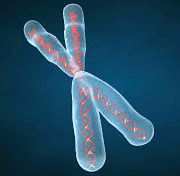
The number of human chromosomes is
23
46
92
64
In what organelle of plant cells does photosynthesis occur?
mitochondria
centrioles
chloroplast
ribosomes

What is the amino acid sequence for the following mRNA strand:
UCG-GAA-CAC-AAU
(a)
What is the amino acid sequence for the following mRNA strand:
AGG-UUC-CUG-GCC
(a)
What is the amino acid sequence for the following mRNA strand:
UGU-UGG-AUA-CCC
(a)
What is the amino acid sequence for the following mRNA strand:
AAU-UCG-CAA-GGG
(a)
This organelle is found in both plant and animal cells. It controls all of the cell's activity. Known as "The Boss" of the cell.
Vacuole
Cytoplasm
Nucleus
Cell Membrane
A gel like material that keeps all of the organelles in their place inside the cell.
Cytoplasm
Chloroplast
Cell Wall
Mitochondria
This organelle releases energy (food) to the cell. It's nickname is "The Powerhouse."
Vacuole
Chloroplasts
Cell Membrane
Mitochondria
This organelle is only found in PLANT cells and they are responsible for making food.
Chloroplasts
Cell Wall
Cell Membrane
Nucleus
This organelle stores food, water and waste.
Cytoplasm
Chloroplasts
Vacuole
Mitochondria
Reactants (ingredients) needed by the plant to do photosynthesis include sunlight and
Sugar and oxygen
oxygen and water
Autotrophs
Carbon Dioxide and water
Carbon Dioxide enters the plant through openings on the underside of their leaves called
Stomata
Chloroplasts
Autotrophs
Chlorophyl

