
 Worksheets
Unit 001 - Working in Engineering Quiz
Total questions: 153
Worksheet time: 2hrs 35mins
Explain what is meant by the term batch production.
A) A method where a group of identical products is produced simultaneously before moving on to make another group.
B) A method where products are produced one at a time.
C) A method where products are produced continuously without any interruptions.
D) A method where products are produced in large quantities in a short amount of time.
Explain the difference between a one-off and a prototype.
A) A prototype is a draft version of a product. A one-off is the complete manufacture of a single bespoke product/item.
B) A prototype is the complete manufacture of a single bespoke product/item. A one-off is a draft version of a product.
C) A prototype is a method of producing large quantities of high tech products. A one-off is a method of producing small quantities of low tech products.
D) A prototype is a method of producing small quantities of a product. A one-off is a method of producing large quantities of a product.
Which of the following is an advantage of mass production?
High production costs
Low precision rate
Standardisation of products
High flexibility in product lines
Which of the following is a disadvantage of mass production?
Low production costs
High flexibility in product lines
Low investment in machinery
Capital intensive
A small bakery produces 50 white loaves, 50 brown loaves, 100 croissants, and 100 doughnuts each morning. The same workers make all the products one after the other, cleaning and adjusting the equipment between each batch. This is an example of:
Mass production
Continuous production
Batch production
Flow production
What is a key characteristic of flow production?
A) Production is carried out in small batches.
B) Production is continuous and products move from one stage to the next without interruption.
C) Production is done on a one-off basis.
D) Production involves high customisation of each product.
Which of the following is an example of mass production?
A) Custom-made furniture
B) Handcrafted jewellery
C) Assembly line manufacturing of cars
D) Small batch baking
What is a disadvantage of batch production?
A) High set-up costs for each batch
B) Low flexibility in product lines
C) High production costs
D) Low standardisation of products
Which process fits this description – molten metal is forced into a mould to cool and solidify?
Sand Casting
Die Casting
Injection Moulding
Rotational Moulding
Which of the following is an advantage of sand casting?
It allows fairly complex models to be cast
It is quick to do
It is fully automated
It is very accurate
Choose the correct advantage of rotational moulding.
It has fast production rates
It will provide a uniform wall thickness
It can provide detailed and complex parts
It is inexpensive
Why might die casting be selected for manufacturing a product? Choose two correct answers.
It can produce very large parts
It is extremely accurate
It provides a smooth surface finish
It is inexpensive to set up
How might you identify that a product has been injection moulded? Choose two correct answers.
Ribs
Rounded corners
Mould split lines
Injection marks
What types of products are manufactured using rotational moulding?
Balls & hollow plastic toys
Balls & plastic baskets
Plastic baskets & hollow plastic toys
Candle holders & balls
What is rapid prototyping?
Getting a product from the design stage to manufacturing as quickly as you can
Creating CAD drawings in large quantities
Manufacturing products very quickly on a production line
A quick method of producing 3D models directly from a CAD drawing
Choose two advantages of using 3D printing.
It is inexpensive to set up and operate
You can print any design, no matter how complex it is
Products can be created as required
You can use any material with a 3D printer
Which of the following is a disadvantage of rapid prototyping?
The surface finish on the product can be rough
The methods are limited in which designs they can produce
It takes longer to design and manufacture products this way
They are really expensive to use
Why might a company choose to use laser cutting? Select two correct answers.
It can produce detailed and complex designs
It is highly accurate – each product is an exact copy of the previous one
It has a very consistent production rate
It does not require a lot of energy to operate the machinery
Which process fits this description: molten metal is forced into a mould to cool and solidify?
Casting
Extrusion
Turning
Rotational Moulding

Which manufacturing process is depicted in the image above, and is required whenever intricate shaping is necessary, demanding precision?
separating
jumping
rolling
milling

A hole is produced within a workpiece or enlarged by a rotating end-cutting tool.
cutting
drilling
milling
finishing

Uses force to cause materials to permanently take a shape.
casting
additive
drilling
forming

These products have been manufactured by...
Injection moulding
Vacuum forming
Extrusion
Blow moulding

These products have been manufactured by...
Binder jetting
Extrusion
Casting
Blow moulding
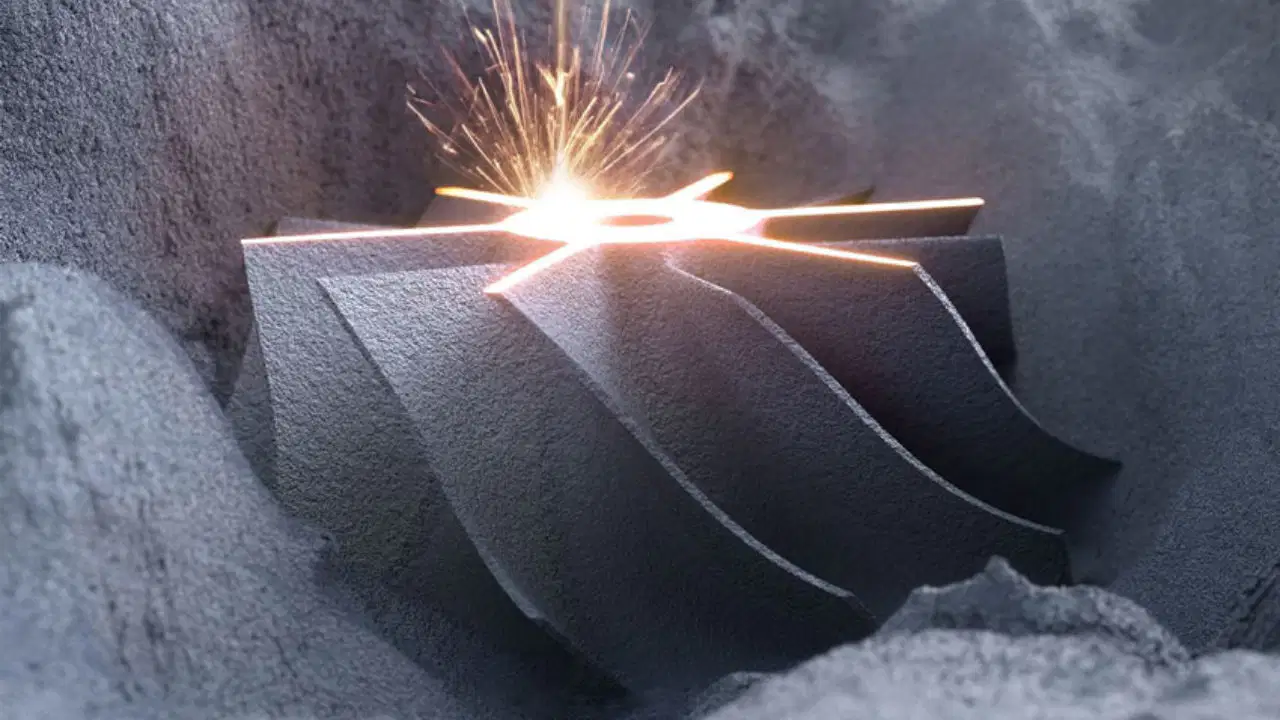
This component has been manufactured using...
3D Powder Bed Fusion
3D Photopolymerisation
3D Material Extrusion
3D Grandma's Recipe

What is the name of this process?
(a)
A manufacturing process involving the shaping of material through hammering, pressing, or rolling.
forming
casting
moulding
joining
machining
A manufacturing process in which liquid material is poured into a mould containing a hollow cavity of the required shape, and then allowed to solidify.
forming
casting
moulding
joining
machining
A manufacturing process that shapes liquid raw material by applying pressure to force it into a fixed mould.
forming
casting
moulding
joining
machining
A manufacturing process in which two or more materials are assembled together.
forming
casting
moulding
joining
machining
A manufacturing process that produces the required shape by removing excess material from a larger workpiece.
forming
casting
moulding
joining
machining

What manufacturing process is illustrated here?

forging
extrusion
rolling
die casting

What manufacturing process is illustrated?
Forging
Extrusion
Rolling
Die casting

Which manufacturing process is depicted?
forging
extrusion
rolling
die casting

What manufacturing process is depicted?
forging
extrusion
rolling
die casting

What manufacturing process is illustrated?
injection moulding
compression moulding
die casting
welding

What manufacturing process is illustrated?
Injection moulding
Compression moulding
Die casting
Welding

What manufacturing process is depicted?
injection moulding
compression moulding
die casting
welding

What manufacturing process is depicted?
Turning
3D printing
Extrusion
Rolling
Laser beam machining is not commonly used for
Grinding
Drilling
Trepanning
Cutting
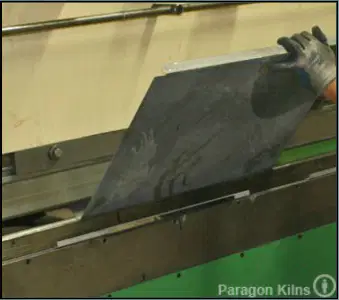
What is the primary purpose of the forming process in manufacturing?
Changing the shape
Turning liquid to solid
Separating materials
Connecting materials

Which of the following is a manufacturing process shown in the picture?
Painting
Cutting
Polishing
Sanding
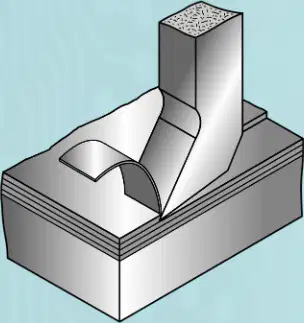
What is the main advantage of using a shaper rather than a file?
It is more precise
It is faster
It is cheaper
It is quieter
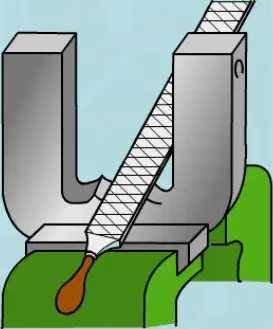
What is a common tool used in manual metal removal?
Lathe
Shaper
File
Drill
What is a brake press used for?
Cutting materials
Producing many identical pressed shapes
Welding metals together
Painting surfaces
Which cutting technique is most suitable for cutting intricate shapes in metal sheets?
Flame cutting
Laser cutting
Plasma cutting
Spark erosion

Which of the following is NOT shown as a joining method in the image?
Riveting
Nuts and bolts
Welding
Soldering
What is a common method for permanently joining two metal parts?
Bolting
Welding
Clamping
Gluing
What is the main purpose of using a CNC machine in manufacturing?
To automate the production process
To manually shape materials
To paint surfaces
To join components
The function of something is________.
its purpose
its value
Something that is sustainable________.
can be made from any type of material
does little harm to the environment
A series of steps engineers use to solve problems
Drag
Engineering Design Process
Parachute
Aerospace Engineer
Jerry has created a prototype of his design solution to address the issue of his bicycle falling over. What should he do next?
Define the problem and goal
Improve
Create and test prototype

What is the first step in the Design Process?
Define the Problem and Goal
Research
Imagine Possible Solutions
A person who uses their creativity and understanding of materials, tools, mathematics, and science to design things that solve problems.
Engineering Design Process
Engineer
Scientist
A sample product that is used to represent the actual product
Constraints
Trade-off
Engineering Design Process
Prototype
What is the development of an entirely new technology, never previously known or seen?
Innovation
Invention
Engineering
Improvements to an invention are referred to as: (choose the best answer)
Innovations
Technology
Engineering
In which stage of the Engineering Design Process do you learn from your mistakes and enhance your design?
ASK
IMPROVE
IMAGE
CREATE
In which stage of the Engineering Design Process would you check to see if your design is functioning correctly?
PRESENT
TEST
CREATE
IMPROVE
A person who designs, builds, or maintains engines, machines, or public works is an ______________. There are more than four different types.
client
designer
engineer
builder
1. What is the Engineering Design Process?
A computer programme about engineering
An assembly line that manufactures car parts
An examination that professional engineers take annually to assess their knowledge
A series of steps that engineers follow to develop a solution to a problem
The testing stage of the Engineering Design Process typically involves multiple rounds of testing and redesigning before arriving at the final design.
True
False
The final step of the Design Process is to
communicate results
iterate
create a prototype
analyse data
Design solutions may include brainstorming, doodling, and creating sketches.
True
False
This is the phase where you use your design to construct your experiment.
design
create
test
present


A series of steps that engineers use to guide them as they solve problems is called _____
the engineering method
the engineering process
the engineering problem
the scientific method

When an engineer identifies a problem they hope to solve, the first thing they do is _____
define the problem
design your solution
build a prototype
test your solution

What is the FIRST step in the Engineering Design Process?
Define the problem.
Identify constraints on your solution.
Brainstorm solutions for the problem.
Communicate your results.
Once you have defined the problem and identified the constraints and requirements for success, you must...
Define the problem.
Determine which solution will be the best.
Brainstorm multiple solutions.
Brainstorm one possible solution.
It is not important to iterate to improve your prototype.
True
False
A group of students are designing a solar cooker. As part of the design process, the students must test a prototype to see if it is able to boil water. What should the students do just before they test it?
Test and evaluate the prototype.
Imagine possible solutions.
Change the prototype and retest it.
Plan and make a prototype.
Identify and research a need.
A group of students is designing a solar cooker. What should the students do immediately after they test and evaluate their solar cooker?
Test and evaluate the prototype.
Imagine possible solutions.
Modify the prototype and retest it (iterate).
Plan and construct a prototype.
Identify and research a need.
Which of the following is most likely part of the testing and evaluation stage of designing a mobile phone?
Writing an advertisement for the phone.
Figuring out the features of the phone.
Finding the material to be used for the case.
Using electrical volts to try to make the phone fail.
Which describes the "Identify the Problem" part of the Engineering Design Process?
Identification occurs when someone realises that a problem exists that needs to be solved.
Definition occurs when someone realises exactly what the problem is.
The requirements the solution must meet, such as what it must do.
The limitations on the solution, such as a maximum size or budget.
Which describes the "Constraints" part of the Engineering Design Process?
Identification occurs when someone realises that a problem exists that needs to be solved.
Definition occurs when someone realises exactly what the problem is.
the requirements the solution must meet, such as what it must do.
the limitations on the solution, such as a maximum size or budget.
_________________________ is how people change the world around them to meet their needs or to solve problems
Systems
Processes
Technology
Science
A flawed prototype is considered a(n) _____ the engineering design process.
a. Failure of
b. Rare occurrence in
c. Argument against
d. Normal part of
The Engineering Design Process begins by considering three key questions about the problems you observe. Which of the following is NOT one of the three questions that assist you in defining the problem during the initial stage of the Engineering Design Process?
What is the problem or need?
What materials do I need?
Who has the problem or need?
Why is the problem important to solve?
If you wanted to design a new and improved type of trainer, a good way to conduct background research and specify requirements for your new shoe would be to
Visit a shoe shop and make notes about the key features of the trainers
Observe at your school and make notes about which types of trainers are the most popular
Discuss with your friends what they like and dislike about the trainers they own
All of these
The engineering design process is an iterative process. This means
The engineering design process cannot be used in all areas of engineering.
New ideas or information may require an engineer to repeat parts of the process multiple times.
An engineer must go through every step of the process twice before the solution is satisfactory.
What is the primary objective of Preventive Maintenance?
To address problems as they occur
To carry out maintenance only when equipment is not operational
To ensure equipment remains operational and to prevent unexpected downtime
To record and schedule maintenance activities
Which type of maintenance requires documentation and scheduling?
Planned Maintenance
Reactive Maintenance
Preventive Maintenance
Shutdown Maintenance
What is the primary focus of Reactive Maintenance?
Preventing equipment failure
Addressing problems when they arise
Scheduling maintenance activities
Performing maintenance during shutdowns
Which type of maintenance is intended to prevent unexpected equipment failure?
Planned Maintenance
Reactive Maintenance
Preventive Maintenance
Shutdown Maintenance
What is a critical task for machine operators regarding machine capacity?
Reducing machine capacity
Ensuring machines are working at full capacity
Limiting machine usage
Increasing machine downtime
What additional devices do maintenance engineers use apart from computerised systems?
Control and monitoring devices
Communication devices
Entertainment devices
Navigation devices
In what type of settings do maintenance engineers primarily work?
Retail settings
Industrial settings
Educational settings
Residential settings
What effect do maintenance engineers have on costly breakdowns?
They increase the frequency
They reduce the incidence
They have no impact
They document them
What is the purpose of arranging specialist procurement of fixtures, fittings, or components?
To ensure the correct parts are available for maintenance
To increase sales revenue
To improve customer satisfaction
To enhance employee training
What is the role of writing maintenance strategies?
To assist with installation and commissioning guidelines
To develop new product lines
To manage customer relationships
To conduct market analysis
What does dealing with unplanned problems involve?
Handling emergencies and repairs
Creating advertising campaigns
Conducting training sessions
Managing social media accounts
Why is it important for maintenance managers to resolve minor problems?
To save time
To prevent them from becoming larger, more costly issues
To avoid hiring more staff
To increase production speed
What is a key responsibility related to equipment inventory?
Designing new equipment
Monitoring equipment inventory and placing orders when necessary
Conducting training workshops
Developing marketing materials
What does solving minor repair issues typically involve?
Designing new repair tools
Carrying out troubleshooting to resolve minor repair issues
Conducting training workshops
Developing marketing materials
Which type of maintenance involves repairing equipment after a failure has occurred?
Preventive Maintenance
Predictive Maintenance
Corrective Maintenance
Condition-Based Maintenance
Which type of maintenance is determined by the actual condition of the equipment, rather than following a fixed schedule?
Preventive Maintenance
Predictive Maintenance
Corrective Maintenance
Condition-Based Maintenance
What is the primary benefit of condition-based maintenance?
It reduces the need for spare parts
It eliminates the need for maintenance
It ensures maintenance is only performed when necessary
It increases the frequency of maintenance tasks
What does Reliability Centred Maintenance mean in a manufacturing context?
A maintenance strategy focusing on non-essential components.
A maintenance strategy focusing on critical components to ensure reliability and prioritise tasks.
Randomly assigning maintenance tasks without prioritisation.
Ignoring critical components in maintenance planning.
What does CMMS stand for when working with maintenance strategies?
Controlled Maintenance Management Software
Complete Management and Maintenance System
Computerised Maintenance Management System
Centralised Maintenance Monitoring System
What are the specific advantages of using a CMMS in a maintenance programme? Select all that apply.
Inventory management
PM scheduling
Collect historical data on machines
Work order generation
________ provide real-time information about the condition of a machine.
Condition monitoring
Preventive maintenance
Scheduled maintenance
None of them
The function of lubricants is
Reduce friction
To cool components
Clean the load bearing surface
All of the above
Regular monitoring of the condition of tools and equipment reduces the risk of accidents in the workplace.
True
False
To prevent rust and corrosion, proper maintenance and lubrication of tools is essential.
True
False
An automated factory is required to have _________ at different levels in the production system.
Sensors
Human intervention
Robots
Supervisors
Which of the following are the importance of site records?
I. Reduce delays
II. Gain clearer insight into the site
III. Track the progress of tasks
IV. Avoid any extra charges by suppliers
I, II, and III
II, III, and IV
I, II, and IV
All of the above
Vibration analysis is the most common method for monitoring the condition of a rotating machine.
TRUE
FALSE
Functional and defective tools are both serviceable.
True
False
What is the premise of a culture of quality?
A single tool can guarantee quality.
No single tool, test, or person can guarantee quality.
Only tests can ensure quality.
Quality is guaranteed by one person.
According to ISO 9000:2015, what is Quality Assurance (QA) a part of?
Quality management focused on detection
Quality management focused on prevention
Quality management focused on providing confidence
Quality management focused on correction
Which approach is associated with QC?
Proactive strategy
Reactive strategy
Process-orientated
Prevention of defects
What does QA stand for in the context of quality management?
Quality Assurance
Quality Assessment
Quality Adjustment
Quality Analysis
QA is a management approach to ensure what?
Quality standards and customer requirements are met
Products are delivered on time
Employees are well-trained
Costs are minimised
QA is fundamentally focused on which aspect of processes?
Planning and documenting
Speed and efficiency
Cost and savings
Innovation and creativity
What is included in QA to assure quality?
Meeting requirements of quality, inspection, and test plans
Increasing production speed
Reducing marketing costs
Enhancing customer service
What is the role of inspection and testing in QA systems?
To reduce production costs
To ensure product quality
To enhance marketing strategies
To increase employee productivity
What does the 'Plan' phase in TQM focus on?
Implementing processes
Formulating objectives and processes
Monitoring processes
Adapting processes
What is the ultimate goal of TQM in terms of customer experience?
To reduce customer interaction
To improve customer experience
To increase customer complaints
To ignore customer feedback
Which of the following best describes the 'Act' phase in TQM?
Implementing new processes
Monitoring existing processes
Adapting and improving processes
Formulating new objectives
Which of the following best describes quality?
The service provided to a customer before, during and after purchasing.
Products being manufactured to a high standard to meet customer requirements.
A high level of productivity.
Which of the following is usually true about poor-quality products?
They are in demand
They fail to meet customers' expectations
They are expensive
What occurs when a business manufactures defective goods?
It increases costs
It increases costs and damages the reputation of the firm
It is an example of Total Quality Management
A business checks products after they are made. What is this an example of?
Quality Control
Quality Circles
Quality Assurance
When products are checked at each stage of production, what is this an example of?
Quality Control
Quality Circles
Quality Assurance
What is the most effective method for improving quality?
Expansion
Reducing costs
Staff and management training
Proactive Approach
Quality Assurance
Quality Control
Reactive Approach
Quality Assurance
Quality Control
What is the purpose of Quality Control in the manufacturing industry?
Speed up the process
Monitor the process
Improve the quality of the product
Reduce the cost of manufacturing
What are the principal methods of Quality Assurance?
Team reviews and Six Sigma
Inspection and Testing
Sampling and Inspection
Pressure and Heat Treatments
What are the common types of Quality Control processes?
Team Review, Verification, Validation
Analysis, Documentation, Inspection
Optimisation, Feedback, Benchmarking
Statistical Quality Control, Benchmarking, Evaluation
Which of the following is a Quality Control principle?
Do it right the first time
Test and measure everything
Develop inspection systems
Evaluate the risk of mistakes
TQM stands for:
Total quality management
Total quality measurement
Total quantity management
None of the above
When setting quality objectives, ________ should be considered.
Customer need
Organisational need
Supplier need
Worker need
Which of the following is responsible for quality objectives?
Top-level management
Middle-level management
Frontline management
All of the above
What is ISO?
Indian organisation for standard
Internal organisation for standard
International organisation for standard
None of the above
TQM seeks out companies to identify improvement ideas for itself. What is this process called?
Benchmarking
Investigating
Improvement copying
Research
Continuous improvement means...
constantly introducing small incremental changes in a business in order to improve quality and/or efficiency.
Introducing big changes in a business in order to improve quality and/or efficiency.
Introducing changes only when needed in order to improve quality and/or efficiency.
Total Quality Management (TQM) focuses on
Employee
Customer
Both Employee and Customer
None of the above
Within an organisation, who holds responsibility for quality?
Quality Management Department
Production Department
The entire organisation
None of the above
What is the key skill required for successful organisational change?
Leadership
Motivation
Communication
Engagement
What is the main disadvantage of relying solely on quality control to assess the quality of a product?
There will be an increase in waste
It's a waste of time
Customers won't notice a few faults
Staff will find it very difficult
When is the quality of a product assessed using quality assurance methods?
At the end of the production process
Never
At the start of the production process
At each stage of the production process
Which one of the following is NOT included among the Three Key Performance Criteria?
Quality
Cost
Time
Materials
Select True or False for the statement:
Total Quality Management (TQM) does not emphasise customers when delivering quality approaches
True
False
Select True or False for the statement:
The main aim of TQM is to address problems that exist within the work system.
True
False
Select the three (3) types of quality approaches.
Quality of Materials
Quality of Design/redesign
Quality of Performance
Quality of Conformance
Quality of Cost
Select the benefits of TQM.
Providing a competitive advantage in the industry
Cost efficiency
Enhancing the productivity level
Enriching the knowledge of the parties involved
Ensuring projects are monopolised by the private sector
"Improving quality through small, incremental improvements"
is a characteristic of which type of quality management system?
Just-in-time
Six Sigma
5S
Kaizen
Which of the following are key components of a Total Quality Management system?
Individual responsibility, incremental improvement, use of raw data
Collective responsibility, continual improvement, use of raw data
Group responsibility, staged improvement, knowledge
Involves everyone, continual improvement, use of data and knowledge
Which of the following is not a principal focus of TQM?
Customer satisfaction
Efficiency, effectiveness and process
Annual profit
Total involvement of people within an organisation

