
Font size
 Worksheets
Circulatory System
Total questions: 73
Worksheet time: 37mins
Which statement best describes the main function of the human circulatory system?
It digests food inside blood vessels
It stores nutrients for future use
It produces hormones in all organs
It transports substances throughout the body
Which components together form the cardiovascular system?
Blood vessels
Blood
Heart
Lymph nodes
Which body fluid occupies the spaces between individual cells?
Tissue fluid
Lymph
Blood
Plasma
What pumps blood to all parts of the body through blood vessels?
Veins
Capillaries
Arteries
Heart
Where is lymph found in the body?
Inside capillary walls
Inside the heart chambers
Within lymph vessels and lymphatic organs
Between cells in all tissues
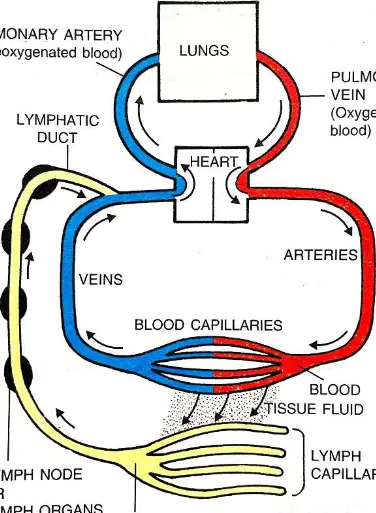
In the diagram of the closed vascular system, which vessels carry blood away from the heart?
Veins with valves to heart
Arteries carrying blood away
Capillaries exchanging gases
Lymphatic ducts returning fluid
Which structures separate the upper heart chambers from the lower chambers?
Semilunar valves in arteries
Pulmonary veins and arteries
AV or atrio-ventricular valves
Pericardial fluid membranes
Where is the human heart located according to the description?
Within the neck near trachea
Inside the abdominal cavity
Behind the liver on right
Between two lungs in chest
Which feature does not protect the heart from mechanical injury?
Capillary walls in tissues
Rib cage around chest
Pericardial fluid cushioning
Double membrane pericardium
Which list correctly names the heart chambers?
Two atria and two ventricles
Four ventricles and no atria
Three atria and one ventricle
One atrium and three ventricles

In the diagram of the heart, which chambers are the receiving chambers that have thinner walls?
Right and left atria
Right and left ventricles
Only left ventricle
Only right ventricle
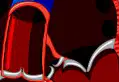
Which valve controls blood flow from the right atrium into the right ventricle?
Tricuspid valve
Pulmonary valve
Aortic valve
Mitral valve
The bicuspid (mitral) valve has how many cusps and lies between which chambers?
Two cusps, left atrium and left ventricle
Three cusps, left atrium and aorta
Two cusps, right atrium and right ventricle
Three cusps, right ventricle and pulmonary artery
Semi-lunar valves prevent backflow when blood leaves the ventricles. Where do they regulate flow?
Into the superior vena cava
Into the aorta
Into the left atrium
Into the pulmonary artery

Which valve is shown at the outlet of the right ventricle leading to the lungs?
Mitral atrioventricular valve
Tricuspid atrioventricular valve
Aortic semilunar valve
Pulmonary semilunar valve
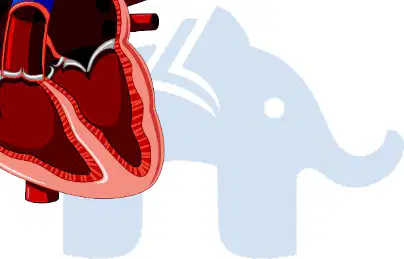
What structure divides the heart into right and left sides, preventing blood from mixing?
Septum membrane
Aortic arch
SA node tissue
Pulmonary artery
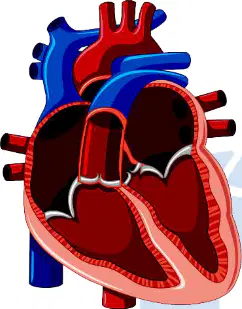
Which statement about atria and ventricles is true?
Atria receive blood; ventricles distribute blood
Ventricles receive blood; atria distribute blood
Atria and ventricles mix deoxygenated and oxygenated blood
Both atria and ventricles only handle oxygenated blood
Which structure acts as the heart’s natural pacemaker by initiating the heartbeat?
AV node in left ventricle
Bundle of His in septum
SA node in right atrium
Purkinje fibers in ventricles
What is the primary function of the SA node?
Opens and closes the mitral valve
Carries blood to the lungs
Sets rhythm of heart contractions
Stores oxygen for the myocardium

Which statement about right versus left sides of the heart is correct?
Both sides distribute deoxygenated blood
Both sides receive oxygenated blood
Right distributes oxygenated; left receives deoxygenated
Right receives deoxygenated; left distributes oxygenated
Arteries typically have which structural feature compared to veins?
Thin non‑elastic muscular walls
Walls lacking smooth muscle
Thick elastic muscular walls
Walls with many valves
Which blood vessel type is the principal site for exchange of gases, nutrients, and wastes?
Arteries with three thick layers
Veins with large lumen
Capillaries with one cell layer
Aorta with strong wall
Blood in arteries usually flows under which condition?
High speed and high pressure
Low speed and low pressure
Moderate speed with valves
Slow speed with jerks
Which statement correctly matches vessel and blood type, including exceptions?
Capillaries carry only deoxygenated blood
Veins carry deoxygenated blood except pulmonary vein
Aorta carries deoxygenated blood to body
Arteries carry oxygenated blood except cardiac artery
Why do some blood vessels contain valves?
To prevent backflow at low pressure
To create pulse in vessel walls
To increase blood pressure peaks
To add thickness to the wall
Which pair correctly contrasts placement of arteries and veins in the body?
Both always deep near skin
Arteries deeply placed; veins more superficial
Both always superficial in limbs
Arteries superficial; veins deepest
Which vessel brings deoxygenated blood from the upper body to the heart?
Aorta
Inferior vena cava
Superior vena cava
Pulmonary vein
What is the role of the pulmonary veins?
Return blood from coronary circulation
Distribute oxygenated blood to heart walls
Carry deoxygenated blood from heart to lungs
Carry oxygenated blood from lungs to heart
Which statement best describes the pulmonary artery?
Branches to lungs carrying deoxygenated blood
Leaves left ventricle to the whole body
Returns oxygenated blood to right atrium
Supplies heart muscle with oxygenated blood
The aorta primarily does what?
Brings deoxygenated blood to right atrium
Collects blood from heart walls
Takes blood to lungs for oxygenation
Carries oxygenated blood from left ventricle
Which vessels serve the heart muscle itself and their function?
Coronary arteries deliver oxygenated blood to heart walls
Pulmonary veins supply heart muscle directly
Coronary veins return deoxygenated blood to right atrium
Venae cavae drain lungs to left atrium
Which feature of capillaries enables efficient exchange of substances?
Presence of many valves
High‑pressure flow
Single layer endothelium
Thick elastic walls
Which chamber first receives deoxygenated blood returning from body tissues?
Left atrium
Right atrium
Right ventricle
Left ventricle
During atrial systole, what happens to blood in the heart?
Ventricles relax and draw blood in
Auricles contract and fill ventricles
AV valves close and block flow
Semilunar valves open widely
Which vessels carry blood from the right ventricle to the lungs?
Pulmonary veins
Aorta branches
Pulmonary arteries
Venae cavae
Where does the left ventricle pump blood during ventricular systole?
Into right atrium
Into superior vena cava
Into the aorta
Into pulmonary veins
Which statements describe events that occur together in a normal heartbeat?
Both atria contract simultaneously
Both ventricles relax simultaneously
Atrial contraction precedes ventricular contraction
Right side blood mixes with left side blood
What is the typical frequency of the rhythmic cardiac cycle mentioned for a healthy adult?
About 96 times per minute
About 60 times per minute
About 72 times per minute
About 84 times per minute
What best defines double circulation in humans?
Blood passes through liver twice
Blood visits lungs two separate times daily
Blood flows through heart twice per cycle
Blood moves only in one closed loop
Which pathway correctly represents pulmonary circulation flow back to the heart?
Lungs to right atrium via pulmonary veins
Lungs to left atrium via pulmonary veins
Lungs to left ventricle via pulmonary arteries
Lungs to right ventricle via venae cavae
Which sequence best represents systemic circulation starting from the left ventricle?
LV to lungs to LA
LV to LA to body
LV to body to RA
LV to RA to RV
Which vessels return deoxygenated blood from the body to the heart in systemic circulation?
Pulmonary veins
Coronary arteries
Superior and inferior vena cava
Aorta and its branches
Which side of the heart receives oxygenated blood directly from the lungs?
Right side chambers
Both sides equally
Left side chambers
Only ventricles receive it
When semilunar valves close, what event is associated according to the notes?
Blood pushed into arteries
AV valves opening again
Blood entering ventricles
Sound produced during closure
What is the immediate result when the right ventricle contracts?
Blood flows into left ventricle through AV
Blood fills the right atrium from veins
Blood moves into aorta under pressure
Blood is sent to lungs via pulmonary artery
Which pair correctly matches circulation type with its transport region?
Pulmonary: heart and body organs
Systemic: heart and lungs only
Systemic: heart and entire body
Pulmonary: heart and lungs only
During ventricular contraction, which valves are open to allow ejection?
Pulmonary veins open
AV valves open wide
Semilunar valves open
Venae cavae open
Which statement about atria and ventricles is accurate for timing?
Atria contract long after ventricles
Atria and ventricles contract independently
Atrial contraction quickly followed by ventricular contraction
Ventricles contract before atria
Which statement best describes how lymph moves through its vessels?
Contraction of surrounding muscles propels lymph
Beating of heart pushes lymph forward
Active swimming by leukocytes drives lymph
Negative pressure in lungs directly pulls lymph
Where does lymph ultimately pour back into the bloodstream?
Anterior veins near right auricle entry
Posterior veins near left auricle
Pulmonary veins near left ventricle
Vena cava near right ventricle
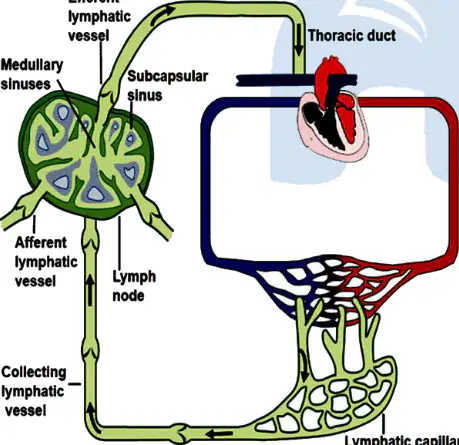
Which path shows lymph drainage correctly?
Lymphatic capillaries → lymph nodes → thoracic duct → veins
Arteries → arterioles → capillaries → venules
Veins → heart → lungs → arteries
Capillaries → arteries → heart → veins
Which cellular component is present in lymph?
Platelets and hemoglobin
Leukocytes, mostly lymphocytes
Only RBCs
RBCs and platelets
What proportion of water is found in the non-cellular part of lymph?
About 50 percent
About 75 percent
About 94 percent
About 99 percent
Which set lists substances in lymph’s non-cellular part?
Urea, creatinine, carbon dioxide, lactic acid
RBC membranes, myosin, keratin, bile salts
Hemoglobin, platelets, oxygen gas, hormones
Proteins, fats, carbohydrates, enzymes, antibodies
Which is NOT a function of lymph?
Draining excess tissue fluid and returning proteins
Supplying nutrients to areas blood cannot reach
Absorbing intestinal fats via lymph vessels
Carrying most respiratory gases from lungs to tissues
Which function of lymph relates to body defense?
Erythrocytes engulf bacteria in lymph
Hemoglobin transports oxygen in lymph
Platelets form clots in lymph vessels
Lymphocytes and monocytes protect tissues
Which difference between lymph and blood is correct?
Blood flows in lymph nodes and lymph vessels
Blood lacks WBCs and plasma proteins
Lymph is part of closed circulatory system
Lymph circulates in lymphatic capillaries and vessels
What gives blood its red color compared to lymph’s pale yellow?
Presence of lymphocytes only
Presence of antibodies in plasma
Presence of hemoglobin in RBCs
Presence of platelets only
Who identified the ABO blood grouping system?
Alexander Fleming
Louis Pasteur
Karl Landsteiner
Robert Koch
On what basis are ABO blood groups differentiated?
Enzymes inside leukocytes
Proteins (antigens) on RBC surfaces
Hormones dissolved in plasma
Antibodies attached to platelets
Which blood type is the universal recipient?
Type AB
Type B
Type A
Type O
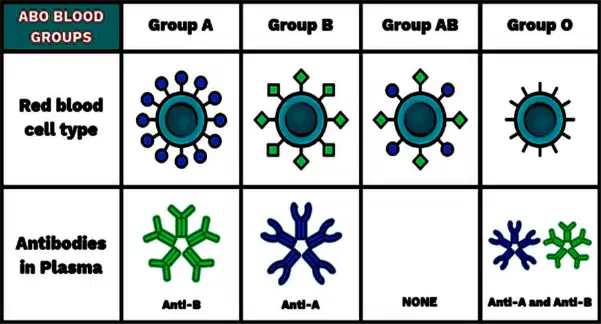
Which blood type is the universal donor?
Type A
Type O
Type B
Type AB
Which statement best describes hypertension?
Irregular rhythm caused only by anxiety
A blood clot blocks oxygen-rich blood
Heart stops pumping blood suddenly
Blood flows with greater force than normal
Which symptom is most typical during a heart attack?
Tingling in fingers only
Tightness or squeezing pain in centre chest
Itchy skin without pain
Sudden fever with chills
Select all signs that can accompany palpitations becoming serious.
Increased appetite after exercise
Shortness of breath during rest
Chest pain or pressure
Dizziness or lightheaded feeling
Which combination lists common heart attack symptoms?
Chest tightness and spreading pain
Shortness of breath and dizziness
Sweating and nausea
Rash and itchy scalp
Which is the most common cause of cardiac arrest mentioned?
Massive blood loss in an accident
Lack of oxygen during sleep only
Low potassium after a big workout
Coronary artery disease with plaque deposition
Choose the less common causes of cardiac arrest.
Seasonal allergies
Intense physical exercise
Blood loss and low potassium levels
Lack of oxygen and heart failure
What is the key difference between heart attack and cardiac arrest?
Heart attack means blood pressure drops suddenly
Cardiac arrest only affects young athletes
Both are the same condition medically
Blood flow interrupted vs heart stops pumping
Which step should be taken first in an emergency when someone collapses?
Give sugary snacks quickly
Place cold packs on the chest
Call an ambulance or doctor
Wait to see if they recover alone
Which emergency actions can help a person in cardiac arrest?
Provide mouth-to-mouth resuscitation
Help them lie in a comfortable position
Perform chest compressions continuously
Massage legs to improve circulation
Which habits best support a healthy heart?
Eating healthy food and exercising
Regular walking, cycling, jogging
Avoid too much oily, fried, fast food
Plenty of fibre like whole grains
Which food choice should be limited to prevent obesity and protect heart health?
Excessive sweet foods and desserts
Whole grain cereals and oats
Fresh fruits and vegetables daily
Lean proteins cooked at home

