
NEW
Font size
S
M
L
XL
 Worksheets
Asexual Reproduction, Mitosis, Meiosis
Total questions: 75
Worksheet time: 40mins
Name
Class
Date
1.
All Offspring of Asexual reproduction are identical
a)
True
b)
False
2.
How many parent(s)are needed for asexual reproduction?
a)
4
b)
1
c)
9
d)
100
3.
In asexual reproduction, all of the offspring are:
a)
Physically Identical
b)
Genetically Identical
c)
Physically and Genetically Identical
d)
Not Identical
4.
A hydra reproduces when an outgrowth, or bud, forms and continues to develop until if falls off of the parent. This is an example of:
a)
Binary Fission
b)
Sporulation
c)
Budding
d)
Vegetative Propagation
5.

What type of asexual reproduction is shown in the picture?
a)
Budding
b)
Sporulation
c)
Vegetative Propagation
d)
Binary Fission
6.

What type of asexual reproduction is shown in the picture?
a)
Budding
b)
Binary Fission
c)
Sporulation
d)
Regeneration
7.
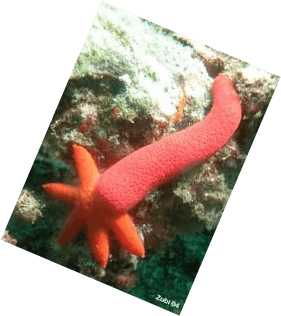
What type of asexual reproduction is taking place?
Fishermen work hard to catch and remove all the starfish that get into their favorite shell fishing beds and the “underwater farms” where they raise clams and oysters. In the past, they put the starfish into their boats, cut them up with knives, and then throw the pieces of starfish overboard. They thought this would kill the starfish. What they did not know was that each piece of starfish will grow into a whole new animal.
Fishermen work hard to catch and remove all the starfish that get into their favorite shell fishing beds and the “underwater farms” where they raise clams and oysters. In the past, they put the starfish into their boats, cut them up with knives, and then throw the pieces of starfish overboard. They thought this would kill the starfish. What they did not know was that each piece of starfish will grow into a whole new animal.
a)
Regeneration
b)
Vegetative propagation
c)
Budding
d)
Fission
8.
This produces 2 identical cells.
a)
Mitosis
b)
Meiosis
9.

How does asexual reproduction happen in plants?
a)
Male and Female plant parts needed
b)
Flowering plants reproduce both ways
c)
Plant can reproduce with plant parts
d)
Plant needs pollen and bees to reproduce
10.
This is when uniform offspring grow from a part of a parent plant. Parent plants sends out runners. Where the runner touches the ground, roots can grow. A new plant is produced even if the runner is broken apart Each new plant is uniform and identical to the parent.
a)
Vegetative Propagation
b)
Regeneration
c)
Budding
d)
Fission
11.
This is when a new organism grows by mitosis and cell division on the body of its parent. The bud, or offspring is identical to the parent. The bud, when large enough, can break off of the parent and live on its own.
Examples of this include yeast, hydra and cactus
Examples of this include yeast, hydra and cactus
a)
Regeneration
b)
Vegetative Propagation
c)
Fission
d)
Budding
12.
A white cat had a litter of kittens that were orange, grey, and black and white spotted. Is this the result of sexual or asexual reproduction? And how would you characterize the offspring listed above?
a)
Sexual reproduction with uniform offspring
b)
Asexual reproduction with diverse offspring
c)
Sexual reproduction with diverse offspring
d)
Asexual reproduction with uniform offspring
13.
Requires two parents
a)
Sexual Reproduction
b)
Asexual Reproduction
14.
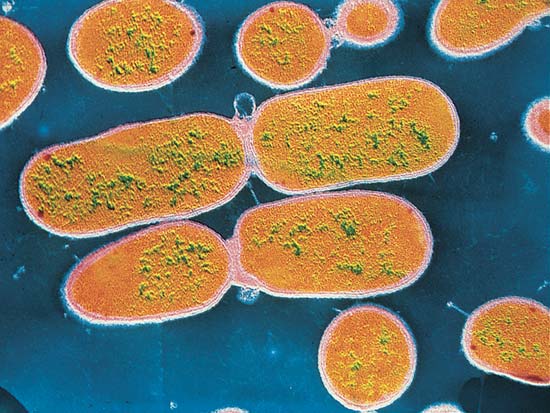
The offspring from asexually reproduced organisms are?
a)
Different than their parents
b)
Identical to parents
c)
Like a combination from both parents
d)
A different species
15.
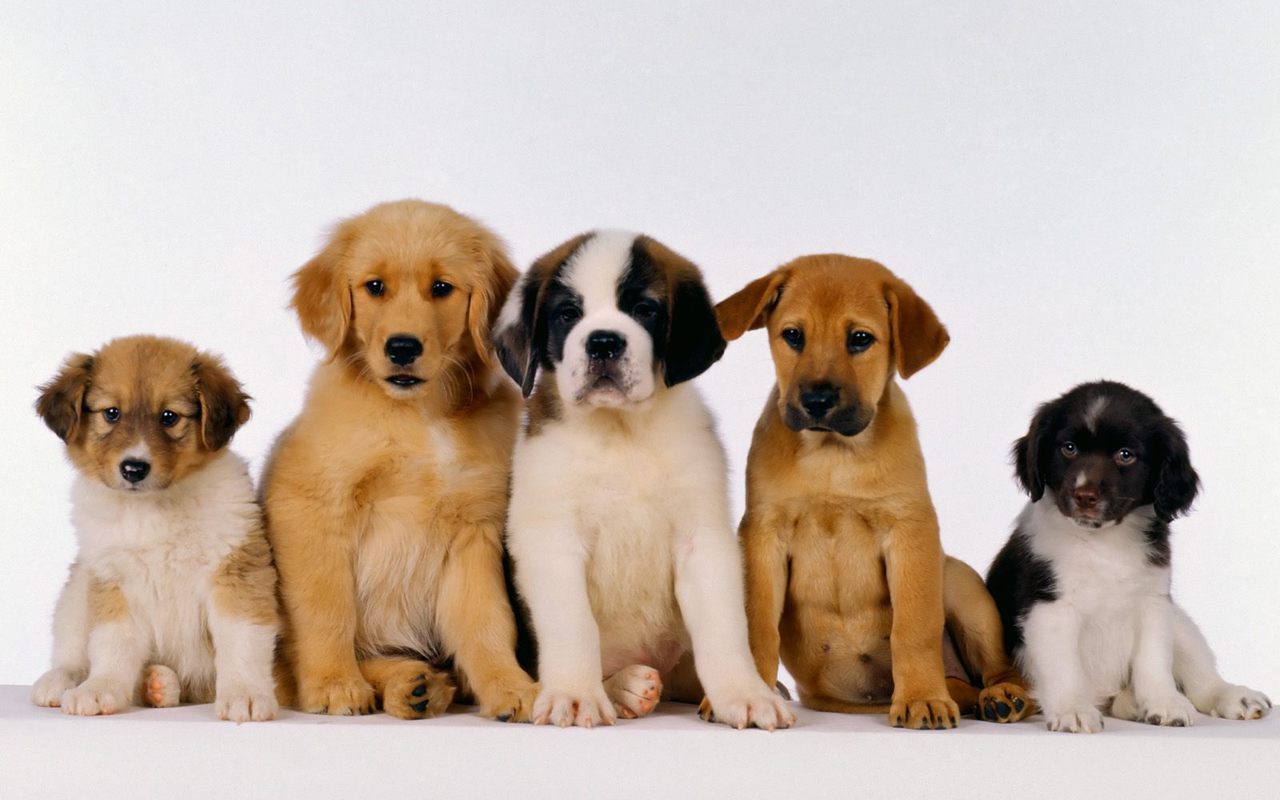
If two organisms reproduce sexually, then their offspring will exhibit a genetic makeup that is -
a)
Identical to only one parent
b)
Identical to all of its siblings
c)
A unique combination of traits
d)
The recessive traits of each parent
16.

Prokaryotes (bacteria) reproduce asexually via -
a)
Spore Formation
b)
Bud Creation
c)
Vegetative Propagation
d)
Binary Fission
17.

All of the offspring of an organism have the same genetic material, which is identical to the parent organism. From this, we can conclude that this organism -
a)
Makes its own food
b)
Is unicellular
c)
Live in a marine habitat
d)
Reproduces asexually
18.

When comparing the offspring of sexually and asexually reproducing organisms, we would expect the genetic material (DNA) of the sexually reproducing organism to -
a)
Contain fewer mutations
b)
Be lesser in quantity
c)
Be simpler overall
d)
Show more variation
19.
Which of the following is NOT an advantage of asexual reproduction?
a)
More efficient.
b)
All organisms can reproduce
c)
No wasted effort finding a mate.
d)
Population has variety to survive in a changing environment.
20.
In sexual reproduction the male produces ___ cells.
a)
Malex
b)
Quack
c)
Egg
d)
Sperm
21.
In sexual reproduction the female produces ___ cells.
a)
Femalex
b)
Quack
c)
Egg
d)
Sperm
22.
Asexual reproduction like mitosis produces
a)
Two offspring cells with the same genetic material as the parent cell.
b)
Two offspring cells with half genetic material as the parent cell.
c)
Four offspring cells with the same genetic material as the parent cell.
d)
Four offspring cells with half the genetic material as the parent cell.
23.
Why do we need meiosis?
a)
To double the number of chromosomes going into sex cells
b)
To halve the number of chromosomes going into sex cells
c)
To triple the number of chromosomes going into sex cells
d)
To not change the number of chromosomes going into sex cells
24.
Which process is mostly for growth and repair?
a)
Mitosis
b)
Meiosis
25.
Which process end in four different cells?
a)
Mitosis
b)
Meiosis
26.
Which process is completed with half a set of chromosomes (23)?
a)
Mitosis
b)
Meiosis
27.

Name that process
a)
Mitosis
b)
Meiosis
c)
Mutation
d)
Cell Cycle
28.

Why would it be important to replicate DNA before a cell divides in mitosis or meiosis?
a)
In order for the cells to have the correct amount of DNA.
b)
In order for the cell grow in size.
c)
In order for the cells to have extra DNA.
d)
In order for the cell to change the DNA.
29.

Meiosis makes sperm and egg cells. In humans, sperm and egg cells each have _____ chromosomes. Therefore a fertilized human egg cell (sperm and egg cell combined) would create a cell with _____ chromosomes.
a)
23, 46
b)
46, 23
c)
2, 4
d)
50, 100
30.

Fruit fly body cells have 8 chromosomes. After mitosis, you would expect a resulting fruit fly daughter cell to have -
a)
16 chromosomes.
b)
46 chromosomes.
c)
8 chromosomes.
d)
4 chromosomes.
31.

Fruit fly body cells have 8 chromosomes. After meiosis, you would expect a resulting fruit fly daughter cell to have -
a)
4 chromosomes.
b)
8 chromosomes.
c)
16 chromosomes.
d)
2 chromosomes.
32.
Produces genetically varied daughter cells.
a)
Mitosis
b)
Meiosis
c)
Both Mitosis and Meiosis
33.
Takes place only in reproductive organs
a)
Mitosis
b)
Meiosis
c)
Both Mitosis and Meiosis
34.
What is an advantage of sexual reproduction?
a)
Smaller populations
b)
Cannot adapt easily
c)
Unique so may adapt easily to new environments
d)
Faster
35.

Which picture is depicting metaphase?
a)
A
b)
B
c)
C
d)
D
36.

Which image shows a cell plate forming between daughter cells?
a)
A
b)
B
c)
C
d)
D
37.
Sister chromatids are held together at a region called the
a)
Centromere
b)
Centrioles
c)
Chromatin
38.
A cell in the stem tip of a corn plant contains 20 chromosomes. How many chromosomes will each daughter cell have?
a)
20
b)
10
c)
5
d)
40
39.
During which phase of the cell cycle does DNA replication occur?
a)
Interphase
b)
Metaphase
c)
Anaphase
d)
Telophase
40.
Cells spend the majority of their life in
a)
Interphase
b)
Metaphase
c)
Cytokinesis
d)
Prophase
41.

Which phrase best describes cancer?
a)
Absence of cyclins
b)
Multiple gene mutations
c)
Uncontrolled cell growth
d)
Presence of genetic defects
42.

Name that phase
a)
Anaphase
b)
Cytokinesis
c)
Interphase
d)
Prophase
43.

Name that phase
a)
Cytokinesis
b)
Interphase
c)
Anaphase
d)
Metaphase
44.

Name that phase
a)
Anaphase
b)
Cytokinesis
c)
Telophase
d)
Metaphase
45.

Name that phase
a)
Cytokinesis
b)
Anaphase
c)
Telophase
d)
Prophase
46.

Structure A refers to the _____.
a)
Chromatid
b)
Chromosome
c)
Centromere
47.

Structure B is pointing to the _____.
a)
Chromosome
b)
Centromere
c)
DNA
d)
Chromatid
48.

Structure C is pointing to one ____.
a)
Chromatid
b)
Chromosome
c)
Centromere
d)
DNA
49.
Chromosomes exist in somatic cells as nearly identical copies of each other called
a)
Analogous Chromosomes
b)
Sister Chromatids
c)
Homologous Chromosomes
d)
Centromeres
50.
Budding, regeneration, and binary fission are all types of _______________ reproduction.
a)
Sexual
b)
Asexual
c)
Both sexual and asexual
51.
Phase of mitosis following prophase during which the double-stranded chromosomes line up along the center of the cell and the spindle fibers attach to each centromere
a)
Prophase
b)
Metaphase
c)
Anaphase
d)
Telophase
52.
Last phase of mitosis in which the spindle fibers break down, chromosomes unwind and the nuclear membrane begins to form around each f the two sets of chromatids
a)
Prophase
b)
Metaphase
c)
Anaphase
d)
Telophase
53.
The part of the cell cycle that divides the cytoplasm of the cell
a)
Synthesis Phase
b)
G1 Phase
c)
G2 Phase
d)
Cytokinesis
54.
The phase in mitosis where chromosomes move away and are pulled by spindles to opposite sides of the cell.
a)
Prophase
b)
Anaphase
c)
Metaphase
d)
Telophase
55.
Why does sexual reproduction result in more genetic diversity than asexual reproduction?
a)
Traits from two parents are combined.
b)
More organisms reproduce this way.
c)
Offspring grow in different environments.
d)
Offspring come from identical parents.
56.
Daffodils are plants that can perform both asexual and sexual reproduction. How does a daffodil population benefit more by reproducing sexually?
a)
It can reproduce more rapidly.
b)
It can adapt faster to its environment.
c)
It can increase the diversity of inherited traits.
d)
It can eliminate unfavorable traits from the gene pool.
57.
What types of cells are found only in organisms that reproduce sexually?
a)
Blood cells
b)
Neurons
c)
Skin cells
d)
Gametes
58.
What is the correct order of the phases in mitosis?
a)
Telophase, metaphase, anaphase and prophase
b)
Anaphase, prophase, metaphase and telophase
c)
Prophase, metaphase, anaphase and telophase
d)
Metaphase, anaphase, prophase and telophase
59.

Which process represents mitosis in the image?
a)
A
b)
B
60.
Yikes, you just fell and skinned your knee! What process will replace your damaged cells?
a)
Meiosis
b)
Replication
c)
Mitosis
d)
Anaphase
61.
In cancer, some cells have lost their ability to control their...
a)
Division
b)
Metabolic rate
c)
Size
d)
Cell nucleus
62.
When a cell divides, what do we call the 2 new cells?
a)
Mother cells
b)
Father cells
c)
Daughter cells
d)
Son cells
63.
Before a cell can divide, what must happen?
a)
Nothing, it is always ready to divide
b)
The number of chromosomes must be cut in half
c)
The number of chromosomes must double
d)
The number of chromosomes must triple.
64.
What is the name of the process in which DNA (genetic information) is exchanged during meiosis?
a)
Crossing under
b)
Crossing over
c)
Melding
d)
Blending
65.

The organelle that helps in cell division and produces spindle fibers.
a)
Chromosome
b)
Centriole
c)
Cytoplasm
d)
Chloroplast
66.
Diploid Cells are represented by
a)
2n
b)
n
c)
4n
d)
1/2 n
67.
The result of meiosis is:
a)
Two diploid cells
b)
Two haploid cells
c)
Four diploid cells
d)
Four haploid cells
68.

When an area of a chromatid is exchanged with the matching area on a chromatid of its homologous chromosome, _________________ occurs
a)
Crossing over
b)
Mutagenesis
c)
Hybridization
d)
Fertilization
69.

Name that process...
a)
Mitosis
b)
Meiosis
c)
Cell Cycle
d)
DNA replication
70.
A female sex cell is called...
a)
Sperm
b)
Egg
71.
A male sex cell is called...
a)
Egg
b)
Sperm
72.
What is a zygote?
a)
New diploid cell from fertilization
b)
New haploid cell from meiosis
73.

This diagram below shows:
a)
Synthesis
b)
Mitosis
c)
Crossing over
d)
Cell cycle
74.

Spermatogenesis
a)
Produces four functional eggs
b)
Produces four functional sperm
c)
Produces one functional sperm
d)
Produces one functional egg
75.

Oogenesis
a)
Produces one functional egg
b)
Produces one functional sperm
c)
Produces four functional eggs
d)
Produces four functional sperm
Reset

