
 Worksheets
Homeostasis Test 2026
Total questions: 45
Worksheet time: 47mins

What does the term "Homeostasis" refer to?
Imbalance in the body
Balance within a system
Rapid changes in the environment
Growth and development
What is the purpose of homeostasis?
To allow organisms to grow faster.
To allow organisms to maintain a stable internal environment even when the outside world is changing.
To help organisms adapt to extreme external conditions.
To regulate the body's energy levels.
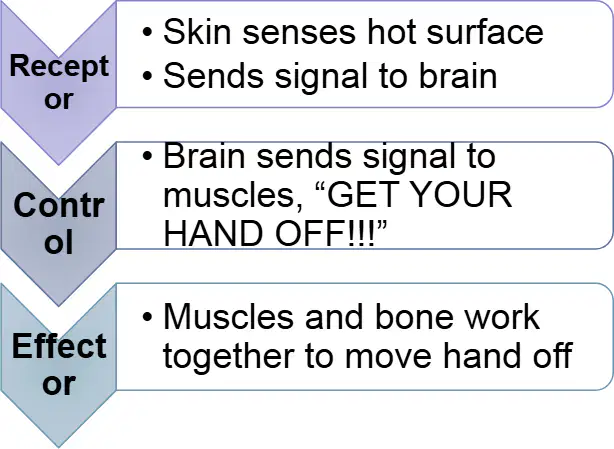
What is the role of the receptor when the skin touches a hot surface?
The receptor sends signals to the muscles to move the hand off.
The receptor senses the very hot surface and sends signals to the brain.
The receptor controls the movement of the hand.
The receptor works with bones to move the hand off.
What happens when the body temperature rises above 98.6°F in the negative feedback process?
The brain sends signals for muscles to shiver
The body begins to cool down by sweating
The body temperature continues to rise
The body begins to warm up
What is the point of a feedback loop?
To provide the body with more energy
To provide the body with more food
To make sure the conditions in the body are always changing
To make sure the conditions in the body remain stable
Which situation indicates that a disruption of homeostasis has taken place?
the presence of hormones that keep the blood sugar steady
the maintenance of a constant body temperature
cell division that is involved in normal growth
a rapid rise in the number of red blood cells
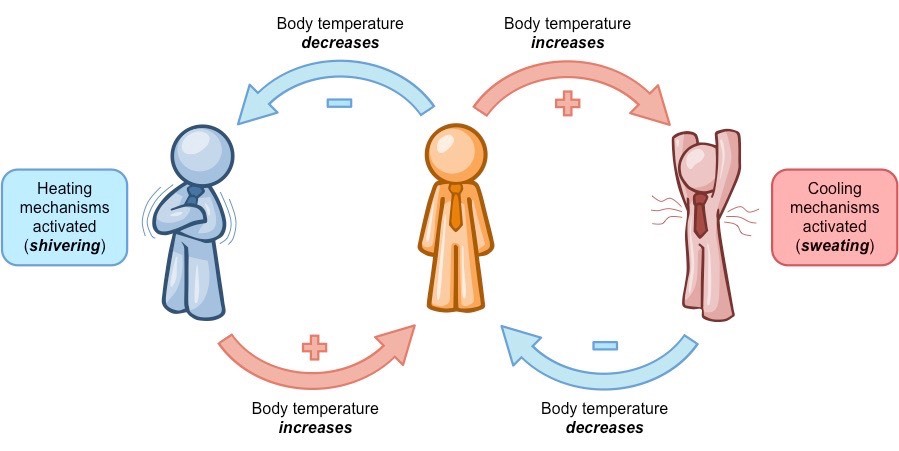
In this body temperature feedback loop, predict what would happen if cooling mechanisms were NOT activated?
The body would not warm up.
The body would not cool down.
Your body would get colder and colder.
Your body would release lots of heat.
Is this positive or negative feedback?
shivering
Positive Feedback
Negative Feedback
Is this positive or negative feedback?
breathing more when you're running
Positive Feedback
Negative Feedback
The group of organisms that use the process of homeostasis includes
mammals, only
animals, only
plants and animals
all living things

Glucagon is released by the pancreas when blood glucose levels decrease and stimulates liver cells to release stored sugars into the blood to bring blood glucose levels back up.
Positive Feedback
Negative Feedback
Insulin is a hormone produced by the pancreas in response to high blood glucose levels. When the pancreas releases insulin, it allows glucose to enter all body cells, where it is used for energy production. This brings blood glucose levels down.
Positive Feedback
Negative Feedback
What is leptin resistance?
The ability of leptin to increase appetite
The effectiveness of leptin in reducing body weight
The inability of leptin to exert its effects in obese individuals
The process of leptin crossing the blood-brain barrier
Why is leptin not clinically useful in treating obesity?
It causes severe side effects
It cannot be administered orally
It is too expensive to produce
Obese individuals are insensitive to leptin
How does leptin influence energy expenditure?
By promoting fat storage
By decreasing metabolic rate (i.e. decrease metabolism)
By increasing appetite and fat intake
By enhancing metabolic rate (i.e. increase metabolism)
What is the function of leptin? Choose 2.
controls the daily circadian cycle
controls temperature
increasing energy levels when adipose cells are full from a meal
controls the rate of metabolism
Let you know you are satiated (i.e. full)
What is the target organ/cells of leptin?
In the hypothalamus of the brain
liver
In the prefrontal cortex of the brain
all cells

This is adipose tissue, what hormone does it release?
Insulin
Energy
Growth Hormone
Leptin
Commonly known as fat, this tissue forms the subcutaneous layer beneath skin.
Areolar
Reticular
Dense Irregular
Insulin is secreted by what cells?
Neurons
Beta Cells
Goblet Cells
Parietal Cells
The ___________ produces__________ in response to rising glucose levels in our blood.
liver, glucagon
pancreas, insulin
adrenals, adrenaline
What is true about insulin resistance? Check all that apply.
cells in your muscles, and liver don't respond well to insulin
Cells can use glucose from your blood for energy.
Glucose can't enter the cells
Glucose builds up in the blood.
can lead to cancer
Type of diabetes characterized by insulin resistance
Type 1 diabetes
Type 2 diabetes
Gestational diabetes

What is the function of insulin? Choose 2.
diagnose diabetes
turn glucose into energy
help glucose enter the cells of the body
all choices
reduce blood sugar
What causes blood glucose levels to fall?
eating
fasting, missing a meal and vigorous exercise
sleeping
going to the toilet
What causes blood glucose levels to rise?
eating
vigorous exercise
sleeping
going to the toilet
Which of the following is a hormone used to control glucose concentrations in the blood?
insulin
glycogen
leptin
adrenaline
What do cells need glucose for?
photosynthesis
ATP energy
protein synthesis
combustion
If you have hyperglycemia (i.e. high blood sugar) one negative effect is
a diabetic coma.
obesity.
tons of energy.
low energy.
Which body system controls the body to maintain homeostasis?
excretory
nervous
circulatory
skeletal
Mrs. Connolly's daughter's stomach is growling, and she knows she is hungry. She eats a cheeseburger and fries for lunch, feels satiated (i.e., full), stops eating, and leaves the last few bites on her plate. Explain how leptin played a role in homeostasis within her body to tell her to stop eating.
Use vocabulary: Leptin, satiated/satiety, homeostasis, hypothalamus, blood vessels, energy, adipose tissue
Instructions: Write a short essay (1 paragraph/8 sentences +) explaining how your body maintains balance in blood sugar/glucose levels. In your response, be sure to answer the following questions in 1 paragraph:
1) Define homeostasis and identify the organ responsible for regulating blood sugar levels.
2) Explain what happens when blood sugar is too high (e.g., after eating a meal).
3) Explain what happens when blood sugar is too low (e.g., after exercising or skipping a meal).
4) Describe what happens to this "balancing act" in a person with diabetes.
USE THE WORD BANK BELOW:
Homeostasis Pancreas Liver Brain Glucose Insulin Glucagon Negative Feedback Loop Diabetes
A person with diabetes often has high blood sugar because:
They exercise too much.
Their body cannot produce or properly use insulin.
Their body is maintaining homeostasis too well.
They have too much glucagon in their liver.
Glucagon is called the "opposite" hormone of insulin because it:
Causes the body to feel hungry.
Decreases the amount of sugar in the blood.
Is only found in the brain.
Raises blood sugar when it gets too low.
What organ acts as the "reservoir" or storage center for glucose (storing it as glycogen)?
Lungs
Stomach
Heart
Liver

According to this graph, what is the person doing during the event (blue region)
Eating
Exercising
Type 1 Diabetes
Type 2 Diaibetes


