
 Worksheets
Anatomy Chp 1-5
Total questions: 132
Worksheet time: 2hrs 44mins
Histology is the study of structures that can be observed without a magnifying lens.
True
False
We live in an ever‑changing environment outside of our body, yet our internal conditions remain relatively stable. This is called ________.
evolution
metastasis
responsiveness
homeostasis
An _________blank is composed of two or more tissues types, whereas _________blank are microscopic structures in a cell.
organ system; organs
organ; organelles
organelle; molecules
organ; molecules
The study of the structure and function of cells is called
comparative physiology
cytology
exploratory physiology
gross anatomy
What are the simplest body structures considered alive?
Organs
Organ systems
Cells
Organelles
The prefix hypo‑ means ________, whereas hyper‑ means ________.
front; back
right; left
inside; outside
below; above
A(n) ________ is a group of similar cells and their intercellular materials in a discrete region of an organ performing a specific function.
organelle
organ system
macromolecule
tissue
A physiological ________ is a difference in chemical concentration, electrical charge, physical pressure, temperature, or other variables between one point and another.
feedback loop
barrier
gradient
imbalance
Blood glucose concentration rises after a meal and stimulates the pancreas to release insulin. Insulin lowers blood glucose. This is an example of ________.
integration control
set point adjustment
dynamic equilibrium
negative feedback
The study of normal body structures is called ________.
anatomy
microscopy
biology
physiology
When a woman is giving birth, oxytocin intensifies contractions until the baby is expelled. This is an example of ________.
negative feedback
positive feedback
set point adjustment
integration control
The lexicon of standard international anatomical terms is ________.
formed from thousands of French word roots
called Terminologia Anatomica (TA)
formed from thousands of Italian word roots
called Nomina Anatomica (NA)
What does “hypercalcemia” mean?
Elevated sodium levels
Lowered sodium levels
Lowered calcium levels
Elevated calcium levels
Which of the following lists levels of human structure from the most complex to the simplest?
Organ, organ system, tissue, cell, organelle
Organ system, organelle, tissue, cell, organ
Organ system, organ, tissue, cell, organelle
Organelle, cell, tissue, organ, organ system
Chemicals in a solution move down a concentration gradient from ________ concentration to ________ concentration.
higher; lower
lower; higher
. equal; equal
higher; higher
During exercise, body temperature rises. Blood vessels dilate and heat is lost. This is an example of ________.
integration control
negative feedback
set point adjustment
positive feedback
The study of how the body functions is called ________.
anatomy
pathology
biology
physiology
What is the answer to this: Table sugar is a disaccharide called _________ and is made up of the monomer(s) _________
sucrose; glucose and fructose
maltose; glucose and sucrose
glycogen; glucose and fructose
lactose; glucose and galactose
Carbon is very versatile in forming bonds with other atoms because it has _________blank valence electrons.
four
two
eight
six
Nucleic acids are _________blank of _________blank.
monomers; monosaccharides
polymers; nucleotides
monomers; ATP
polymers; DNA
Proteins perform all of the following functions except _________
produce muscular and other forms of movement
store hereditary information
regulate transport of solutes into and out of cells
give structural strength to cells and tissues
Proteins are _________built from _________ different amino acids.
molecules; 10
peptides; 25
polymers; 20
monomers; 10
All enzymes are _________
lipids
nucleic acids
proteins
cofactors
Which of these is hydrophobic?
K+
Fat
Water
Cl−
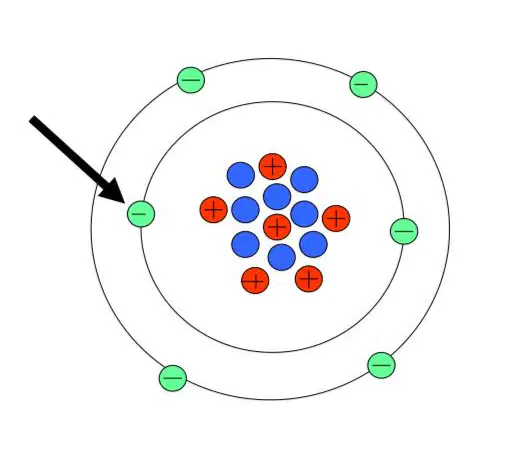
What is indicated by the arrow?
Prion
Anion
Proton
Electron
When table salt, sodium chloride (NaCl), is placed in water _________.
Na+ and Cl− form polar covalent bonds with each other
Na+ and Cl− form ionic bonds with each other
Na+ and Cl− become separated by their Van der Waals forces
ionic bonds between Na+ and Cl− are broken
The most abundant element in the human body, by weight, is _________
calcium
hydrogen
nitrogen
oxygen
_________ is a monosaccharide, whereas _________ is a polysaccharide.
Cellulose; glucose
Fructose; sucrose
Glucose; starch
Lactose; glycogen
Na (atomic no. 11) reacts with Cl (atomic no. 17) to become stable. In the reaction, Na will _________, while Cl will _________
give up one electron; accept one electron
become an anion; become a cation
give up one proton; accept one proton
share one electron with chlorine; share one electron with sodium
Triglycerides consist of a 3-carbon compound called _________ bound to three _________.
glycerol; fatty acids
lactate; glycerols
sterol; fatty acids
eicosanoid; steroids
Oxygen has an atomic number of 8 and an atomic mass of 16. How many valence electrons does it have?
2
6
16
8
In a workout your muscle cells produce lactate, yet you maintain a constant blood pH because _________.
metabolic acids are neutralized in muscle cells before released into the blood
metabolic bases are produced at the same rate by muscle cells to neutralize the acids
the body contains chemicals called buffers that resist changes in pH
What type of bond attracts one water molecule to another?
An ionic bond
A covalent bond
A hydrolytic bond
A hydrogen bond
Sodium has an atomic number of 11 and an atomic mass of 23. Sodium has _________
12 electrons and 11 neutrons
12 protons and 11 electrons
12 neutrons and 11 protons
12 electrons and 11 protons
The breakdown of glycogen (an energy-storage compound) is an example of a(n) _________ reaction.
synthesis
exergonic
equilibrium
endergonic
Which one of the following would not increase the rate of a reaction?
A rise in temperature
An increase in reactant concentrations
The presence of a catalyst
A decrease in reactant concentrations
_________ differ from one another in their number of neutrons and atomic mass.
Anions
Isotopes
Cations
Free radicals
Which of these has the highest H+ concentration?
Saliva, pH = 6.6
Lemon juice, pH = 2.3
Household ammonia, pH = 10.8
Tomato juice, pH = 4.7
A drastic conformational change in a protein in response to extreme heat or pH is called _________
denaturation
deconformation
saturation
contamination
What is the name of the positively charged subatomic particle?
Electron
Neutron
Proton
Element
What type of bond involves the unequal sharing of electrons?
Polar covalent
Nonpolar covalent
Ionic
Hydrogen
White blood cells engulf bacteria by means of _________
cotransport
phagocytosis
pinocytosis
receptor-mediated endocytosis
Which of the following is not one of the three basic components of a cell?
Nucleus
None of these are basic components of a cell.
Interstitial fluid
Cytoplasm
What do facilitated diffusion and active transport have in common?
Both involve transport of a solute down its concentration gradient.
. Both involve the use of energy provided by ATP.
Both involve transport of a solute up its concentration gradient.
Both are examples of carrier-mediated transport
Which of the following organelles is not involved in protein synthesis?
Smooth ER
The nucleus
Rough ER
The Golgi complex
The plasma membrane is mostly made of molecules that have hydrophilic heads and hydrophobic tails. These molecules are called _________
lipoproteins
phospholipids
glycolipids
proteoglycans
The most abundant molecules in the plasma membrane are _________
cholesterol molecules
prostaglandins
glycolipids
phospholipids
Which of the following processes requires the use of energy?
Filtration
Simple diffusion
Active transport
Facilitated diffusion
Muscle cells contain numerous _________ to serve their high demand for ATP.
Golgi vesicles
lysosomes
mitochondria
ribosomes
What is the branch of biology that investigates cells called?
Arthrology
Microscopy
Microscopy
Cytology
______ play an important role in cell division, and are made of ______.
Inclusions; centrosomes
Ribosomes; intermediate filaments
Centrioles; microtubules
Mitochondria; microtubules
The sodium-potassium ( Na+−K+ ) pump transports both sodium and potassium _________blank their concentration gradients in a process called _________
down; countertransport
up; active transport
up; cotransport
down; active transport
A patient was severely dehydrated, losing a large amount of fluid. The patient was given intravenous fluids of normal saline. Normal saline is ______ to your blood cells and is about ______ NaCl.
isotonic; 9%
hypertonic; 9%
hypotonic; 9%
isotonic; 0.9%
A protein that is bound to a carbohydrate is called a
phosphoprotein
proteocalyx
lipoprotein
glycoprotein
Which organelle is most active in causing programmed cell death?
Rough endoplasmic reticulum
Centriole
Lysosome
Golgi complex
The flat-shaped cells found covering the skin are ______ in shape.
cylindrical
spherical
columnar
squamous
Which function would immediately cease if the ribosomes of a cell were destroyed?
Osmosis
Protein synthesis
Active transport
Exocytosis
Simple diffusion is defined as the movement of
molecules from areas of lower concentration to areas of higher concentration
gas molecules across a membrane
water molecules across a membrane
molecules from areas of higher concentration to areas of lower concentration
When sugar is mixed with water, equilibrium is reached when
molecules of sugar stop moving
water and sugar molecules are moving at the same speed
there are the same number of water molecules as dissolved sugar molecules
the dissolved sugar molecules are evenly distributed throughout the solution
Which of the following does not affect the rate of diffusion?
Temperature
Membrane permeability
The amount of available ATP
Steepness of the concentration gradient
Diffusion is one of the processes in which materials are exchanged between a cell and its environment.
True
False
What does facilitated diffusion require?
Lipid or carbohydrate carriers
Carrier proteins
Lipid carriers
Carbohydrate carriers
Facilitated diffusion occurs______
in either direction depending on the temperature
into the cell only
in either direction depending on the concentration gradient of the molecule
in either direction depending on the size of the molecule
Facilitated diffusion is used to transport _________
H₂O and O₂
sugars and amino acids
sugars and H₂O
CO₂ and H₂O
Unlike simple diffusion, facilitated diffusion requires energy expenditure by the cell.
True
False
Osmosis is best defined as the movement of _________
molecules from an area of low concentration to an area of higher concentration
water molecules inside a container
water molecules across a membrane from an area of high water concentration to an area of lower concentration
water molecules across a membrane from an area of low water to an area of higher concentration
Which of the following will pass through a cell membrane most easily?
Large polar molecules
Large nonpolar molecules
Small nonpolar molecules
Small polar molecules
Facilitated diffusion requires a specific transporter for a specific molecule.
True
False
A red blood cell placed in a hypertonic medium will ________
become a white blood cell
burst
shrink
. expand
A 5% urea solution is hypotonic to a 10% urea solution.
True
False
If a cell is placed in an isotonic medium, there will be no net movement of water.
True
False
The sodium–potassium pump functions to pump ________
sodium and potassium ions into the cell
sodium ions into the cell and potassium ions out of the cell
sodium and potassium ions in both directions across the cell membrane
sodium ions out of the cell and potassium ions into the cell
What is the source of energy used to power the sodium–potassium pump?
Breakdown of ATP
Transport of GTP by the pump
Formation of ATP
Breakdown of GTP
During one cycle, the sodium–potassium pump binds and moves _________blank.
1 Na⁺ and 2 K⁺
2 Na⁺ and 3 K⁺
3 Na⁺ and 3 K⁺
3 Na⁺ and 2 K⁺
The sodium–potassium pump is a transmembrane protein.
True
False
The binding and release of sodium or potassium ions are due to conformational changes in the protein.
True
False
Eye color is caused by genes at multiple loci. This phenomenon is called _________
polygenic inheritance
sex linkage
incomplete dominance
pleiotropy
What is the complementary DNA base sequence to the DNA strand TGCCAT?
UGCCAU
TGCCAT
ACGGTA
ACGGUA
The stage at which chromosomes aggregate along the equator of a cell is _________
anaphase
interphase
prophase
metaphase
After cytokinesis, the cell enters the G1 phase.
True
False
In chromatin, DNA winds around disc-shaped clusters of eight proteins called _________
kinetochores
centrioles
histones
nucleosomes
The human genome consists of approximately _________ pairs of nucleotides.
3000
3 billion
300,000
3 million
The alleles possessed by all members of a population collectively are called the _________
species DNA
genetic drift
phenotype
gene pool
If one allele is not phenotypically expressed in the presence of another, we say that it is a _________ allele.
recessive
dominant
homozygous
suppressed
Hemophilia is caused by a sex-linked recessive allele. This means that _________
females can be carriers but cannot get hemophilia
a male can give the allele to their son but not to their daughter
a male who has hemophilia inherited the allele from his mother
the gene is found on the Y chromosome
A karyotype shows the _________ chromosomes sorted and isolated from a cell in _________.
23; interphase
46; S phase
46; prophase
46; metaphase
Cytokinesis overlaps with which phase of mitosis?
Metaphase
The S phase
Prophase
Telophase
Sister chromatids are pulled to opposite poles of a cell during _________of the cell cycle.
the S phase
prophase
anaphase
metaphase
Which of the following is not found in RNA?
Uracil
Ribose
Thymine
Guanine
Which of the following represents the correct order of the phases of the cell cycle?
G1 → G2 → M → S
G1 → M → G2 → S
G1 -> S -> G2 -> M
G1 → G2 → S → M
During mitosis, the division of the cytoplasm is called _________
mitosis
cytokinesis
cytogenetics
meiosis
Which of the following represents the correct order of the phases of mitosis?
prophase → anaphase → metaphase → telophase
prophase → metaphase → telophase → anaphase
prophase -> metaphase -> anaphase -> telophase
metaphase → prophase → anaphase → telophase
DNA replication occurs in mitosis.
True
False
Mitosis and cytoplasmic division result in the formation of two genetically identical cells.
True
False
Which of the following events does NOT occur in prophase of mitosis?
The chromosomes are replicated.
The mitotic spindle begins to form.
The nuclear membrane breaks down.
The nucleolus breaks down.
In DNA, which nitrogenous base pairs with adenine?
Guanine
Thymine
Uracil
Cytosine
What term describes nuclear division?
Cell cycle
Cytokinesis
Interphase
Mitosis
DNA replication occurs during the G2 phase.
True
False
During which phase do sister chromatids separate and start moving toward opposite poles of the cell?
Prophase
Metaphase
Telophase
Anaphase
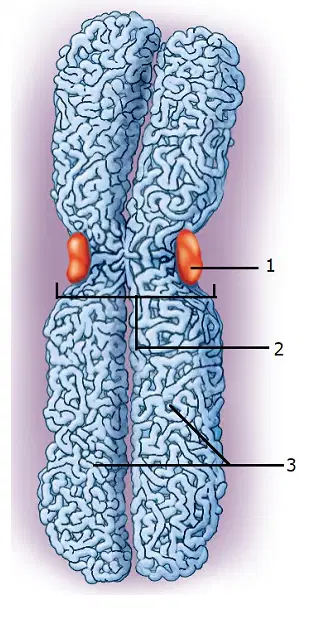
Name the "pinched in" region of the chromosome labeled 2.
Centromere
Kinetochore
Sister chromatids
Histone

Which phase of the cell cycle is labeled 2?
First gap phase (G1)
Second gap phase (G2)
Mitotic phase (M)
Synthesis phase (S)
The clear gel inside a cell is called _________.
interstitial fluid
cytosol
matrix
tissue fluid
The _________ gives rise to the _________.
ectoderm; nervous system and epidermis
endoderm; muscular system and skeletal system
mesoderm; endoderm
endoderm; mesoderm
Which type of muscle tissue is found in the walls of hollow organs?
Skeletal muscle
Cardiac muscle
Organ muscle
Smooth muscle
The clear gel that usually surrounds cells is called interstitial fluid.
True
False
The four primary tissue types found in adult organs include all of the following except _________ tissue.
nervous
connective
fibrous
epithelial
Epithelium that consists of more than one layer of cells is called _________
stratified
squamous
pseudostratified
columnar
Nervous tissue consists predominantly of two cell types, neurons and _________.
fibroblasts
neuroglia
myocytes
chondrocytes
The middle primary germ layer is called _________, which gives rise to a gelatinous material called _________, which then gives rise to different types of connective tissue such as bone, cartilage, and blood.
mesoderm; fibroblasts
ectoderm; mesenchyme
mesoderm; mesenchyme
ectoderm; stem cells
Neurons usually have multiple short, branched processes called _________, which receive signals from other cells and conduct messages to the _________.
nerve fibers; glial cells
axons; dendrites
nerve fibers; dendrites
dendrites; cell body
The covering of body surfaces and the lining of body cavities is composed of _________ tissue.
nervous
epithelial
muscle
muscle
An epithelium with a single layer of tall cells would be classified as which type of epithelium?
Stratified columnar epithelium
Stratified cuboidal epithelium
Simple columnar epithelium
Simple squamous epithelium
Skeletal muscle is described as
nonstriated and voluntary
striated and involuntary
nonstriated and involuntary
striated and voluntary
Mesoderm gives rise to muscle, bone, and blood.
True
False
______ secrete ______ into ______.
Goblet cells; mucus; the blood
Endocrine glands; hormones; the blood
Endocrine glands; hormones; ducts
Exocrine glands; hormones; ducts
Tissues whose cells are most susceptible to stimuli that change the membrane potential are called _________.
excitable tissues
loose connective tissues
epithelium
stroma
Which of the following is not a primary tissue type?
Connective
Nervous
Bone
Epithelium
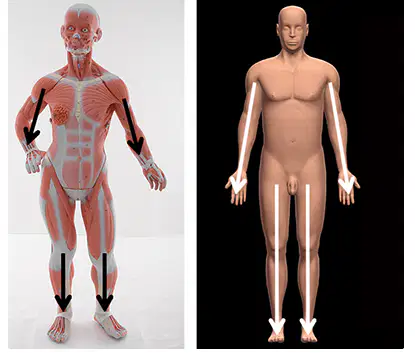
Which structure is highlighted and indicated by the leader line?
Distal
Medial
Lateral
Proximal

Which structure is highlighted and indicated by the leader line?
Right upper quadrant
Left upper quadrant
Left lower quadrant
Right lower quadrant
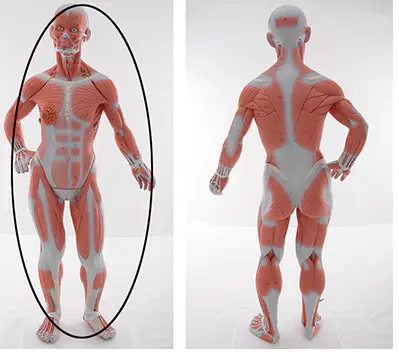
Which structure is highlighted and indicated by the leader line?
Anterior
Posterior
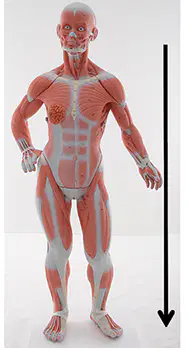
Which structure is highlighted and indicated by the leader line?
Superior
Lateral
Proximal
Inferior
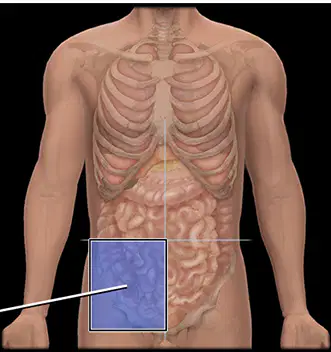
Which structure is highlighted and indicated by the leader line?
Right lower quadrant
Right upper quadrant
Left lower quadrant
Left upper quadrant
s towards the front of the body.
Anterior
Distal
Medial
Superior
is farther from the trunk or origin of a structure.
Medial
Anterior
Distal
Superior
is towards the midline of the body.
Anterior
Distal
Superior
Medial
is upward or towards the head.
Anterior
Distal
Medial
Superior
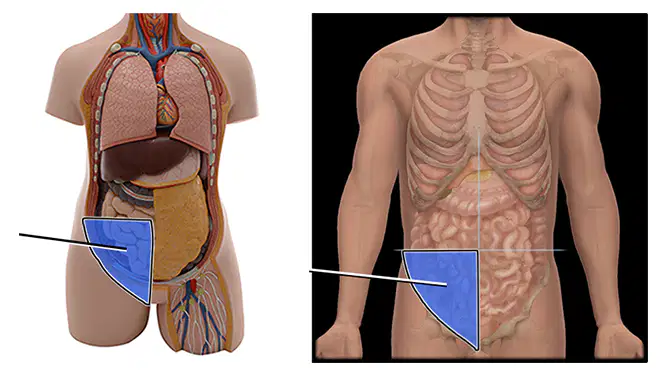
Which structure is highlighted and indicated by the leader line?
Right lower quadrant
Left upper quadrant
Right upper quadrant
Left lower quadrant
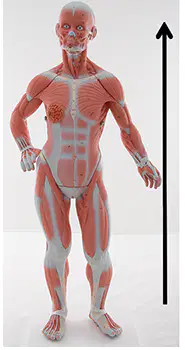
Which structure is highlighted and indicated by the leader line?
Medial
Proximal
Superior
Distal

Which structure is highlighted and indicated by the leader line?
Left lower quadrant
Left upper quadrant
Right lower quadrant
Right upper quadrant
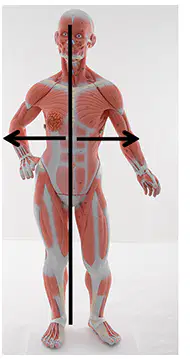
Which structure is highlighted and indicated by the leader line?
Lateral
Distal
Medial
Inferior
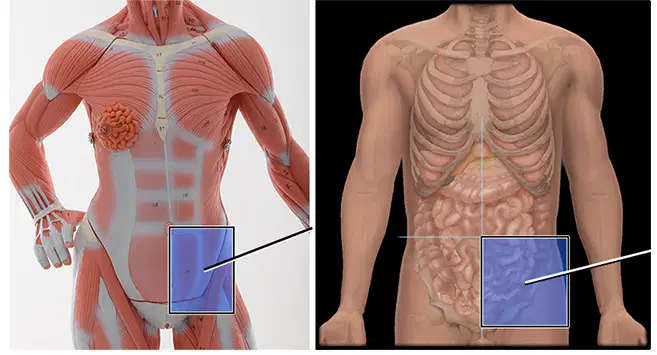
Which structure is highlighted and indicated by the leader line?
Left lower quadrant
Right upper quadrant
Left upper quadrant
Right lower quadrant
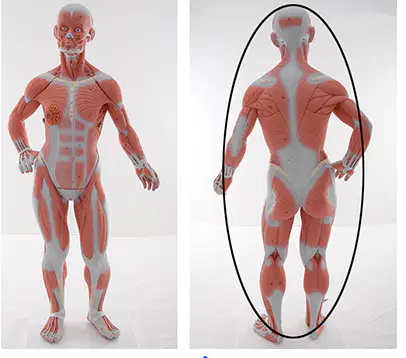
Which structure is highlighted and indicated by the leader line?
Posterior
Anterior

