


10th Grade Atomic Mass Quizzes
Test your knowledge of atomic mass concepts with this comprehensive Grade 10 chemistry quiz designed to assess your understanding through practice questions and instant feedback. Challenge yourself with self-paced assessment questions covering atomic mass calculations, isotopes, and relative atomic mass principles.

20 questions
Quiz on Atomic Mass and Isotopes

Quiz
•
10th Grade
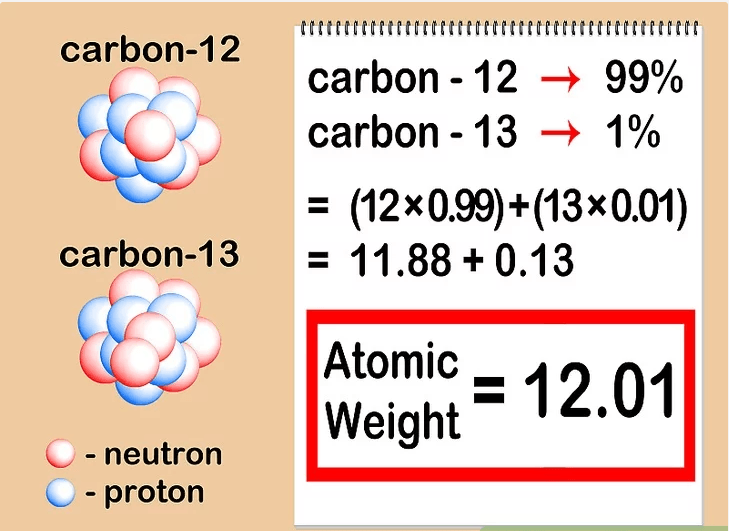
13 questions
Average Atomic Mass
Quiz
•
10th Grade

10 questions
Atomic/Mass Number
Quiz
•
10th Grade

37 questions
Understanding Atomic Mass and Ions
Quiz
•
10th Grade

11 questions
Quiz Review: Isotopes and Average Atomic Mass
Quiz
•
10th Grade

20 questions
Calculating Average Atomic Mass
Quiz
•
10th Grade
16 questions
Average Atomic Mass
Quiz
•
10th Grade
6 questions
Average Atomic Mass
Quiz
•
10th Grade
13 questions
Semester 1 review: Average atomic mass
Quiz
•
10th Grade
10 questions
Atoms & Isotopes
Quiz
•
10th Grade
25 questions
Chapter 4 ATOMS
Quiz
•
10th Grade
38 questions
EMS and Atomic Mass
Quiz
•
10th - 12th Grade
Explore 10th Grade Atomic Mass Quizzes
Atomic mass represents a fundamental concept in Grade 10 chemistry that bridges the gap between atomic theory and practical chemical calculations. These comprehensive quizzes available through Wayground provide students with targeted assessment opportunities to master atomic mass calculations, isotope relationships, and the weighted average principles that determine elemental atomic masses on the periodic table. Through carefully structured practice questions, students develop critical analytical skills needed to distinguish between mass number and atomic mass, calculate relative atomic masses from isotopic data, and apply atomic mass concepts to solve stoichiometric problems. The immediate feedback mechanism within these quizzes helps students identify misconceptions early and reinforces proper understanding of how atomic mass relates to chemical formulas and equation balancing. Wayground's extensive collection draws from millions of teacher-created resources, ensuring educators have access to diverse atomic mass quiz formats that align with curriculum standards and learning objectives. The platform's robust search and filtering capabilities allow teachers to quickly locate quizzes that match specific atomic mass subtopics, from basic isotope identification to complex weighted average calculations. Customization tools enable educators to differentiate instruction by modifying question difficulty, adjusting time limits, or incorporating visual elements like periodic table references. These digital-first quiz delivery options support flexible classroom implementation, whether used for formative assessment during instruction, summative evaluation after atomic mass units, or targeted remediation for students struggling with mass calculation concepts, ultimately strengthening foundational chemistry skills essential for advanced coursework.
FAQs
How do I teach atomic mass to chemistry students?
Start by distinguishing atomic mass from atomic number and mass number, as students frequently conflate these terms. Use isotope tables to show students how naturally occurring elements exist as a mixture of isotopes, then walk through weighted average calculations using concrete percentage abundance data. Building from the conceptual definition to the mathematical procedure helps students understand why atomic mass values on the periodic table are not whole numbers.
What practice problems help students learn atomic mass calculations?
The most effective practice problems for atomic mass involve calculating weighted averages from isotopic abundance data, interpreting mass spectrometry graphs, and converting between atomic mass units and molar mass. Students benefit from problems that require them to work both directions: calculating atomic mass from given isotope data and back-calculating percent abundance when atomic mass is known. Scaffolded problem sets that gradually remove given information build procedural fluency and conceptual understanding simultaneously.
What mistakes do students commonly make when calculating atomic mass?
The most common error is confusing mass number with atomic mass — students often round the periodic table value to the nearest whole number and treat it as the mass number of a single isotope. A second frequent mistake is failing to convert percent abundance to a decimal before multiplying, which throws off weighted average calculations entirely. Students also commonly add isotope masses without weighting them, treating all isotopes as equally abundant regardless of what the problem states.
How do I differentiate atomic mass instruction for students at different skill levels?
For struggling students, begin with two-isotope weighted average problems before introducing elements with three or more isotopes, and provide partially completed calculation templates to reduce cognitive load. Advanced students can be challenged with back-calculation problems, mass spectrometry interpretation, or connecting atomic mass to molar mass in stoichiometry contexts. On Wayground, teachers can apply accommodations such as reduced answer choices or read-aloud support to individual students without affecting the rest of the class, making it straightforward to run differentiated sessions from a single assignment.
How do I use Wayground's atomic mass quizzes in my classroom?
Wayground's atomic mass quizzes are available as printable PDFs for traditional classroom use and in digital formats for technology-integrated environments, so teachers can deploy them however their classroom is set up. Teachers can also host quizzes as a quiz directly on Wayground, enabling real-time tracking of student responses and instant access to answer keys. The platform's search and filtering tools allow teachers to locate quizzes aligned to specific chemistry standards and adjust content to match their students' current skill level.
What is the difference between atomic mass, atomic number, and mass number?
Atomic number is the count of protons in an atom's nucleus and defines the element. Mass number is the total count of protons and neutrons in a specific isotope and is always a whole number. Atomic mass, by contrast, is the weighted average of all naturally occurring isotopes of an element based on their relative abundance, which is why it appears as a decimal on the periodic table rather than a whole number.
How does atomic mass relate to molar mass in chemistry?
Atomic mass, expressed in atomic mass units (amu), is numerically equal to molar mass expressed in grams per mole (g/mol). This means that if carbon has an atomic mass of 12.011 amu, one mole of carbon atoms has a molar mass of 12.011 g/mol. Understanding this relationship is essential for stoichiometry, as it is the bridge between the atomic scale and measurable laboratory quantities.

Accessibility
Features
Wayground Super
School & District
Wayground for Business
Create a quiz
Create a presentation
Wayground AI
Subjects
Mathematics
Social Studies
Science
Physics
Chemistry
Biology
About
Our Story
Wayground Blog
Media Kit
Careers
Support
F.A.Q.
Help & Support
Privacy Policy
Terms of Service
Teacher Resources
2026 Wayground


Get our app

