

10th Grade Dalton's Law Quizzes
Test your understanding of Dalton's Law with this Grade 10 chemistry quiz featuring practice questions on partial pressures and gas mixtures. Assess your knowledge through self-paced questions with instant feedback to master this fundamental gas law concept.

15 questions
PRACTICE: Dalton's Law of Partial Pressure

Quiz
•
10th Grade

15 questions
Dalton's Law
Quiz
•
10th Grade
15 questions
Dalton's Law
Quiz
•
10th Grade

10 questions
ET unit 7 -- Dalton's Law
Quiz
•
10th Grade

25 questions
Dalton's Law
Quiz
•
10th Grade

15 questions
Dalton's Law of Partial Pressure
Quiz
•
10th Grade
15 questions
Dalton's Law of Partial Pressure
Quiz
•
10th Grade
15 questions
Dalton's Law, Charles and Boyle's Law
Quiz
•
10th Grade
25 questions
Dalton's Law of Partial Pressure
Quiz
•
10th Grade
25 questions
Dalton's Law of Partial Pressure
Quiz
•
10th Grade
15 questions
Dalton's Law
Quiz
•
10th Grade
15 questions
Dalton's Law
Quiz
•
10th Grade
Browse by grade
Explore 10th Grade Dalton's Law Quizzes
Dalton's Law represents a fundamental principle in gas behavior that Grade 10 students must master to understand partial pressures and gas mixtures. These comprehensive quiz collections available through Wayground provide targeted assessment opportunities that evaluate student understanding of how individual gas pressures combine in mixture systems. The practice questions systematically cover essential concepts including partial pressure calculations, mole fraction relationships, and real-world applications of Dalton's Law in laboratory and industrial settings. Through immediate feedback and detailed explanations, students develop critical problem-solving skills while reinforcing their grasp of gas law principles that form the foundation for advanced chemistry coursework. Wayground's extensive library contains millions of teacher-created quiz resources specifically designed to support educators in delivering effective Dalton's Law instruction and assessment. The platform's robust search and filtering capabilities enable teachers to locate precisely aligned materials that match curriculum standards and specific learning objectives for gas law concepts. Customization tools allow educators to modify existing quizzes or create differentiated versions that accommodate diverse learning needs, while flexible digital delivery formats support both classroom instruction and independent practice. These comprehensive resources facilitate strategic lesson planning, targeted remediation for struggling students, and enrichment opportunities for advanced learners, ensuring that all Grade 10 students can successfully master the complexities of partial pressure calculations and gas mixture behavior.
FAQs
How do I teach Dalton's Law of partial pressures to chemistry students?
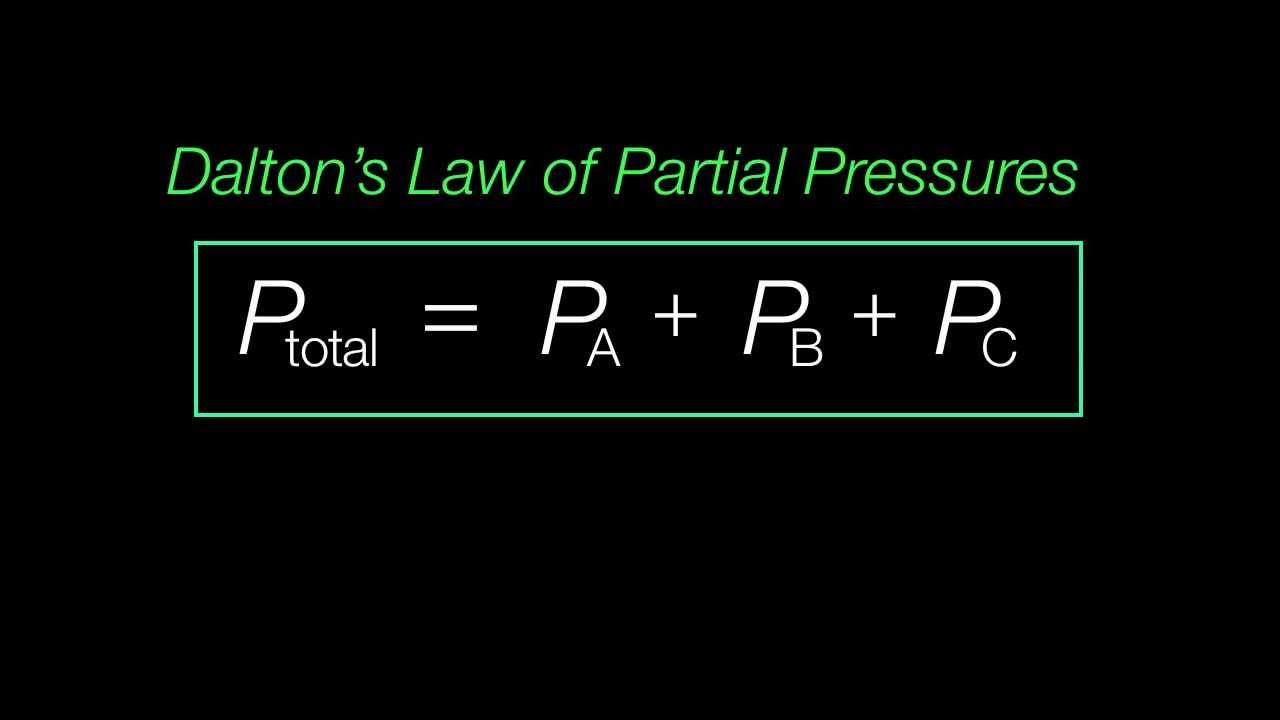
Start by establishing that gas molecules in a mixture behave independently of one another, so each gas exerts its own pressure as if it were alone in the container. From there, introduce the additive relationship: total pressure equals the sum of all partial pressures. Using concrete examples like atmospheric air as a mixture of nitrogen, oxygen, and other gases helps students connect the abstract formula to real-world systems before moving into calculations.
What kinds of practice problems help students master Dalton's Law calculations?
Effective practice should progress from single-step problems, such as finding total pressure given individual partial pressures, to multi-step problems that require students to identify an unknown partial pressure by subtracting known values from total pressure. Problems involving collected-over-water scenarios, where students must account for water vapor pressure, are especially valuable because they appear frequently on standardized chemistry assessments and require students to apply Dalton's Law in a less straightforward context.
What mistakes do students commonly make when solving Dalton's Law problems?
The most common error is forgetting to subtract water vapor pressure when a gas is collected over water, leading to an inflated value for the gas being measured. Students also frequently confuse partial pressure with mole fraction, or assume that a gas with a higher mole fraction always has a disproportionately higher pressure contribution without working through the math. Reinforcing the independence of each gas component and requiring students to show all steps explicitly helps catch both types of errors.
How can I differentiate Dalton's Law instruction for students at different ability levels?
For struggling students, begin with visual representations of gas mixtures and limit initial problems to two-component systems with whole-number pressures. For advanced learners, introduce problems that combine Dalton's Law with the ideal gas law or require unit conversions between kPa, atm, and mmHg. On Wayground, teachers can apply accommodations such as reduced answer choices or read-aloud support to individual students, allowing the same quiz to serve multiple ability levels without singling anyone out.
How do I use Dalton's Law quizzes from Wayground in my classroom?
Wayground's Dalton's Law quizzes are available as printable PDFs for traditional classroom use and in digital formats for technology-integrated or remote learning environments, including the option to host them as a quiz directly on Wayground. Teachers can use them for guided practice during instruction, as independent work for consolidation, or as targeted remediation for students who struggled with partial pressure concepts on an assessment. All quizzes include answer keys so students can self-check their work and identify gaps before a formal test.
How does Dalton's Law connect to other gas laws students need to know?
Dalton's Law is often taught alongside Boyle's Law, Charles's Law, and the Ideal Gas Law because it extends the concept of pressure into multi-component systems. Understanding partial pressures is a prerequisite for interpreting gas collection experiments and for later topics such as respiratory physiology, where oxygen and carbon dioxide partial pressures govern gas exchange. Building fluency with Dalton's Law calculations strengthens students' overall problem-solving approach to all quantitative gas law work.

Accessibility
Features
Wayground Super
School & District
Wayground for Business
Create a quiz
Create a presentation
Wayground AI
Subjects
Mathematics
Social Studies
Science
Physics
Chemistry
Biology
About
Our Story
Wayground Blog
Media Kit
Careers
Support
F.A.Q.
Help & Support
Privacy Policy
Terms of Service
Teacher Resources
2026 Wayground


Get our app

