

The Periodic Table and Bonding

Presentation
•
Chemistry
•
6th - 8th Grade
•
Practice Problem
•
Medium
Standards-aligned

Michael Stange
Used 106+ times
FREE Resource
8 Slides • 8 Questions
1
The Periodic Table and Bonding

2

3

4
Bonding
When elements chemically combine to form compounds, they either lose, share, or gain electrons.
Metals LOSE electrons (+ ions)
Metalloids (and elements near them on the periodic table) typically SHARE electrons
Nonmetals GAIN electrons (_ ions)
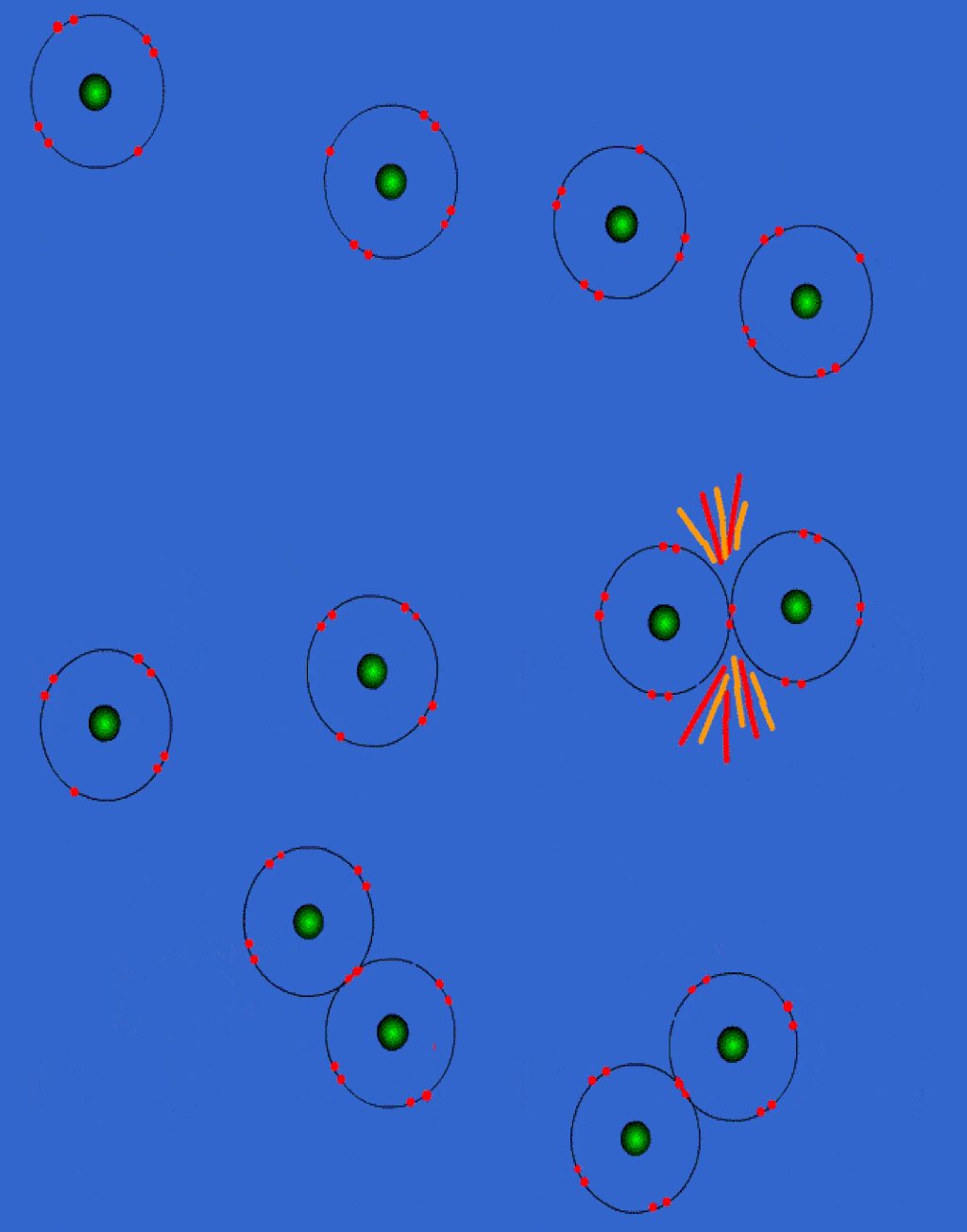
5
Bonding
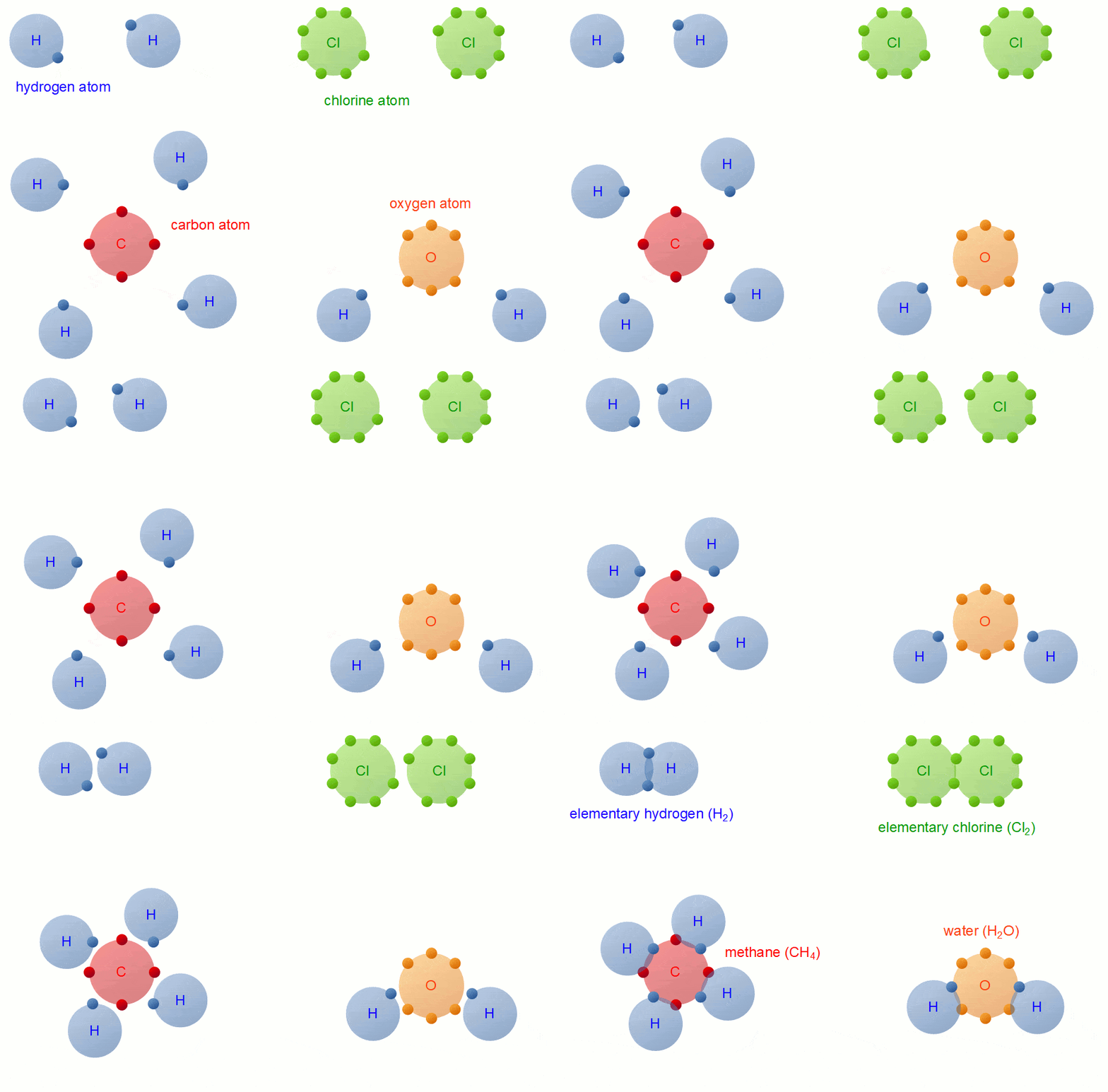
Whenever you have an electron pair from 2 separate elements, it creates an attraction that bonds the atoms together to form a compound.

6
7

8

9
Multiple Choice

In the periodic table, the number of valence electrons in each element DECREASES from left to right across each period.
10
Multiple Choice

Atoms tend to be stable and nonreactive if they have ______ valence electrons.
11
Multiple Choice

Which group of elements on the periodic table is composed gases that easily react with metals?
12
Multiple Choice

Which group of elements on the periodic table is composed of super reactive metals?
13
Multiple Choice

The reactivity of a NONMETAL depends on how easily it _______ valence electrons.
14
Multiple Choice

The reactivity of a METAL depends on how easily it _______ its valence electrons.
15
Multiple Choice

When an atom loses an electron, it becomes a __________, and when an atom gains an electron, it becomes a __________.
16
Multiple Choice

A(n) ____________ ______________ is the force of attraction that holds atoms together based on the arrangement of electrons between them.
The Periodic Table and Bonding
Show answer
Auto Play
Slide 1 / 16
SLIDE

