Unit 6 Exam Review
Presentation
•
Science
•
10th - 12th Grade
•
Medium
+4
Standards-aligned
Taylor Phillips
Used 14+ times
FREE Resource
10 Slides • 26 Questions
1
Unit 6 Exam Review
Origins of the Universe
2
The Big Bang Theory
the creation of the universe
3
The Big Bang: Evidence
Galaxies are moving away from us
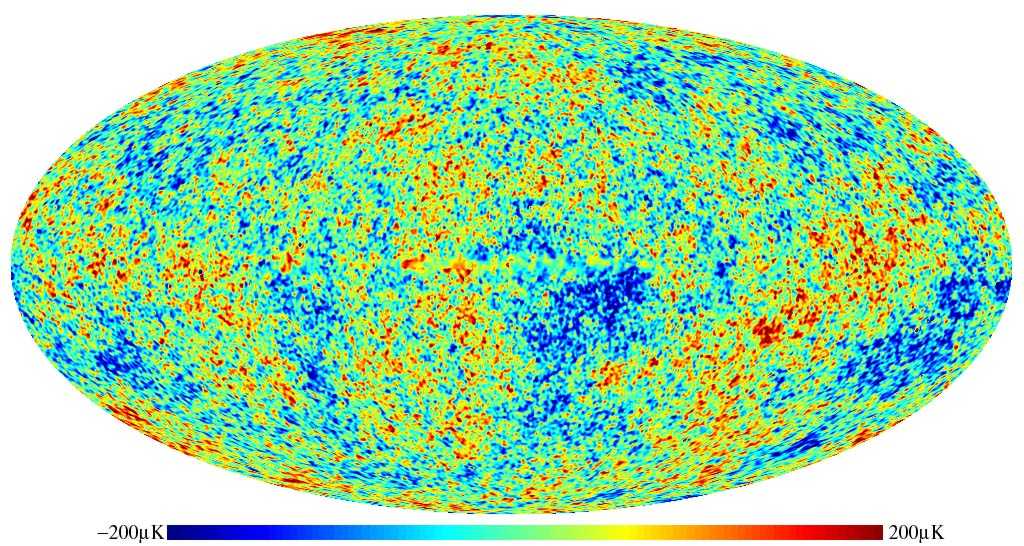
Cosmic Microwave Background radiation
The abundance of Helium and Hydrogen in the Universe
4
Red Shift
If a star is moving away from us , the light gets stretched out. This makes the light appear more red than it really is.
If the star is moving TOWARD us, the light gets squeezed and it appears more blue than it really is.
5
CMB
Cosmic Microwave Background Radiation
Left over ENERGY from the big bang
6
Hydrogren + Helium
The Universe is 74% hydrogen and 25% helium.
Heavier elements make up the other 1%.
7
Multiple Choice
A model of the universe in which Earth is at the center of the revolving planets and stars.
Solar System
Heliocentric
Geocentric
Constellations
8
Multiple Choice
9
Multiple Choice
In red shift, the wavelengths of light become
Longer
Shorter
Bluer
Slower
10
Multiple Choice
Which of the following is NOT evidence of the Big Bang Theory?
CMBR everywhere
Stars that are blue shifted
the universe is getting bigger
abundance of Hydrogen and Helium
11
Multiple Choice
The universe is expanding! This means that:
all of the galaxies are spreading out.
the universe must have started from a single point.
the universe is cooling down.
all of the above.
12
Multiple Choice
The term big bang refers to _______________.
The origin of the universe
The ultimate fate of the universe
A supernova explosion
The formation of a quasar
13
Multiple Choice
14
Multiple Choice
15
Multiple Choice
16
Multiple Choice
17
Multiple Choice
How does Cosmic Microwave Background Radiation support the Big Band Theory?
Microwaves are found everywhere in the universe.
Microwaves occurred at the time of the Big Bang
Microwaves are useful in our everyday lives
Only A & B
18
Multiple Choice
What is the big bang theory?
A theory that states that the universe started in a large mass and then imploded to form everything.
A theory that states that the universe was there, will be and is there. Is homogeneous and isotropic.
A theory that states that the universe is slowly coming back to a center.
A theory that states that the universe started in a small mass and then expanded, the expansion cooled down the temperature and that resulted in the formation of matter, energy, space and time.
19
Multiple Choice
What were the original two elements in our universe?
Hydrogen and Lithium
Helium and Oxygen
Helium and Hydrogen
None of the above
20
Multiple Choice
How does the abundance of hydrogen and helium support the Big Bang Theory.
Hydrogen and helium are elements on the Periodic Table
Hydrogen and helium are in the same ratio throughout the universe.
Hydrogen and helium have many current uses today
21
Multiple Choice
22
The Life Cycle of a Star
~
23
Life Cycle
Stars spend most of their lives in main sequence
Mass determines what happens to a star after main sequence
High mass stars live fast and die young. Low mass stars live longer and have a slooow burn.
24
Star Wars!!! Ha!!
Stars seek equilibrium between the attractive force of gravity and the outward force of fusion
Stars spend most of their lives fusing hydrogen into helium
25
H-R Diagram
A way to classify stars based on LUMINOSITY and TEMPERATURE
26
Multiple Choice
An extremely hot ball of gas with hydrogen fusing into helium is a
Planet
Star
Balance
27
Multiple Choice
Stars are formed from big clouds of gas and dust is known as:
dust cloud
space fog
neutron clouds
nebulae
28
Multiple Choice
True or False: The life of a star is dependent upon the mass of the original star.
True
False
29
Multiple Choice
When a nebula condenses and takes on a shape it is called:
a red supergiant
a black hole
a white dwarf
a protostar
30
Multiple Choice
When a Red Giant's outer atmosphere drifts away it is now known as:
planetary cloud
White dwarf cloud
planetary nebula
expanding nebula
31
Multiple Choice
Our sun is currently in what star stage?
Protostar
Nebula
Main Sequence
Red Giant
32
Multiple Choice
When a massive star begins to cool and expand it is known as a:
Black Dwarf
Red Giant
Red Supergiant
White Dwarf
33
Multiple Choice
34
Multiple Choice
35
Multiple Choice
In this stage, a star spends most of its life. Hydrogen is fused into helium at a temperature of millions of degrees.
nebula
protostar
main-sequence
supergiant
36
Multiple Choice
A star is born when nuclear _________ begins.
Measuring
Heating
Fusion
Unit 6 Exam Review
Origins of the Universe
Show answer
Auto Play
Slide 1 / 36
SLIDE

Similar Resources on Wayground
33 questions
Mass vs. Weight
Presentation
•
9th - 12th Grade
35 questions
Color (light Waves)
Presentation
•
9th - 12th Grade
31 questions
Tissues (Epithelial & Connective)
Presentation
•
10th - 12th Grade
27 questions
Newton's Second law of Motion
Presentation
•
9th - 12th Grade
35 questions
History of the Atom
Presentation
•
10th - 12th Grade
30 questions
Climate Factors
Presentation
•
10th - 12th Grade
26 questions
Limiting Factors and Carrying Capacity EOC Review
Presentation
•
9th - 12th Grade
27 questions
What is Biodiversity?
Presentation
•
11th - 12th Grade
Popular Resources on Wayground
28 questions
US History Regents Review
Quiz
•
11th Grade
36 questions
Biology Regents Review
Quiz
•
9th - 10th Grade
20 questions
Math Review
Quiz
•
3rd Grade
38 questions
Regents Life Science General Review
Quiz
•
9th Grade
20 questions
Math Review
Quiz
•
6th Grade
21 questions
EOY Grade 6 Benchmark Assessment - Content Skills
Quiz
•
6th Grade
20 questions
Inferences
Quiz
•
4th Grade
20 questions
Figurative Language Review
Quiz
•
6th Grade
Discover more resources for Science
45 questions
Earth and Space Science Regents: Exam Cram
Presentation
•
7th - 12th Grade
50 questions
Earth Science Regents Review
Quiz
•
10th Grade
20 questions
Explore Human Impact on Climate and Sustainability
Quiz
•
9th - 12th Grade
23 questions
Explore Adaptations and Natural Selection
Quiz
•
9th - 12th Grade
51 questions
Aug 2022 Chemistry Regents
Quiz
•
12th Grade