
Molecular Polarity
Presentation
•
Science
•
12th Grade
•
Practice Problem
•
Easy
+2
Standards-aligned
Salvador Magalong
Used 27+ times
FREE Resource
34 Slides • 26 Questions
1
Molecular Polarity
Synthesis Session
2
Poll
Self- Assessment:
• I can define what chemical bonding is and explain why it happens.
CRYSTAL CLEAR
CLEAR ENOUGH
BLURRY
3
Poll
Self- Assessment:
• I can differentiate the different types of chemical bonds from one another.
CRYSTAL CLEAR
CLEAR ENOUGH
BLURRY
4
Poll
Self- Assessment:
• I can identify the type of chemical bond present between two atoms.
CRYSTAL CLEAR
CLEAR ENOUGH
BLURRY
5
Poll
Self- Assessment:
• I can determine verbally if a molecule is polar or non-polar given its structure.
CRYSTAL CLEAR
CLEAR ENOUGH
BLURRY
6
Poll
Self- Assessment:
• I can relate the polarity of a molecule to its properties.
CRYSTAL CLEAR
CLEAR ENOUGH
BLURRY
7
REVIEW of the
LESSON PLAYLIST RESPONSES and FEEDBACK
8
Open Ended
Synthesis Question 1:
What is a chemical bond?
9
Synthesis Question 1:
What is a chemical bond?
an electrical attraction between the nuclei and valence electrons of an atom and which binds atoms together.
10
Open Ended
Synthesis Question 2:
Differentiate the three (3) types of chemical bonds that may exist in substances: ionic, covalent, and metallic.
11
Types of Chemical Bonds
a. ionic – transfer of electrons
(metal and nonmetal )(cation and anion)
12
Types of Chemical Bonds
b. covalent – sharing of electrons (among nonmetals)
13
Types of Chemical Bonds
c. metallic – existing among metals
14
Open Ended
Synthesis Question 3:
How will you differentiate POLAR from NON-POLAR covalent bond?
15
Non-polar covalent bond
• electrons are equally shared by the bonded atoms.
• balanced distribution of electrical charge
• electrons spend the same length of time in the locality of each atom
16
Polar covalent bond
• bonded atoms have an unequal sharing of electrons (partial electron transfer)
17
Multiple Choice
Concept Check 1:
In a polar covalent bond, the electron density (length of time of the electrons in the locality of each atom) is the same around the nuclei of the atoms involved.
True
False
18
Multiple Choice
Concept Check 2:
In a polar covalent bond, the electrons are closer to the more electronegative atom.
True
False
19
DIPOLE MOMENT
20
Dipole Moment
• the two partially charged regions or poles of a molecule are referred to as a dipole.
• symbolized by an arrowhead to the more electronegative atom (negative pole), and a crossed tail located at the less negative atom (positive pole)
21
Open Ended
Synthesis Question 4:
What is electronegativity?
22
Electronegativity
A measure of the tendency of an atom to attract electrons toward itself.
23
HOW TO DISTINGUISH A NONPOLAR FROM A POLAR COVALENT BOND?
24
Concept Check 3
Predict first if the bond between each pair of atoms is ionic or covalent. Further, classify the covalent bond as either polar or nonpolar using the concept of electronegativity. Determine the more electronegative atom in each pair.
25
For 5 minutes, answer the items above using your notebook and get ready with your answers in the next Quizizz Fill-in-the-blanks questions.
26
Fill in the Blank
Type answer...
27
Multiple Choice
Pair 1: Chlorine and Potassium
TYPE of BOND
Ionic
Polar
Non-polar
28
Multiple Choice
Pair 1: Chlorine and Potassium
MORE ELECTRONEGATIVE ATOM
Chlorine
Potassium
29
Fill in the Blank
Type answer...
30
Multiple Choice
Pair 2: Chlorine and Carbon
TYPE of BOND
Ionic
Polar
Non-polar
31
Multiple Choice
Pair 2: Chlorine and Carbon
MORE ELECTRONEGATIVE ATOM
Chlorine
Potassium
32
Fill in the Blank
Type answer...
33
Multiple Choice
Pair 3: Two atoms of Chlorine
TYPE of BOND
Ionic
Polar
Non-polar
34
Multiple Choice
Pair 3: Two atoms of Chlorine
MORE ELECTRONEGATIVE ATOM
Cannot be determined
Same
35
MOLECULAR GEOMETRY and POLARITY
A molecule whose bonds are all nonpolar in character is likely to be nonpolar overall.
However, NOT ALL POLAR COVALENT BONDS result to POLAR MOLECULES!!!
Molecule polarity is also affected by the molecular geometry, which in turn is influenced by the electrons in the molecule.
36
MOLECULAR GEOMETRY and POLARITY
• The polarity of an atom-atom bond may be different from the polarity of the whole molecule itself.
37
MOLECULAR GEOMETRY and POLARITY
•The difference in the electron density of each atom makes EACH Be-H bond POLAR.
• However, since the molecular geometry of BeH2 is LINEAR and the two poles are on the OPPOSITE SIDES, the polarities “CANCEL OUT”, which makes the whole molecule NONPOLAR. (NO DIPOLE MOMENT!)
38
NOTES on MOLECULAR GEOMETRY and POLARITY
When determining the polarity of a molecule, it is all about symmetry.
Asymmetric molecules tend to be polar.
Symmetric molecules are always non-polar.
39
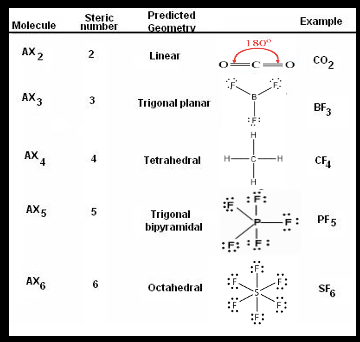
COMMON MOLECULAR GEOMETRIES
Polar or non-polar?
40
Key
1. Nonpolar
2. Nonpolar
3. Nonpolar
4. Nonpolar
5. Nonpolar
41
Key
6. Polar
7. Polar
8. Polar
42
EXERCISES
Given the Lewis structure, predict if each substance is polar or non-polar.
43
Multiple Choice
1. N2
Polar
Non-polar
44
Multiple Choice
2. SO2
Polar
Non-polar
45
Multiple Choice
3. BrF3
Polar
Non-polar
46
Multiple Choice
4. HCN
Polar
Non-polar
47
Multiple Choice
5. CH2Cl2
Polar
Non-polar
48
Open Ended
GIve at least two (2) insights you had from our discussions.
49
50
51
52
53
54
55
56
57
58
59
60
Molecular Polarity
Synthesis Session
Show answer
Auto Play
Slide 1 / 60
SLIDE

Similar Resources on Wayground
50 questions
Enthalpy Review
Presentation
•
11th Grade - University
49 questions
Big Bang Lesson
Presentation
•
11th - 12th Grade
51 questions
Unit 2: Lesson 7 Half Life Decay
Presentation
•
10th - 12th Grade
50 questions
Electrons in Atoms
Presentation
•
11th - 12th Grade
55 questions
CCU8.A Acid Base Rxns and Titrations
Presentation
•
12th Grade
57 questions
biomolecules 2
Presentation
•
12th Grade
61 questions
Collision Theory and Reaction Rates
Presentation
•
12th Grade
61 questions
Energy Collision
Presentation
•
12th Grade
Popular Resources on Wayground
10 questions
5.P.1.3 Distance/Time Graphs
Quiz
•
5th Grade
10 questions
Fire Drill
Quiz
•
2nd - 5th Grade
20 questions
Equivalent Fractions
Quiz
•
3rd Grade
22 questions
School Wide Vocab Group 1 Master
Quiz
•
6th - 8th Grade
20 questions
Main Idea and Details
Quiz
•
5th Grade
20 questions
Context Clues
Quiz
•
6th Grade
20 questions
Inferences
Quiz
•
4th Grade
12 questions
What makes Nebraska's government unique?
Quiz
•
4th - 5th Grade
Discover more resources for Science
20 questions
Cladograms and Phylogenetic Trees
Quiz
•
9th - 12th Grade
65 questions
Unit 4 Test Review: Force and Motion
Quiz
•
9th - 12th Grade
19 questions
Identify Endothermic and Exothermic Reactions
Quiz
•
9th - 12th Grade
13 questions
Explore Genetic Concepts and Punnett Squares
Quiz
•
7th - 12th Grade
15 questions
Identify Types of Chemical Reactions
Quiz
•
7th - 12th Grade
13 questions
Amoeba Sisters: Biomolecules
Interactive video
•
9th - 12th Grade
28 questions
Asexual vs. Sexual Reproduction
Quiz
•
9th - 12th Grade
20 questions
Explore Air Masses and Weather Fronts
Quiz
•
6th - 12th Grade