Ecology Community interactions and Ecology review questions
Presentation
•
Biology
•
8th - 12th Grade
•
Medium

Jorge Rodriguez
Used 11+ times
FREE Resource
41 Slides • 79 Questions
1
Willowridge High Ecology Community interactions and Ecology Review questions
Jorge Rodriguez
2
3
An ecosystem is made of Biotic and Abiotic components (parts)
Biotic is the life that makes up the Ecosystem such as you, birds, roaches, bacteria etc... and even tiny kittens
Abiotic is the nonliving components such as rain,rocks, sand, oxygen, the temperature etc.
4
5
6
Symbiosis
How organisms interact with each other
7
8
Predator Prey
Relationships
9
10
11
12
13
14
15
Human parasites
they feed on you. Yes you are their food.
16
Mosquitos on humans
The amazing mosquitos
17
18
19
20
Mutualism
help me and i help you.
21
22
23
24
25
Commensalism
26
27
28
29
30
31
32
33
34
35
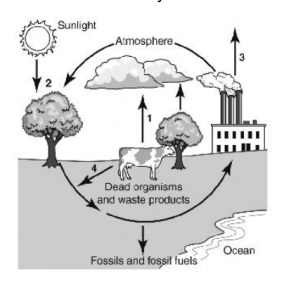
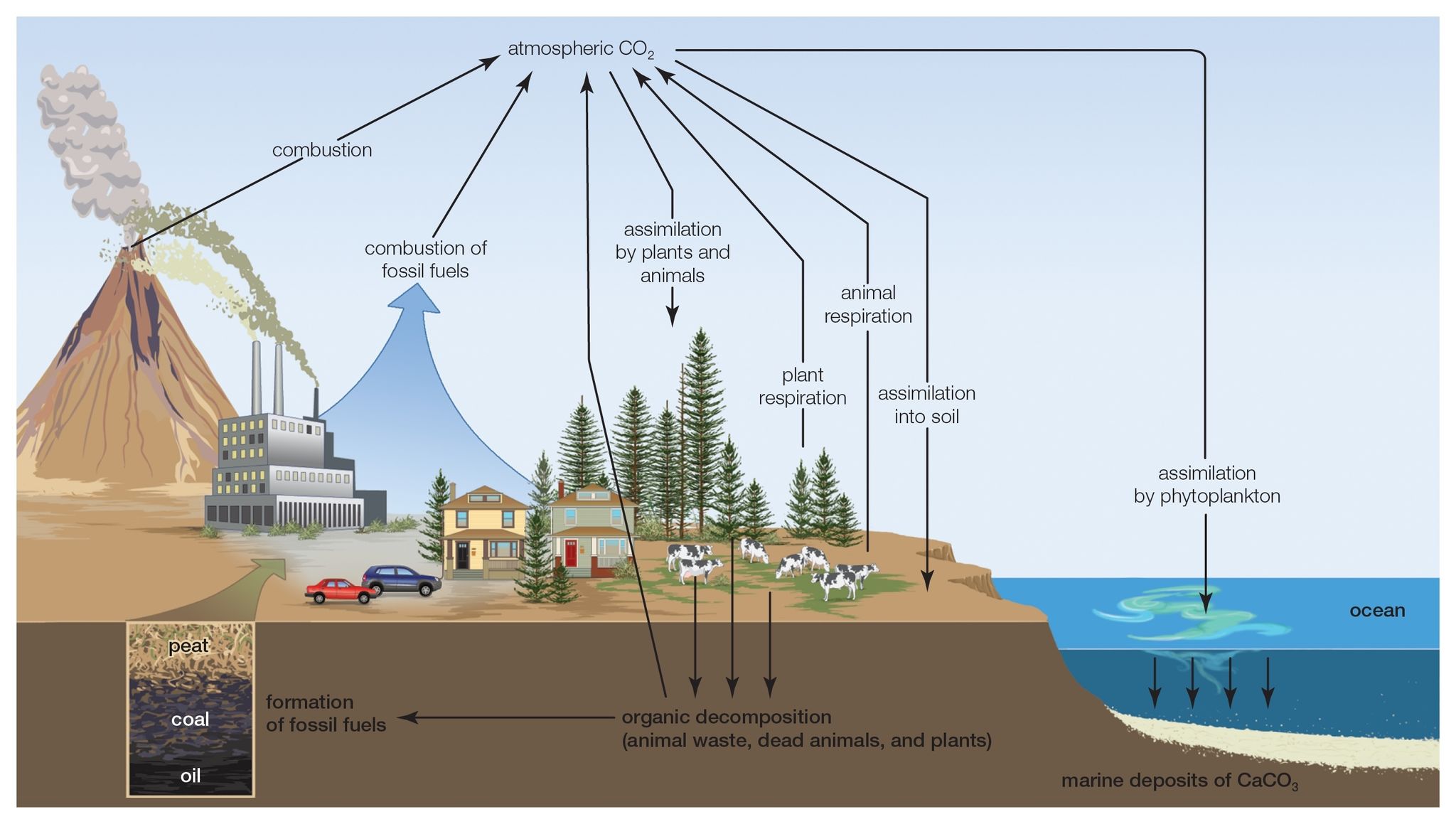
The Carbon Cycle- Ryclying
living things give off carbon when they
exhale or when they die
Carbon is also given off when animal products are burned
36
The Carbon Cycle
37
6 ways Carbon get recycled 1-3
Combustion: Burning of wood and fossil fuels by factory and auto emissions transfers carbon to the atmosphere as carbon dioxide.
Photosynthesis: Carbon dioxide is taken up by plants during photosynthesis and is converted into sugar/glucose.
Metabolism: Autotrophs convert carbon into organic molecules like fats, carbohydrates and proteins, which animals can eat.
38
6 ways Carbon gets Recycled 4-6
Cellular respiration: Plants and animals break down these organic molecules during the process of cellular respiration . Carbon dioxide is returned to the atmosphere during respiration (breathing).
Precipitate: Carbon dioxide in the atmosphere can also precipitate as carbonate in ocean sediments.
Decay: Carbon dioxide gas is also released into the atmosphere during the decay of all organisms.
39
7 steps of the Nitrogen Cycle 1-4
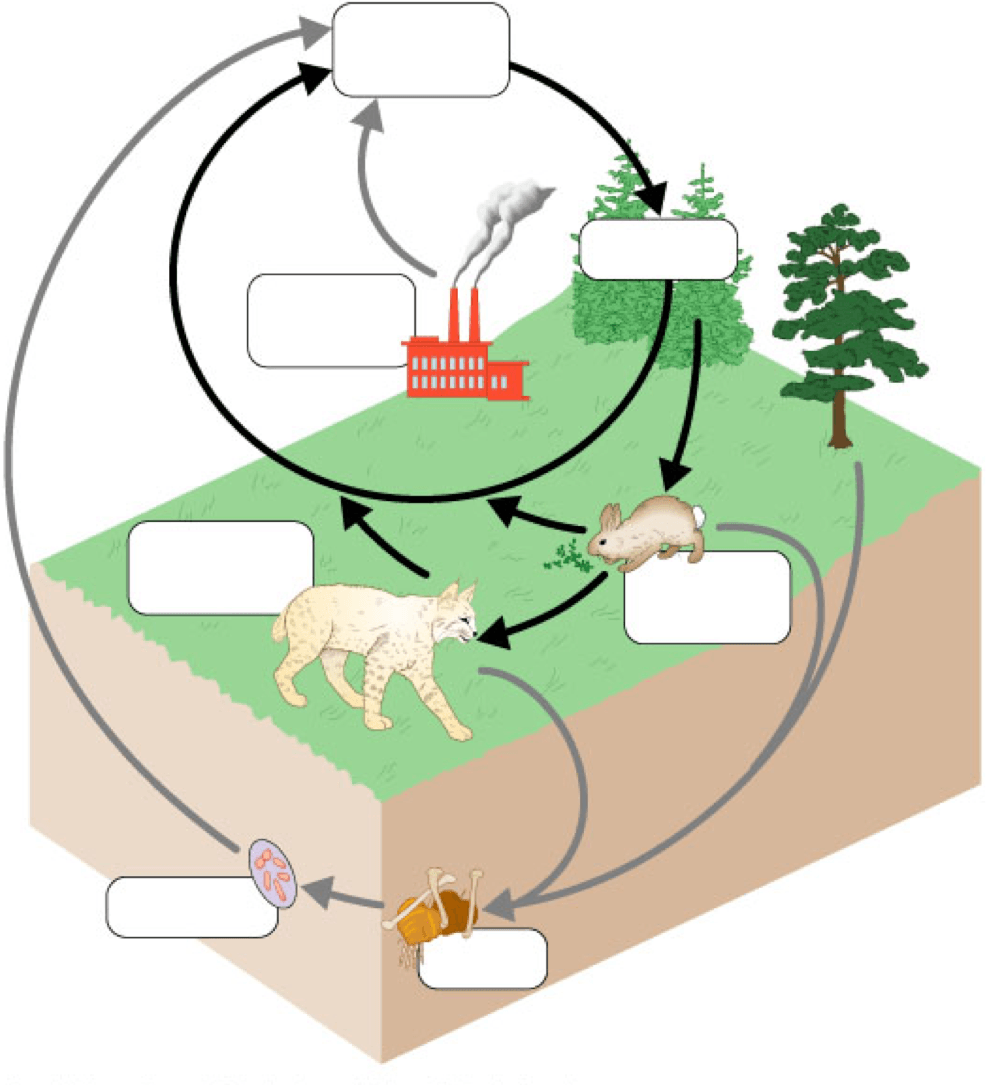
Lightning: Nitrogen can be changed to nitrates directly by lightning which then act as a fertiliser that can be used by living organims.
Absorption: Ammonia and nitrates are absorbed by plants through their roots.
Ingestion: Humans and animals get their nitrogen supplies by eating plants or plant-eating animals.
Decomposition: During decomposition, bacteria and fungi break down proteins and amino acids from plants and animals
40
The 7 steps of the Nitrogen Cycle 5-7
Ammonification: The nitrogenous breakdown products of amino acids are converted into ammonia (NH$_{3}$ ) by these decomposing bacteria.
Nitrification: Is the conversion of the ammonia to nitrates by nitrifying bacteria.
Denitrification: bacteria convert ammonia and nitrate into nitrogen and nitrous oxide (N$_{2}$ O). Nitrogen is returned to the atmosphere to start the cycle over again.
41
Nitrogen Cycle
42
Multiple Choice
43
Multiple Choice
44
Multiple Choice
45
Multiple Choice
46
Multiple Choice
Which gas do animals release, that plants depend on for survival?
Carbon dioxide
Oxygen
Sunlight
Water
47
Multiple Choice
How do plants affect the air that animals and people breathe?
Plants use oxygen from the air to make their own food
Plants release pollution into the air
Plants take in carbon dioxide and release oxygen
Plants take in oxygen and release carbon dioxide
48
Multiple Choice
The process of plants turning carbon dioxide and water into oxygen and sugar is called
Respiration
Oxidation
Photosynthesis
Combustion
49
Multiple Choice
Which gas do plants release, that humans depend on for survival?
Water
Carbon Dioxide
Oxygen
Sugar
50
Multiple Choice
Plants use ____________ to make their own food
Water
Sunlight
Carbon dioxide
All of these
51
Multiple Choice
52
Multiple Choice
53
Multiple Choice
54
Multiple Choice
55
Multiple Choice
56
Multiple Choice
When humans burn fossil fuels, most of the carbon quickly enters the as carbon dioxide.
Water
Atmosphere
Sun
Air
57
Multiple Choice
When humans burn fossil fuels, most of the carbon quickly enters the as carbon dioxide.
Water
Atmosphere
Sun
Air
58
Multiple Choice
What would happen to the plants in this nitrogen cycle if all the bacteria died?
They would not get the nitrogen they need.
They would get their nitrogen directly from the atmosphere
59
Multiple Choice
Organisms require nitrogen to make which of the following?
Glucose
Proteins
60
Multiple Choice
61
Multiple Choice
62
Multiple Choice
63
Multiple Choice
64
Multiple Choice
65
Multiple Choice
Organisms that break down dead plants & animals and release nitrogen back into atmosphere...
bacteria
plants
animals
producers
66
Multiple Choice
Organisms that break down dead plants & animals and release nitrogen back into atmosphere...
bacteria
plants
animals
producers
67
Multiple Choice
68
Multiple Choice
69
Multiple Choice
70
Multiple Choice
According to this diagram, plants use nitrogen to make ________
bacteria
proteins
animals
decomposers
71
Multiple Choice
72
Multiple Choice
73
Multiple Choice
How do producers (like plants) get their energy to survive and reproduce?
competing for sunlight
disguising themselves from consumers
releasing more oxygen into the environment
more biotic factors relying on them
74
Multiple Choice
Who could be affected if the number of birds decreased?
only the birds
only the grasshoppers and grains
only the foxes
all of the organisms shown
75
Multiple Choice
76
Multiple Choice
Food webs are models that show
one sequence of producers and consumers.
complex networks of feeding relationships.
stored energy in food chains
only primary consumers in an ecosystem
77
Multiple Choice
78
Multiple Choice
79
Multiple Choice
There are birds that eat the food from between the teeth of alligators, leaving the alligators with clean teeth and the birds with a meal. What type of ongoing relationship is this?
A. Predator & Prey
B. Mutualism
C. Commensalism
D. Parasitism
80
Multiple Choice
Only eats plants
Herbivore
Carnivore
Omnivore
Decomposer
81
Multiple Choice
How nitrogen is "fixed" into a useable form for plants...
through action of bacteria only
through lightning only
through action of bacteria & lightning
through photosynthesis
82
Multiple Choice
Which of the following is abiotic?
A tree in a forest.
Wood from the tree on the forest floor.
A termite on the tree.
The soil the tree is growing in.
83
Multiple Choice
Ecology is the study of .
life
Interactions among organisms and their environments
interactions among organisms
how traits are passed from parents to offspring
84
Multiple Choice
85
Multiple Choice
86
Multiple Choice
87
Multiple Choice
88
Multiple Choice
Why don't parasites kill their hosts?
It makes the parasite sick
They don't
The parasite would die
The parasite gets full
89
Multiple Choice
90
Multiple Choice
91
Multiple Choice
92
Multiple Choice
93
Multiple Choice
94
Multiple Choice
95
Multiple Choice
96
Multiple Choice
97
Multiple Choice
Get their energy from the sun and make their own food
Decomposer
Heterotroph
Biomass
Producer
98
Multiple Choice
99
Multiple Choice
100
Multiple Choice
101
Multiple Choice
102
Multiple Choice
How does carbon in a grass plant get into a lion?
The lion eats an antelope that ate the grass
Carbon from grass doesn't end up in a lion.
The lion absorbs the carbon given off by transpiration
The lion breathes in carbon given out by the plant
103
Multiple Choice
104
Multiple Choice
105
Multiple Choice
106
Multiple Choice
Plants and animals need nitrogen to make __________.
Protein
Carbohydrates
Lipids
Minerals
107
Multiple Choice
Position that an organism occupies based on what it eats
Producer
Trophic level
Heterotroph
Consumer
108
Multiple Choice
Plants and animals need nitrogen to make __________.
Protein
Carbohydrates
Lipids
Minerals
109
Multiple Choice
110
Multiple Choice
111
Multiple Choice
112
Multiple Choice
113
Multiple Choice
114
Multiple Choice
115
Multiple Choice
116
Multiple Choice
Which organisms eat only producers?
Secondary Consumers
Apex Predators
Tertiary Consumers
Primary Consumers
117
Multiple Choice
Process through which plants make their own food
Photosynthesis
Autotroph
Biomass
Trophic
118
Multiple Choice
Eats dead organisms and returns nutrients to soil
Autotroph
Decomposer
Biomass
Carnivore
119
Multiple Choice
Eats other organisms
Producer
Decomposer
Consumer
Autotroph
120
Multiple Choice
Position that an organism occupies based on what it eats
Producer
Trophic level
Heterotroph
Consumer
Willowridge High Ecology Community interactions and Ecology Review questions
Jorge Rodriguez

Show answer
Auto Play
Slide 1 / 120
SLIDE

Similar Resources on Wayground
115 questions
Unit: 0 Intro to Biology and Review
Presentation
•
10th Grade
105 questions
Human Circulatory System
Presentation
•
9th - 12th Grade
110 questions
Marine Science Ch 6
Presentation
•
9th Grade
119 questions
Ch. 6 L. 1 Atoms, Elements & Compounds
Presentation
•
7th - 12th Grade
110 questions
Dichotomous Keys and Taxonomy
Presentation
•
9th - 12th Grade
112 questions
Normal Mode and Musical Theory
Presentation
•
9th - 12th Grade
118 questions
2025 ORG Foundation Cell Transport ppt
Presentation
•
9th - 12th Grade
117 questions
Phy Science Final Exam Review
Presentation
•
9th - 12th Grade
Popular Resources on Wayground
20 questions
"What is the question asking??" Grades 3-5
Quiz
•
1st - 5th Grade
20 questions
“What is the question asking??” Grades 6-8
Quiz
•
6th - 8th Grade
10 questions
Fire Safety Quiz
Quiz
•
12th Grade
20 questions
Equivalent Fractions
Quiz
•
3rd Grade
34 questions
STAAR Review 6th - 8th grade Reading Part 1
Quiz
•
6th - 8th Grade
20 questions
“What is the question asking??” English I-II
Quiz
•
9th - 12th Grade
20 questions
Main Idea and Details
Quiz
•
5th Grade
47 questions
8th Grade Reading STAAR Ultimate Review!
Quiz
•
8th Grade
Discover more resources for Biology
24 questions
BIOLOGY STAAR REVIEW
Quiz
•
9th Grade
30 questions
Biology STAAR Review #3
Quiz
•
9th Grade
16 questions
AP Biology: Unit 1 Review (CED)
Quiz
•
9th - 12th Grade
50 questions
Biology EOC Review
Quiz
•
9th Grade
25 questions
photosynthesis and cellular respiration
Quiz
•
9th Grade
20 questions
AP Biology: Unit 3 Review (CED)
Quiz
•
9th - 12th Grade
20 questions
Enzymes
Quiz
•
9th Grade
16 questions
Types of Variables
Quiz
•
6th - 8th Grade