

Big Idea 15: Diversity & Evolution of Living Organisms (CS1)

Presentation
•
Science
•
6th Grade
•
Medium

Carly MacMillan
Used 3+ times
FREE Resource
6 Slides • 40 Questions
1
Big Idea 15: Diversity and Evolution of Living Organisms
Domains and Kingdoms (CS1)

2
Big Idea 15: Diversity and Evolution of Living Organisms
The scientific theory of evolution is the organizing principle of life.
The scientific theory of evolution is supported by multiple forms of evidence.
Natural selection is a primary mechanism leading to change over time in organisms.
3
Analyze and describe how and why organisms are classified according to shared characteristics. (SC.6.L.15.1 - DoK 3)
All living things are made of cells, they grow, develop, and change, respond to stimuli, consume energy, and reproduce.
Organisms are classified according to similarities, not differences between them.
The classification hierarchy places organism in broad to specific categories starting with Domain, Kingdom, Phylum, Class, Order, Family, Genus, and finally, Species. There are fewer and fewer individuals as you move to more specific categories.
Remember: Dear King Philip Came Over For Good Spaghetti!
Carolus Linnaeus was a Swedish botanist that is know as the "father of taxonomy" (which is the study of classification), due to his formalization of binomial nomenclature, or scientific names.
Binomial nomenclature means "a name with two terms". It consists of the genus and species of the organism. It can be abbreviated with the first letter genus capitalized followed by a period and then the species name.
4
Domains
Domain is the broadest category of the taxonomic hierarchy.
Organisms are classified into domains according to their cellular structure.
The three domains are Eukarya, Prokarya, and Archaea.
Eukarya consists of eukaryotic organisms, whose cells have a nucleus that contains their DNA.
Prokarya consists of prokaryotic organisms that are unicellular and do not have a nucleus within that cell, instead their DNA is free floating in the cell's cytoplasm.
Archaea consist of prokaryotic organisms, but they are able to live in harsh environments, like thermal vents and really salty water, which organisms in the domain Prokarya cannot.
5
Kingdoms
After being sorted into domains, organisms are further classified into kingdoms.
All of the organisms in the domain Prokarya are classified into the kingdom Eubacteria. All of the organisms in the domain Archaea are classified into the kingdom Archaebacteria.
The organisms in the domain Eukarya are sorted into the kingdoms Animalia, Plantae, Fungi, or Protisa based on how they obtain the energy needed for survival.
Animals are heterotrophs, or consumers, because they must consume other organisms for food (energy).
Plants are autotrophs, or producers, because they produce their own food in the form of glucose from sunlight.
Fungi are heterotrophs, but rather than consumers, they are decomposers because they absorb energy from dead or decaying matter.
Protists can be plant-like, animal-like, or fungi-like depending on how they obtain energy.
6
7
Multiple Choice
Mushrooms, bread molds, and yeasts are classified together in the fungi kingdom. Specific characteristics are used to classify these organisms. Which of the following is a characteristic used to classify these organisms as fungi?
They are parasites.
They are unicellular.
They are prokaryotes.
They are heterotrophs.
8
Multiple Choice
9
Multiple Choice
10
Multiple Choice
11
Multiple Choice
12
Multiple Choice
13
Multiple Choice
14
Multiple Choice
15
Multiple Choice
16
Multiple Choice
17
Multiple Choice
Scientists place organisms into one of six groups. What are these groups called?
Kingdom
Phylum
Class
Order
18
Multiple Choice
Members of this kingdom are multicellular and autotrophic
Plantae
Animalia
Protista
Fungi
19
Multiple Choice
Examples of species in this kingdom are amoebas and paramecia.
Fungi
Protista
Plantae
Animalia
20
Multiple Choice
Members of this kingdom are multicellular and heterotrophic
Plantae
Protista
Animalia
Achaebacteria
21
Multiple Choice
Molds, yeast, and mushroom belong to kingdom:
Eubacteria
Archaebacteria
Protista
Fungi
22
Multiple Choice
Algae, seaweeds, and protozoans belong to kingdom:
Protista
Animalia
Plantae
Fungi
23
Multiple Choice
Which 2 organisms have the fewest characteristics in common?
2 organisms in the same kingdom
2 organisms in the same genus
2 organisms in the same species
2 organisms in the same family
24
Multiple Choice
Cells that have a true nucleus are called....
eukaryotes
prokaryotes
unicellular
multicellular
25
Multiple Choice
Cells that do not have a true nucleus are called....
eukaryote
prokaryote
unicellular
multicellular
26
Multiple Choice
Which of the following organisms are LEAST closely related?
organisms that share a domain
organisms that share a family
organisms that share a genus
organisms that share a species
27
Multiple Choice
An organism that CANNOT make its own food and must consume other living things:
heterotroph
multicellular
unicellular
autotroph
28
Multiple Choice
An organism that CAN make its own food is called:
heterotroph
unicellular
autotroph
multicellular
29
Multiple Choice
Any living things is called:
organism
animal
cell
plant
30
Multiple Choice
The smallest functional and structural unit of all living organisms is:
atom
cell
nucleus
brain
31
Multiple Choice
In Binomial Nomenclature the Genus and Species are in italics and only the GENUS is capitalized
False
True
32
Multiple Choice
How many species does Felis domesticus contain?
1
2
3
4
33
Multiple Choice

Which characteristic is shown in the image?
Organisms grow and develop
Organisms react to stimuli
Organisms can adapt
Organisms use and obtain energy
Organisms are made up of cells
34
Multiple Choice

Which characteristic is shown in the image?
Organisms reproduce
Organisms react to stimuli
Organisms can adapt
Organisms use and obtain energy
Organisms are made up of cells
35
Multiple Choice

Which characteristic is shown in the image?
Organisms reproduce
Organisms react to stimuli
Organisms can adapt
Organisms use and obtain energy
Organisms are made up of cells
36
Multiple Choice
The main language of scientific names is:
Greek
English
Latin
Arabic
37
Multiple Choice
Which group is made up of organisms that are all from the same kingdom?
cat, frog, palm tree
mold, fungi, pear tree
maple tree, grass, fish
rose bush, tulip, apple tree
38
Multiple Choice
Naming system developed by Linnaeus
Classification
Binominal Nomenclature
Genus
Taxonomy
39
Multiple Choice

Which 2 organisms would be able to reproduce and produce fertile offspring?
2 organisms in the same class
2 organisms in the same family
2 organisms in the same genus
2 organisms in the same species
40
Multiple Choice
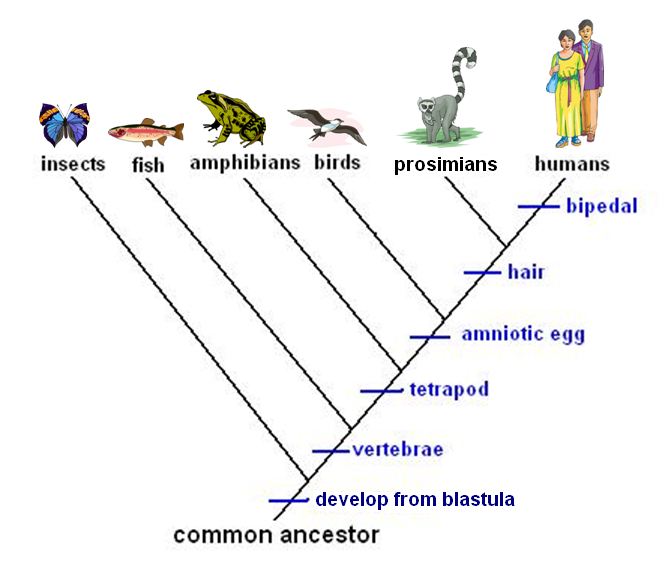
Which organisms pictured on the cladogram have hair?
prosimians only
prosimians and humans
humans only
prosimians and birds
41
Multiple Choice
An example of an unicellular organism would be:
monkey
bacteria
spider
human
42
Multiple Choice
An organism made up of more than one cell would be called:
multicellular
unicellular
heterotroph
autotroph
43
Multiple Choice
Ctenodiscus crispatus (Mud Starfish)
44
Multiple Choice
Organisms in this smallest taxonomic group share many characteristics.
domain
kingdom
species
class
45
Multiple Choice
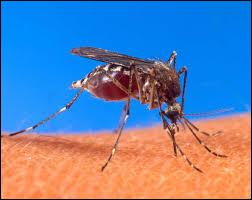
Mosquito belongs to what kingdom?
Animal Kingdom
Plant Kingdom
Fungi Kingdom
Protista Kingdom
46
Multiple Choice
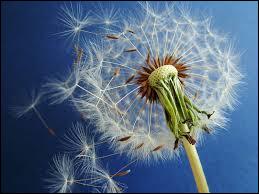
Dandelion, What kingdom does it belongs to?
Plant Kingdom
Animal Kingdom
Fungi Kingdom
Protista Kingdom
Big Idea 15: Diversity and Evolution of Living Organisms
Domains and Kingdoms (CS1)
Show answer
Auto Play
Slide 1 / 46
SLIDE
Similar Resources on Wayground

39 questions
Waves 6.P.1.1
Presentation
•
6th Grade
39 questions
Body Systems
Presentation
•
6th Grade
40 questions
Chapter 7 Science: Plate Tectonics Vocabulary Quiz Review
Presentation
•
6th Grade
43 questions
Unit 4 Lesson 6 - Earthquake Waves
Presentation
•
6th Grade
39 questions
PURE SUBSTANCES AND MIXTURES
Presentation
•
7th Grade
37 questions
Genetic Engineering
Presentation
•
6th - 7th Grade
38 questions
Microscope Lesson
Presentation
•
6th Grade
43 questions
The Cell System
Presentation
•
7th Grade
Popular Resources on Wayground
10 questions
How much do you know about our Portrait of an Eagle?

Quiz
•
10th Grade
10 questions
Fast Food Slogans
Quiz
•
6th - 8th Grade
21 questions
Continents and Oceans
Quiz
•
6th Grade
20 questions
Parts of Speech
Quiz
•
5th Grade
16 questions
Subject & Predicate
Quiz
•
5th Grade
25 questions
Multiplication Facts
Quiz
•
5th Grade
12 questions
Map Skills
Quiz
•
3rd Grade
22 questions
Continents and Oceans
Quiz
•
5th Grade
Discover more resources for Science
10 questions
6.6D - Relative Density Review
Quiz
•
6th Grade
20 questions
Claim, Evidence and Reasoning (CER)
Quiz
•
6th - 8th Grade
20 questions
Density
Quiz
•
6th Grade
10 questions
Exploring Chemical and Physical Changes

Interactive video
•
6th - 10th Grade
20 questions
Food Chains & Food Webs
Quiz
•
5th - 7th Grade
18 questions
Interpreting Distance/Time Graphs
Quiz
•
6th Grade
10 questions
Decoding the Periodic Table of Elements
Interactive video
•
6th - 10th Grade
15 questions
Potential and Kinetic Energy
Quiz
•
6th Grade