Search Header Logo
Chapter 4. Atoms and Elements

Chapter 4. Atoms and Elements

Assessment

Presentation

•

Chemistry

•

University

•

Medium

•
NGSS
MS-PS1-1, MS-PS1-4, MS-PS1-2

+5

Standards-aligned

Created by

Luis Bello

Used 16+ times

FREE Resource

35 Slides • 43 Questions

1

Chapter 4. Atoms and Elements

Presenter: Dr. Luis Bello

media

2

Previous... Chapter 3 Matter and Energy

•3.3 Classifying Matter According to Its State: Solid, Liquid, and Gas

•3.4 Classifying Matter According to Its Composition: Elements, Compounds, and Mixtures

•3.5 Differences in Matter: Physical and Chemical Properties

•3.6 Changes in Matter: Physical and Chemical Changes

•3.7 Conservation of Mass: There Is No New Matter

•3.8 Energy

•3.9 Energy and Chemical and Physical Change

•3.1Temperature: Random Motion of Molecules and Atoms

•3.1Temperature Changes: Heat Capacity

•3.1Energy and Heat Capacity Calculation

3

Checking Comprehension

4

Multiple Choice

As the kinetic energy of the molecules in a substance increases, the temperature of the substance __________.
1
increases
2
decreases

5

Multiple Choice

Energy is transferred as heat between two objects of ___________ temperatures. 
1
differing
2
same

6

Multiple Choice

The specific heat of aluminum is 0.9025 J/g°C. How much heat(Q) is released when a 10.0 g piece of aluminum foil is taken out of the oven and cools from 100.0° to 50.0°?

1

451 J

2

45.1 J

3

400 J

7

Multiple Choice

How many Hydrogen atoms are in 4H2O?

1

6

2

8

3

2

4

4

8

Multiple Choice

Question image

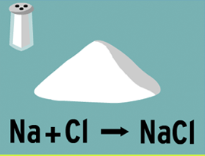
When sodium and chlorine combine to form sodium chloride, sodium chloride is the:

1

Originator

2

Reactant

3

Product

4

Produce

9

Multiple Choice

In a reaction A + B ----> C,  reactant A has 5g and product  C has 9g. How many grams does reactant B should have? 
1
4g
2
5g
3
9g
4
14g

10

Multiple Choice

Question image
Ability to rust is this type of property:
1
Physical property
2
Chemical property

11

Multiple Choice

As water begins changing from liquid to solid, it will ____ & _____.
1
freeze, shrink
2
freeze, expand
3
condensate, shrink
4
condensate, expand

12

Multiple Choice

Who has a definite volume?
1
solids
2
liquids
3
solids & liquids
4
solids & gases

13

Today: Chapter 4. Atoms and Elements

4.2 Indivisible: The Atomic Theory 

4.3 The Nuclear Atom 

4.4 The Properties of Protons, Neutrons, and Electrons 

4.5 Elements: Defined by Their Numbers of Protons 

4.6 Looking for Patterns: The Periodic Law and the Periodic Table 

4.7 Ions: Losing and Gaining Electrons 

4.8 Isotopes: When the Number of Neutrons Varies 

4.9 Atomic Mass: The Average Mass of an Element’s Atoms 

14

Early Ideas about Atoms

15

media

16

17

Dalton’s experiments

Dalton’s experiments with gases led to some of the earliest measurements of atomic masses and a concept of atomic structure and reactivity.

Dalton’s atomic theory contained the following ideas:

All atoms of a given element are identical.

The atoms of different elements vary in mass and size. Atoms are indestructible.

Chemical reactions may result in their rearrangement, but not their creation or destruction.

18

The first part to be discovered was the electron, a tiny subatomic particle with a negative charge. It is often represented as e−, with the right superscript showing the negative charge.


Later, two larger particles were discovered. The proton is a more massive (but still tiny) subatomic particle with a positive charge, represented as p+.


The neutron is a subatomic particle with about the same mass as a proton but no charge. It is represented as either n or n0. We now know that all atoms of all elements are composed of electrons, protons, and (with one exception) neutrons.

19

media

20

The Properties of Protons, Neutrons, and Electrons 

21

media

22

media

23

media

24

The Periodic Law and the Periodic Table 

25

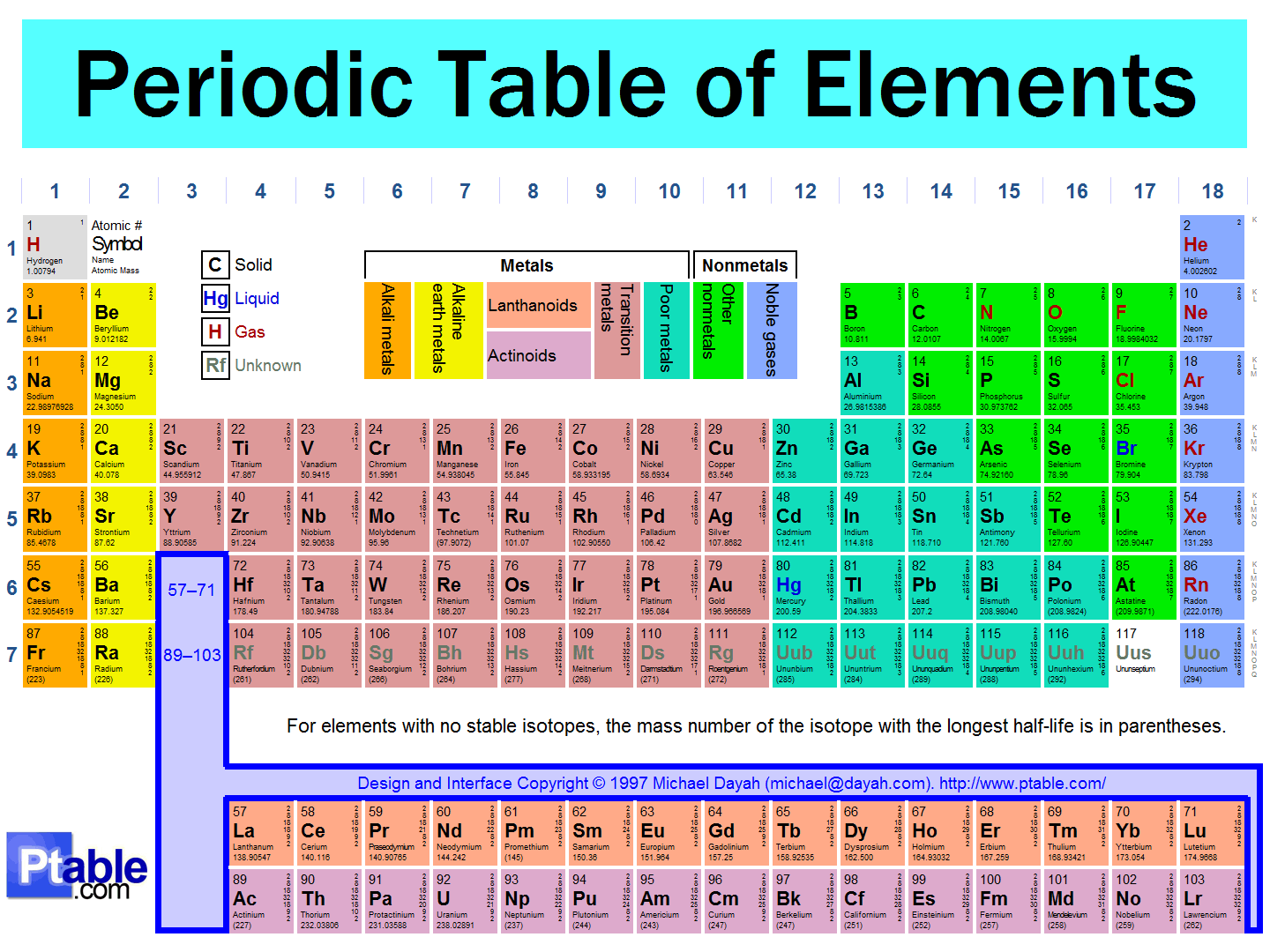
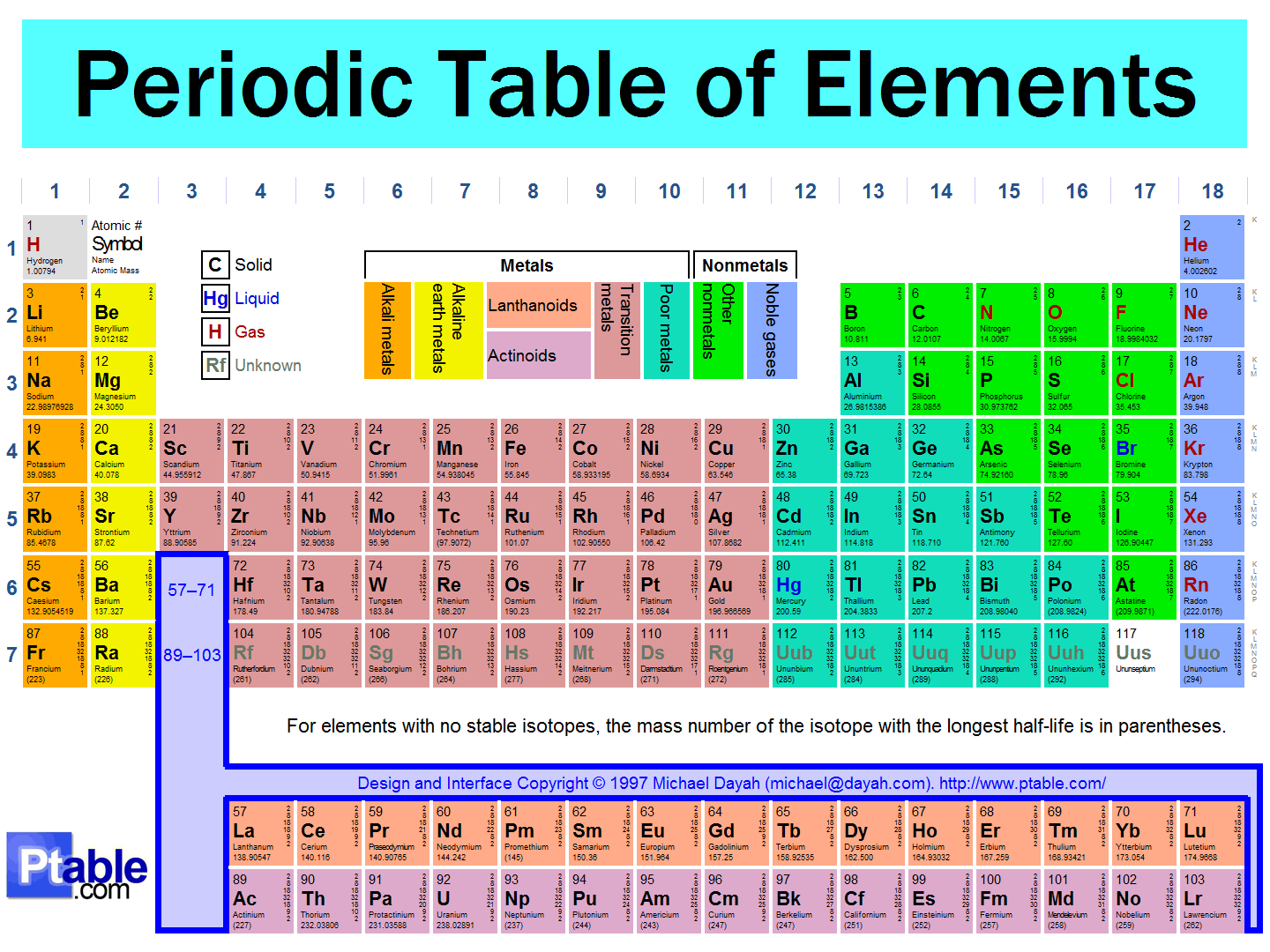
The periodic table lists all the elements, with information about their atomic weights, chemical symbols, and atomic numbers.


The arrangement of the periodic table leads us to visualize certain trends among the atoms.

The vertical columns (groups) of the periodic table are arranged such that all its elements have the same number of valence electrons.


All elements within a certain group thus share similar properties.

26

media

27

web page not embeddable

Periodic Table – Royal Society of Chemistry

You can open this webpage in a new tab.

28

Ions: Losing and Gaining Electrons 

29

So far, we have discussed elements and compounds that are electrically neutral. They have the same number of electrons as protons, so the negative charges of the electrons are balanced by the positive charges of the protons.


However, this is not always the case. Electrons can move from one atom to another; when they do, species with overall electric charges are formed. Such species are called ions.

30

Species with overall positive charges are termed cations, while species with overall negative charges are called anions.


Remember that ions are formed only when electrons move from one atom to another; a proton never moves from one atom to another. Compounds formed from positive and negative ions are called ionic compounds.

31

media

32

media

33

Isotopes

34

Isotopes are atoms of the same element that contain an identical number of protons, but a different number of neutrons.


Despite having different numbers of neutrons, isotopes of the same element have very similar physical properties. Some isotopes are unstable and will undergo radioactive decay to become other elements.


The predictable half-life of different decaying isotopes allows scientists to date material based on its isotopic composition, such as with Carbon-14 dating.

35

media

36

media

37

Atomic Mass: The Average Mass of an Element’s Atoms 

38

An element can have differing numbers of neutrons in its nucleus, but it always has the same number of protons.


The versions of an element with different neutrons have different masses and are called isotopes.


The average atomic mass for an element is calculated by summing the masses of the element’s isotopes, each multiplied by its natural abundance on Earth.


When doing any mass calculations involving elements or compounds, always use average atomic mass, which can be found on the periodic table.

39

Calculating Average Atomic Mass

40

The average atomic mass of an element is the sum of the masses of its isotopes, each multiplied by its natural abundance (the decimal associated with the percent of atoms of that element that are of a given isotope).

Average atomic mass = f1M1 + f2M2 + … + fnMwhere f is the fraction representing the natural abundance of the isotope and M is the mass number (weight) of the isotope.

41

media

42

media

43

media

44

Multiple Choice

True or False: An isotope is when the protons and neutrons are the same, but the electrons are different.
1
True
2
False

45

Multiple Choice

Atom 1 has Mass=12  Protons=6
Atom 2 has Mass= 14 Electrons=6
Are these atoms isotopes of each other or different elements?
1
Different Elements - Mg & Si
2
Different Elements - Ar & Ca
3
Isotopes of Carbon
4
Isotopes of Magnesium

46

Multiple Choice

Do the following atoms belong to the same element? Explain
       Aluminum-27
       An atom with 14 protons and 13 neutrons
1
Yes because they have the same number of protons
2
Yes because they have the same mass
3
No because they have different number of protons
4
No because they have different number of neutrons

47

Multiple Choice

Question image
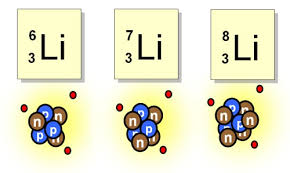
which atom has  4 neutrons?
1
Li-6
2
Li-7
3
Li-8
4
they have the same # of neutrons

48

Multiple Choice

What quantities vary between isotopes of an element?
1
protons, electrons, and atomic mass
2
protons, electrons, and atomic number
3
neutrons and electrons
4
neutrons and atomic mass

49

Multiple Choice

Question image
In a correctly written symbol what would be located in the "A" position?
1
number of neutrons
2
atomic number
3
number of electrons 
4
mass number

50

Multiple Choice

Question image
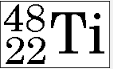
How many protons does this isotope of titanium have?
1
48
2
22
3
26
4
70

51

Multiple Choice

Question image
How many neutrons does the isotope of lithium have?
1
8
2
3
3
4
4
5

52

Multiple Choice

Question image
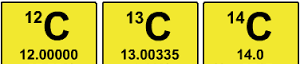
What do these isotopes of carbon all have in common?
1
neutrons & mass number
2
atomic number and neutrons
3
atomic number and electrons
4
protons, atomic number, and mass number

53

Multiple Choice

If an atom loses electrons, the charge will be positive.

1

true

2

false

54

Multiple Choice

What is the ion formed from Sulfur?

1

S+2

2

S-2

3

S+6

4

S-6

55

Multiple Choice

Which types of elements from anions?

1

metals

2

nonmetals

3

metalloids

4

noble gases

56

Multiple Choice

Which types of elements from cations?

1

metals

2

nonmetals

3

metalloids

4

noble gases

57

Multiple Choice

What is a negative ion called?

1

anion

2

cation

3

covalent

4

isotope

58

Multiple Choice

What is a positive ion called?

1

anion

2

cation

3

isotope

4

covalent

59

Multiple Choice

Question image
A rule that states that repeating chemical and physical properties of elements change periodically with the atomic number of the elements is the _________.
1
periodic law
2
alkaline-earth metals
3
actinide
4
group rule

60

Multiple Choice

Question image
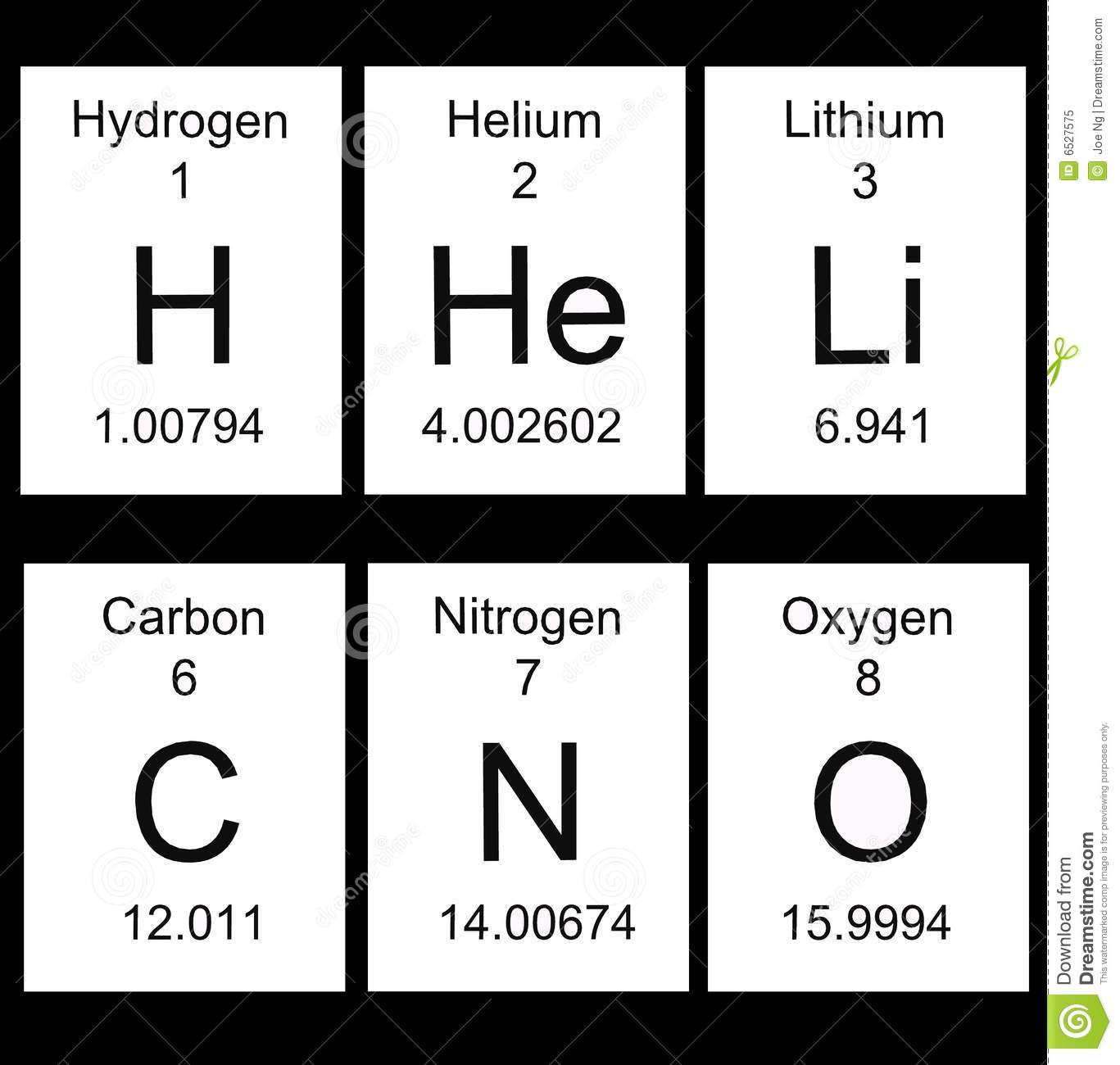
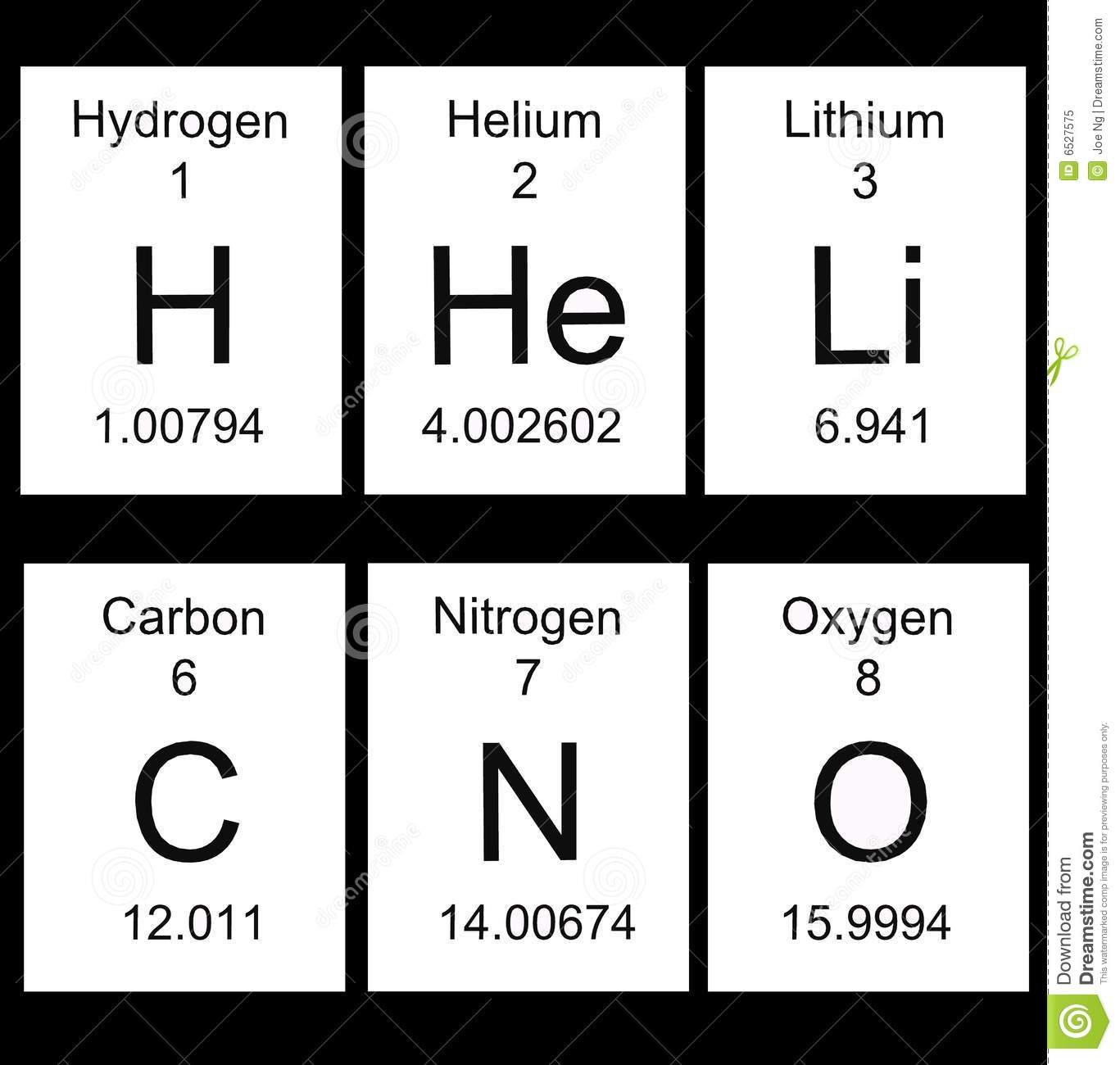
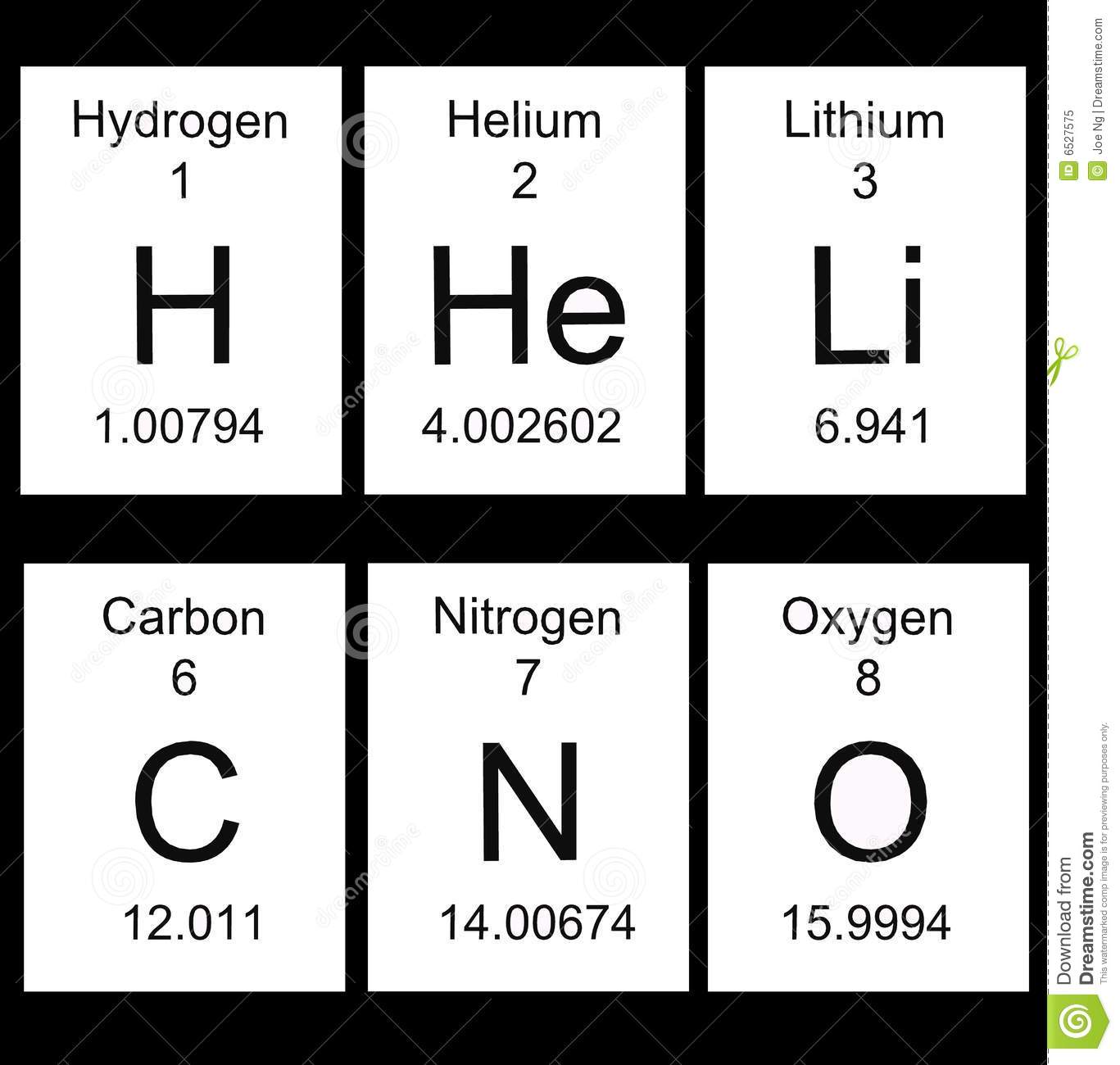
What is the chemical symbol for Lithium?
1
H
2
He
3
Li
4
N

61

Multiple Choice

Question image
The number at the top of each square on the periodic table is the ...
1
atomic number
2
atomic mass
3
Chemical Symbol
4
Element Name

62

Multiple Choice

Question image
The number at the bottom of each square on the periodic table is the ...
1
atomic number
2
atomic mass
3
chemical symbol
4
element name

63

Multiple Choice

Question image
A vertical column is called...
1
group
2
tower
3
period
4
crew

64

Multiple Choice

Question image
The horizontal row on the periodic table is called a
1
group
2
family
3
period
4
atomic number

65

Multiple Choice

The atomic # tells us the # of ____________________ in an atom.

1

protons

2

electrons

3

neutrons

4

Cassietrons

66

Multiple Choice

What charge is the neutron?

1

no charge (neutral)

2

positive

3

negative

4

Katlyn-charged

67

Multiple Choice

What charge is the proton?

1

positive

2

no charge (neutral)

3

negative

4

Senaida-charged

68

Multiple Choice

Where are electrons found in an atom?

1

in the nuclues

2

electrons don't exist o_O

3

orbiting the nucleus

4

Only Josie knows where they are.

69

Multiple Choice

Where is the neutron found in the atom?

1

protons don't exist o_O

2

in the nucleus

3

orbiting the nucleus

4

Carleah has it!

70

Multiple Choice

Where is the proton found in an atom?

1

nucleus

2

orbiting around the nucleus

3

protons don't exist o_O

4

Justmir is hiding it.

71

Multiple Choice

Who stated that atoms cannot be divided?
1
Democritus
2
Dalton
3
Thomson
4
Bohr

72

Multiple Choice

Question image
Where are electrons likely to be found according to our Modern Day Theory?
1
outer shell of the atom
2
in the nucleus
3
electron cloud

73

Multiple Choice

Question image
Bohr's model of the atom proposed that ______.
1
the nucleus spins
2
neutrons move around the nucleus
3
electrons move around the nucleus in levels
4
neutrons do not exist, but are just paired protons and electrons

74

Multiple Choice

Question image
The middle of the atom, which contains protons and neutrons, is called ___________
1
the shell
2
the nucleus
3
the cell
4
the control center

75

Multiple Choice

Question image
What contribution did John Dalton make to the atomic theory?
1
He discovered that every atom was positively charged.
2
He discovered that every element consisted of one type of atom.
3
He discovered the nucleus in an atom.
4
He discovered that atoms could be divided into smaller parts.

76

Multiple Choice

Question image

How did Rutherford discover the proton?

1

Cathode Ray Tube

2

Gold Foil Experiment

3

Planetary Model

4

Plum Pudding Model

77

Multiple Choice

Question image

How did Rutherford discover the proton?

1

Cathode Ray Tube

2

Gold Foil Experiment

3

Planetary Model

4

Plum Pudding Model

78

media

Chapter 4. Atoms and Elements

Presenter: Dr. Luis Bello

media

Show answer

Auto Play

Slide 1 / 78

SLIDE