Search Header Logo
  1. Resource Library
  2. Science
  3. Earth & Space Science
  4. Index Fossil
  5. Fossils And Geologic Time
Fossils and geologic time

Fossils and geologic time

Assessment

Presentation

Science

6th Grade

Medium

NGSS
MS-LS4-1, MS-ESS1-4, HS-PS1-8

+5

Standards-aligned

Created by

Nikkole Wowaka

Used 41+ times

FREE Resource

34 Slides • 48 Questions

1

Fossils and geologic time

by Nikkole Wowaka

2

Multiple Choice

Remains, imprints or traces of once-living organisms
1
water
2
superposition
3
fossils 

3

Multiple Choice

In what type of rock would you typically find fossils?
1
igneous
2
metamorphic
3
sedimentary
4
rocky

4

media

5

Multiple Choice

Question image
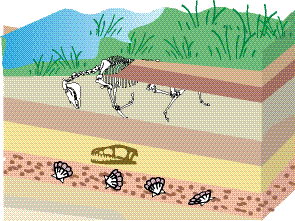
According to the law of superposition, the oldest fossils are found 
1
At the top of the rock layers
2
Near the bottom of the rock layers
3
In the middle of the rock layers
4
Somewhat near the surface

6

media

7

Multiple Choice

Remains of organisms don't change once fossilized

1

true

2

false

8

media
media

9

Multiple Choice

Question image
Which item below would INCREASE the chances of making a fossil?
1
Soft body parts
2
Buried Right Away
3
Left Exposed
4
Lots of Scavenger Activity

10

media

11

media
media

12

Multiple Choice

Fossils of species that existed for  short periods and were widespread 
1
trace fossils 
2
index fossils 
3
original remains 

13

Multiple Choice

The best index fossils have which two traits?
1
widespread geographically, long lifespan
2
widespread geographically, short lifespan
3
specific place, long lifespan
4
specific place, short lifespan

14

Multiple Choice

Question image
Which fossil makes the best index fossil?
1
Fossil 1
2
Fossil 2
3
Fossil 3
4
None follow all of the rules

15

media

16

Multiple Select

Which conditions might lead to fossil formation? (Choose 3)

1

Decomposition

2

Getting buried quickly by sediment

3

getting trapped in a tar pit

4

getting eaten by another animal

5

making a footprint in mud

17

Multiple Choice

Fossils can provide evidence of how life has changed over time, how Earth's surface has changed, and clues about what past environments were like.
1
True
2
False

18

media

19

media

20

Fill in the Blank

Type answer...

21

media

22

Multiple Choice

Remains of animals can be preserved by preventing them from decaying. What substances might help preserve parts or a whole animal
1
tar, amber, ice
2
ice, carbonization, trace
3
rock, amber, ice
4
tar, carbonization, rock

23

Multiple Choice

Question image
What type of fossil is pictured? 
1
cast
2
petrified fossil
3
preserved remains
4
trace fossil

24

media

25

Multiple Choice

Generally, only hard parts become fossils.
These hard parts include........................
1
fingernails
2
bones, shells, teeth, seeds & woody stems
3
soft tissue
4
skin

26

Multiple Choice

The most common type of fossil?
1
preserved remains
2
molds & casts
3
trace fossils
4
carbon films

27

media

28

Multiple Choice

A bone is

1

organic

2

inorganic

29

media

30

Multiple Choice

Would asphalt preserve soft parts of an organisms remains?

1

yes

2

no

31

media

32

Multiple Choice

Involves the filling of pores in a porous substance such as a bone with minerals from a solution.

1

Mummification

2

Petrification

3

Permineralization

4

Freezing

33

Multiple Choice

Question image

The oldest fossils are found

1

At the top of the rock layers

2

Near the bottom of the rock layers

3

In the middle of the rock layers

4

Somewhat near the surface

34

media

35

Multiple Choice

Question image

Which of the following methods of fossil formation is formed in dry areas to lack of moisture.

1

amber fossil

2

mummification

3

freezing

4

carbonization

36

Multiple Choice

Question image
What type of fossil is represented in the picture?
1
Mold
2
Cast
3
Preserved Part

37

media

38

Multiple Choice

Cavity in a rock made when an organism decayed
1
cast
2
mold 
3
original remains

39

Multiple Choice

Produced when sediments fill in a cavity made when an object decayed 
1
cast
2
mold
3
original remains

40

media

41

Multiple Choice

Question image

This type of fossil is formed by pressure driving off the organism's liquids and gases.

1

Mineralization

2

carbonization

3

trace fossils

4

Original material

42

media

43

Multiple Choice

Question image

What type of scientist studies fossils?

1

physicists

2

paleontologist

3

chemist

4

biologist

44

Multiple Choice

What does the word fossil mean in Latin.

1

underground

2

obtained by digging

3

death

4

to get in between

45

media

46

Multiple Choice

Scientific law that states in horizontal sedimentary rock, the oldest layers are at the bottom

1

Law of Intrusions

2

Law of Original Horizontality

3

Law of Cross Cutting Relationships

4

Law of Superposition

47

media

48

Multiple Choice

Scientific study of rock layers

1

Archeology

2

Stratigraphy

3

Paleontology

4

Geology

49

media

50

Multiple Choice

The millions of fossils that scientists have collected are called
1
The Geologic Time Scale
2
The Origin of Species
3
The Fossil Record
4
A really neat fossil collection

51

media

52

Multiple Choice

Question image
According to the law of superposition, which layer is the youngest?
1
A
2
B
3
C

53

Multiple Choice

Question image

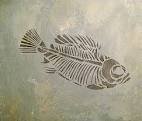
If scientists found this fossil, what could they infer?

1

what fish are like today

2

that this fish lacked oxygen

3

that water once covered the area where this fossil was found

54

media

55

Fill in the Blank

Type answer...

56

media

57

Multiple Choice

The age of a rock compared to the ages of other rocks is the rock's
1
absolute age
2
geologic age
3
sedimentary age
4
relative age

58

Multiple Choice

Question image

Which layer is OLDER? Layer M or Intrusion P?

1

Layer M

2

Intrusion P

59

Multiple Choice

Question image

Which layer is OLDER? Layer E or Fault H?

1

Layer E

2

Fault H

60

media

61

Multiple Choice

The number of years that have passed since the rock formed is the rock's
1
relative age
2
law of superposition
3
absolute age
4
index fossil

62

Multiple Choice

Which is the most accurate form of absolute dating?
1
radiometric dating
2
erosion rate
3
deposition rate
4
index fossils

63

Multiple Choice

The time it takes for half of a radioactive isotopes to decay into stable isotopes is called the
1
isotope decay
2
radiometric dating
3
half life
4
absolute age

64

media

65

Multiple Choice

Fossil #1 is found 700ft under ground and fossil #2 is found 300ft under ground, which is newer?

1

Fossil #1

2

Fossil #2

3

Neither fossil is newer

4

Both Fossils are the same age

66

Multiple Choice

Which of the following would be an example of absolute age?

1

Fossil A is older than Fossil B

2

Fossil A and Fossil B are the same age

3

Fossil A is 10 million years old

67

media

68

Multiple Choice

Question image

Organisms D and C clearly lived in an aquatic (water) environment. Organism A does not look like it lived in the water. What is the most likely explanation for this?

1

The fossil in layer A died on land and was carried to the water

2

The fossils in layer C and D did not live in the same location as the fossil in layer A

3

The environment changed over a long period of time. It used to be under water, but is not anymore

69

media

70

media

71

Multiple Choice

The oldest fossils are from

1

65 million years ago

2

3.8 billion years ago

3

700 million years ago

4

65 billion years ago

72

media

73

Multiple Choice

What is the largest/major unit of geologic time?

1

Epoch

2

Period

3

Era

74

Multiple Choice

Paleo means

1

ancient

2

middle

3

recent

4

old

5

animal life

75

Multiple Choice

Put the following units of geological time in order from largest to smallest unit of time.

1

Eon, Epoch, Era, Period

2

Epoch, Period, Era, Eon

3

Eon, Era, Period, Epoch

4

Eon, Period, Epoch, Era

76

media

77

Multiple Choice

When does geological time start?

1

When the dinosaurs lived

2

When the Earth began

3

When the first humans lived

4

When the first bacteria were living on Earth

78

media

79

media

80

Multiple Choice

During which geologic time or era did humans first appear?
1
Cenozoic
2
Mesozoic
3
Paleozoic
4
Precambrian

81

media

82

Multiple Choice

Cavemen lived at the same time as the dinosaurs.
1
TRUE
2
FALSE

Fossils and geologic time

by Nikkole Wowaka

Show answer

Auto Play

Slide 1 / 82

SLIDE