

Earth's Atmosphere

Presentation
•
Science
•
10th Grade
•
Medium
+1
Standards-aligned

Mario Miro
Used 42+ times
FREE Resource
12 Slides • 18 Questions
1
By Mario Miro
2
Atmospheric Composition - What is our air made of?
Many years ago air was thought to be one of the fundamental elements
from which all other substances were made.
In fact air is a combination of gases such as Nitrogen (78%),
Oxygen (21%), Carbon Dioxide (.04%),water droplets, ice crystals
and particles of dust.
Our atmosphere extends from Earth's surface to outer space.
Permanent Atmospheric Gases - Gas composition of our atmosphere that basically never changes.
99% of our Atmosphere (Air) is composed of Nitrogen, and Oxygen.
1% of of our atmosphere consists of other gases, Argon, Carbon Dioxide,
and water vapor
3
The amount of these gases is pretty constant over recent times. as our atmosphere recycles these gases on a continuing basis
Understand that our atmosphere over millions of years has gone over many different changes. In Earth's early life our atmosphere was basically composed of helium, hydrogen, methane and ammonia.
Variable Atmospheric Gases - Gases that change in amount of concentration, it changes in different places and times. These are mostly:
Carbon Dioxide, Water Vapor and Ozone (O3)
These gases play a major role in regulating the amount of energy that is absorbed by our atmosphere
Ozone (O3) - is very important to the maintaining of our atmosphere, Changes can cause global warming and be harmful to our earth's surface.
4
Atmospheric Layers - Our atmosphere is classified into 5 different layers, they differ in altitude, temperature, and composition:
Troposphere - is the closest to our earth's surface. (surface to about 10 Km above the surface)
Contains the most mass of our atmosphere
Weather occurs in this layer, also planes fly here
Air temperature decrease with altitude, The altitude at which air temperature stops decreasing is called the Tropopause (top of Troposphere). This point can varies from 16Km (Equator) to 9km (Poles)
Stratosphere - Above the troposphere (10km to 50km)
Air Temperature increases with altitude
The Ozone layer is contain within the Stratosphere (20km to 50km)
5
In the lower part (10km to 20km) of the stratosphere the temp. basically is consistant, but in the ozone the temp increase as we increase our altitude. This is caused by the ozone absorbing more UV energy from the sun.
Mesosphere - This is the area above the stratosphere (50km to 85km) above the surface of the earth.
Air temp decreases with altitude due to very little Sun energy being absorbed in the layer
Coldest of the atmospheric layers
At the top of the mesosphere where air temp stops decreasing is called the mesopause.
6
Thermosphere - is the layer that is found above the mesosphere at about 85km to 600km.
Air mass is low density, causing air temps to rise with altitude
This is the layer where we find that our spaceship travel in:
ISS (International Space Station)
other spaceships that have recently flown into space
Air temp can rise up to 2000*C
Exosphere - outermost layer of earth's atmosphere (600km to over 10,000km) no clear boundary.
Thought of as the transitional region into outer space
Atmosphere is very low density, atoms and molecules are far apart
7
Multiple Choice
the outermost region of a planet's atmosphere; gas molecules finally become so scarce that at some point there are no more
Exosphere
Ionosphere
Troposphere
Endosphere
8
Multiple Choice
Which layer of the atmosphere do pilots prefer to fly in?
stratosphere
thermosphere
troposphere
endosphere
9
Multiple Choice
the layer closest to Earth, where almost all weather occurs; the thinnest layer; decreases with altitude
Troposphere
Thermosphere
Stratosphere
Ionosphere
10
Multiple Choice
What are the two most common gases in the atmosphere?
hydrogen and oxygen
nitrogen and water vapor
hydrogen and nitrogen
oxygen and nitrogen
11
Multiple Choice
Ozone is a type of oxygen.
True
False
12
Multiple Choice
Water vapor is one of the two main gases found in
Earth's atmosphere today
True
False
13
Multiple Choice
14
Properties of the Atmosphere
Temperature - is the measure of the average kinetic energy of the particles in the material
Temperature is measured 2 common scales:
Fahrenheit (F) - Water boils (212 F), water freezes (32 F), Absolute Zero (-459 F)
Celsius (C) - Water boils (100 C), water freezes (0 C), Absolute Zero (-273 C)
Kelvin (K) - Scientific Scale - Water boils (373 K), water freezes (273 K), Absolute Zero (0 K)
15
Air Pressure - is the pressure exerted on a surface by the weight of the atmosphere above the surface, measured in newtons/square meter (N/m2) or millibars (mb), (1mb =100N/m2), At sea-level air pressure = 1000mb, Increasing in altitude, decreases air pressure
Density of Air - is the mass of material in a volume, such as (1 m3)
Density of Air decreases as we increase altitude
Air Density @ sea level is 1.2 kg/m3
Wind - movement of air
Wind is mainly due to a difference in air pressure.
hot air less dense and lower pressure
cold air greater density and high pressure
Example - Colder air-conditioned building as you open door. You feel the rush of colder air coming at you.
16
Wind speed is most often determined by altitude
high altitudes cause increased wind speed as the wind is not subjected to the friction of the earth's surface.
Humidity - is the amount of water vapor in the atmosphere at a given location on the earth's surface.
Relative Humidity - amount of water vapor in a volume of air relative to the amount of water vapor needed to for that volume of air to become saturated
Dew Point - is the temperature to which air must be cooled at constant pressure to reach saturation
17
Multiple Choice
As you rise upwards in the atmosphere, air pressure __?__.
increases
decreases
doesn't change
18
Multiple Choice
Winds are caused by differences in __?__.
precipitation
air pressure
humidity
19
Multiple Choice
20
Multiple Choice
The amount of water vapor in the air is known as ___.
dew point
humidty
relative humidity
rain
21
Multiple Choice
When the air is full of water and has a relative humidity of 100% it is said to be ___.
full
humid
saturated
warm
22
Multiple Choice
Items in the air that are required for clouds to form
dust
condensation nuclei
minuscule particles
hail
23
Clouds and Precipitation
Clouds can form when a rising air mass cools
Remember hotter air rises as it is less dense then colder air. Also, air on the surface of the earth warns and cools at different rate so, we will have different air masses rising or sinking as this happens.
As, air rises it cools and condenses causing the formation of a cloud.
As, the air condenses into water droplets they attach themselves to small particles (condensation nucleus), causing the formation of CLOUDS
Clouds formation is also dependent on the stability of the air, meaning are the air masses rising or falling due to temperature changes
24
Types of clouds, formed at different altitudes and having different shapes
3 classes of clouds based on the altitude they were formed, low, middle, and high clouds
Low clouds - usually form below 2000m (Cumulonimbus - low cloud with vertical development)
Cumulus - puffy, lumpy-looking cloud
Stratus - sheet-like(Blanket) covers much of the sky
Stratocumulus - cumulus cloud flattened out horizontally by the wind
Nimbostratus - low clouds that produce precipitation, can cause thunderstorms
Middle clouds - between 2000m and 6000m
Altocumulus and Altostratus - made of ice crystals and water droplets due to colder temperatures
25
High Clouds - made of ice crystals and formed at heights above 6000m.
Cirrus - often wispy, indistinct appearance
Cirrostratus - forms as a continuous layer, that can be transparent or thick covering the light from the sun or the moon
Cirrocumulus - has a rippled effect in the shy
Precipitation
Precipitation - Any type of water falling from clouds to the ground. 4 main types
Coalescence - when water droplets collide with each other to form larger water droplets, which then fall to earth
Rain - is precipitation that reaches earth's surface as a liquid
Snow, Sleet and Hail - Type of precipitation that reaches earth with cold temperature aloft and/or at the surface
26
Multiple Choice
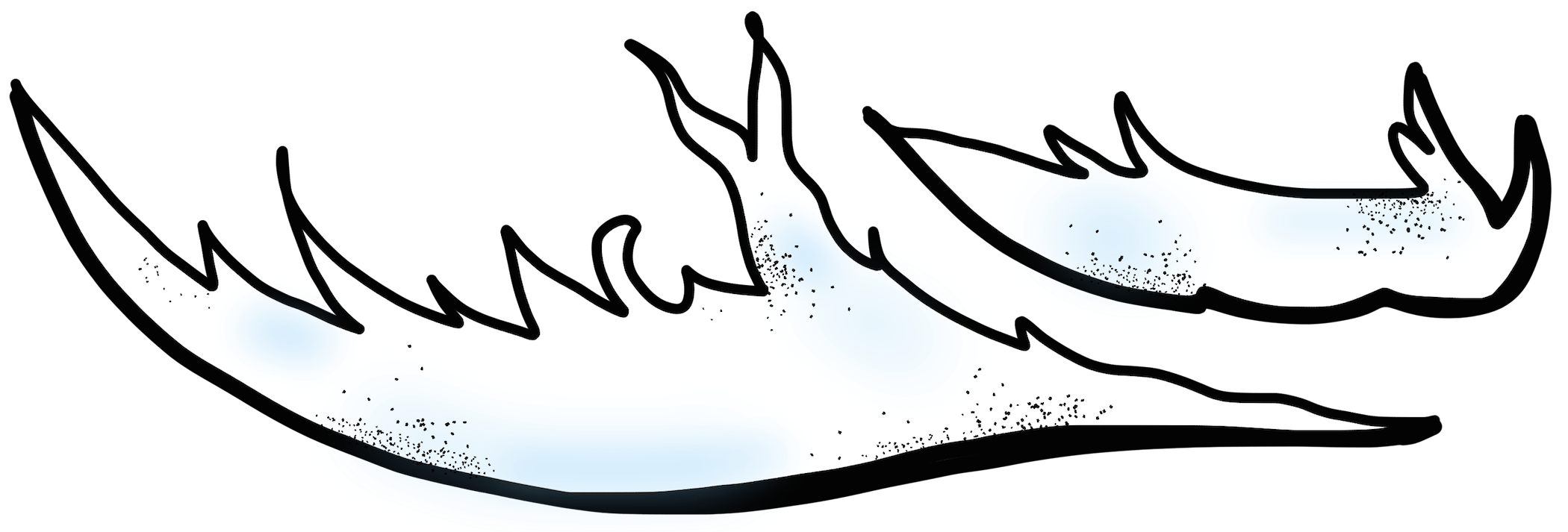
Which type of cloud is described as being high and wispy?
cumulus
cirrus
stratus
cumulonimbus
27
Multiple Choice
Clouds with the prefix alto- are found where in the troposphere? Also, many cumulus clouds are found here too.
High
Middle
Low
Very Low
28
Multiple Choice
29
Multiple Choice

Clouds are formed by the process of ______________________.
precipitation
evaporation
condensation
collection
30
Multiple Choice
By Mario Miro
Show answer
Auto Play
Slide 1 / 30
SLIDE
Similar Resources on Wayground

24 questions
Earth's Resources
Presentation
•
9th - 11th Grade
20 questions
Soil Formation and Earth’s Structure
Presentation
•
9th - 10th Grade
22 questions
Free Body Diagrams
Presentation
•
11th Grade
23 questions
Ecology
Presentation
•
10th Grade
25 questions
Physical and Chemical Changes Review
Presentation
•
8th Grade
22 questions
Cell Cycle and Cancer Review
Presentation
•
9th - 10th Grade
22 questions
Radioactive Decay
Presentation
•
10th Grade
26 questions
Naming Compounds and Writing Formulas
Presentation
•
10th Grade
Popular Resources on Wayground
10 questions
How much do you know about our Portrait of an Eagle?

Quiz
•
10th Grade
10 questions
Fast Food Slogans
Quiz
•
6th - 8th Grade
21 questions
Continents and Oceans
Quiz
•
6th Grade
20 questions
Parts of Speech
Quiz
•
5th Grade
16 questions
Subject & Predicate
Quiz
•
5th Grade
25 questions
Multiplication Facts
Quiz
•
5th Grade
12 questions
Map Skills
Quiz
•
3rd Grade
22 questions
Continents and Oceans
Quiz
•
5th Grade
Discover more resources for Science
10 questions
Exploring Chemical and Physical Changes

Interactive video
•
6th - 10th Grade
10 questions
Decoding the Periodic Table of Elements
Interactive video
•
6th - 10th Grade
10 questions
Exploring the Periodic Table
Interactive video
•
6th - 10th Grade
14 questions
Physical and Chemical Changes
Quiz
•
10th Grade
22 questions
Periodic Table Review
Quiz
•
9th - 12th Grade
10 questions
Exploring the States of Matter
Interactive video
•
6th - 10th Grade
10 questions
Exploring Physical and Chemical Changes
Interactive video
•
6th - 10th Grade
21 questions
Macromolecules and Enzymes Study Guide
Quiz
•
9th - 10th Grade