Search Header Logo
Heat/heat transfer and Temperature Lesson

Heat/heat transfer and Temperature Lesson

Assessment

Presentation

Science

10th - 11th Grade

Medium

NGSS
MS-PS1-4, MS-PS3-3, MS-PS3-4

+9

Standards-aligned

Created by

S Jones

Used 1+ times

FREE Resource

30 Slides • 61 Questions

1

Heat/Heat Transfer and Temperature Lesson

By Seantre Jones

2

media

3

media

4

Multiple Choice

What happens when something gains heat?

1

it becomes hotter

2

it becomes colder

5

media

6

Multiple Choice

What is temperature?

1

a form of heat

2

a form of energy

3

a measure of how old or cold something is

4

something to measure how hot or cold an object is

7

media

8

media

9

Multiple Choice

Question image

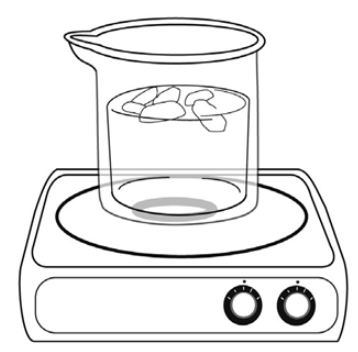
Emerson places a beaker of water on a hotplate and turns the hotplate on. The temperature in the room is 25 ºC. After the water heats to 75 ºC, she adds pieces of ice to the beaker.


Which of the following describes a transfer of heat energy that occurs during this experiment?

1

from the air to the water

2

from the ice to the beaker

3

from the water to the ice

4

from the water to the hotplate

10

Multiple Choice

When you touch something that feels cold, 
1
heat from your hand moves into the cold substance.
2
coldness moves from the cold substance into your hand.
3
it melts.
4
it freezes.

11

Multiple Choice

Question image

On this picture what is the flow of heat transfer?

1

hot water -> spoon -> mug

2

spoon -> mug -> hot water

3

hot water -> mug -> spoon

12

media

13

media

14

Multiple Choice

Question image

Identify the method of heat transfer.

Tanning under the sun.

1

Conduction

2

Convection

3

Radiation

15

media

16

Multiple Choice

What happens during heat gain?

1

the object will expand

2

the object will contract

17

Multiple Choice

What happens during heat loss?

1

the object will expand

2

the object will contract

18

Multiple Choice

Thermal energy moves from an object with a

1

lower temperature to an object with a higher temperature

2

higher temperature to objects with a lower temperature

3

bad smell to an object with a good smell

4

lower mass to an object with a higher mass

19

Multiple Choice

The process transfer of heat to different medium or forms of matter.

1

Heat

2

Heat transfer

3

Thermal energy

4

Temperure

20

media

21

media

22

media

23

Multiple Choice

Question image

Identify the method of heat transfer.

Boiling water on electric water heater.

1

Conduction

2

Convection

3

Radiation

24

media

25

media

26

media

27

media

28

Multiple Choice

It is the only method of heat transfer does not need any interaction between matter.

1

conduction

2

convection

3

radiation

29

Conductors and Insulators

media

30

Conductors are materials that allow heat or electrical energy to easily move through them.

media

31

Multiple Choice

Why do electrons move so easily in conductors?

1

have loose electrons

2

have tight electrons

3

have exploding electrons

32

Multiple Choice

What is the purpose of conductors in an electric circuit?

1

make the circuit faster

2

connect parts of circuit

3

stop the flow of electricity

33

Conductors and Insulators

How do they compare?

media

34

Multiple Choice

What type of matter makes good conductors?

1

Gases

2

Nonmetals

3

Metals

35

Insulators

  • Atoms: Electrons are bound tightly to their atoms

  • Electron Behavior: Do not move easily from one atom to another atom

  • Purpose: Protect people from becoming part of a circuit

media

36

Multiple Choice

Why do insulators not allow the flow of electricity?

1

have loose electrons

2

have tight electrons

3

have happy electrons

37

Multiple Choice

What is the purpose of insulators in a circuit?

1

connect parts of circuit

2

protect people from electricity

3

to make the wire look pretty

38

Nonmetals - Good Insulators

  • Wood/Paper

  • Glass

  • Plastic

  • Rubber

  • Cloth

  • Foam

  • Ceramic/Clay

media

39

Multiple Choice

What type of matter makes good insulators?

1

people

2

nonmetals

3

metals

40

Multiple Choice

Glass is an example of an insulator.

1

True

2

False

41

Multiple Choice

Question image

Is rubber a good insulator or good conductor?

1

Good conductor

2

Good insulator

42

Multiple Choice

Question image

Is this jacket a good conductor or good insulator?

1

Good conductor

2

Good insulator

43

Multiple Choice

Question image

Is gold a good insulator or a good conductor?

1

Good conductor

2

Good insulator

44

Multiple Choice

Question image

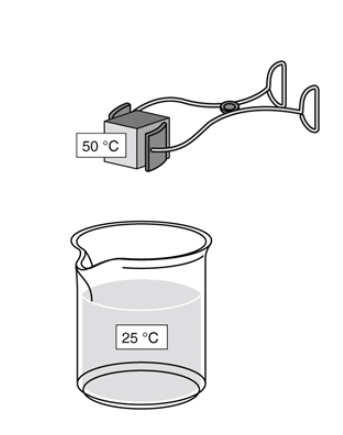
As part of a lab experiment, Tasha drops a metal cube into a beaker of water, as shown in the figure below.


After energy in the form of heat transfers between the substances, what is the final temperature of the water?

1

The final temperature is 25 °C because there is more water than metal.

2

The final temperature is 50 °C because the metal warms the water to the temperature of the metal.

3

The final temperature is between 25 °C and 50 °C because energy is transferred from the metal to the water.

4

The final temperature is between 25 °C and 50 °C because most of the thermal energy is lost to the air around the substances.

45

Conductor

  • Atoms: Electrons are loosely attached to their atoms

  • Electron Behavior: Move easily from one atom to another atom

  • Purpose: Connect all parts of a circuit to allow electrons to flow

media

46

Multiple Choice

Why do electrons move so easily in conductors?

1

have loose electrons

2

have tight electrons

3

have exploding electrons

47

Multiple Choice

Temperature represents...

1

the average potential energy of particles that make up a material.

2

the average kinetic energy of particles that make up a material.

3

the average thermal potential energy in a material.

48

Multiple Choice

What is the purpose of conductors in an electric circuit?

1

make the circuit faster

2

connect parts of circuit

3

stop the flow of electricity

49

Multiple Choice

Why do electrons move so easily in conductors?

1

have loose electrons

2

have tight electrons

3

have exploding electrons

50

Metals - Good Conductors

  • Copper

  • Iron

  • Silver

  • Aluminum

  • People

media

51

Multiple Choice

Heat is

1

the movement of cold particles to warm particles.

2

the movement of thermal energy from warmer objects to cooler objects.

3

the average kinetic and potential energy of the particles of a substance.

4

a way of measuring temperature.

52

Metals - Good Conductors

  • Copper

  • Iron

  • Silver

  • Aluminum

  • People

media

53

Multiple Choice

What type of matter makes good conductors?

1

Gases

2

Nonmetals

3

Metals

54

Multiple Choice

What is the purpose of conductors in an electric circuit?

1

make the circuit faster

2

connect parts of circuit

3

stop the flow of electricity

55

Multiple Choice

Aluminum cans are examples of good conductors.

1

True

2

False

56

Multiple Choice

Question image
The transfer of energy by electromagnetic waves is called
1
conduction
2
convection
3
radiation
4
insulation

57

Insulators

  • Atoms: Electrons are bound tightly to their atoms

  • Electron Behavior: Do not move easily from one atom to another atom

  • Purpose: Protect people from becoming part of a circuit

media

58

Multiple Choice

Why do insulators not allow the flow of electricity?

1

have loose electrons

2

have tight electrons

3

have happy electrons

59

Multiple Choice

Question image
The movement of thermal energy from a warmer object to a cooler object is called
1
heat.
2
temperature.
3
motion.
4
momentum.

60

Multiple Choice

What is the purpose of insulators in a circuit?

1

connect parts of circuit

2

protect people from electricity

3

to make the wire look pretty

61

Multiple Choice

What type of matter makes good conductors?

1

Gases

2

Nonmetals

3

Metals

62

Nonmetals - Good Insulators

  • Wood/Paper

  • Glass

  • Plastic

  • Rubber

  • Cloth

  • Foam

  • Ceramic/Clay

media

63

Multiple Choice

Aluminum cans are examples of good conductors.

1

True

2

False

64

Insulators

  • Atoms: Electrons are bound tightly to their atoms

  • Electron Behavior: Do not move easily from one atom to another atom

  • Purpose: Protect people from becoming part of a circuit

media

65

Multiple Choice

What type of matter makes good insulators?

1

people

2

nonmetals

3

metals

66

Multiple Choice

Glass is an example of an insulator.

1

True

2

False

67

Multiple Choice

Why do insulators not allow the flow of electricity?

1

have loose electrons

2

have tight electrons

3

have happy electrons

68

Conductors and Insulators Comparison

media

69

Multiple Choice

What is the purpose of insulators in a circuit?

1

connect parts of circuit

2

protect people from electricity

3

to make the wire look pretty

70

Nonmetals - Good Insulators

  • Wood/Paper

  • Glass

  • Plastic

  • Rubber

  • Cloth

  • Foam

  • Ceramic/Clay

media

71

Multiple Choice

Using a conductor in a circuit will

1

allow electricity to flow

2

will not allow electricity to flow

3

makes the circuit disappear

72

Multiple Choice

If you place an insulator in an open circuit, it will

1

complete the circuit

2

destroy the circuit

3

not allow electricity to flow

73

Multiple Choice

What type of matter makes good insulators?

1

people

2

nonmetals

3

metals

74

Multiple Choice

Glass is an example of an insulator.

1

True

2

False

75

Conductors and Insulators Comparison

media

76

Multiple Choice

Using a conductor in a circuit will

1

allow electricity to flow

2

will not allow electricity to flow

3

makes the circuit disappear

77

Multiple Choice

If you place an insulator in an open circuit, it will

1

complete the circuit

2

destroy the circuit

3

not allow electricity to flow

78

Multiple Choice

You wake up on a Saturday morning and are glad you don’t have to go to school. You sit outside in the sun because you don’t really feel like doing anything at all. The heat from the sun is starting to make you sweat.
1
conduction
2
convection 
3
radiation

79

Multiple Choice

Question image

It’s boring sitting in the house on your day off, so you go to the pool to meet your friends.You test the water by dipping your feet on the surface of the water...it's warm. Then you jump in and the water is freezing but you don’t want to look like a wimp so you try to get used to it. Your lips are turning blue and your skin now feels cold.

1

conduction

2

convection

3

radiation

80

Multiple Choice

You climb out of the pool and lie on the warm concrete to warm your body back up.
1
conduction
2
convection
3
radiation

81

Multiple Choice

Which is the best example of convection?

1

a camp fire

2

a light bulb

3

a hot air balloon

4

a microwave oven

82

Multiple Choice

Question image

Which best explains why the temperature inside the greenhouse is higher than the temperature outside the greenhouse?

1

The sun’s rays radiate heat into the greenhouse, and then the warmed air is convected inside the greenhouse.

2

The sun’s rays conduct heat into the greenhouse, and then the warmed air is radiated inside the greenhouse.

3

The warm air outside passes into the greenhouse by convection,

and then the warm air is conducted inside the greenhouse.

4

The cool air outside passes into the greenhouse by radiation, and then the cool air is conducted inside the greenhouse.

83

Multiple Select

Check the 3 types of heat transfer.

1

Conduction

2

Condutor

3

Radiation

4

Temperature

5

Convection

84

Multiple Choice

"Lava lamps" contain colored liquids. These liquids form globs that rise to the top due to
1
conduction
2
convection
3
radiation

85

Multiple Choice

How does radiation compare to conduction?

1

Radiation is heat transfer through liquid, and conduction is heat

transfer through air.

2

Radiation is heat transfer through materials touching, and conduction is heat transfer through air.

3

Radiation is heat transfer through air, and conduction is heat transfer through liquid.

4

Radiation is heat transfer through air, and conduction is heat transfer through materials touching.

86

Multiple Choice

Conduction and convecion cannot happen in

1

solids

2

liquids

3

gases

4

vacuum

87

Multiple Choice

Why does water flow upwards when it is heated?

1

The water expands, increasing its density.

2

The water expands, decreasing its density.

3

The water contracts, increasing its density.

4

The water contracts, decreasing its density.

88

Multiple Choice

As a student in an environmental science class, you have been asked to explain the greenhouse effect and the problem we face, in regards to global warming with increasing greenhouse gas emissions. You decide to use an analogy to help your other classmates understand how the increase in greenhouse gases will play a role in the greenhouse effect and global warming. All BUT ONE of these analogies is correct.

1

The increase in greenhouse gas emissions is like wearing a sweatshirt while you are running.

2

The increase in greenhouse gas emissions is like putting on extra layers of clothes during the winter.

3

The increase in greenhouse gas emissions is like placing an extra log on the fire to produce more heat.

4

The increase in greenhouse gas emissions is like pulling an extra blanket over you while lying on the couch.

89

Multiple Choice

Conduction occurs more easily between solids and liquids. This is because the particles in gases are

1

farther apart and move faster.

2

closer together and move faster.

3

further apart and move more slowly.

4

closer together and move more slowly.

90

Multiple Choice

Question image

Why do we wear jackets in cold weather?

1

To keep cold out

2

To generate heat

3

To reduce heat loss

4

To look cool

91

Multiple Choice

Question image

Identify the method of heat transfer.

Ironing of clothes.

1

Conduction

2

Convection

3

Radiation

Heat/Heat Transfer and Temperature Lesson

By Seantre Jones

Show answer

Auto Play

Slide 1 / 91

SLIDE