Search Header Logo
  1. Resource Library
  2. Science
  3. Chemistry
  4. Chemical Bonding
  5. Chemical Bonding Intro
Chemical Bonding Intro

Chemical Bonding Intro

Assessment

Presentation

Science

8th - 12th Grade

Easy

NGSS
MS-PS1-1, HS-PS1-1, MS-PS2-5

+4

Standards-aligned

Created by

Teresa Schlueter

Used 12+ times

FREE Resource

16 Slides • 27 Questions

1

Multiple Choice

Question image
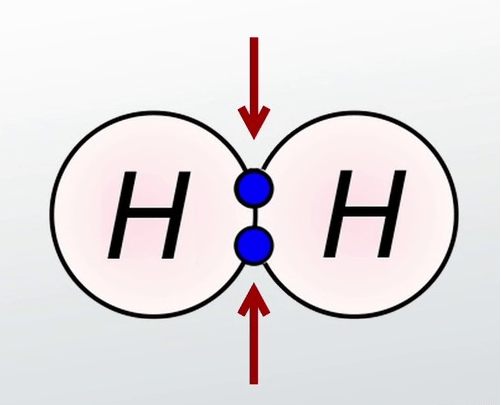
How many valence electrons in this structure?
1
6
2
5
3
4
4
7

2

Multiple Choice

An electron has a ___ charge.

1

no charge

2

positive

3

negative

4

it depends

3

Multiple Choice

A proton has a ___ charge.

1

positive

2

negative

3

no charge

4

it depends

4

Multiple Choice

What are valence electrons?

1

sum of the protons and neutrons

2

protons minus electrons

3

electrons in the inner shells

4

electrons in the outer shell

5

media

6

media

7

media

8

Multiple Choice

The _____ describes the atoms in a compound.

1

Chemical Equation

2

Chemical Formula

3

Chemical Symbol

4

Coefficient

9

Multiple Choice

How many elements are in C6H12O6?

1

1

2

2

3

3

4

4

10

Multiple Choice

Which is the correct formula for:

3 Hydrogen (H)

1 Sulfur (S)

4 Oxygen (O)

1

H3SO4

2

HSO4

3

H4S3O

4

H2O

11

media

12

Multiple Choice

A is defined as - strong attractive force between atoms or ions in a molecule or compound.

1

Chemical Bond

2

Emotional Bond

3

BFFs

4

Element

13

Multiple Choice

A chemical bond is formed when elements _______ or ________ electrons.

1

transfer or share

2

explode or create

3

run away from or run towards

14

media

15

Multiple Choice

Why don't noble gases form bonds?

1

Noble gases do form bonds

2

They all have a full octet

3

They only bond with each other

16

Multiple Choice

Atoms form compounds to become more ---

1

reactive

2

stable

3

explosive

4

toxic

17

Multiple Choice

Question image

Atoms lose, gain, or ______electrons to get a stable outer energy level.

1

share

2

split

3

create

4

destroy

18

Multiple Choice

The electrons that are lost, gained, or shared in chemical bonds are called ________________.

1

valence electrons

2

chemical electrons

3

Lewis electrons

4

none of the above

19

media

20

Multiple Choice

Why do chemical bonds form?

1

so the number of protons equals the number of electrons

2

to fill the outermost electron level

3

so an atom can become unstable

21

Multiple Choice

According to the Octet Rule, atoms of elements react with each other in order to attain ____ electrons in their outermost energy level or shell.

1

2

2

4

3

8

4

10

22

Multiple Choice

Question image

An atom of Neon complies with the Octet Rule because it has ___ electrons in its outer shell.

1

10

2

8

3

2

4

7

23

media

24

media

25

media

26

Multiple Choice

Ionic bonds form between ---

1

nonmetals.

2

metals and nonmetals.

27

Multiple Choice

Cations are ions with _________ charge.

1

positive

2

negative

3

gains

4

loses

28

Multiple Choice

Atoms that gain an electron have an electric charge of ---

1

-1.

2

-2.

3

+1.

4

+2.

29

Multiple Choice

Question image

An atom that has a charge because it has a different number of electrons (more or less) is called an ---

1

isotope

2

valence electron

3

ion

4

octet

30

media

31

media

32

Multiple Choice

Question image
What two types of atoms make a covalent bond?
1
2 Nonmetals
2
1 Nonmetal and 1 Metal
3
2 Metals
4
2 Noble Gases

33

Multiple Choice

The chemical bond formed when two atoms share electrons is call a(n)

1

covalent bond

2

ionic bond

3

metallic bond

4

electron bond

34

Multiple Choice

How do covalent bonds form?
1
Donating & receiving valence e- between atoms.
2
Opposite slight charges attract each other between compounds.
3
Scientists are still not sure how they form.
4
Sharing valence e- between atoms.

35

media

36

media

37

media

38

media

39

Multiple Select

Which of these are a property of ionic bonds?

1

Only metals can form ionic bonds

2

Non-metals and metals form ionic bonds

3

Elements in ionic bonds steal or lose electrons

4

Can be easily broken by the presence of water

40

Multiple Select

Which of these are a property of a covalent bond?

1

The strongest chemical bond

2

The stronger element steals electrons

3

Elements share or somewhat shares electrons

4

Only bond when the elements are different charges

5

Only charged elements can form covalent bonds

41

Multiple Choice

When two nonmetals do not share electrons evenly, the resulting covalent bond will be

1

nonpolar

2

polar

3

ionic

4

metallic

42

Multiple Choice

Question image
What type of bond is shown in this image?
1
Ionic
2
Polar Covalent
3
Nonpolar Covalent
4
Van der Waals Force

43

media
Question image
How many valence electrons in this structure?
1
6
2
5
3
4
4
7

Show answer

Auto Play

Slide 1 / 43

MULTIPLE CHOICE