2.6 Energy resources
Presentation
•
Science
•
7th Grade
•
Medium
William Katumba
Used 3+ times
FREE Resource
2 Slides • 68 Questions
1
2.6 Energy Resources
Use pages 150-151 to complete this lesson worksheet.
Lesson objectives;
Describe the difference between a renewable and non renewable energy source.
Describe how electricity is generated in a power station.
2
Multiple Select
Page 150; Select all that apply;
Energy resources of the planet are used to;
Heat homes
Make electrical appliances work
Move people around
3
Multiple Select
Give three examples of energy resources that were formed millions of year ago
Coal
Oil
Gas
Water
4
Multiple Choice
True
False
5
Multiple Choice
Which of these fossil fuels came from fossilized remains of trees?
Coal
Oil
Gas
6
Multiple Choice
Non renewable means;
You can easily get more when you run out
You can easily produce more when you run out
You can't easily get more when you run out
7
Multiple Choice
Which of these fossil fuels are renewable?
Coal
Oil
Gas
None of them
8
Multiple Choice
Complete this sentence from page 150;
Thermal power stations..........
..are mainly used to produce petrol, plastics and other useful materials
..burn coal and oil to to drive a generator
....burn oil and gas to drive a generator
...burn coal and gas to drive a generator
9
Multiple Choice
Page 150;
The current transfers energy from the ___ store of the fuel to the ___ store of the water in the kettle.
thermal........ chemical
chemical........ electrical
electrical........ chemical
chemical........ thermal
10
Multiple Choice
Page 150; What's the major problem with burning fossil fuels?
They take a long time to burn
They produce a lot of carbon dioxide
They are tool old
All of these
11
Multiple Choice
True or False;
Carbon dioxide is a greenhouse gas that can contribute to climate change
TRUE
FALSE
12
Multiple Select
Page 151;
What are some other pollutants that are produced when burning fossil fuels?
Sulfur dioxide
Nitrogen oxides
Particulates
Hydrocarbons
13
Multiple Select
What are renewable sources? (Select all that apply)
Energy sources that cannot be depleted
Energy sources that do not run out
Energy sources that come from the nuclear store of the sun
Energy sources that are safe for the environment.
14
Multiple Select
Which of the following are renewable energy sources?
Biomass
Wind turbines
Coal
Solar cells
Hydroelectricity
15
Multiple Choice
When DO renewable sources produce carbon dioxide?
When they are being burnt
When they are being used
As they are transferred from the sun
All of these
16
Multiple Choice
17
Multiple Choice
Renewable energy resources?
Do not release harmful emissions to the atmosphere.
They do not diminish and they are restored naturally.
All the above
18
Multiple Choice
19
Multiple Choice
20
Multiple Choice
21
Multiple Choice
22
Multiple Choice
23
Multiple Choice
24
Multiple Choice
25
Multiple Choice
26
Multiple Choice
27
Multiple Choice
28
Multiple Choice
29
Multiple Choice
30
Multiple Choice
31
Multiple Choice
32
Multiple Choice
33
Multiple Choice
34
Multiple Choice
35
Multiple Choice
Use the diagram to put the steps below in the correct order to describe how electrical energy is generated in an electrical power plant.
- Electricity is generated.
- Magnet spins between wire coils.
- Water is heated and changes to steam.
- Steam makes turbine spin.
- Fossil fuel is burned.
Steps 1, 3, 4, 2, then 5.
Steps 5, 2, 4, 3, then 1.
Steps 5, 3, 4, 2, then 1.
Steps 1, 2, 4, 3, then 5.
36
Multiple Choice
37
Multiple Select
Which of the following are Non-Renewable energy resources? (Check all that apply.)
coal
wind
solar
nuclear
38
Multiple Choice
One advantage of solar and wind power over fossil fuels is that
wind and solar are presently much less expensive than fossil fuels.
wind and solar come from natural processes and fossil fuels do not.
wind and solar are nonrenewable resources and fossil fuel are renewable.
wind and solar are continuously renewable and fossil fuels take millions of years to be formed.
39
Multiple Select
Renewable or Nonrenewable: Coal
Renewable
Nonrenewable
40
Multiple Select
Renewable or Nonrenewable: Natural Gas
nonrenewable
renewable
41
Multiple Select
Renewable or Nonrenewable: Oil
Nonrenewable
Renewable
42
Multiple Select
Renewable or Nonrenewable: Sunlight
Renewable
Nonrenewable
43
Multiple Select
Renewable or Nonrenewable: Water
Nonrenewable
Renewable
44
Multiple Select
Renewable or Nonrenewable: Wind
Renewable
Nonrenewable
45
Multiple Choice
This energy is from moving air.
Wind Energy
Geothermal Energy
Fossil Fuel Energy
Biofuel
46
Multiple Choice
This is electrical energy that comes from the force of energy of moving water. It is the most widely used type of renewable energy.
Coal
Hydroelectric Power
Wind Energy
Geothermal Energy
47
Multiple Choice
This is a liquid fuel derived from plant materials.
wind energy
biofuel (from biomass)
geothermal energy
solar energy
48
Multiple Choice
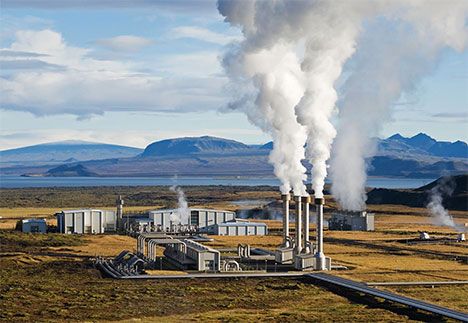
This is the energy generated in the Earth's core and produces steam and hot water.
Solar Energy
Hydroelectric Power
Fossil Fuels
Geothermal
49
Multiple Select
Solar energy is a completely renewable resource.
Advantage
Disadvantage
50
Multiple Select
Fossil Fuels produce carbon dioxide that pollutes the atmosphere.
Advantage
Disadvantage
51
Multiple Select
Nuclear Power can generate high amounts of electrical energy in a single plant.
Advantage
Disadvantage
52
Multiple Select
Biomass requires a lot of space.
Advantage
Disadvantage
53
Multiple Choice
Wind energy is pollution free.
Advantage
Disadvantage
54
Multiple Select
Hydropower can have a negative impact on river wildlife.
Advantage
Disadvantage
55
Multiple Select
Geothermal power is geographically limited-not available in many locations.
Advantage
Disadvantage
56
Multiple Select
Fossil Fuels are a nonrenewable resource.
Advantage
Disadvantage
57
Multiple Select
Which are non renewable resources?
(Choose all correct answers)
natural gas
coal
water in a dam
oil
nuclear energy
58
Multiple Choice
Fossil Fuel are?
A group of energy resources that were formed from ancient plants and organisms
A group of dinosaur fossils
A type of gas used for planes
59
Multiple Choice
60
Multiple Choice
What is one DISADVANTAGE of using renewable resources?
They are not as efficient as burning fossil fuels.
They will eventually run out.
They are cheaper and better for the environment.
61
Multiple Choice
What type of power plant uses scraps from farming, waste products and wind to generate electricity?
Hydroelectric Power Plant
Geothermal Power Plant
Biomass Power Plant
Nuclear Power Plant
62
Multiple Choice
63
Multiple Choice
64
Multiple Choice
Which type of energy resource is safer for the environment?
Renewable Energy Resources
Non-Renewable Energy Resources
65
Draw
Draw a line to match each of the energy resources to it's type.
66
Multiple Choice
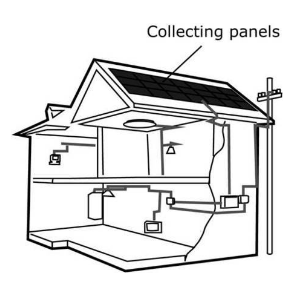
Which alternative energy resource can be found on the roof tops of houses or buildings?
67
Multiple Choice
68
Multiple Choice
69
Multiple Choice
Which renewable energy resource would be the most ideal for use in the Southern African region?
Hydro (water) energy
Solar energy
Wind energy
Geothermal energy (Earth's heat)
70
HOMEWORK; Write this in your notebook
Write a children's story that follows the journey of Chris the carbon atom. Chris starts out in the trunk of a tree that is turned into coal and then used to generate electricity.
At the end of the journey, he is a molecule of carbon-dioxide.
2.6 Energy Resources
Use pages 150-151 to complete this lesson worksheet.
Lesson objectives;
Describe the difference between a renewable and non renewable energy source.
Describe how electricity is generated in a power station.
Show answer
Auto Play
Slide 1 / 70
SLIDE

Similar Resources on Wayground
64 questions
Force and Motion Test Recap
Presentation
•
8th Grade
60 questions
Ocean Currents w/Questions for Interactive Notebook
Presentation
•
7th Grade
63 questions
Chemistry Calculations Review
Presentation
•
8th Grade
62 questions
Plasma
Presentation
•
8th Grade
69 questions
Phase Change 1.2
Presentation
•
8th Grade
64 questions
Simple Machines and Efficiency Review
Presentation
•
6th Grade
62 questions
G7 T3L32 Nutrients
Presentation
•
7th Grade
64 questions
Second Law
Presentation
•
7th - 8th Grade
Popular Resources on Wayground
10 questions
5.P.1.3 Distance/Time Graphs
Quiz
•
5th Grade
10 questions
Fire Drill
Quiz
•
2nd - 5th Grade
20 questions
Equivalent Fractions
Quiz
•
3rd Grade
22 questions
School Wide Vocab Group 1 Master
Quiz
•
6th - 8th Grade
20 questions
Main Idea and Details
Quiz
•
5th Grade
20 questions
Context Clues
Quiz
•
6th Grade
20 questions
Inferences
Quiz
•
4th Grade
12 questions
What makes Nebraska's government unique?
Quiz
•
4th - 5th Grade
Discover more resources for Science
19 questions
Introduction to Properties of Waves
Presentation
•
6th - 8th Grade
16 questions
Interactions within Ecosystems
Presentation
•
6th - 8th Grade
10 questions
Exploring the Layers of the Earth
Interactive video
•
6th - 10th Grade
16 questions
Photosynthesis and Cellular Respiration Review
Quiz
•
7th Grade
20 questions
Abiotic & Biotic Factors
Quiz
•
7th Grade
10 questions
Exploring the Evolution of Cell Theory
Interactive video
•
7th Grade
17 questions
Human body systems
Quiz
•
7th Grade
20 questions
Energy Transformations
Quiz
•
6th - 8th Grade