

The circulatory system

Presentation
•
Science
•
8th Grade
•
Medium
+4
Standards-aligned

Jeremy Soumpholphakdy
Used 1+ times
FREE Resource
16 Slides • 22 Questions
1
Open Ended
Brainstorm what you know about the circulatory system already. Can you name any of its parts? Add your ideas to the class brainstorm.
2
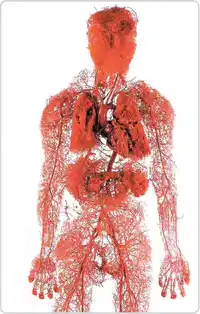
The circulatory system is the body's transport network. Powered by the regular beating of the heart, it cycles blood throughout the body to carry substances to the places they're needed, or to where they can be removed.
3
Hotspot
Where on the human body do you think you would find the heart?
4
Delivery
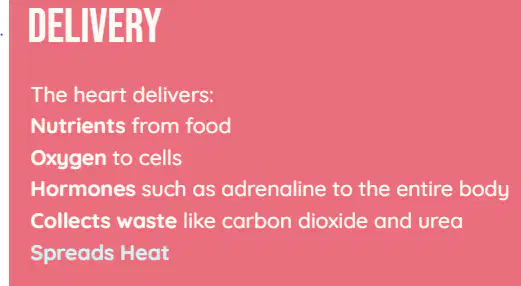
The heart delivers:
Nutrients from food
Oxygen to cells
Hormones such as adrenaline to the entire body
Collects waste like carbon dioxide and urea
Spreads Heat
5
Multiple Choice
What kind of nutrients do we find in our blood?
Glucose
Glumine
Criene
Cellulose
6
Multiple Select
What systems would be linked to the digestive system remembering that
Digestive (eating)
Respiratory (breathing)
Endocrine (hormones)
Excretory (waste)
Body system
7
8
9
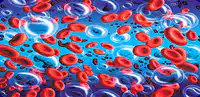
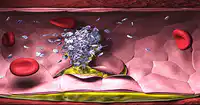
Plasma
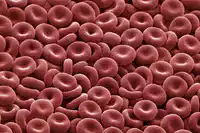
Red blood cells

10
Carry oxygen and remove carbon dioxide and waste
Contains haemoglobin
Red blood cells
Fight disease and infection
White blood cells
Water portion of the blood (55%)
Plasma
Help blood clot
Platelets


11
Match
Red blood cells
White blood cells
Platelets
Plasma
Red blood cells
White blood cells
Platelets
Plasma
12
Open Ended
When we mix sugar to water, what happens to the water?
13
Multiple Choice
Blood plasma is a water-based solution. Identify how it transports nutrients from food around the body.
The nutrients dissolve in the plasma
The nutrients are carried by haemoglobin molecules
The nutrients are carried by the white blood cells
The nutrients don't dissolve but flow through the blood vessels suspended in the plasma
14
Multiple Choice
___ _____ _____ contains haemoglobin, for transporting oxygen.
Plasma
White blood cells
Red blood cells
Platelets
15
Multiple Choice
Which component of blood fights infection.
Plasma
White blood cells
Red blood cells
Platelets
16
Labeling
Guess the following
17
Three types
Arteries - Carries blood away from the heart
Veins - Carries blood back to the heart
Capilaries - Delivers low-oxygen blood to veins (Smallest)
18
Labeling
Guess the following
19
20
Open Ended
hy do you think capillaries are so small and numerous?
21
Draw
Draw how you think a heart would look
22
The heart
The heart is a fist-sized muscle inside the rib cage.
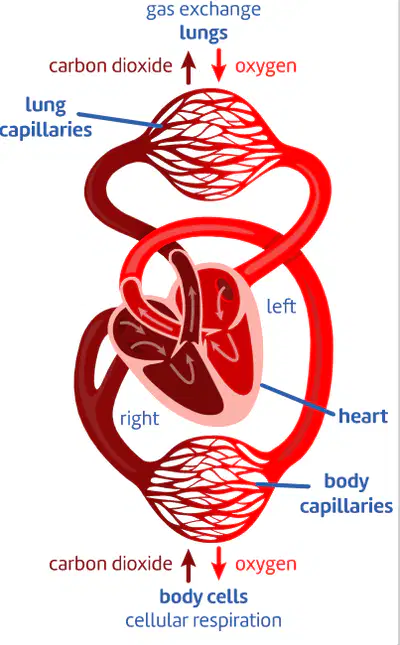
It actually functions as two pumps working side by side and delivering blood to two main loops:
23
The heart
One loop goes to the lungs. There, blood collects oxygen and delivers carbon dioxide.
24
The heart
The other loop goes around the rest of the body. The blood delivers oxygen and glucose to cells for cellular respiration and collects carbon dioxide and other wastes.
25
The heart
The diagram on the right shows the two loops.
Oxygenated blood – blood rich in oxygen – is shown as bright red, and de-oxygenated blood as dark red. These are close to the real colours.
26
27
28
Multiple Choice
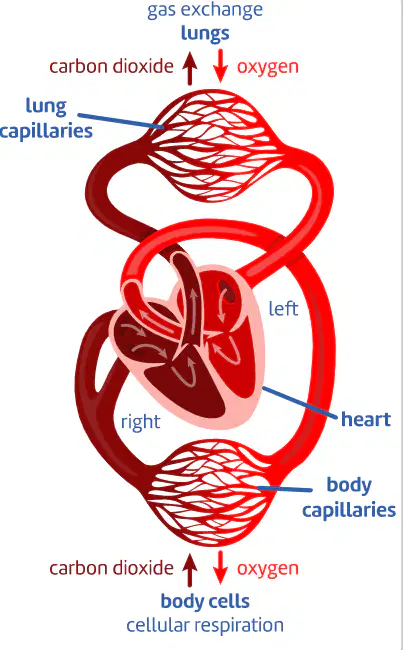
The right side of the heart pumps:
Oxygenated blood to the lungs
Oxygenated blood to the body
De-oxygenated blood to the lungs
De-oxygenated blood to the body
29
Multiple Choice
The left side of the heart pumps:
Oxygenated blood to the lungs
Oxygenated blood to the body
De-oxygenated blood to the lungs
De-oxygenated blood to the body
30
31
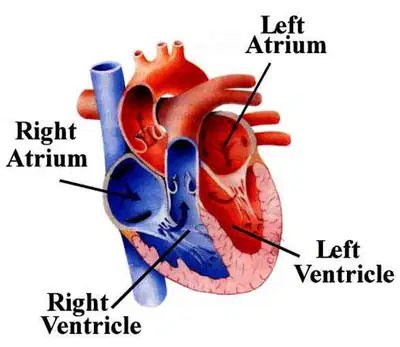
The heart has four chambers
32
Open Ended
When you exercise, your muscle cells need more oxygen and produce more carbon dioxide. You breathe more deeply and quickly, and your heart beats harder and faster.
Using your knowledge of body systems, how these facts about cells, breathing and hearts are connected.
33
Multiple Choice
From the right atrium, blood is pumped to the rest of the body
True
False
34
Multiple Choice
The left ventricle pumps blood to the rest of the body through a large vein.
True
False
35
Labeling
36
Hotspot
Where do you think there would be the least amount of oxygen?
37
Hotspot
Where do you think there would be the most amount of oxygen?
38
Labeling
In the diagram below, drag the labels to match the relationship between the circulatory, digestive and respiratory systems.
Brainstorm what you know about the circulatory system already. Can you name any of its parts? Add your ideas to the class brainstorm.
Show answer
Auto Play
Slide 1 / 38
OPEN ENDED
Similar Resources on Wayground

34 questions
7U3L4 Energy Pyramids
Presentation
•
7th - 8th Grade
34 questions
Acids and bases
Presentation
•
7th - 8th Grade
32 questions
Metric System
Presentation
•
7th - 8th Grade
33 questions
Scientific Inquiry
Presentation
•
8th Grade
31 questions
Wave Behaviors
Presentation
•
8th Grade
31 questions
Investigating Potential Energy
Presentation
•
8th Grade
33 questions
Lesson over Atoms and the Periodic Table
Presentation
•
8th Grade
30 questions
Newton's Laws of Motion
Presentation
•
8th Grade
Popular Resources on Wayground
10 questions
How much do you know about our Portrait of an Eagle?

Quiz
•
10th Grade
10 questions
Fast Food Slogans
Quiz
•
6th - 8th Grade
21 questions
Continents and Oceans
Quiz
•
6th Grade
20 questions
Parts of Speech
Quiz
•
5th Grade
16 questions
Subject & Predicate
Quiz
•
5th Grade
25 questions
Multiplication Facts
Quiz
•
5th Grade
12 questions
Map Skills
Quiz
•
3rd Grade
22 questions
Continents and Oceans
Quiz
•
5th Grade
Discover more resources for Science
20 questions
Scientific Method and Variables
Quiz
•
8th Grade
20 questions
Scientific method and variables
Quiz
•
8th Grade
27 questions
Counting Atoms - Subscripts
Quiz
•
8th Grade
20 questions
Claim, Evidence and Reasoning (CER)
Quiz
•
6th - 8th Grade
18 questions
Counting Atoms
Quiz
•
7th - 8th Grade
20 questions
Elements, Compounds and Mixtures
Quiz
•
8th Grade
10 questions
Exploring Chemical and Physical Changes

Interactive video
•
6th - 10th Grade
10 questions
Decoding the Periodic Table of Elements
Interactive video
•
6th - 10th Grade