Search Header Logo
Kinetics Review 2

Kinetics Review 2

Assessment

Presentation

Science

10th Grade

Easy

NGSS
HS-PS1-5, HS-PS1-4, HS-PS1-6

+1

Standards-aligned

Created by

Linda Cannon

Used 5+ times

FREE Resource

0 Slides • 31 Questions

1

Multiple Choice

Why does a higher concentration increase the rate of reaction?

1

it increases the amount of reactants

2

it lowers the activation energy

3

it increases the energy of reactant particles

4

it increases the frequency of collision

2

Multiple Choice

What is the rate of reaction?
1

How fast a reaction is 

2

How big a reaction is

3

How loud a reaction is

4

How much gas a reaction produces

3

Multiple Choice

Grinding an effervescent tablet into powder increases the rate of reaction due to increase of

1

concentration

2

total surface area

3

temperature

4

size

4

Multiple Choice

Increasing pressure causes the reacting particles

1

to bond together

2

to repel from each other

3

gain more kinetic energy

4

to move closer together

5

Multiple Choice

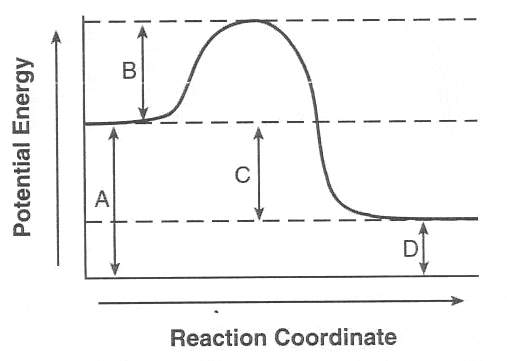
Question image
What letter represents the energy of the products?
1

A

2

B

3

C

4

D

6

Multiple Choice

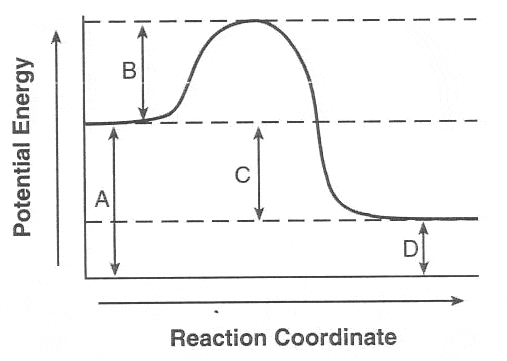
Question image
What type of reaction is this?
1

Endothermic

2

Exothermic

7

Multiple Choice

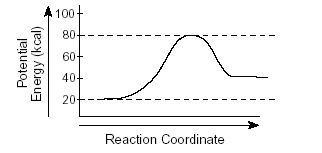
Question image

What is the ΔH of this reaction?

1

40 kJ

2

20 kJ

3

80 kJ

4

-60 kJ

8

Multiple Choice

Question image
What letter represents ΔH?
1

A

2

B

3

C

4

D

9

Multiple Choice

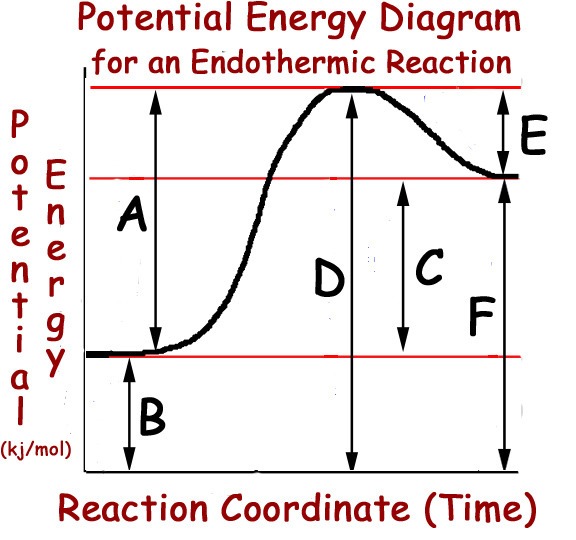
Question image
What is the PE of the reactants?
1

100 kJ

2

175 kJ

3

50 kJ

4

75 kJ

10

Multiple Choice

ΔH value in an endothermic reaction is a positive number.
1

True

2

False

11

Multiple Choice

Question image

This symbol indicates that a reaction is _____

1

reversible

2

irreversible

12

Multiple Choice

What are the two factors that help determine that equilibrium is reached?

1

Forward reaction rate is faster than the reverse and the concentrations are equal

2

Forward and reverse reaction rates are equal and concentrations are equal

3

Forward and reverse reaction rates are equal and concentrations are constant

13

Multiple Choice

A catalyst works by
1

changing the order of the reaction

2

increasing the temperature

3

lowering the activation energy

4

making the activated complex

14

Multiple Choice

If the temperature is reduced, a reaction rate will ______

1

increase

2

decrease

3

stay the same

15

Multiple Choice

If the concentration of a reactant is increased, the reaction rate will ___________.

1

increase

2

decrease

3

stay the same

16

Multiple Choice

A ______________ is a substance that increases the rate of a reaction without being used up during the reaction. 
1

catalyst

2

product

3

reactant

4

solute

17

Multiple Choice

Increase in temperature of the reactants can do one of the following
1

Slow collision frequency

2

Allow less effective collision between the particles

3

Cause particles to lose speed

4

Increase collision between the particles thus increasing the rate.

18

Multiple Choice

Question image
The following factors affect the position of equilibrium EXCEPT
1

Concentration

2

Pressure

3

Temperature

4

States of matter

19

Multiple Choice

2SO2(g)+O2(g) ⇌ 2SO3(g) + Heat


Adding SO2(g) will

1

shift equilibrium right

2

shift equilibrium left

3

increase rate of reaction

4

have no change

20

Multiple Choice

2SO2(g)+O2(g) ⇌ 2SO3(g) + Heat


Increasing the temperature will...

1

shift equilibrium right

2

shift equilibrium left

3

increase pressure

4

have no change

21

Multiple Choice

2SO2(g)+1O2(g) ⇌ 2SO3(g) + Heat


Increasing the pressure on the system will...

1

shift equilibrium right

2

shift equilibrium left

3

slow rate of reaction

4

have no change

22

Multiple Choice

2SO2(g) + O2(g) ⇌ 2SO3(g) + Heat


Using a catalyst

1

shift equilibrium right

2

shift equilibrium left

3

increase the rate of reaction

4

have no change

23

Multiple Choice

The rate of a chemical reaction is NOT affected by which of the following:
1

temperature

2

concentration

3

particle size (surface area)

4

All of these affect reaction rates

24

Multiple Choice

Products will form faster if____________
1

the particle size of the reactants are larger.

2

temperature is decreased.

3

concentration of the reactants are increased.

4

the reaction is not stirred.

25

Multiple Choice

A ______________ is a substance that increases the rate of a reaction without being used up during the reaction. 
1

catalyst

2

product

3

reactant

4

solute

26

Multiple Choice

Catalysts permit reactions to proceed along a ___________energy path.

1

lower

2

higher

3

magnetic

4

psycho's

27

Multiple Choice

Smaller particle size allows for a _________ surface area to be exposed for the reaction.

1

larger

2

smaller

3

rectangular

4

spherical

28

Multiple Choice

________ is the measure of how much area of an

object is exposed.

1

Surface Area

2

Catalyst

3

Temperature

4

Concentration

29

Multiple Choice

Grains of sugar have a greater _______ than a solid cube of

sugar of the same mass, and therefore will dissolve quicker in water.

1

Surface Area

2

Catalyst

3

Temperature

4

Concentratrion

30

Multiple Select

Pick the TWO (2) options that will INCREASE the rate of a reaction.

1

Reducing Heat

2

Adding Catalyst

3

Adding Heat

4

Removing Catalyst

31

Multiple Choice

Which of the following will lower the rate

of reaction?

1

adding an enzyme to the reaction

2

decreasing the temperature from 40°C to

10°C

3

breaking a chunk of calcium up into

smaller pieces

4

increasing the amount of solute

dissolved in a solution

Why does a higher concentration increase the rate of reaction?

1

it increases the amount of reactants

2

it lowers the activation energy

3

it increases the energy of reactant particles

4

it increases the frequency of collision

Show answer

Auto Play

Slide 1 / 31

MULTIPLE CHOICE