
Search Header Logo
  1. Resource Library
  2. Science
  3. Earth & Space Science
  4. Biogeochemical Cycles
  5. Env. Sci 3 3.2 & 3 4: The Hydrosphere & Biogeochemical Cycles
Env. Sci 3-3.2 & 3-4: The Hydrosphere & Biogeochemical Cycles

Env. Sci 3-3.2 & 3-4: The Hydrosphere & Biogeochemical Cycles

Assessment

Presentation

•

Science

•

9th - 12th Grade

•

Hard

•
NGSS
MS-ESS1-1, MS-ESS2-4, MS-LS2-3

+19

Standards-aligned

Created by

Abby Fancsali

Used 2+ times

FREE Resource

22 Slides • 15 Questions

1

Chapter 3-3.2 & 3.4 The Hydrosphere & Biogeochemical Cycles

media

2

Multiple Choice

A set of moral principles or values held by a person or a society is called

1

Ethics

2

Justice

3

Culture

4

Biocentrism

3

Multiple Select

Question image

An Earthworm living in the dirt is an example of which sphere(s) of the Earth?

1

Biosphere

2

Geosphere

3

Atmosphere

4

Hydrosphere

4

Multiple Choice

What has happened to human resource consumption in the last several hundred years?

1

It has remained at the same level

2

It has decreased Slightly

3

It has Increased Slightly

4

It has decreased dramatically

5

It has Increased dramatically

5

Multiple Choice

Question image

Predator-prey relationships are an example of a

1

System with no Feedback loops

2

Positive Feedback Loop

3

Negative Feedback Loop

4

Destabilizing System

6

The Gulf of Mexico's Dead Zone

  • In the Gulf of Mexico, there is a region of water that has been depleted of oxygen and can not support any life.

    • Hypoxia: Low Oxygen levels

  • The Zone appears each spring and continues to grow into the fall

    • 2017: measured 22,729 square km or 7226 sq miles

  • The dead zone is caused by an overgrowth of bacteria in the water that depletes oxygen

media

7

The Hydrosphere

  • Water is Essential for life

  • Water plays influences all other systems on Earth

  • 97.5% of the water on Earth is Saltwater

    • All the ice on Earth is sometimes called the Cryosphere

  • Of the remaining 2.5% of Freshwater

    • 2% is frozen in ice

    • 0.5% is available for use

      • Includes Surface Water and Ground Water

  • The limited amount of drinking water is a major source of conflict between countries

media

8

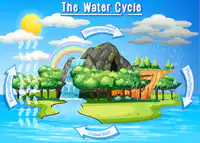
The Water Cycle

  • Evaporation: The Conversion of a substance from a liquid to a gas

    • Sped up by high temperatures and strong winds

  • Transpiration: The release of water vapor by plants through their leaves

  • Both filter out minerals and pollutants

media

9

The Water Cycle

  • Precipitation: The return of water to liquid form from the atmosphere as rain or snow

    • Some water is taken up by plants

    • Some soak into the soil

    • A lot flows as runoff into bodies of water

media

10

The Water Cycle

  • Condensation: A change in state from gas to liquid

    • Generally caused by a decrease in temperature

media

11

Groundwater

  • When Precipitation travels to Earth, some of it soaks down into the soil

  • Aquifers: Underground Stores of water

    • The maximum amount held is called the water table

    • It can take thousands of years to refill completely

  • Groundwater: Freshwater found underground

media

12

Human Impacts

  • Humans do several things that can alter the water cycle

    • Runoff and erosion are increased by the removal of plants from the surface

  • Overuse of groundwater depletes aquifers

  • Pollution increases the acidity of rain

13

Multiple Choice

Question image

True or False: Most of the water on Earth is Salt Water

1

True

2

False

14

Multiple Choice

Question image

A change in state in which water returns to Earth's surface and changes from a vapor to a liquid is called

1

Condensation

2

Transpiration

3

Evaporation

4

Recharge

15

Multiple Select

Question image

Select all of the places fresh water can be found.

1

Oceans

2

Aquifers

3

Groundwater

4

Ice

16

Multiple Choice

Question image

What is the major source of international conflicts surrounding water?

1

Some countries Pollute more than others

2

Some Countries Divert water away from other countries

3

There is a very small amount of fresh drinking water available on Earth

4

Evaporation happens faster in some countries

17

Matter

  • The matter is never used up

  • The Law of Conservation of Matter: Matter can be transformed from one type to another, but can not be created or destroyed

media

18

Nutrients

  • Nutrients: matter that organisms require for their life processes

    • There are several dozen required for life

    • Two main groups of Nutrients

      • Macronutrients: Nutrients required in relatively large amounts

        • Carbon

        • Nitrogen

        • Phosphorus

      • Micronutrients: Nutrients needed in small amounts

  • Nutrients travel through the environment in biogeochemical Cycles

19

The Carbon Cycle

media

20

The Carbon Cycle

  • Describes the route that carbon atoms take throughout the environment

  • Travels through different organisms

  • Producers: Organisms that make their own food using the energy and carbon dioxide in the environment

    • Most use Photosynthesis

media

21

The Carbon Cycle

  • Consumers: Organisms that eat other organisms to obtain nutrients

  • Decomposers: Organisms that break down waste and dead organisms for nutrients

  • Consumers and Decomposers perform cellular respiration

    • Not the same thing as "Breathing"

media

22

The Carbon Cycle

  • When Organisms die, their remains may settle in Sediments and forms layers

    • Can convert tissue into fossils

    • Also holds Carbon in Fossil Fuel Deposits

    • Limestone and other sedimentary rock are the largest reservoirs of Carbon

  • Carbon is released through erosion and volcanic Eruption

media
media

23

The Carbon Cycle

  • The Oceans are the second-largest Carbon Sink

    • Absorb Carbon from

      • the atmosphere,

      • runoff,

      • undersea volcanoes,

      • the waste/Remains of Organisms

    • The absorption rate is affected by many factors

      • Temperature

      • Organisms living in the Ocean

media
media

24

Human Impacts on The Carbon Cycle

  • We shift Carbon into the atmosphere in many ways

    • Extracting Fossil Fuels and Disturbing the lithosphere

    • Burning Fossil Fuels releases CO2 into the atmosphere

    • Removing vegetation reduces the number of plants to absorb CO2

  • Missing Carbon Sink: Scientists still are not sure about one Carbon Sink that takes up more than 1-2 Billion metric tons of Carbon

    • Many think it is the Northern Forests

25

Multiple Choice

Which Organisms make their own food using energy and carbon dioxide in the environment?

1

Producers

2

Consumers

3

Decomposers

4

Chef Gordon Ramsay

26

Multiple Choice

Question image

Where is most Carbon stored on Earth?

1

The Oceans

2

Limestone

3

The Northern Forests

4

In Living creatures

27

Multiple Choice

Which Organisms break down waste or other dead organisms?

1

Producers

2

Consumers

3

Decomposers

4

Chef Gordon Ramsay

28

Multiple Select

Which Organisms eat other organisms for energy and nutrients?

1

Producers

2

Consumers

3

Decomposers

4

Chef Gordon Ramsay

29

The Phosphorous Cycle

media

30

The Phosphorous Cycle

  • Involves Mostly the lithosphere & Oceans

  • Phosphorous is essential to Life, but most of it is bound up in rocks and inaccessible

  • Plants take up Phosphorus through the Roots

  • Consumers gain Phosphorus from eating and drinking water

media

31

Human Impacts on The Phosphorous Cycle

  • Phosphorus is mined for fertilizer

  • Phosphorus is used in cleaning supplies to increase their power

  • When wastewater with phosphorus runs off into bodies of water, it leads to eutrophication

    • An overgrowth of producers like algae and bacteria

    • can cause hypoxia in water and create dead zones

media

32

The Nitrogen Cycle

media

33

The Nitrogen Cycle

  • Nitrogen is mostly bound up in the atmosphere

    • Nitrogen makes up 78% of our atmosphere by mass

  • Needs to undergo a nitrogen fixation to be available for consumption

    • Lightning

    • Bacteria

    • Human technology

  • Some plants & bacteria denitrify nitrates and convert them back to nitrogen gas

34

Human Impacts on The Nitrogen Cycle

  • Now that we have the technology to fix nitrogen, our output has grown significantly

    • Necessary as a fertilizer for plants

  • Nitrogen runs off and contributes to eutrophication

  • Burning land & fossil fuels release nitrogen from soil into the atmosphere

35

Multiple Select

How is Nitrogen fixed so it can be used by other organisms?

1

Lightning

2

Bacteria

3

Human Technologies

4

By Worms

36

Match

Match the following macronutrient to where it is mostly found in the environment

Carbon

Phosphorous

Nitrogen

In Limestone

In Rocks and The Oceans

In the Atmosphere

37

Open Ended

Question image

Based on what we have learned about the Hydrosphere and nutrient cycles, what do you think causes the Dead Zone in The Gulf of Mexico? Write a paragraph explaining your reasoning and possible solutions to the problem

Chapter 3-3.2 & 3.4 The Hydrosphere & Biogeochemical Cycles

media

Show answer

Auto Play

Slide 1 / 37

SLIDE
