Midterm Review - Units 1A and 1B
Presentation
•
Science
•
9th Grade
•
Medium
Viveca Elsey
Used 3+ times
FREE Resource
16 Slides • 71 Questions
1
2
3
Multiple Choice
The study of internal and external structures is
anatomy
physiology
disease
pathology
4
Multiple Choice
The study of internal and external functions is
anatomy
physiology
disease
pathology
5
Multiple Choice
When body anatomy and physiology fails to function normally, we use the term _________________________ .
anatomy
physiology
disease
pathology
6
Multiple Choice
"The stomach is a J-shaped organ with thick folds."
This describes the stomach's _________
anatomy
physiology
character
metabolism
7
Multiple Choice
"The stomach stores food, secretes digestive juices, and passes on food."
This describes the stomach's _________.
anatomy
physiology
character
metabolism
8
9
Multiple Choice
The entire respiratory tract is an example of which organizational level?
Organ system
Tissue
Organ
Organism
10
Multiple Choice
Which level of organization is the lowest?
Cell
Atom
Tissue
Organ
11
Multiple Choice
Which level of organization is the highest?
Atom
Cell
Organ system
Organism
12
Multiple Choice
All materials, including those of the human body, are composed of chemicals.
True
False
13
Multiple Choice
Specialized structures within cells are called organelles.
False
True
14
Multiple Choice
The structure of a body part is closely related to its function
True
False
15
16
Multiple Choice
above another part of the body
superior
inferior
distal
proximal
17
Multiple Choice
away from point of attachment
superior
inferior
distal
proximal
18
Multiple Choice
close to point of attachment
superior
inferior
distal
proximal
19
Multiple Choice
back of the body
ventral
dorsal
medial
lateral
20
Multiple Choice
toward the surface
superficial
deep
medial
lateral
21
Multiple Choice
away from the surface of the body
superficial
deep
medial
lateral
22
Labelling
Put the labels in place
Digestive System
Respiratory System
Nervous System
Circulatory System
23
24
Multiple Choice
What body system controls other body systems?
Skeletal System
Nervous System
Digestive System
Circulatory System
Respiratory System
25
Multiple Choice
What do I do? main function
Filters wastes out of the blood.
Produce offspring for the next generation
Covers and protects the body, Regulates body temperature.
Provides movement for the body
Provides framework and support for the body
26
Multiple Choice
What do I do? main function
Filters wastes out of the blood.
Take in oxygen and give off carbon dioxide
Covers and protects the body, Regulates body temperature.
Provides movement for the body
Provides framework and support for the body
27
28
Multiple Choice
Bio-
flesh
life
cell
disease or condition
29
Multiple Choice
Carcin-
blood
within
between
cancer
30
Multiple Choice
Derm-
heart
bone
outside of
skin
31
Multiple Choice
Hemo-
muscle
blood
bone
itch
32
Multiple Choice
Quadr-
two
too much, excessive
four
life
33
Multiple Choice
Cutan-
on, over, outside, after
not/away or departing from
skin
within
34
Multiple Choice
Osteo-
cancer
skin
bone
feeling, emotion, suffering
35
Multiple Choice
Myo-
bone
muscle
skin
blood
36
Multiple Choice
Cardi-
cancer
life
flesh
heart
37
38
Multiple Choice
The physiological process that monitors and maintains a stable internal environment.
Homeostasis
Metabolism
Physiology
Pathology
39
Multiple Choice
Homeostasis refers to
Changing internal conditions
Changing external conditions
Maintaining internal conditions
Stable external conditions
40
Multiple Choice
Requirements to maintain the life of humans do NOT include
Water
Pressure
Food
Light
41
Multiple Choice
Of the items listed, which is NOT required from the environment for the maintenance of life?
Carbon dioxide
Water
Pressure
Food
42
Multiple Choice
Sweating to bring body temperature back to normal is an example of
Metabolism
Anabolism
Negative feedback
Positive feedback
43
Multiple Choice
Childbirth is an example of
Metabolism
Physiology
Negative feedback
Positive feedback
44
45
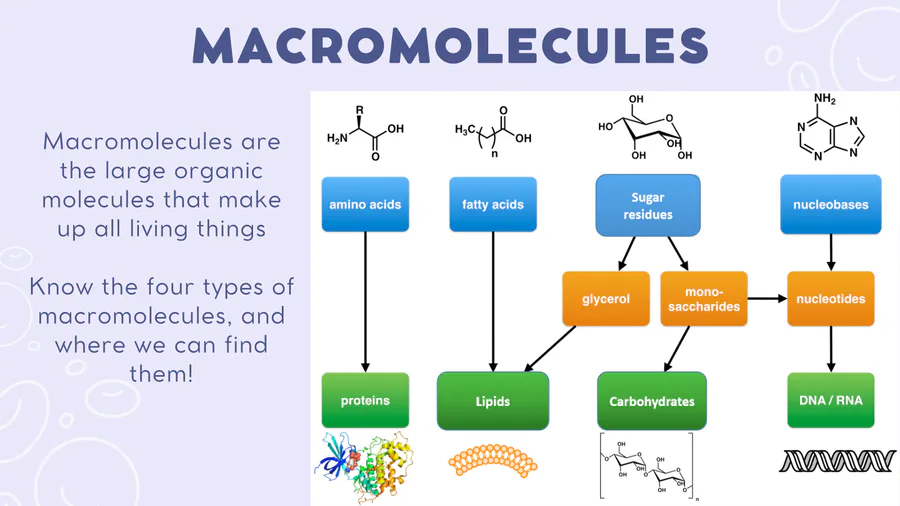
46
Multiple Select
Which of the following elements are found in all macromolecules? (Select all that apply).
47
Multiple Choice
Which macromolecule is used as our main source of energy?
Lipids/Fats
Nucleic Acids
Proteins
Carbohydrates
48
Multiple Select
Which of the following are examples of carbohydrates? (Select all that apply).
Bread
Pasta
Olive Oil
Cheese
49
Multiple Choice
Which macromolecule stores energy?
Carbohydrates
Proteins
Lipids/Fats
Nucleic Acids
50
Multiple Select
Nucleic acids make up which of the two molecules listed below?
FDA
RNA
DNA
FDR
51
Match
Match the MACROMOLECULES and their MONOMERS.
Hint: Monomer = a single unit
carbohydrate
lipid
protein
nucleic acid
monosaccharide
fatty acid & glycerol
amino acid
nucleotide
monosaccharide
fatty acid & glycerol
amino acid
nucleotide
52
Multiple Choice
What is this?
water
DNA
a snake
53
54
Multiple Choice
55
Multiple Choice
2
56
Multiple Choice
57
Multiple Choice
58
59
Multiple Choice
60
Multiple Select
Lipids are mostly made out of
Carbon
Nitrogen
Oxygen
Hydrogen
61
Multiple Choice
Which diagram is a triglyceride?
62
Multiple Choice
True or False: The main function of a lipid is to store energy.
True
False
63
64
Multiple Choice
65
Multiple Choice
66
Multiple Choice
67
Multiple Choice
68
Multiple Choice
69
Multiple Choice
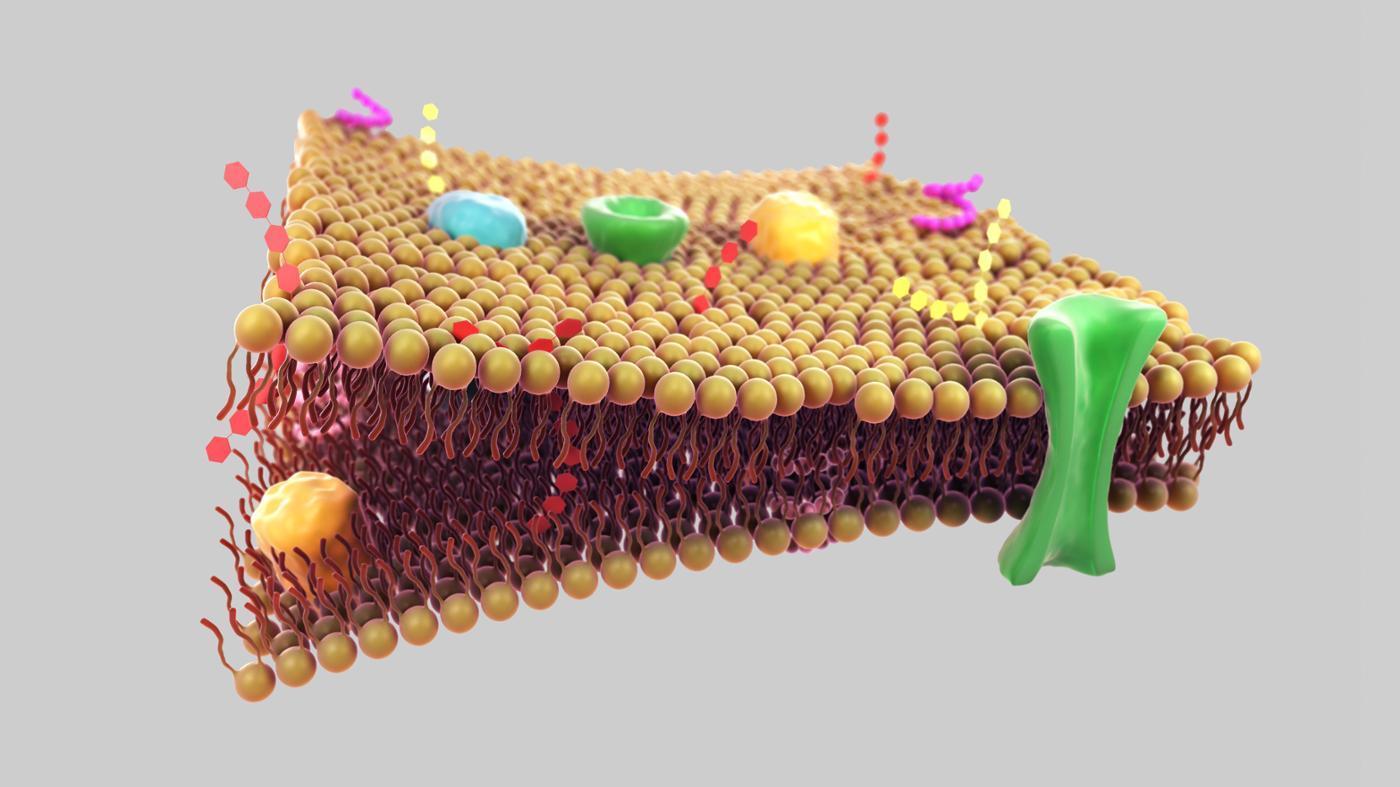
Identify the structure in the diagram.
Phospholipid
Cholesterol
Triglyceride
Carbohydrate
70
71
Multiple Choice
An example of a nucleic acid is
amino acid
DNA
sugar
wax
72
Multiple Choice
What's the monomer of a nucleic acid?
DNA
monosaccharides
nucleotide
amino acid
73
Multiple Choice
What is the function of nucleic acids?
store energy (long-term)
store energy (short-term)
build skin, hair, nails, muscles
store genetic information
74
75
Multiple Choice
What is this molecule called?
nucleotide
fatty acid
amino acid
monosaccharide
glycerol
76
Multiple Choice
Enzymes belong to which category of organic molecule?
Proteins
Lipids
Carbohydrates
Nucleic acids
77
78
Multiple Choice
What is a long chain of amino acids called?
Polysaccharide
Lipid
Carbohydrate
Polypeptide
Nucleic acid
79
Multiple Choice
A protein goes through ____ stages of folding before it is finished.
4
2
3
5
20
80
Multiple Choice
If a protein is "denatured", what does that mean?
The protein has broken down
The protein has been created
The protein has folded
The protein has been domesticated
81
82
Multiple Choice
83
Multiple Choice
84
Multiple Choice
85
Multiple Choice
A baby is locked in the car on a hot day. What is most likely to happen to the child?
The child's body will adjust and cause it to maintain homeostasis
The child's enzymes will denature causing chemical reactions to speed up in the body, which will lead to death.
The child's enzymes will denature causing chemical reactions to slow down in the body, which will lead to death.
The activation energy for chemical reactions will remain unchanged and therefore the child will live.
86
Multiple Choice
Enzymes are _______________ that _____________________ chemical reactions by ____________ the amount of activation energy required to start the reaction.
carbohydrates, slow down, lowering
proteins, speed up, increasing
lipids, speed up, lowering
proteins, speed up, lowering
87
Multiple Choice
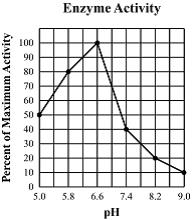
What is the optimal temperature of this enzyme?
60
40
70
30
Show answer
Auto Play
Slide 1 / 87
SLIDE

Similar Resources on Wayground
82 questions
SpanishNounsPluralsArticles2024
Presentation
•
8th Grade
83 questions
Sound Waves
Presentation
•
9th Grade
84 questions
Physics Motion- Yr 10
Presentation
•
10th Grade
82 questions
Tenses
Presentation
•
9th Grade
80 questions
Plant Structure and Function
Presentation
•
9th Grade
80 questions
Operations with Complex Numbers
Presentation
•
10th Grade
83 questions
Inequalities Review Number Line
Presentation
•
8th - 9th Grade
85 questions
Genetics EOC Review Lesson
Presentation
•
9th - 10th Grade
Popular Resources on Wayground
20 questions
STAAR Review Quiz #3
Quiz
•
8th Grade
20 questions
Equivalent Fractions
Quiz
•
3rd Grade
6 questions
Marshmallow Farm Quiz
Quiz
•
2nd - 5th Grade
20 questions
Main Idea and Details
Quiz
•
5th Grade
20 questions
Context Clues
Quiz
•
6th Grade
20 questions
Inferences
Quiz
•
4th Grade
19 questions
Classifying Quadrilaterals
Quiz
•
3rd Grade
12 questions
What makes Nebraska's government unique?
Quiz
•
4th - 5th Grade
Discover more resources for Science
46 questions
Unit 4 Geosphere Test Review
Quiz
•
9th - 12th Grade
25 questions
Naming Ionic and Covalent Compounds
Quiz
•
9th Grade
20 questions
Human Impact on the Environment Review #2
Quiz
•
9th Grade
16 questions
Ecosystem Stability
Quiz
•
9th Grade
20 questions
Mendelian Genetics Review
Quiz
•
9th Grade
12 questions
Unit 6 Quiz #3 (Life Cycles of Stars)
Quiz
•
9th Grade
34 questions
Human Impact on Ecosystems Quiz
Quiz
•
9th Grade
10 questions
Exploring Alfred Wegener's Continental Drift Theory
Interactive video
•
6th - 10th Grade