Search Header Logo
  1. Resource Library
  2. Science
  3. Chemistry
  4. Ions And Atoms
  5. 7.1.2 The Structure Of Atoms
7.1.2-The Structure of Atoms

7.1.2-The Structure of Atoms

Assessment

Presentation

Science

6th - 8th Grade

Easy

NGSS
MS-ESS1-1, MS-PS1-1, MS-ESS2-1

+13

Standards-aligned

Created by

Jessica Freeman

Used 5+ times

FREE Resource

46 Slides • 55 Questions

1

media

2

media

3

media

4

media

5

media

6

media

7

I. What are the parts of the current (modern) model used today?

  • 2 PARTS:

  • NUCLEUS: the dense/solid CENTER part of an atom where most MASS is found.

  • Contains PROTONS and NEUTRONS

media

8

I. What are the parts of the current (modern) model used today?

  • ELECTRON CLOUD:  mostly empty space surrounding the nucleus, where electrons are found.

  • Broken in to ENERGY LEVELS:  The DISTANCE an electron is away from the nucleus (specific ORBITALS can be found within each energy level).

  • Electrons can change energy levels (gain energy=moving up; lose energy=down)

media

9

Multiple Select

Which particle(s) is/are found in the nucleus

1

proton

2

neutron

3

electron

4

all of them

10

Multiple Choice

Which sub-atomic particle is the "atomic glue" of the nucleus and has no charge?

1

proton

2

neutron

3

electron

4

ion

11

Multiple Choice

Which sub-atomic particle gives an atom its identity

1

proton

2

neutron

3

electron

4

isotope

12

media

13

Multiple Choice

You an change an element into another element by adding or subtracting its total number of

1

protons.

2

neutrons.

3

electrons.

14

Multiple Choice

  1. What are the charges of the subatomic particles?

1

p+, e-, n°

2

p°, e+, n-

3

p-, e°, n+

15

Multiple Choice

Where do you find the subatomic particles?

1
In the empty space between atoms
2
In the protons of an atom
3
In the outermost shell of an atom
4
In the nucleus of an atom and in the electron cloud surrounding the nucleus.

16

Fill in the Blank

17

Multiple Choice

What is an atom?

1

Is the smallest particle of a cell

2

Is the smallest part of matter

3

Is the particle of the universe

18

Multiple Choice

Question image

The attached image of Hydrogen Chloride is a...

1

Atom

2

Element

3

Molecule

4

Compound

19

Multiple Choice

Question image

Which TWO elements combine to make a Carbon Dioxide compound?

1

Carbon and Hydrogen

2

Carbon and Oxygen

3

Hydrogen and Oxygen

4

Carbon and hydroxide

20

media

21

media

22

media

23

media

24

Fill in the Blank

Type answer...

25

Atomic number and protons

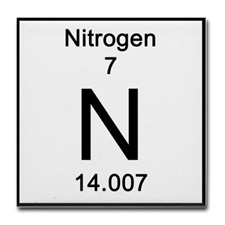
The atomic number of an element is usually on top of the element symbol, and it indicates how many protons it has. For example, Nitrogen has 7 protons, and Oxygen has 8. If you could add one proton to a nitrogen atom, you end up with an atom of oxygen.

26

Atomic number and protons

Find a periodic table or use the one in Schoology. Fill in the blanks in the table.

27

Multiple Choice

Question image

If an atom contains exactly three protons, then it's an atom of _______.

1

Lithium

2

Gold

3

Nitrogen

4

Carbon

28

Multiple Choice

Question image

What does the nucleus of an CARBON atom contain?

1

4 Electrons and 3 neutrons

2

6 Protons and 6 neutrons

3

4 Protons and 6 neutrons

4

12 Protons

29

Multiple Choice

Question image

What is the number of protons that the element in this image contain?

1

14

2

7

3

15

4

18

30

Multiple Choice

Question image

How many protons does Potassium have?

1

19

2

39

3

20

4

None of the above

31

Multiple Choice

Question image

How many protons are in an atom of oxygen?

1

8

2

16

3

24

4

32

32

Multiple Choice

The center of the atom was the

1

neutrons

2

protons

3

electrons

4

nucleus

33

Multiple Choice

The center of the atom contained

1

protons and electrons

2

protons and neutrons

3

electrons and mass number

4

mass number

34

Multiple Choice

Which particle of the atom has positive charge?

1

electron

2

proton

3

neutron

4

none of the above

35

Multiple Choice

The number of protons in the nucleus is the

1

atomic number

2

atomic mass

3

electron cloud

4

nucleus number

36

Multiple Choice

The number of protons determines the

1

atomic mass

2

electron cloud

3

identity of the element or atom

4

weight of the element

37

media

38

Atomic Mass and Mass Number

Module 3 - Physical Science

media

39

The Periodic Table of Elements

  • The Periodic Table is an organizational tool used by scientists to place elements into different categories.

  • Elements are the building blocks of matter, each having different chemical and physical properties.

  • Today, we will be looking at what atoms are composed of, and how we describe those atoms.

media

40

Review

  • The atomic number is the number of protons in the element.

  • The atomic mass is the number of protons and neutrons in one atom of that element.

  • All elements are electrically neutral, meaning they have ZERO NET CHARGE. This means that the number of protons (positive charges) are equal to the number of neutrons (negative charges)

media

41

Review

  • The element Helium (He) has an Atomic Number of 2. This means that all Helium atoms have exactly two protons.

  • Since the atom is electrically neutral, that means the atom also has exactly two electrons.

  • How do we determine how many neutrons there are in an atom?

media

42

Review

  • Atomic Mass = Protons + Neutrons

  • We round the atomic mass to the nearest whole number, 4

  • Since we already determined that Helium has two protons, that means: 4=2+Neutrons

  • There must be 2 Neutrons in one atom of Helium

media

43

Let's Practice Together!

  • What is the Atomic Number?

  • What is the Atomic Mass?

  • How many protons are in a Lithium Atom?

  • How many electrons are in a Lithium Atom?

  • What is the rounded Atomic Mass?

  • How many neutrons are in a Lithium Atom?

media

44

Let's Practice Together!

  • What is the Atomic Number? 3

  • What is the Atomic Mass? 6.941

  • How many protons are in a Lithium Atom? 3

  • How many electrons are in a Lithium Atom? 3

  • What is the rounded Atomic Mass? 7

  • How many neutrons are in a Lithium Atom? 7-3=4

media

45

Multiple Choice

Question image

What is the Atomic Number for Beryllium (Be)?

1

4

2

9.012

3

9

4

5

46

Multiple Choice

Question image

What is the Atomic Mass for Beryllium (Be)?

1

4

2

9.012

3

9

4

5

47

Multiple Choice

Question image

How many Protons are in one atom of Beryllium (Be)?

1

4

2

9.012

3

9

4

5

48

Multiple Choice

Question image

How many Electrons are in one atom of Beryllium (Be)?

1

4

2

9.012

3

9

4

5

49

Multiple Choice

Question image

What is the Rounded Mass of Beryllium (Be)?

1

4

2

9.012

3

9

4

5

50

Multiple Choice

Question image

How many neutrons are in one atom of Beryllium (Be)?

1

4

2

9.012

3

9

4

5

51

media

52

media

53

media

54

media

55

media

56

media

57

media

58

media

59

media

60

media

61

media

62

media

63

Multiple Choice

A nucleus with 5 protons and 5 neutrons has a total charge of _____.

1

0

2

+5

3

+10

4

-5

64

media

65

media

66

Multiple Choice

How do you know if an atom is an isotope?

1

It has more or less neutrons than protons.

2

It has more electrons than protons.

3

It has no electrons.

4

It has no nucleus.

67

Multiple Choice

True or false: An atom with 5 protons and 6 neutrons is an isotope.

1

True

2

False

68

Multiple Choice

True or False: An atom with 6 protons and 6 neutrons is an isotope.

1

True

2

False

69

media

70

media

71

media

72

media

73

Multiple Choice

True or false: an atom with 5 protons and 3 electrons is an ion.

1

True

2

False

74

Multiple Choice

An ion with 17 protons and 18 electrons has an overall charge of ___.

1

-18

2

-1

3

+1

4

+17

75

Multiple Choice

An ion with 6 protons and 5 electrons has an overall charge of ___.

1

-5

2

-1

3

+1

4

+6

76

media

77

Multiple Choice

An atom that has gained or lost electrons in an attempt to become stable/bond with another atom.

1

Normal/Neutral Atom

2

Ion

3

Isotope

78

media

79

Multiple Choice

A negatively charged ion that has gained electrons to satisfy the octet rule (metals do this)

1

Anion

2

Cation

3

Neutral Atom

4

Isotope

80

Multiple Choice

A positively charged ion that has lost electrons to satisfy the octet rule (non-metals do this)

1

Anion

2

Cation

3

Neutral Atom

4

Isotope

81

Multiple Choice

If an atom has 9 protons and 10 electrons it has a charge of ____.

1

0

2

-1

3

+1

4

-2

82

Multiple Choice

If an atom has 4 protons and 2 electrons it has a charge of ____.

1

0

2

-2

3

+2

4

+1

83

Multiple Choice

If an atom has a charge of +3 and an atomic number of 5 it should have _______ electrons.

1

1

2

2

3

3

4

4

84

Multiple Choice

If an atom has a charge of -2 and an atomic number of 16 it should have _______ electrons.

1

14

2

16

3

18

4

20

85

Multiple Choice

If an atom has a charge of 0 (neutral) and an atomic number of 8 it should have ____ electrons.

1

0

2

8

3

7

4

9

86

Multiple Choice

Question image

How many electrons does this magnesium ion have?

1

24

2

12

3

10

4

14

87

Multiple Choice

A negative ion is called _______.

1

an anion

2

a neutron

3

an isotope

4

valence

88

Multiple Choice

A positive ion is called _______.

1

a cation

2

an anion

3

a metalloid

4

a neutron

89

Multiple Choice

If an atom has an equal number of protons and electrons, it is _____.

1

a positive ion

2

a negative ion

3

an isotope

4

a neutral atom

90

Multiple Choice

If an atom has more electrons than protons, it is _____

1

a positive ion

2

a negative ion

3

an isotope

4

a neutral atom

91

Multiple Choice

If an atom has more protons than electrons, it is _____.

1

a positive ion

2

a negative ion

3

an isotope

4

a neutral atom

92

media

93

Multiple Choice

This is an atom with a charge. 
1
omni
2
oni
3
ion
4
ouch-e

94

Multiple Choice

You see an model of an atom with 5 protons and 4 electrons. What kind of atom is this? 
1
positive ion 
2
negative ion 
3
neutral ion 
4
strange ion

95

Multiple Choice

These subatomic particles are taken or removed to form ions. 
1
neutrons 
2
protons 
3
electrons 
4
nimrons 

96

media

97

Match

Match the following if you were to add or take away a subatomic particle.

Proton

Neutron

Electron

new element

isotope

ion

98

Match

Match the following subatomic particles to their charge

proton

neutron

electron

positive

neutral

negative

99

Match

Match the following

atomic mass

atomic number

the charge of element

to determine how many neutrons in atom

to determine the element

ion or neutral atom

100

media

101

Poll

How do you feel about the lesson?

media

Show answer

Auto Play

Slide 1 / 101

SLIDE