

Electrons, Ions, Valence Electrons Lesson

Presentation
•
Science
•
9th - 12th Grade
•
Practice Problem
•
Easy

Katelyn Harlan
Used 6+ times
FREE Resource
13 Slides • 29 Questions
1
Multiple Choice
A student determined that the density of a sample of tin is 8.00 g/mL when the actual density of tin is 7.28 g/mL. What is the percent error in the student's calcuation?
0.72%
9.0%
9.9%
91%
2
Fill in the Blanks
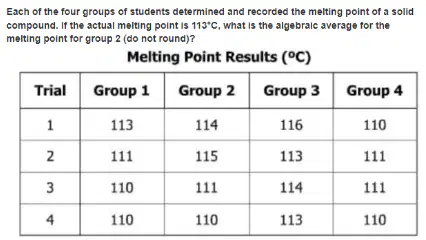
Type answer...
3
Multiple Choice
The most efficient way to determine whether a reaction is an exothermic chemical reaction is to use -
(Hint: Exo = Outer; Thermic = Dealing with heat)
An oxygen probe
A temperature probe
A pressure probe
A pH probe
4


Monday, October 20, 2024 (Green Day)
Tuesday, October 21, 2024 (Gold Day)
Learning Intention:
I will be able to predict
properties of elements using
trends on the periodic table.
Success Criteria:
I will be able to correctly
answer questions about
periodic trends with 80%
accuracy.
5


Agenda
1.
Warm-Up✅
2.
Electron, Ions, and Valence Electrons Review
3.
4.
5.
Periodic Trends Lab
Periodic Trends Exit Ticket
6


Electrons & Atomic Number
●Very small, do not significantly contribute to atom’s
mass
●Electrons reside in the electron cloud.
●Electrons have a -1 charge.
●Atoms are neutral.
○There needs to be a +1 charge (proton) for every -1 charge (electron).
●Atomic number tells us the number of protons and the number of electrons.
7
Fill in the Blanks
How many electrons are in Pd (Palladium, Group 10, Period 5)?
Type answer...
8
Fill in the Blanks
How many electrons are in O (Oxygen, Group 16, Period 2)?
Type answer...
9
Dropdown
The number of electrons
10


Electrons & Energy Levels
●Scientists use mathematical models to estimate the locations of the electrons
within the electron cloud.
●Energy levels (also called electron shells) are distances from the nucleus of an atom where electrons may be found.
●Electrons fill energy levels in a certain order - from the inside out.
11


Electrons & Periods
●An element’s period is its number of energy levels.
●Elements within the same period have the same energy level.
●When discussing trends, we will see how increasing energy levels affect
various chemical properties.
12
Fill in the Blanks
How many energy levels does Ar (Argon, Group 18, Period 3) have?
Type answer...
13
Fill in the Blanks
How many energy levels does Ag (Silver, Group 11, Period 5) have?
Type answer...
14
Dropdown
Energy levels
15
Poll
How are you feeling about your understanding of the information so far?
Great!
Good
Okay
Not so good
Terrible
16


Electrons & Bohr Models
●Bohr Model is a way of modelling the location of
electrons within an atom.
●Center circle contains nucleus information
(protons & neutrons).
○Protons = Atomic Number
○Neutrons = Atomic Mass - Atomic Number,
rounded to whole number
●Each ring is an energy level, increasing from
inside to outside.
●1st Energy Level = 2 electrons, one on top, one
on bottom
●2nd Energy Level = 8 electrons
○Add one electron to each direction (top,
left, bottom, right) before adding another.
17
Draw
Draw a Bohr Model for Li.
18
Draw
Draw a Bohr Model for B.
19
Draw
Draw a Bohr Model for N.
20
Draw
Draw a Bohr Model for F.
21
Draw
Draw a Bohr Model for Ne.
22

23


Valence Electrons
●Valence electrons can absorb energy to move to a higher energy level. They can emit energy in the form of light.
Valence electrons are involved in bonding.
Valence electrons can be gained or lost to create ions.
Octet Rule: Elements have achieved a stable configuration when they have 8 valence electrons
24

25
Multiple Choice
26
Multiple Choice
27
Multiple Choice
How many valence electrons does Nitrogen have?
1
2
3
4
5
28
Multiple Choice
How many valence electrons does Fluorine have?
4
5
6
7
8
29
Multiple Choice

30
Drag and Drop
31
Dropdown
The number of valence electrons
32


Electrons and Ions
Remember: Electrons have a -1 charge. Protons have a +1
charge. Atoms are neutral.
●
If an atom loses an electron, its charge increases by +1.
●
If an atom gains an electron, its charge decreases by -1.
●
We indicate charge in the upper right hand corner.
Charge = # Protons - # Electrons
33


Ion Trends
Remember: Elements always seek a stable configuration (8 valence electrons).
How many electrons do you think each group prefers to lose/gain?
What charge would their ions have?
34


Ion Trends
Remember: Elements always seek a stable configuration (8 valence electrons).
How many electrons do you think each group prefers to lose/gain?
What charge would their ions have?
+1 +2 +3 +4 -3 -2 -1
35
Multiple Choice
Na ionizes to a charge of _______
+1
+2
-1
-2
36
Multiple Choice
Be ionizes to a charge of ________.
+1
+2
-1
-2
37
Multiple Choice
Iodine has 7 valence electron. It will have a charge of _______
-2
-1
+1
+2
38
Multiple Choice
S has 6 valence electron. It will have a charge of _______
-2
-1
+1
+2
39
Fill in the Blanks
Ions are created by changing the number of -
Type answer...
40
Multiple Choice
The octet rules requires
8 electrons in the outer shell
a neutral atom
16 electrons in the outer shell
the month of October
41
Multiple Choice

An atom becomes _________ when it gains electrons.
Positive
Negative
Neutral
42


Periodic Organization
●Periodic table is organized by increasing atomic number (increasing protons, neutrons, and electrons from left to right, top to bottom)
●Groups have the same number of valence electrons, and the number of valence electrons increases left to right.
●Periods have the same number of energy levels, and the number of energy levels increases from top to bottom.
●These properties lead to the predictability of different chemical properties, by using periodic trends.
A student determined that the density of a sample of tin is 8.00 g/mL when the actual density of tin is 7.28 g/mL. What is the percent error in the student's calcuation?
0.72%
9.0%
9.9%
91%
Show answer
Auto Play
Slide 1 / 42
MULTIPLE CHOICE
Similar Resources on Wayground

38 questions
Physical Science 6-4: Radioactivity & Energy from the Nucles
Presentation
•
9th - 12th Grade
36 questions
Plant Hormones and Responses (Tropisms)
Presentation
•
9th - 12th Grade
37 questions
Static Electricity
Presentation
•
8th - 11th Grade
39 questions
Introduction to Solutions
Presentation
•
9th - 12th Grade
36 questions
2nd 6wks
Presentation
•
9th - 12th Grade
38 questions
Lesson 26 Self Paced
Presentation
•
9th - 12th Grade
37 questions
Molecules and Chemical Bonds
Presentation
•
9th - 12th Grade
40 questions
Balancing and 5 Types of Chemical Reactions
Presentation
•
9th - 12th Grade
Popular Resources on Wayground
10 questions
How much do you know about our Portrait of an Eagle?

Quiz
•
10th Grade
10 questions
Fast Food Slogans
Quiz
•
6th - 8th Grade
21 questions
Continents and Oceans
Quiz
•
6th Grade
20 questions
Parts of Speech
Quiz
•
5th Grade
16 questions
Subject & Predicate
Quiz
•
5th Grade
25 questions
Multiplication Facts
Quiz
•
5th Grade
12 questions
Map Skills
Quiz
•
3rd Grade
22 questions
Continents and Oceans
Quiz
•
5th Grade
Discover more resources for Science
10 questions
Exploring Chemical and Physical Changes

Interactive video
•
6th - 10th Grade
20 questions
Atomic Structure
Quiz
•
9th Grade
10 questions
Decoding the Periodic Table of Elements
Interactive video
•
6th - 10th Grade
10 questions
Exploring the Periodic Table
Interactive video
•
6th - 10th Grade
14 questions
Physical and Chemical Changes
Quiz
•
10th Grade
22 questions
Periodic Table Review
Quiz
•
9th - 12th Grade
20 questions
Observation vs. Inference
Quiz
•
7th - 9th Grade
14 questions
Periodic Trends
Interactive video
•
11th Grade