
- Resource Library
- Social Studies
- Civics & Government
- The Judicial Branch
- 6.2 Principles Of The Judicial Branch
6.2 Principles of the Judicial Branch

Presentation
•
Social Studies
•
12th Grade
•
Easy

Amy Schneider
Used 2+ times
FREE Resource
18 Slides • 3 Questions
1

Principles of the Judicial
Branch
This Photo by Unknown author is licensed under CC BY.
2



Lesson Overview
• Students Will Be Able To:
• Identify examples of judicial review and precedent.
• Identify how Marbury v. Madison established the
federal Supreme Court's power of judicial review.
• Compare the methods of selecting federal judges and Pennsylvania judges.
• Evaluate whether following precedents is a fair way for courts to make decisions.
• Vocabulary:
• Judicial Review, Justice

3


Essential Question- What principles shape the judicial branch's role and power?
4


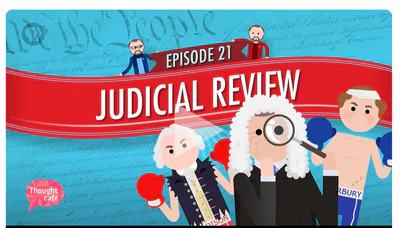
Judicial Review
• Judicial Review- power of the judicial branch to examine acts by the legislative and executive branch and declare them unconstitutional
Remember that the Constitution is
the Supreme Law of the Land
(Rules)
This way the Supreme Court are
referees making sure the rules are
followed
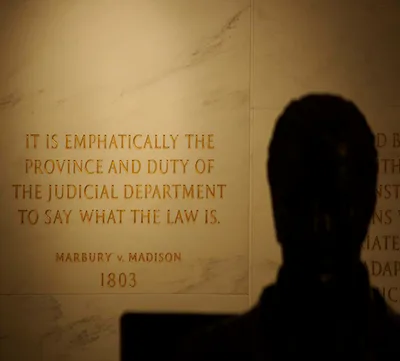
What is the connection
between this case and the
power that the Supreme Court has?
5

Place the items according to whether they
represent judicial review or appellate jurisdiction
• deciding that a president does not have the power to take a certain action
• overturning a decision by a state legislature
• ruling that an act of the federal Congress violates the Constitution
• reversing a lower court's decision
6
Categorize
Ruling that an act of Congress violates Constitution
Deciding a president does not have the power to take a certain action
Overturning a decision by a state legislature
Reversing a lower court's decision
Place the items according to whether they represent judicial review or appellate jurisdiction.
7
Marbury v Madison
• Constitution does not
mention the power of
judicial review.
• This power comes
from the 1803
Supreme Court case Marbury v. Madison
8


9
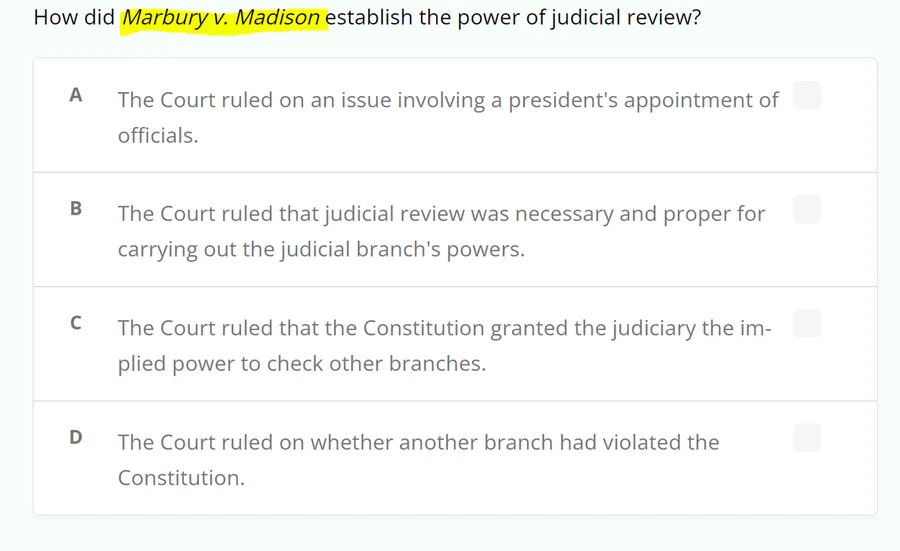
Draw
How did Marbury vs. Madison establish the power of judicial review? Circle or place a mark next to the correct answer.
10


11

What is "Precedent"?
• We have used this term before in class and remember that it means a decision or rule that sets an example and shapes future decisions or rules
• Example-
• Hazelwood v. Kuhlmeier we can see what precedent means
• A high school principal edited two different articles in a student run school newspaper
• The student authors argued that this violated their 1st Amendment Rights
• The Supreme Court said that the school had the right to edit any stories to reflect school values
• This set a precedent for future court decisions
• Since the Supreme Court is the highest court, it sets precedents for lower courts
• By following these Precedents, the judicial system is using stare decisis (Star-ay dee Sigh-cis) Latin for "Let the Decision Stand"
12
Interpreting the Constitution
• Individual judges will look at and interpret the Constitution differently.
• When deciding on a case they may:
• Look at earlier decisions for precedents
• Examine the historical context of the Constitution
and/or Amendment to interpret what the writers meant
• Consider how people's understanding of justice has
changed since 1787
• Example- when written, women could not vote and neither
could anyone who was non-white
• They may consider the positive and negative
consequences from a ruling
• A sense of morality
13


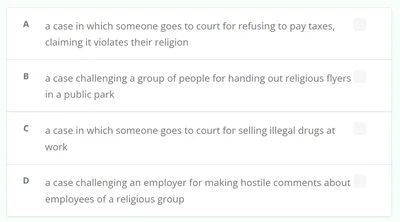
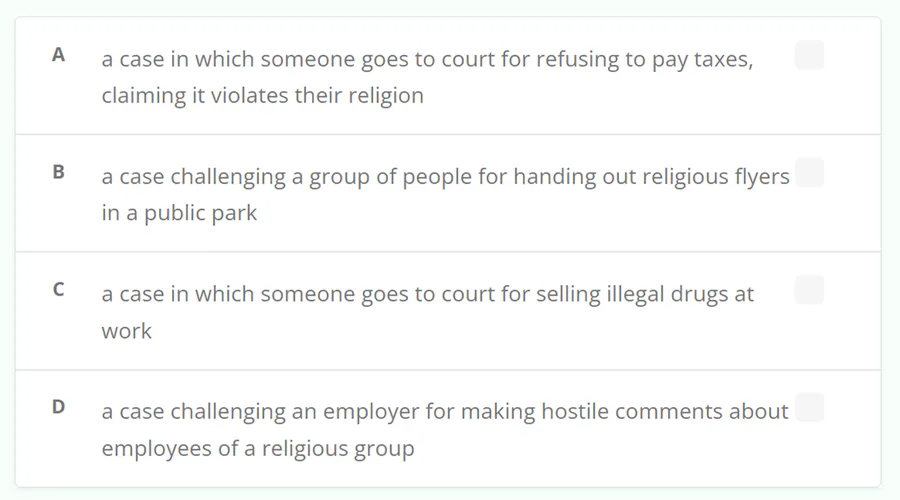
In which of the following cases could a court use Employment Division v. Smith (1990) as a precedent to guide its decision?
• Two men in Oregon were fired from their jobs because they failed a drug test after using an illegal drug in a religious ceremony.
• Oregon state denied their application for unemployment benefits because of a rule that the state did not need to provide unemployment benefits to people fired for illegal drug use.
• The question of whether this was a violation of freedom of religion went to court. The Supreme Court ruled that the state of Oregon could deny the unemployment benefits.
14
15



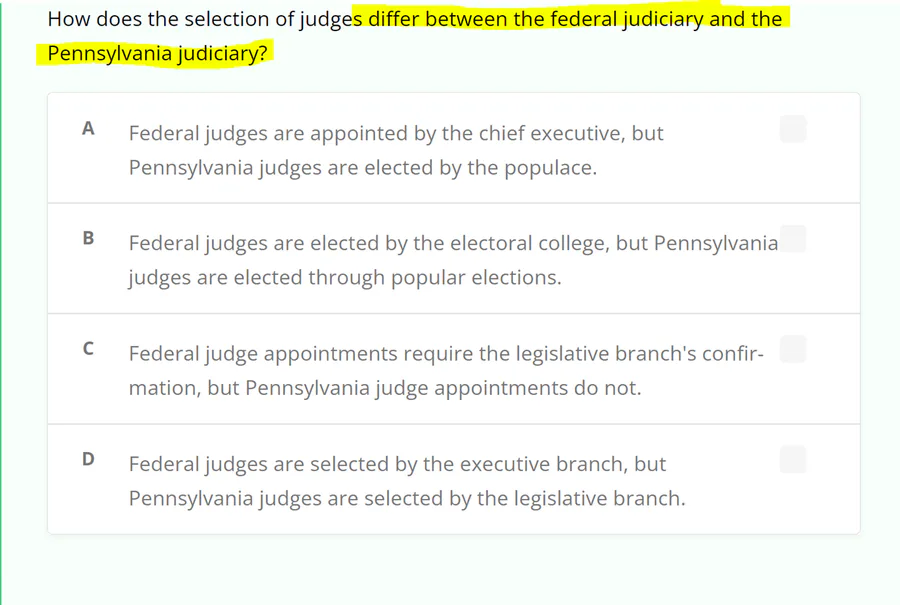
Selection of Judges
• Different ways of selecting and placing judges on the bench depending on the office
• Federal Judges
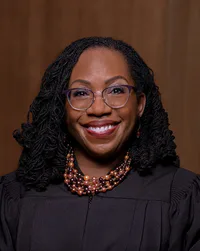
• Federal Court judges and Supreme Court Judges are appointed
• Supreme Court judges are called- Justices
appointed by the president and confirmed/approved by the Senate
• State Judges Across the Nation
• Each state has its own way of selecting judges
• Some are elected and some are appointed
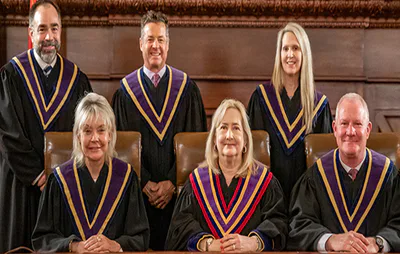
• State Judges in PA
• In PA citizens of the state vote for the State Judges to take office (sit on the bench)
• Elections take place in even-numbered years and judges serve either 6- or 10-year terms depending on the court
• In PA Judges have their political party affiliation on the ballot as well
PA Supreme Court
16
17


18
Draw
How does the selection of judges differ between the federal judiciary and the Pennsylvania judiciary? Circle or place a mark next to the correct answer.
19


20


Essential Question- What principles shape the judicial branch's role and power?
• Judicial review is the Supreme Court's power to judge the constitutionality of other branches' actions.
• Courts follow precedents of earlier rulings to make decisions.
• The president nominates federal judges. States vary in how they select state judges.
21

Upcoming
• Tomorrow:
oLive Classroom- CNN 10
• Monday
oSupreme Court Justices
• Tuesday
oLive Classroom- iCivics Game- CourtQuest or Argument Wars
Principles of the Judicial
Branch
This Photo by Unknown author is licensed under CC BY.
Show answer
Auto Play
Slide 1 / 21
SLIDE
Similar Resources on Wayground

19 questions
SSUSH8B: Manifest Destiny
Presentation
•
11th Grade
15 questions
Job Interview
Presentation
•
12th Grade
16 questions
Black Power and Militancy
Presentation
•
11th - 12th Grade
20 questions
The Origins of Buddhism
Presentation
•
KG - University
16 questions
Harlem Renaissance Trivia
Presentation
•
12th Grade
18 questions
PPC - 6.0 Right Triangle Trigonometry Lesson
Presentation
•
12th Grade
14 questions
Pronoun Problems
Presentation
•
12th Grade
16 questions
Collisions
Presentation
•
12th Grade
Popular Resources on Wayground
10 questions
How much do you know about our Portrait of an Eagle?

Quiz
•
10th Grade
10 questions
Fast Food Slogans
Quiz
•
6th - 8th Grade
21 questions
Continents and Oceans
Quiz
•
6th Grade
20 questions
Parts of Speech
Quiz
•
5th Grade
16 questions
Subject & Predicate
Quiz
•
5th Grade
25 questions
Multiplication Facts
Quiz
•
5th Grade
12 questions
Map Skills
Quiz
•
3rd Grade
22 questions
Continents and Oceans
Quiz
•
5th Grade
Discover more resources for Social Studies
46 questions
Unit 1 Test REVIEW Ancient Greece and Rome
Quiz
•
9th - 12th Grade
27 questions
Supply & Demand Test Review
Quiz
•
12th Grade
36 questions
Unit 5 Key Terms
Quiz
•
11th Grade - University
12 questions
supply and demand shifters
Quiz
•
9th - 12th Grade
25 questions
NGPF Budgeting - Unit Test
Quiz
•
12th Grade
16 questions
Unit 3 Personal Finance Guided Notes
Presentation
•
9th - 12th Grade
19 questions
USHC 5 Spanish-American War to Panama Canal
Quiz
•
9th - 12th Grade
22 questions
2.5A: Changes in Political Parties Over Time
Presentation
•
12th Grade