

Q2 Exam Study Guide Version 01

Presentation
•
Science
•
7th Grade
•
Medium
+11
Standards-aligned

James Sanzin
Used 1+ times
FREE Resource
81 Slides • 45 Questions
1

2

3

4

5

6

7

8

9

10

11

12

13

14

15

16

17
18

19

20

21

22

23

24
25

26

27

28

29

30

31

32

33

34

35

36

37

38

39

40

41

42
The Carbon Cycle
The carbon cycle is a complex process involving the exchange of carbon between the Earth's atmosphere, oceans, land, and living organisms. Several key processes drive this cycle:
43
Multiple Choice
Which of the following are reactants of photosynthesis?
CO2 and H2O
O2
H2O and Glucose
None of the above
44
Multiple Choice
Which of the following is NOT another word for the energy a plant takes in to make photosynthesis happen?
Sunlight
Radiant Energy
Light Energy
Thermal Energy
45
Multiple Choice
46
Both plants and animals release carbon dioxide back into the atmosphere through respiration.
Cellular respiration breaks down organic molecules to release energy, producing carbon dioxide as a byproduct.
Respiration:
Plants absorb carbon dioxide from the atmosphere and use it to produce glucose through photosynthesis.
This process converts inorganic carbon into organic carbon, storing it in plant tissues.
Photosynthesis:
47
The ocean absorbs carbon dioxide from the atmosphere and releases it back.
This exchange helps regulate atmospheric carbon dioxide levels.
Ocean-Atmosphere Exchange:
When organisms die, their organic matter decomposes, releasing carbon dioxide into the atmosphere.
Some carbon may also be stored in soil organic matter.
Decomposition:
48
Human activities, such as deforestation, burning fossil fuels, and industrial processes, have significantly altered the carbon cycle. These activities release large amounts of carbon dioxide into the atmosphere, leading to an imbalance and contributing to climate change.
Understanding these processes is crucial for addressing climate change and developing strategies to mitigate its impacts.
Human Activities and the Carbon Cycle:
Over millions of years, carbon can be stored in rocks and fossil fuels.
Volcanic eruptions and the burning of fossil fuels release carbon dioxide back into the atmosphere.
Geological Processes:
49
Multiple Choice
What is the role of decomposers in an ecosystem?
Produce energy
Break down dead material
Capture sunlight
Absorb water
50
Decomposers play a crucial role in ecosystems by breaking down dead material, recycling nutrients back into the soil, and supporting plant growth. This process is essential for maintaining the balance of the ecosystem.
51
Multiple Choice
In the carbon cycle, what is the main source of carbon emissions from human activities?
Photosynthesis
Industrial emissions
Respiration
Decomposition
52
The main source of carbon emissions from human activities is industrial emissions, which result from manufacturing processes and energy production, significantly contributing to the carbon cycle.
53
Multiple Choice
What role do root nodules play in the nitrogen cycle?
They release nitrogen into the atmosphere
They store carbon
They house nitrogen-fixing bacteria
They decompose organic matter.
54
Root nodules are specialized structures on the roots of certain plants, particularly legumes, that house nitrogen-fixing bacteria. These bacteria convert atmospheric nitrogen into a form that plants can use, playing a crucial role in the nitrogen cycle.
55
Multiple Choice
What is the role of legumes in the nitrogen cycle?
They release nitrogen into the atmosphere
They fix nitrogen in the soil
They decompose organic matter
They store carbon.
56
Legumes play a crucial role in the nitrogen cycle by fixing nitrogen in the soil through their symbiotic relationship with nitrogen-fixing bacteria. This process enriches the soil, making nitrogen available for plant use.
57
Multiple Choice
Fill in the blank: _______ is constantly moving through the atmosphere and earth in the water cycle.
Nitrogen
Carbon
Water
Oxygen
58
Water is the essential component of the water cycle, constantly moving through evaporation, condensation, and precipitation. Unlike nitrogen, carbon, or oxygen, water uniquely circulates through the atmosphere and earth.
59
Multiple Choice

In this food web, what trophic level is the owl?
Producer
Primary Consumer
Secondary Consumer
Tertiary Consumer
60
The owl is a predator that feeds on secondary consumers like rodents. Therefore, it occupies the trophic level above secondary consumers, making it a tertiary consumer in the food web.
61
Multiple Choice
All energy on Earth ultimately comes from what source?
Water
Sun
Consumers
Oxygen
62
All energy on Earth ultimately comes from the Sun, which provides the necessary light and heat for photosynthesis and other processes that sustain life. Other options like water, consumers, and oxygen are not primary energy sources.
63
Labeling
Examine the diagram to the right. On your answer sheet, place the appropriate stage next to each letter based on this picture. Use the wordbank provided on your answer sheet.
Precipitation
Evaporation
Infiltration
Condensation
Transpiration
Runoff
64
Labeling
Label the Water Cycle.
assimilation
precipitation
transpiration
evaporation
collection
65
Multiple Choice

Which involves the movement of water from the biosphere to the atmosphere?
Evaporation of water from oceans, lakes, and streams into the atmosphere
Precipitation from clouds in the atmosphere onto the Earth.
Surface runoff of water from the Earth into groundwater.
Transpiration of water from plants into the atmosphere.
66
Transpiration involves the movement of water from plants into the atmosphere, contributing to the water cycle. This process is distinct from evaporation, precipitation, and runoff, which do not specifically involve plants.
67
Multiple Choice
How does energy flow in an ecosystem?
From the sun to autotrophs to heterotrophs
From chemical compounds to consumers to producers
From consumers to producers
From the owl to the gecko to the grasshopper
68
Energy flows in an ecosystem starting from the sun, which is captured by autotrophs (producers) through photosynthesis. Heterotrophs (consumers) then obtain energy by consuming autotrophs, making the correct flow: from the sun to autotrophs to heterotrophs.
69
Multiple Choice
What is a trophic level?
The total number of organisms in an ecosystem
The top predator in a food chain
The amount of energy lost between levels
A step in the transfer of energy and matter in a food chain
70
A trophic level refers to a step in the transfer of energy and matter in a food chain, indicating the position of an organism in the sequence of energy flow, from producers to various levels of consumers.
71
Multiple Choice
What process do bacteria in volcano vents use to make carbohydrates?
Photosynthesis
Chemosynthesis
Fermentation
Respiration
72
Bacteria in volcanic vents use chemosynthesis to convert inorganic compounds into carbohydrates. Unlike photosynthesis, which relies on sunlight, chemosynthesis harnesses chemical energy from substances like hydrogen sulfide.
73
Multiple Choice
How is carbon dioxide removed from the atmosphere?
Respiration
Photosynthesis
Erosion
Volcanic activity
74
Carbon dioxide is removed from the atmosphere primarily through photosynthesis, where plants convert CO2 into oxygen and glucose using sunlight. This process is essential for maintaining atmospheric balance.
75
Multiple Choice
What percentage of air is nitrogen?
21%
10%
78%
50%
76
The atmosphere is composed of approximately 78% nitrogen, making it the most abundant gas. The other options, such as 21% (oxygen) and 10% or 50%, are incorrect.
77
Multiple Choice
Which organisms can change nitrogen into a form that plants can use?
Birds
Insects
Bacteria
Fungi
78
Bacteria are the primary organisms that convert nitrogen from the atmosphere into forms like ammonia and nitrates, which plants can absorb and use for growth. Birds, insects, and fungi do not perform this essential nitrogen fixation.
79
Multiple Choice
What happens to nitrogen when organisms die?
It returns to the soil
It is absorbed by rocks
It evaporates into the atmosphere
It turns into carbon
80
When organisms die, nitrogen from their bodies is decomposed by bacteria and returned to the soil, enriching it and making it available for plants. This process is essential for nutrient cycling in ecosystems.
81
Multiple Choice
Which of the following is a marine biome?
Taiga
Tundra
Coral Reef
Savanna
82
The correct answer is Coral Reef, as it is a marine biome characterized by underwater ecosystems formed by coral. In contrast, Taiga, Tundra, and Savanna are terrestrial biomes.
83
Labeling
Label the nitrogen cycle.
84
Multiple Choice
What is a population in ecological terms?
A group of different species living in the same area
A group of organisms of different species living in different areas
A group of organisms of the same species living in the same area
A single organism living in an area
85
In ecological terms, a population refers to a group of organisms of the same species living in the same area. This distinguishes it from other options that involve different species or individual organisms.
86
Multiple Choice
What is population density?
The number of species in an area
The number of individuals per unit area
The number of organisms in a sample
The number of predators in an area
87
Population density refers to the number of individuals per unit area, making it a measure of how crowded a particular area is with individuals of a species. This distinguishes it from other options that focus on species or predators.
88
Multiple Choice
What is carrying capacity?
The number of organisms that can migrate to an area
The number of predators an area can support
The number of organisms of one species that can be supported in an environment
The maximum number of different species in an area
89
Carrying capacity refers to the maximum number of organisms of one species that an environment can support sustainably, considering resources and space. This definition distinguishes it from other options related to migration or species diversity.
90
Multiple Choice
How do ecologists estimate the size of a large population?
By observing their behavior
By measuring the area they occupy
By using a sampling method
By counting every individual
91
Ecologists estimate large population sizes using sampling methods, which involve counting individuals in a small area and extrapolating to the larger area. This is more practical than counting every individual.
92
Multiple Choice
What is biodiversity?
The number of ecosystems in a country.
The variety of life in the world or in a particular habitat or ecosystem.
The genetic similarity among species.
The number of endangered species in a region.
93
Biodiversity refers to the variety of life forms in a specific habitat or the entire planet. It encompasses the different species, ecosystems, and genetic variations, making the correct choice the one that highlights this diversity.
94
Multiple Choice
What is the primary cause of biodiversity decline?
Climate change
Predator-prey relationships
Human activity
Natural disasters
95
The primary cause of biodiversity decline is human activity, which includes habitat destruction, pollution, and overexploitation of resources. These actions significantly disrupt ecosystems and threaten various species.
96
Multiple Choice
What is an endangered species?
A species with a stable population.
A species whose population is increasing.
A species that has gone extinct.
A species whose population is declining or losing genetic diversity.
97
An endangered species is one whose population is declining or losing genetic diversity, making it vulnerable to extinction. This distinguishes it from stable or increasing populations.
98
Multiple Choice
What is an invasive species?
A species introduced to new habitats that lack natural predators.
A native species that thrives in its environment.
A species that is endangered.
A species that is extinct.
99
An invasive species is one that is introduced to new habitats where it has no natural predators, allowing it to thrive and potentially disrupt local ecosystems. This distinguishes it from native or endangered species.
100
Multiple Choice
What is the goal of sustainable development?
To create more invasive species.
To use resources without harming the ecosystem.
To increase the number of endangered species.
To eliminate all human activity in natural areas.
101
The goal of sustainable development is to use resources without harming the ecosystem, ensuring that future generations can also meet their needs while maintaining ecological balance.
102
Multiple Choice
What does it mean when a population is experiencing rapid growth?
The birth rate is equal to the death rate
A large portion of the population is children
The population is declining
There are more adults than children
103
Rapid population growth often indicates a high birth rate, typically due to a large portion of the population being children. This leads to more births than deaths, driving the overall growth.
104
Multiple Choice
Which of the following is a nonrenewable resource?
Soil
Water
Trees
Coal
105
Coal is a nonrenewable resource because it forms over millions of years from decomposed organic matter and cannot be replenished on a human timescale, unlike soil, water, and trees, which are renewable resources.
106
Multiple Choice

Which one is a completely renewable resource?
Oil
Sunlight
Coal
Fresh water
107
Sunlight is a completely renewable resource as it is constantly replenished by the sun. In contrast, oil, coal, and fresh water can be depleted and are not fully renewable in the same way.
108
Multiple Choice
A resource that can restore or renew itself (unless badly mismanaged) or can be used over and over is called a:
Renewable resource
Non-renewable resource
Perpetual resource
Indestructible resource
109
A renewable resource is one that can restore or renew itself naturally, allowing it to be used repeatedly without depletion, unlike non-renewable resources which are finite. Thus, the correct answer is renewable resource.
110
Labeling
Trees
Sun
Burning Fossil Fuel/Emissions
Fossils and Fossil Fuels
Dead Organisms
Plant Respiration
Animal Respiration
111
Multiple Choice
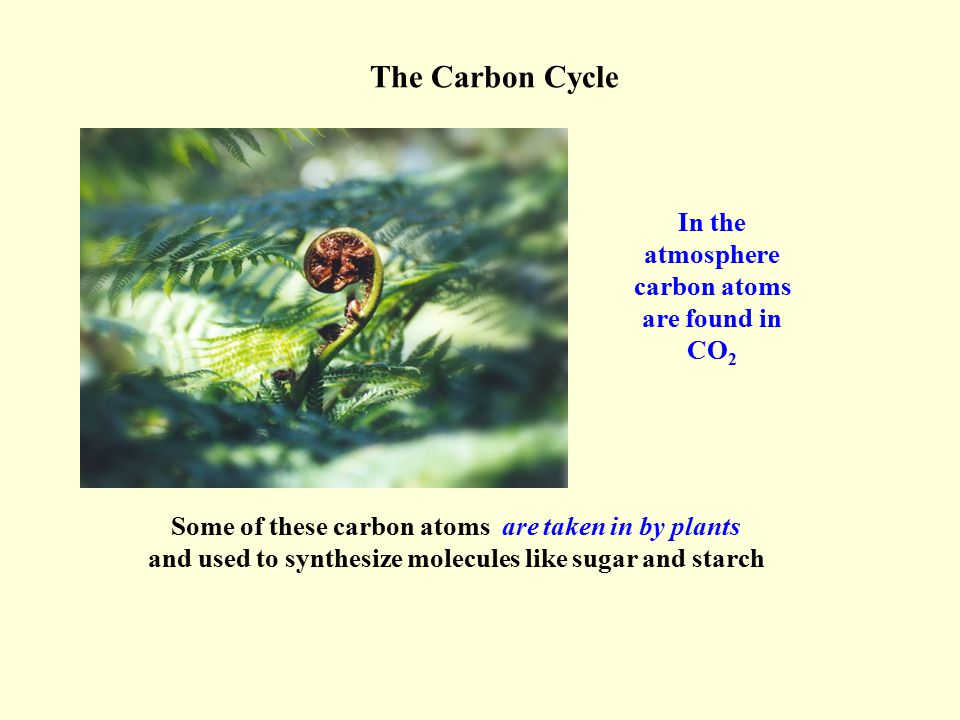
Carbon is used in the process called __________ by plants and algae to make food and the building blocks for growth.
carbon cycle
life
photosynthesis
decomposition
112
Carbon is essential in the process of photosynthesis, where plants and algae convert sunlight into food and growth materials. This process uses carbon dioxide from the atmosphere, making 'photosynthesis' the correct answer.
113
Multiple Select

How does carbon get from animals and back into the atmosphere? (CHOOSE ALL THAT APPLY)
Respiration (breathing)
After they die, they are broken down by decomposers
Photosynthesis
None of these
114
Carbon returns to the atmosphere through respiration when animals breathe out CO2. After death, decomposers break down the organic matter, releasing carbon back into the atmosphere, making both options correct.
115
Multiple Choice
When water is heated in the ocean by the sun and turns into water vapor
Condensation
Evaporation
Transpiration
116
When water is heated by the sun in the ocean, it changes from liquid to gas, which is called evaporation. This process is essential for the water cycle, distinguishing it from condensation and transpiration.
117
Multiple Choice
When plants give off drops of water it is called
Transpiration
Evaporation
Condensation
118
When plants release water vapor through their leaves, this process is known as transpiration. It is distinct from evaporation, which involves water turning into vapor from any surface, and condensation, which is the opposite process.
119
Multiple Choice
After condensation, the droplets of water in the clouds fall to Earth in different forms...
precipitation
condensation
evaporation
120
After condensation, water droplets in clouds fall to Earth as precipitation, which includes rain, snow, sleet, or hail. This term specifically refers to the various forms of water that fall from the atmosphere.
121
Multiple Choice
What is transpiration?
Excess water being released from the leave
Excess sugar being released from the leave
The way a plant makes its food
When the plant uses sugar for energy
122
Transpiration is the process where excess water is released from the leaves of a plant. This helps in nutrient transport and temperature regulation, making it the correct choice among the options provided.
123
Multiple Choice
How do MOST invasive species get to new areas where they don't naturally belong?
humans take them accidentally or on purpose
they ride on the back of sea turtles from one country to another
they get blown by the wind to a new location
they buy a bus ticket and travel there themselves
124
Multiple Choice

If a new, NON-NATIVE species that eats rabbits was introduced into this food chain, what would probably happen?
the population of rabbits would increase
the population of eagles would increase
the population of eagles would decrease
there would be less sunlight
125
If a new animal started eating the rabbits, there would be less rabbits. Also, the eagle eats rabbits, too, so there would less food for the eagle, and there would be less eagles, too.
126
Multiple Choice
Show answer
Auto Play
Slide 1 / 126
SLIDE
Similar Resources on Wayground

126 questions
F1 Exam 1 Practice 01
Presentation
•
7th Grade
115 questions
Periodic Table of Elements Atomic Numbers
Presentation
•
8th Grade
115 questions
CP2 review
Presentation
•
6th - 8th Grade
118 questions
Chapter 13 Weather
Presentation
•
7th Grade
124 questions
German 1 Essen und Trinken
Presentation
•
7th Grade
118 questions
Natural Texas and Its People 1.1 Study Guide
Presentation
•
7th Grade
122 questions
Intro to Approx Irrational #s/Classification of Real #s
Presentation
•
8th Grade
126 questions
Southwest Asia: Religious Groups
Presentation
•
7th Grade
Popular Resources on Wayground
10 questions
Safety Day 2026 – Student Review

Quiz
•
9th Grade
21 questions
Continents and Oceans
Quiz
•
6th Grade
20 questions
Parts of Speech
Quiz
•
5th Grade
16 questions
Subject & Predicate
Quiz
•
5th Grade
25 questions
Multiplication Facts
Quiz
•
5th Grade
12 questions
Map Skills
Quiz
•
3rd Grade
22 questions
Continents and Oceans
Quiz
•
5th Grade
15 questions
Rounding Decimals
Quiz
•
5th Grade
Discover more resources for Science
10 questions
Exploring Chemical and Physical Changes

Interactive video
•
6th - 10th Grade
14 questions
Week 1 Falcon Flex Fast and Curious
Quiz
•
7th Grade
42 questions
Explore Plate Tectonics and Boundaries
Quiz
•
7th Grade
21 questions
Waves and Wave Properties
Quiz
•
6th - 8th Grade
16 questions
Photosynthesis and Cellular Respiration Review
Quiz
•
7th Grade
20 questions
Food Webs + Energy Pyramids
Quiz
•
7th Grade
9 questions
Biology: Cell Structure
Interactive video
•
7th Grade
8 questions
Diffusion and Osmosis Review
Presentation
•
6th - 8th Grade