Search Header Logo
G10 Respiratory System

G10 Respiratory System

Assessment

Presentation

Biology

10th Grade

Practice Problem

Easy

Created by

Cynthia Gian

Used 7+ times

FREE Resource

28 Slides • 51 Questions

1
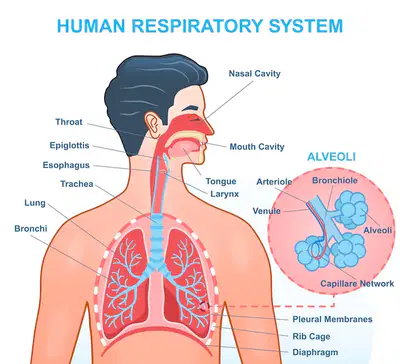
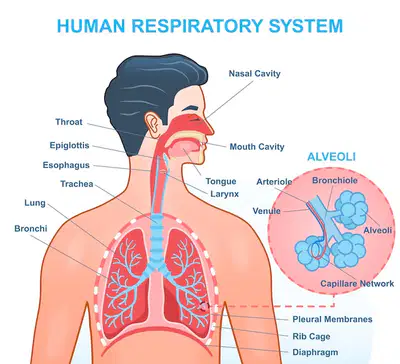
Respiratory System

media

2

media

3

Open Ended

What are the components of the respiratory system?

4

media

5

media

6

Hotspot

where is the nose?

7

Hotspot

where is the trachea?

8

Hotspot

where is the lungs?

9

Hotspot

where is the diaphragm?

10

Fill in the Blanks

media image

11

Multiple Choice

Question image

Fill in the missing label

1

Bronchus

2

Bronchioles

3

Left lung

4

Alveoli

12

Multiple Choice

Question image

Fill in the blank for the label that belongs in the red rectangle

1

Nasal Conchae

2

Sphenoidal Sinus

3

Bronchioles

4

Nose

13

Multiple Choice

Question image

Fill in the blank for the missing label

1

Bronchus

2

Bronchioles

3

Alveoli

4

Right Lung

14

Multiple Choice

Question image

Fill in the blank for the missing label

1

Bronchus

2

Bronchioles

3

Right Lung

4

Alveoli

15

Multiple Choice

Question image

Fill in the missing label

1

Frontal Sinus

2

Sphenoidal Sinus

3

Nasal conchae

4

Nasal Cavity

16

Multiple Choice

Question image

Fill in the missing label

1

Nose

2

Larynx

3

Trachea

4

Pharynx

17

Fill in the Blanks

media image

18

Multiple Choice

Question image

Fill in the missing label

1

Trachea

2

Larynx

3

Sphenoidal Sinus

4

Frontal Sinus

19

Fill in the Blanks

media image

20

Fill in the Blanks

media image

21

The respiratory system is made of many parts that all work together to:

  • deliver oxygen to your cells

  • remove carbon dioxide from your cells

media

22

Fill in the Blanks

23

Multiple Choice

Another main function of the respiratory system is to remove ______ _______ gas from the body. This can be toxic to the cells if it is not removed.

1

nitrogen

2

oxygen

3

carbon dioxide

4

helium

24

Multiple Choice

Another main function of the respiratory system is to remove ______ _______ gas from the body. This can be toxic to the cells if it is not removed.

1

nitrogen

2

oxygen

3

carbon dioxide

4

helium

25

Fill in the Blanks

26

Multiple Select

Select ALL the organs that ARE parts of the respiratory system

1

Heart

2

Bronchi

3

Trachea

4

Capillaries

5

Small intestine

27

media

Does two very important things:

  • brings oxygen into our bodies, which our cells need to function properly

  • helps us get rid of carbon dioxide, which is a waste product of cellular respiration

RESPIRATORY SYSTEM

28

Multiple Choice

What is the function of the respiratory system
1

Take in O2 only

2

Remove CO2 only

3

Take in O2 ad remove CO2

4

Make sugar

29

Multiple Choice

Which is the main organ of the respiratory system?

1

heart

2

lungs

3

kidney

4

brain

30

Structures of the human respiratory system

  • Trachea- (windpipe)

    • tube made of cartilage, lined with mucus & cilia (hairs).

    • Covered by epiglottis when not breathing.

    • connects  to the bronchi 

  • Bronchi- 2 tubes lead to each lung

  • Bronchioles small branches leading to alveoli

media

31

media
media

32

Multiple Choice

Question image

Letter A represents the...

1

Trachea

2

Diaphragm

3

Bronchus

4

Alveolus

33

Lungs

  • take in oxygen and release carbon dioxide when we breathe

  • most important organ of the respiratory system

media

34

Alveoli

  • site of GAS EXCHANGE

  • oxygen and carbon dioxide exchange places inside the blood

media

35

Alveoli

  • Alveolus – individual sac

  • Bunches of tiny air sacs inside the lungs.

  • When you breath in, they fill with air.

  • Very thin walls which permit the exchange of gases (oxygen and carbon dioxide)

  • Exchange oxygen and carbon dioxide in the blood stream.

media

36

Gas Exchange

  • Alveoli

    • where gas exchange occurs (think of exchange like 'swapping')

media

37

media

Gas Exchange

38

Multiple Choice

It is the delivery of oxygen from the lungs to the bloodstream, and the elimination of carbon dioxide from the bloodstream to the lungs.

1

Gas Exchange

2

Diffusion

39

media
  • Pharynx (throat): Tube that delivers air from your mouth and nose to the trachea (windpipe).

  • Trachea: Passage connecting your throat and lungs.

40

media
  • Bronchial tubes: Tubes at the bottom of your windpipe that connect into each lung.

  • Lungs: Two organs that remove oxygen from the air and pass it into your blood.

41

Multiple Select

What are the two openings that bring air into your body?

1

Mouth

2

Lungs

3

Nose

4

Sinus

42

media

43

media
  • Diaphragm: Muscle that helps your lungs pull in air and push it out.

  • Ribs: Bones that surround and protect your lungs and heart.

How do the lungs inhale

44

Multiple Select

What two gasses are exchanged in the alveoli?

1

Oxygen

2

Carbon

3

Carbon Dioxide

4

Hydrogen

45

Multiple Choice

What are the clusters of air sacs that are at the end of the bronchioles

1

Trachea

2

Bronchi

3

Capillaries

4

Alveoli

46

media

47

media

48

media

49

media

50

media

51

media

52

media

53

Reorder

Put the following in order of inhalation

nose

trachea

bronchi

bronchioles

alveoli

1
2
3
4
5

54

Multiple Choice

What is the muscle called that assists with inhaltion & exhalation?

1

diaphragm

2

alveoli

3

bronchus

55

Multiple Choice

Which is not a job of the respiratory system?

1

taking in oxygen

2

taking in carbon dioxide

3

moisten air

4

transport glucose

56

Multiple Choice

Which blood cells carry the oxygen to the rest of the body?
1
Red Blood Cells
2
White Blood Cells
3
Blue Blood Cells
4
Yellow Blood Cells

57

Multiple Choice

Which is known as the voice box?

1

pharynx

2

larynx

3

trachea

4

bronchi

58

Multiple Choice

When you exhale, the diaphragm

1

moves upwards

2

moves downwards

3

flattens

4

none of the above

59

Multiple Choice

Where is carbon dioxide and oxygen exchanged at capillaries?

1

trachea

2

larynx

3

alveoli

4

bronchi

60

Multiple Choice

The "windpipe" is known as the

1

alveoli

2

esophagus

3

trachea

4

bronchi

61

Multiple Choice

Which system shares the pharynx with the respiratory system?

1

circulatory

2

digestive

3

excretory

4

skeletal

62

Multiple Choice

Where does air go after the pharynx during inhalation?

1

nose

2

trachea

3

bronchi

4

alveoli

63

Multiple Choice

Which 2 substances are exchanged in the Respiratory System?

1

oxygen and nitrogen

2

carbon dioxide and oxygen

3

oxygen and glucose

4

glucose and carbon dioxide

64

Multiple Choice

What does the respiratory system release?

1

oxygen

2

glucose

3

carbon dioxide

65

Multiple Choice

Question image

When you breathe, your lungs take in _______ and remove ___________ from the body.

1

air/oxygen

2

oxygen/carbon dioxide

3

carbon dioxide/water

4

waste/air

66

Multiple Choice

Question image

The air sacs that are covered with capillaries where gas exchange takes place

1

bronchi

2

oxygen

3

lungs

4

alveoli

67

Multiple Choice

Question image

Which statement correctly defines the diaphragm?

1

Muscle beneath the lungs that contracts and relaxes to move gases in and out of the body

2

Factor during an experiment

3

muscle that filters blood into, and out of the lungs

4

Allows you to move food throughout your thoracic cavity.

68

Multiple Choice

The gas known as _______ is needed for humans to stay alive. Without this gas inside of our bodies, the respiratory system could not function properly.

1

nitrogen

2

carbon dioxide

3

oxygen

4

helium

69

Asthma

  • inflammation of the airways and lungs

  • causes wheezing, breathlessness, chest tightness, and coughing at night or early in the morning

media

70

media

71

media
media
media

​Emphysema

72

media

73

Multiple Choice

Question image

The alveolus wall loses its elasticity and increases its size. Gas exchange is reduced, shortness of breath and prolonged cough.

1

Bronchitis

2

Asthma

3

Emphysema

74

Multiple Choice

Question image

The bronchial wall is inflamed and irritated thick mucus. Causes difficulty in breathing.

1

Asthma

2

Bronchitis

3

Emphysema

75

Multiple Choice

Question image

Acute inflammation and infection of alveoli, which fill with pus or products of the inflammatory reaction

1

pulmonary edema

2

emphysema

3

pneumonia

4

mesothelioma

76

Multiple Choice

Bronchi

1

Allows oxygen to be taken into the body, while also letting the body get rid of waste in the air breathed out.

2

These are hair like tubes that connect to the alveoli

3

These are the air sacs that allow gas exchange in the lungs.

4

The two branching tubes that connect the trachea to the lungs.

77

Multiple Choice

Lungs

1

Allows oxygen to be taken into the body, while also letting the body get rid of waste in the air breathed out.

2

These are hair like tubes that connect to the alveoli

3

These are the air sacs that allow gas exchange in the lungs.

4

The two branching tubes that connect the trachea to the lungs.

78

Multiple Choice

Bronchioles

1

Allows oxygen to be taken into the body, while also letting the body get rid of waste in the air breathed out.

2

These are hair like tubes that connect to the alveoli

3

These are the air sacs that allow gas exchange in the lungs.

4

The two branching tubes that connect the trachea to the lungs.

79

Multiple Choice

Alveoli

1

Allows oxygen to be taken into the body, while also letting the body get rid of waste in the air breathed out.

2

These are hair like tubes that connect to the alveoli

3

These are the air sacs that allow gas exchange in the lungs.

4

The two branching tubes that connect the trachea to the lungs.

Respiratory System

media

Show answer

Auto Play

Slide 1 / 79

SLIDE