Ionic Lewis Dot Diagrams
Presentation
•
Science
•
10th - 11th Grade
•
Hard

Joseph Anderson
FREE Resource
11 Slides • 19 Questions
1
How to draw Lewis Dot Diagrams for Ionic Compounds
2
Lewis Dot Diagrams
The Lewis dot diagram shows the number of valence electrons in an atom in an almost 'box like' fashion around the symbol
3
4
Multiple Choice
5
Multiple Choice
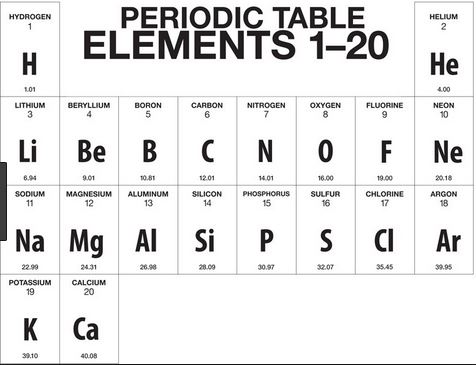
How many dots would you put around carbon, a group 14 element?
4
6
8
18
6
Multiple Choice
How many valence electrons does Aluminum Have?
1 Valence electron
2 Valence electron
3 Valence electron
4 Valence electron
5 Valence electron
7
Lewis Dot Diagrams for Ions
Metals lose their valence electrons and form positive ions; cations
Nonmetals gain electrons and form negative ions; anions
8
Lewis Dot Diagram for Ionic Compounds
Shows the charges on the ions in brackets
9
Structure of Ionic Compounds
The + and - ions in Ionic compouds are held together by strong 'electrostatic attractions'
The compound will always be electrically neutral
10
Formation of Ionic Bond
The positive CATION and negative ANION are held together in a crystaline lattice structure
The exact structure and shape will depend on the size of the cation and anion
11
Formation of Ionic Bond
The formation of an ionic bond is an EXOTHERMIC process which means that energy is released
12
Multiple Choice
13
Multiple Select
The reason that a sodium atom bonds to a chlorine atom is (chose all that apply)
sodium transfers an electron to chlorine
the ions are the same size
the ions have a full outer shell
oppositely charged ions have a strong electrostatic attraction
they are happy together
14
Multiple Choice
15
Formation of Ionic Compounds
Metals transfer their electrons to non metals
Formation of Sodium Chloride : NaCl
16
Formation of Ionic Compounds
For Sodium Oxide : note the number of valence electrons on sodium and oxygen
17
Oxidation Numbers
The oxidation number indicates the number of electrons lost or gained.
The Metals lose their valence electrons
The Nonmetals gain electrons to get to 8
The group the element is in in the periodic table will tell you how many electrons will be lost or gained.
18
Multiple Choice
19
Multiple Choice
K1+ S2-
20
Multiple Choice
Al3+ O2-
21
Multiple Choice
What is the correct formula for the compound, lithium oxide ?
LiO
Li2O
LiO2
Li2O2
22
Multiple Choice
23
Multiple Choice
If my charge becomes 2+ what does that say about me?
I am stealing 2 electrons
I am losing 2 electrons
I am in period 2
I have an atomic # of 2
24
Multiple Choice
What type of forces hold an ionic compound together?
covalent bond
Vander Waals forces
Metllic bond
Electrostatic attraction
25
Multiple Choice
Which of the following diagrams shows an atom that has lost 2 electrons when forming an ionic bond?
26
Multiple Choice
Which of these diagrams shows an ion for an element from group 15?
27
Multiple Choice
Which diagram shows an ion that will form from an atom with a neutral electron configuration of 2-8-6?
28
Multiple Choice
Which diagram shows an ATOM from group 17?
29
Multiple Choice
Which diagram could be showing an ion of Potassium?
30
Multiple Choice
Which of the following would be the Lewis Dot Diagram for an ION of Aluminum?
How to draw Lewis Dot Diagrams for Ionic Compounds

Show answer
Auto Play
Slide 1 / 30
SLIDE

Similar Resources on Wayground
23 questions
Potential (GPE) and Kinetic (KE) Energy practice
Presentation
•
9th - 11th Grade
23 questions
The NITROGEN CYCLE
Presentation
•
9th - 12th Grade
20 questions
Photosynthesis
Presentation
•
9th - 11th Grade
20 questions
Periodic Trends
Presentation
•
10th - 12th Grade
22 questions
Accuracy v. Precision, Sig Figs, and Scientific Notation
Presentation
•
9th - 12th Grade
21 questions
Introduction to the Integumentary System
Presentation
•
9th - 12th Grade
25 questions
Psychology 10.1
Presentation
•
10th - 11th Grade
25 questions
Electron Configuration, Orbital Notation, & Dot diagrams
Presentation
•
9th - 12th Grade
Popular Resources on Wayground
10 questions
5.P.1.3 Distance/Time Graphs
Quiz
•
5th Grade
10 questions
Fire Drill
Quiz
•
2nd - 5th Grade
20 questions
Equivalent Fractions
Quiz
•
3rd Grade
22 questions
School Wide Vocab Group 1 Master
Quiz
•
6th - 8th Grade
20 questions
Main Idea and Details
Quiz
•
5th Grade
20 questions
Context Clues
Quiz
•
6th Grade
20 questions
Inferences
Quiz
•
4th Grade
12 questions
What makes Nebraska's government unique?
Quiz
•
4th - 5th Grade
Discover more resources for Science
10 questions
Exploring the Layers of the Earth
Interactive video
•
6th - 10th Grade
16 questions
Balancing Chemical Equations and Types of Reactions
Quiz
•
9th - 10th Grade
10 questions
Exploring Ecological Levels: Organism to Ecosystem
Interactive video
•
6th - 10th Grade
10 questions
Exploring Light and Waves Concepts
Interactive video
•
6th - 10th Grade
10 questions
Exploring Weathering, Erosion, and Deposition Processes
Interactive video
•
6th - 10th Grade
10 questions
Exploring Chemical and Physical Changes
Interactive video
•
6th - 10th Grade
10 questions
Exploring Plant Structures and Adaptations
Interactive video
•
6th - 10th Grade
5 questions
Solubility curves
Presentation
•
10th Grade