

Untitled Presentation

Presentation
•
Health Sciences
•
University
•
Hard

Sayra Caiza
FREE Resource
59 Slides • 28 Questions
1

2
Multiple Choice
Why is it important to understand the pharmacology of urinary tract infections (UTIs)?
To choose the most effective treatment and reduce antibiotic resistance
To learn about kidney anatomy
To understand the symptoms of diabetes
To prevent heart disease
3

4
Open Ended
What are some common uses of quinolones in the treatment of infections?
5

6
Multiple Choice
Which structural component of quinolones is essential for antibacterial activity against gram-positive bacteria?
R5
R7
COOH
F
7

8
Open Ended
Describe the main differences between the first and second generation quinolones in terms of their antibacterial spectrum and clinical use.
9

10
Multiple Choice
Which of the following drugs is classified as a third-generation fluoroquinolone?
Ciprofloxacino
Levofloxacino
Ácido nalidíxico
Moxifloxacino
11

12
Multiple Select
Select all correct statements about the characteristics of quinolone generations.
First generation quinolones mainly target gram-negative bacteria.
Second generation quinolones are effective against both gram-positive and gram-negative bacteria.
Third generation quinolones have a narrow antibacterial spectrum.
Fourth generation quinolones can treat anaerobic infections.
13

14
Fill in the Blanks
Fill in the blank: Quinolones act by inhibiting the enzyme
15
16
Open Ended
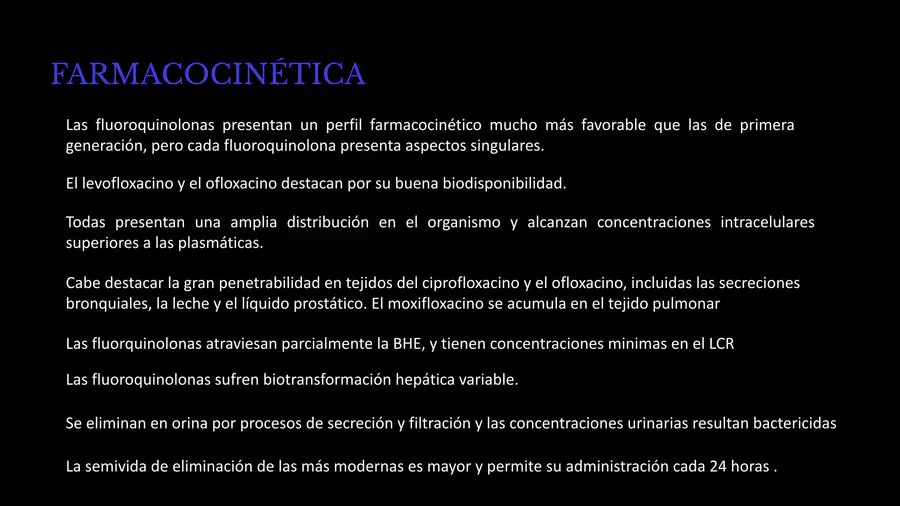
Explain why levofloxacin and ofloxacin are notable among fluoroquinolones in terms of pharmacokinetics.
17
18
Multiple Choice
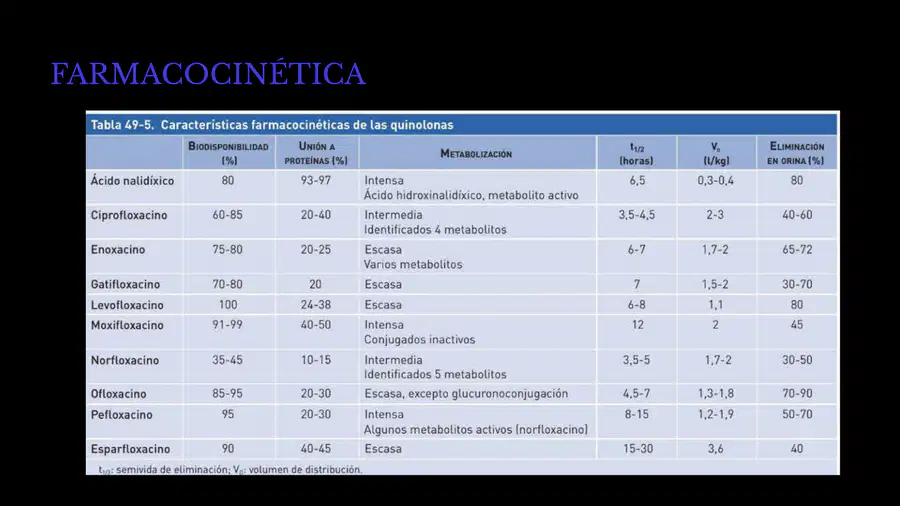
Which quinolone has the highest percentage of elimination in urine according to the pharmacokinetic table?
Levofloxacin
Ofloxacin
Ciprofloxacin
Moxifloxacin
19
20
Open Ended
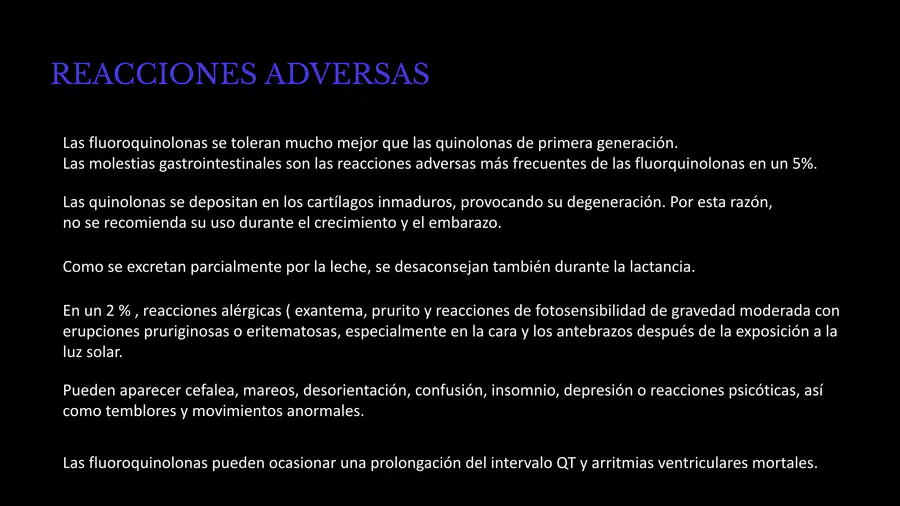
Explain why the use of quinolones is not recommended during growth and pregnancy, based on their adverse reactions.
21
22
Multiple Select
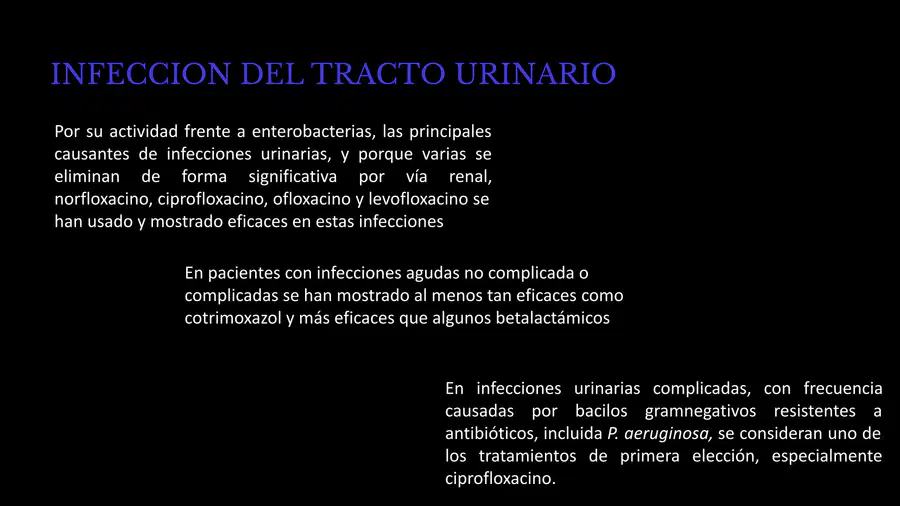
Which of the following fluoroquinolones are considered effective for urinary tract infections due to their significant renal elimination?
Norfloxacin
Ciprofloxacin
Moxifloxacin
Levofloxacin
23
24
Fill in the Blanks
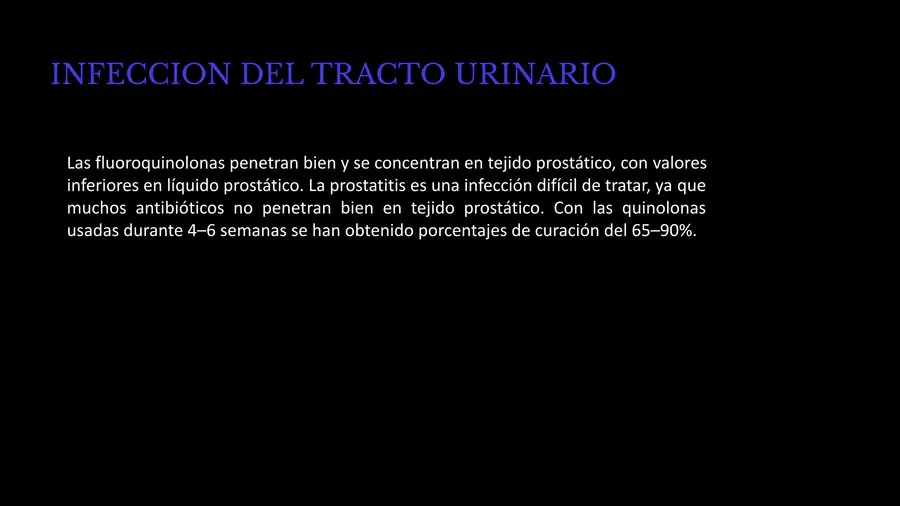
Fluoroquinolones are able to penetrate and concentrate in
25
26
Open Ended
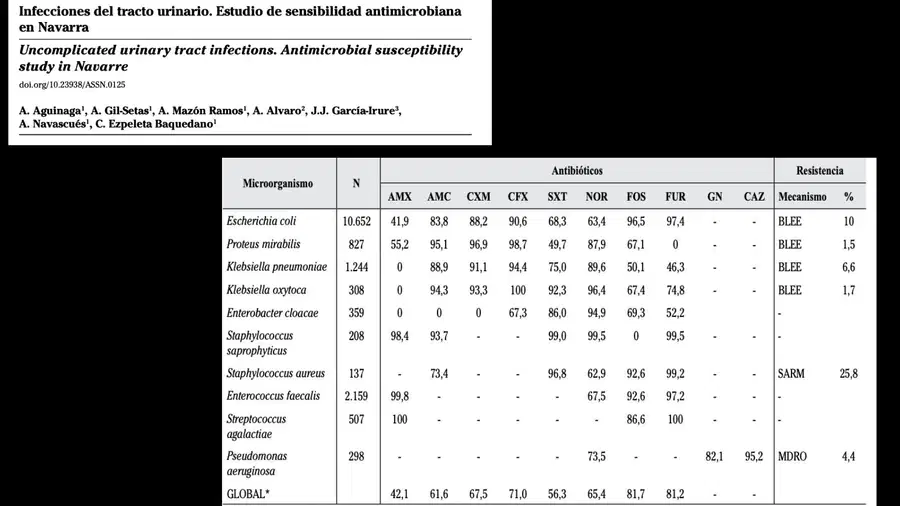
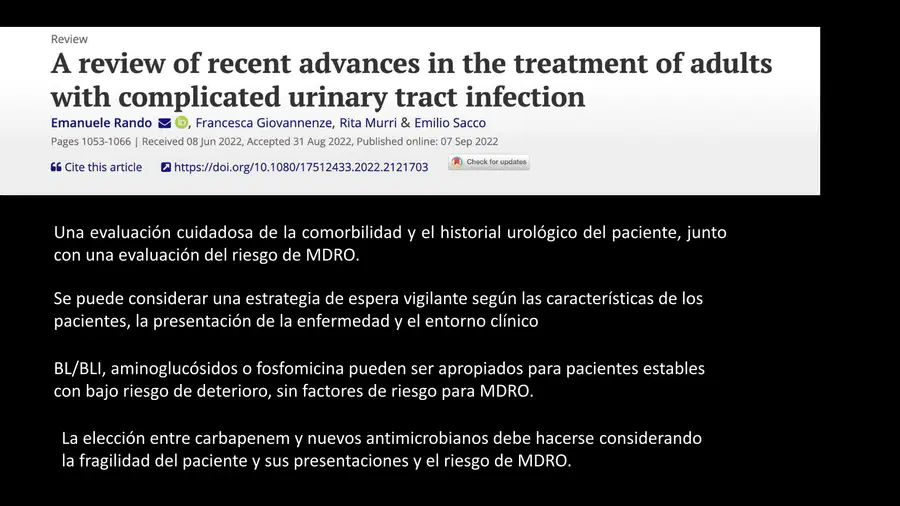
Discuss the clinical implications of the resistance mechanisms (e.g., BLEE, SARM, MDRO) found in urinary tract infection pathogens and how they affect antibiotic selection.
27
Multiple Choice
According to the antimicrobial susceptibility study in Navarre, which microorganism shows the highest resistance percentage to antibiotics?
Staphylococcus aureus
Escherichia coli
Klebsiella pneumoniae
Proteus mirabilis
28
29
30
Multiple Choice
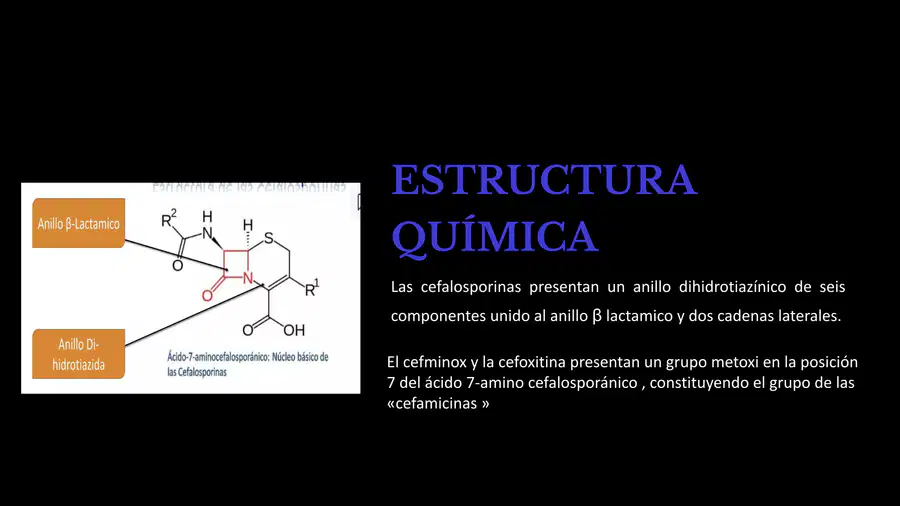
Which structural components are characteristic of cephalosporins according to their chemical structure?
β-lactam ring and dihydrothiazine ring
Benzene ring and amide group
Imidazole ring and carboxyl group
Pyridine ring and hydroxyl group
31
32
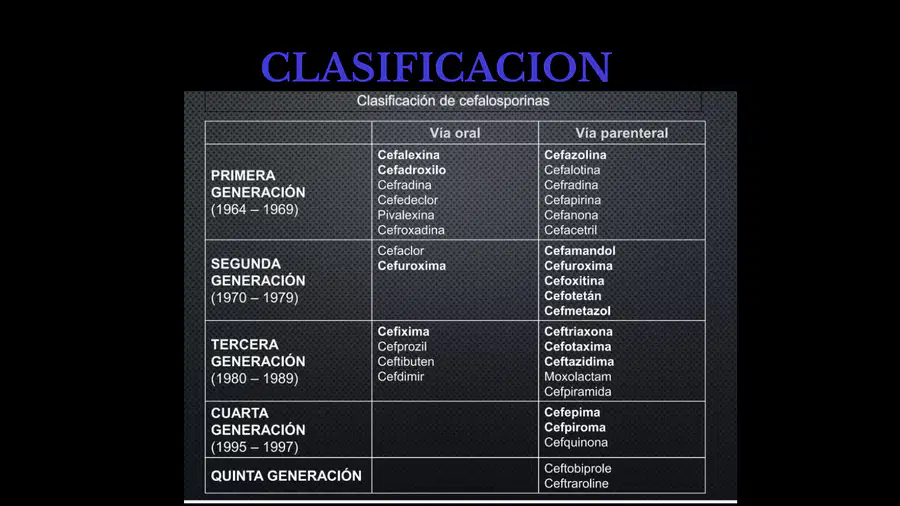
Multiple Choice
How are cephalosporins classified according to their generation and route of administration?
By their chemical structure only
By their antibacterial spectrum only
By generation and whether they are administered orally or parenterally
By their side effects
33
34
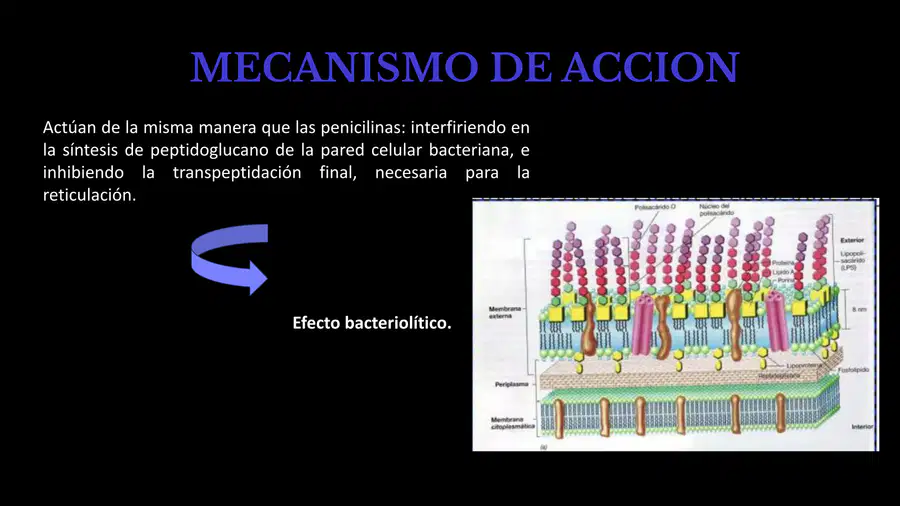
Open Ended
Describe the mechanism of action of cephalosporins and their effect on bacterial cells.
35
36
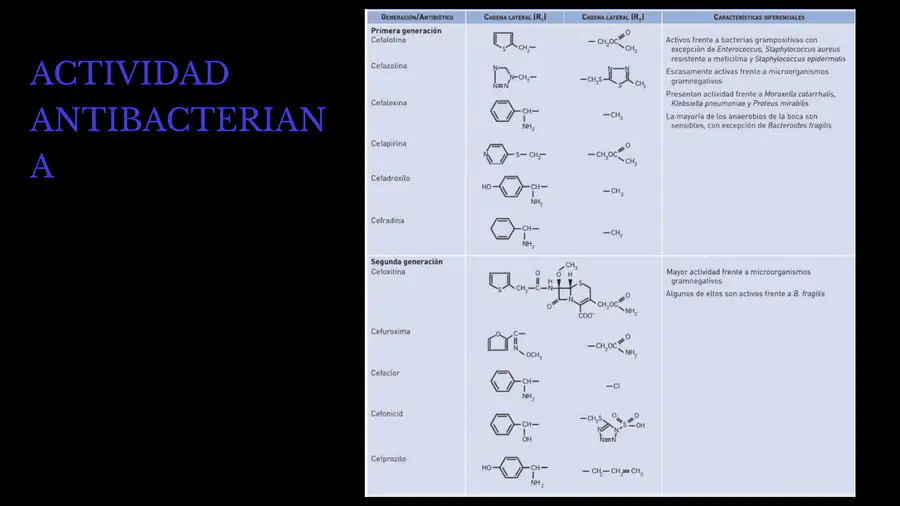
Fill in the Blanks
Cephalosporins of the second generation have greater activity against
Type answer...
37
38
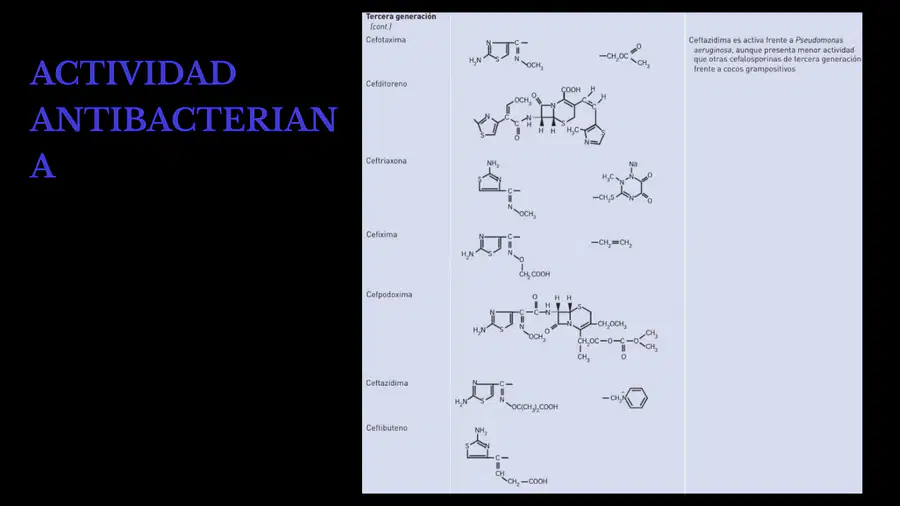
Multiple Choice
Which of the following cephalosporins is active against Pseudomonas aeruginosa?
Cefadroxil
Cefuroxime
Ceftazidime
Cefaclor
39
40
Multiple Select
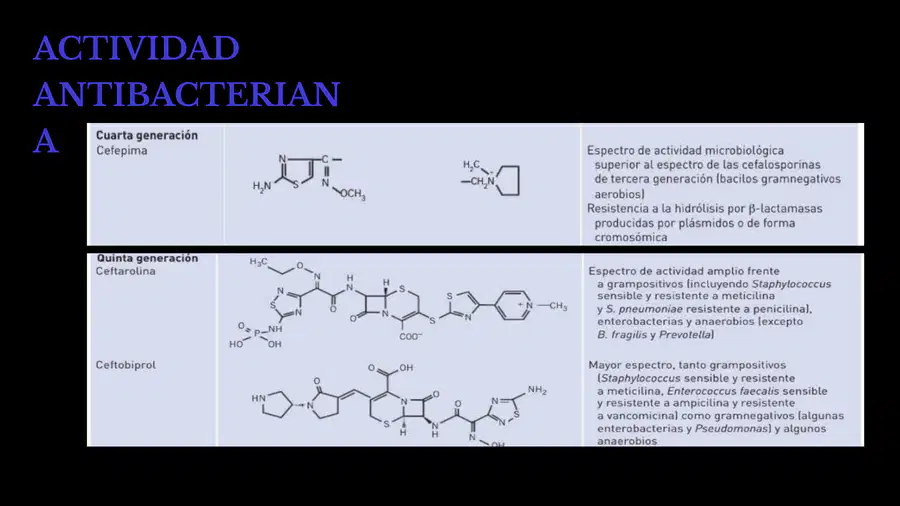
Select all statements that correctly describe the antibacterial spectrum of fourth and fifth generation cephalosporins.
Fourth generation cephalosporins have superior activity against aerobic gram-negative bacilli compared to third generation.
Fifth generation cephalosporins are active against methicillin-resistant Staphylococcus aureus (MRSA).
Fourth generation cephalosporins are less resistant to β-lactamases than third generation.
Fifth generation cephalosporins have a broader spectrum including some gram-negative and anaerobic bacteria.
41
42
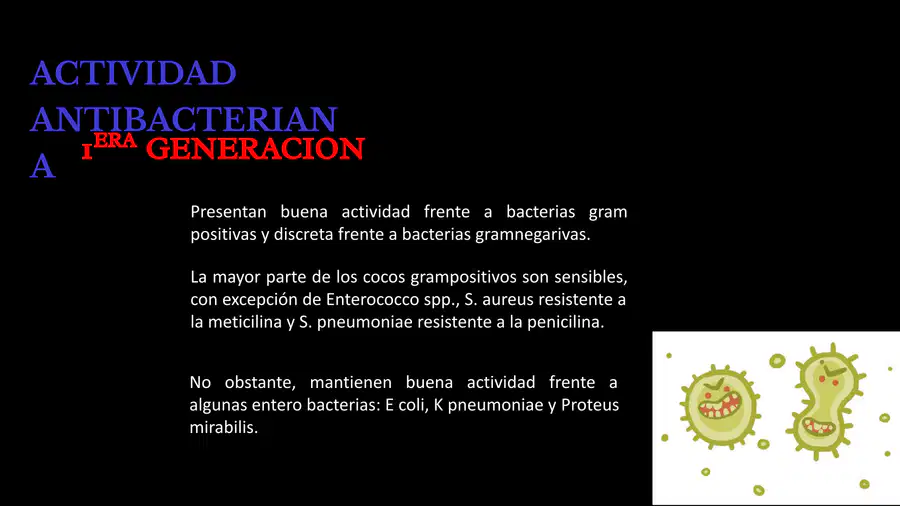
Multiple Choice
Which generation of cephalosporins maintains good activity against some enterobacteria such as E. coli, K. pneumoniae, and Proteus mirabilis?
First generation
Second generation
Third generation
Fourth generation
43
44
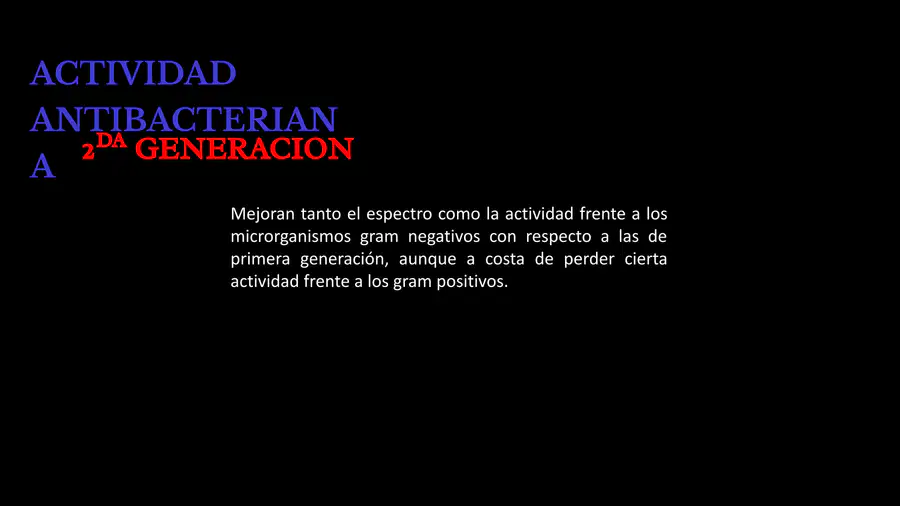
Open Ended
How does the antibacterial spectrum and activity of second-generation cephalosporins compare to first-generation cephalosporins?
45
46
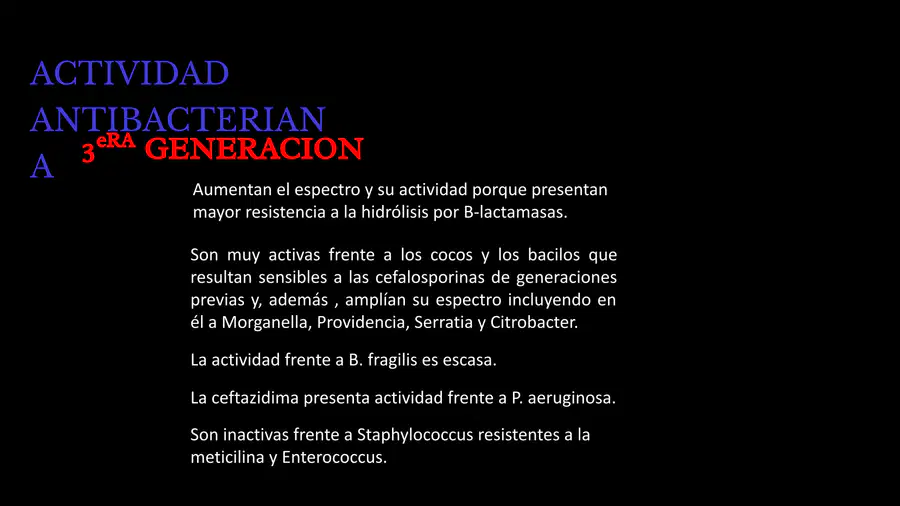
Multiple Select
Which of the following bacteria are included in the expanded spectrum of third-generation cephalosporins?
Morganella
Providencia
Serratia
Citrobacter
47
48
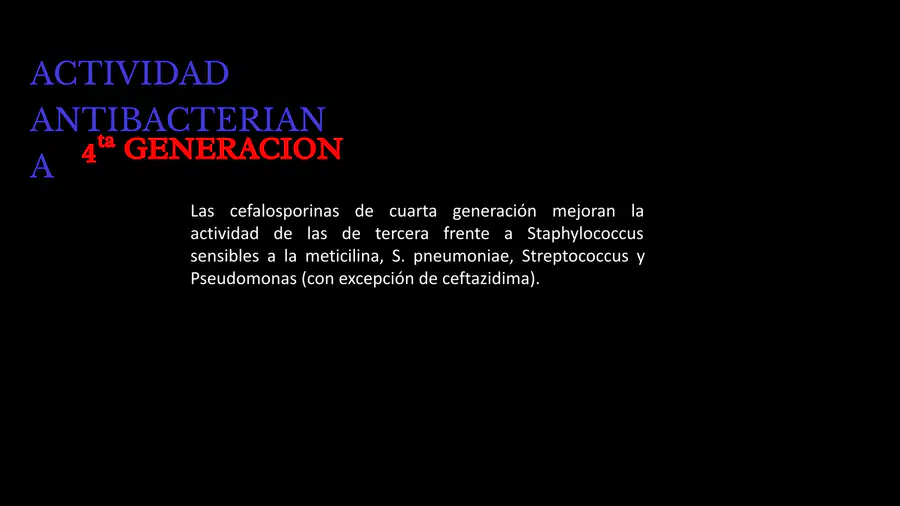
Fill in the Blanks
Fill in the blank: Fourth-generation cephalosporins improve activity against Staphylococcus sensitive to
Type answer...
49
50
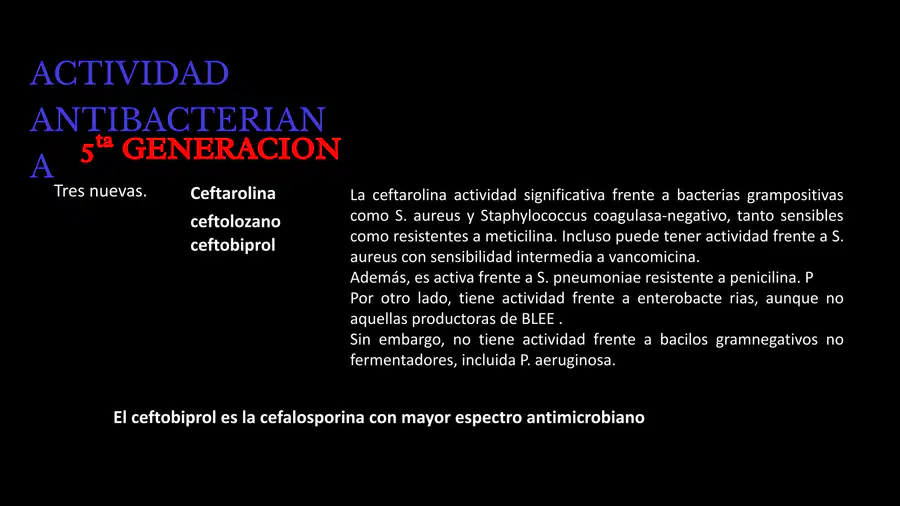
Multiple Choice
Which cephalosporin is noted for having the broadest antimicrobial spectrum?
Ceftaroline
Ceftolozano
Ceftobiprol
Cefazolin
51
52
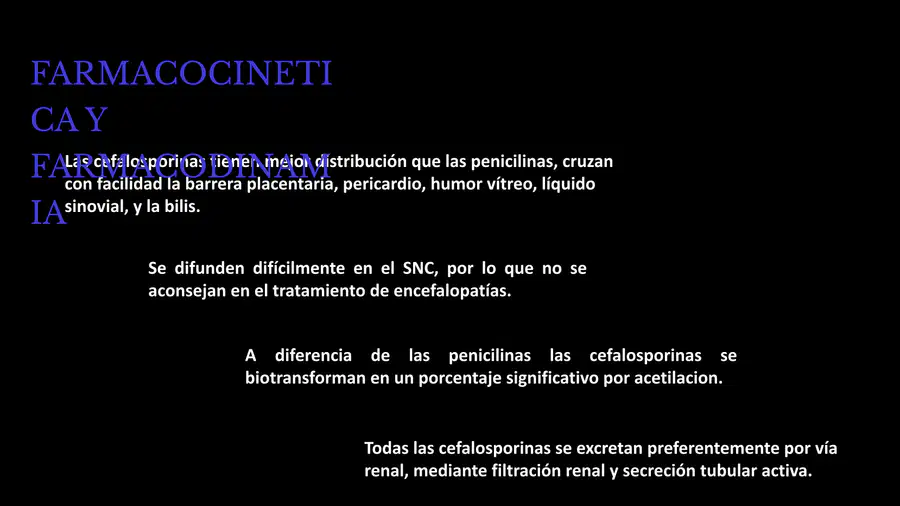
Open Ended
What are two key pharmacokinetic differences between cephalosporins and penicillins based on their distribution and biotransformation?
53
54
55

56
57
58
59
60
61
62
63
64
65
66
67
68
69
70
71
72
73
74
75
76
77
78
79
80
81
82

83
84
85

86
Open Ended
After learning about pharmacology and urinary tract infections, what questions do you still have or what would you like to know more about?
87
Open Ended
What are quinolones and how are they used in the treatment of urinary tract infections?
Show answer
Auto Play
Slide 1 / 87
SLIDE
Similar Resources on Wayground

81 questions
Math for College Algebra
Presentation
•
University
80 questions
Strategic Planning Analysis Tools
Presentation
•
University
82 questions
Module 05: Integration Management
Presentation
•
University - Professi...
79 questions
DON SINH NHAT SC
Presentation
•
University
79 questions
Review ROBO TEST 1st December
Presentation
•
KG - University
86 questions
Pediatric Rashes
Presentation
•
University
81 questions
printers
Presentation
•
University
84 questions
heliocentric VS geocentric
Presentation
•
KG
Popular Resources on Wayground
10 questions
Safety Day 2026 – Student Review

Quiz
•
9th Grade
21 questions
Continents and Oceans
Quiz
•
6th Grade
20 questions
Parts of Speech
Quiz
•
5th Grade
16 questions
Subject & Predicate
Quiz
•
5th Grade
25 questions
Multiplication Facts
Quiz
•
5th Grade
12 questions
Map Skills
Quiz
•
3rd Grade
22 questions
Continents and Oceans
Quiz
•
5th Grade
15 questions
Rounding Decimals
Quiz
•
5th Grade
Discover more resources for Health Sciences
20 questions
Disney Trivia
Quiz
•
University
10 questions
Spanish Greetings and Goodbyes!
Presentation
•
6th Grade - University
20 questions
Physical or Chemical Change/Phases
Quiz
•
8th Grade - University
39 questions
Unit 7 Key Terms
Quiz
•
11th Grade - University
25 questions
SER and Subject Pronouns
Quiz
•
8th Grade - University
38 questions
Unit 6 Key Terms
Quiz
•
11th Grade - University
19 questions
Key Concepts in Buddhism
Quiz
•
University
0 questions
Cell Domain Basic Review (Biology)
Quiz
•
University