Search Header Logo
  1. Resource Library
  2. Science
  3. Chemistry
  4. Ionic And Covalent Compounds
  5. Ionic And Covalent Chemical Bonding
Ionic and Covalent Chemical Bonding

Ionic and Covalent Chemical Bonding

Assessment

Presentation

Science

10th Grade

Practice Problem

Hard

NGSS
HS-PS1-1, MS-PS1-1, HS-PS1-3

+4

Standards-aligned

Created by

Eugene Jones

FREE Resource

21 Slides • 23 Questions

1
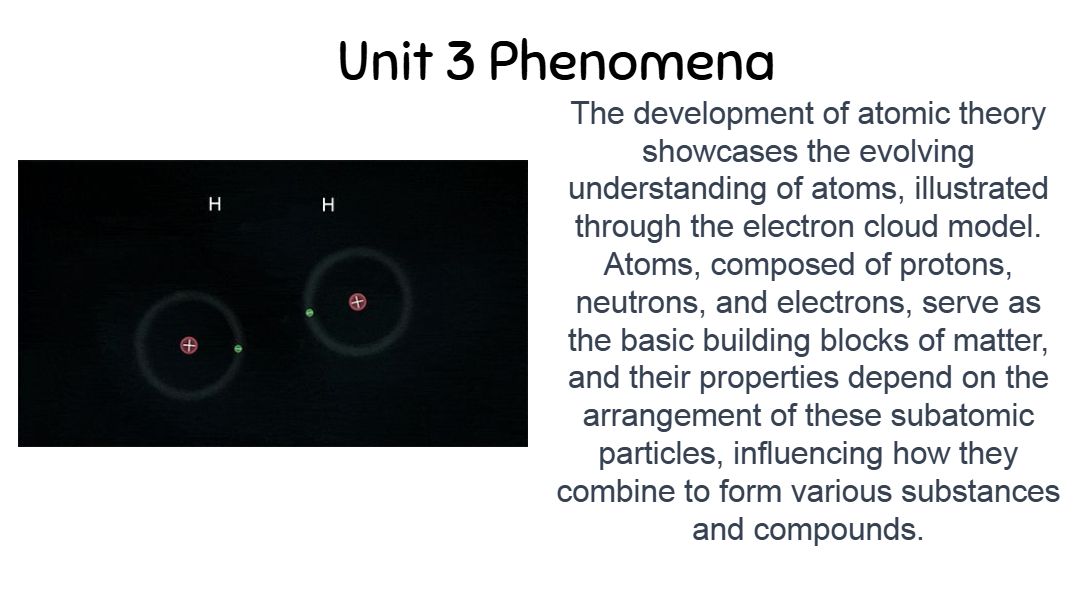
media

2

Labelling

Label this atom's particles.

Drag labels to their correct position on the image

Neutrons

Protons

Nucleus

Electrons

3

Multiple Choice

Which of the following subatomic particles are found in the nucleus of an atom?

1

Protons and neutrons

2

Electrons and protons

3

Neutrons and electrons

4

Only electrons

4

media

5

media

6

media

7

Multiple Choice

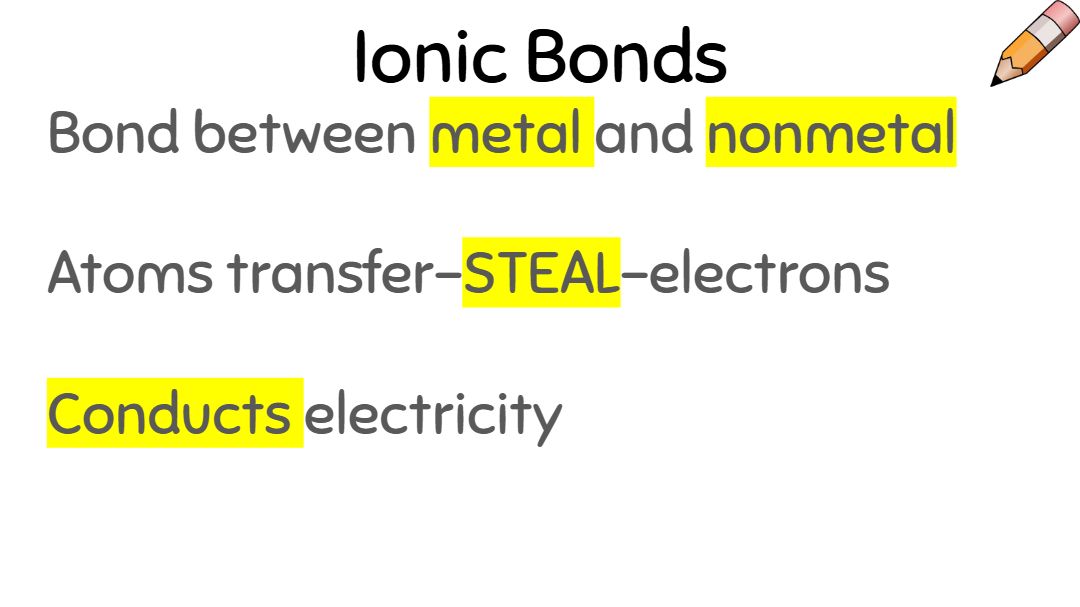
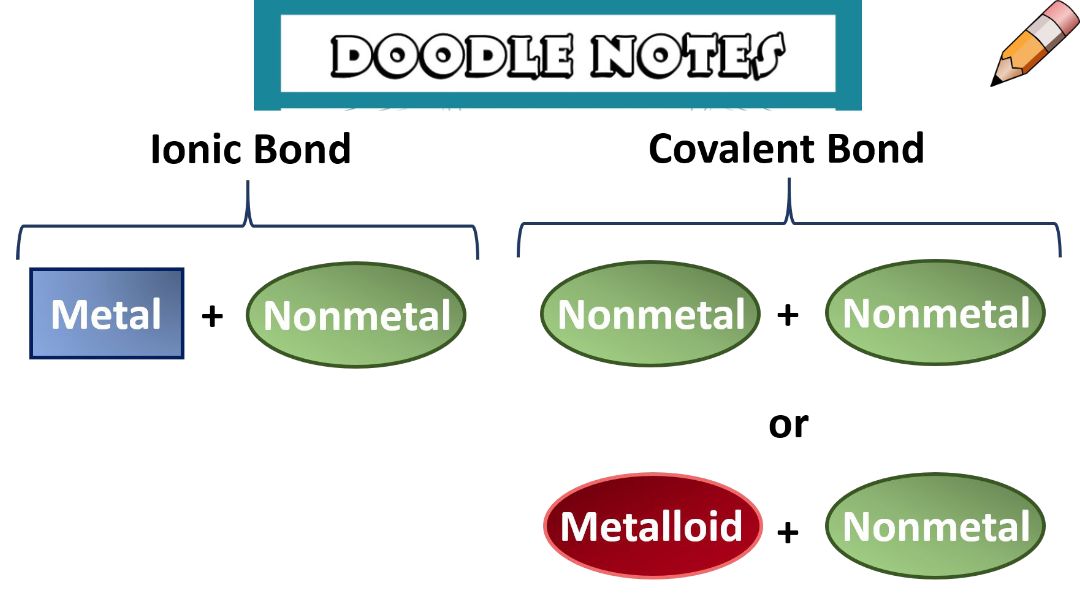
Which type of bond involves the transfer (stealing) of electrons between a metal and a nonmetal?

1

Ionic bond

2

Covalent bond

3

Metallic bond

4

Hydrogen bond

8

media

9

Multiple Select

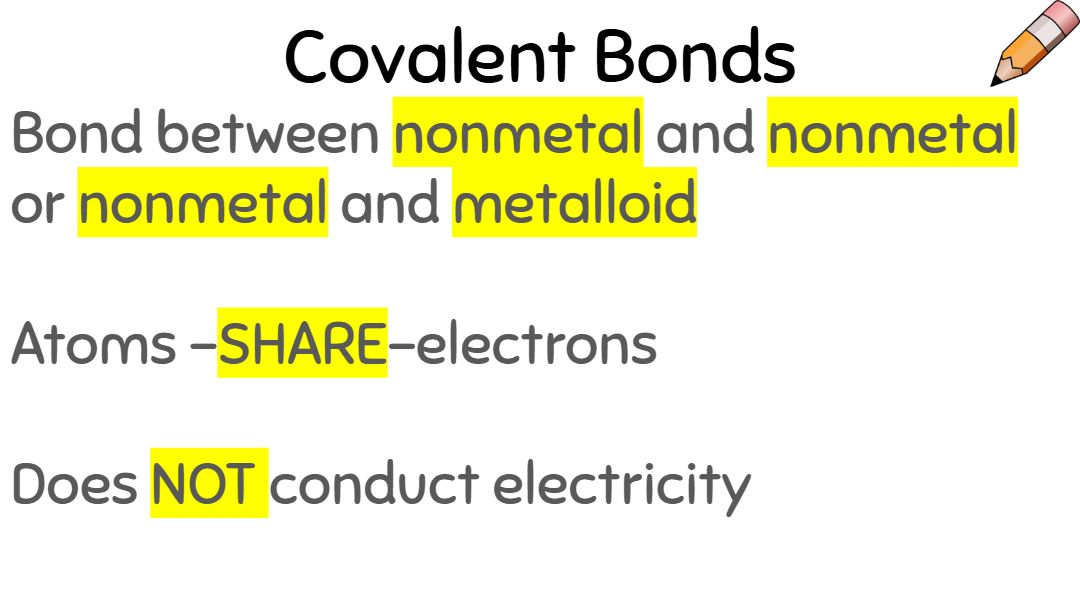
Which of the following are characteristics of covalent bonds?

1

Bond between nonmetal and nonmetal

2

Atoms share electrons

3

Does not conduct electricity

4

Bond between metal and nonmetal

10

media

11

Fill in the Blank

12

Open Ended

Explain how you can predict whether a compound will form an ionic or covalent bond based on the types of elements involved.

13

media

14

Multiple Choice

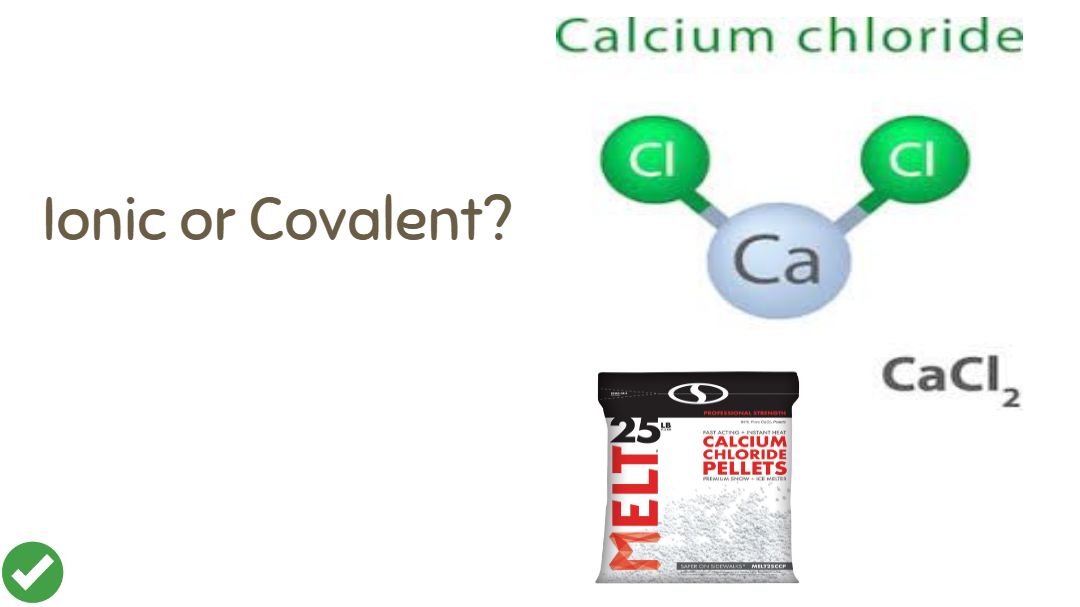
Is the bond in calcium chloride (CaCl2) ionic or covalent?

1

Ionic

2

Covalent

3

Both

4

Neither

15

media

16

Multiple Choice

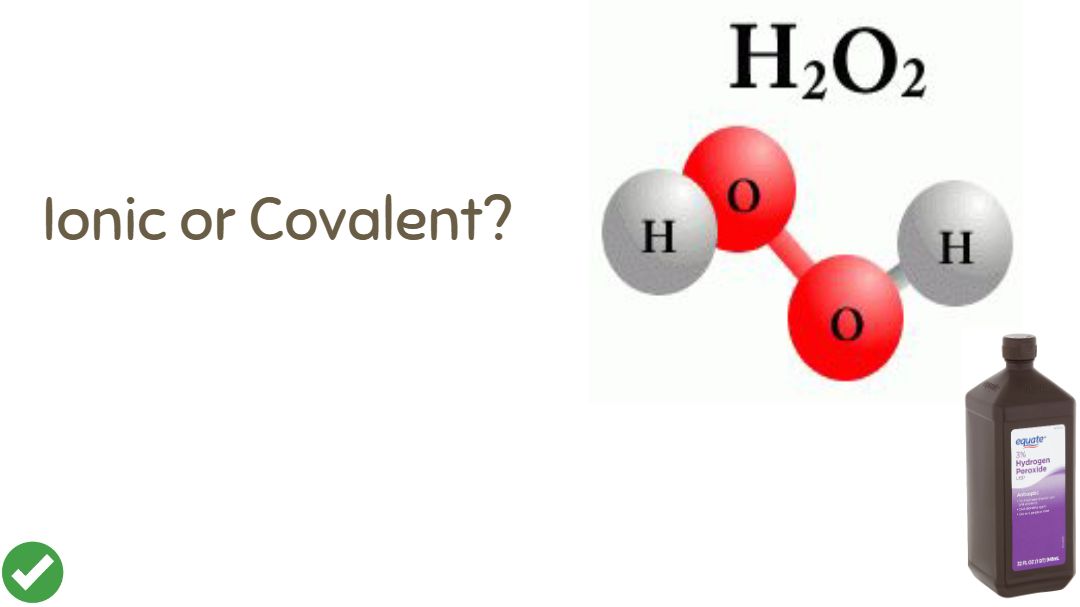
Is the bond in hydrogen peroxide (H2O2) ionic or covalent?

1

Ionic

2

Covalent

3

Both

4

Neither

17

media

18

Multiple Choice

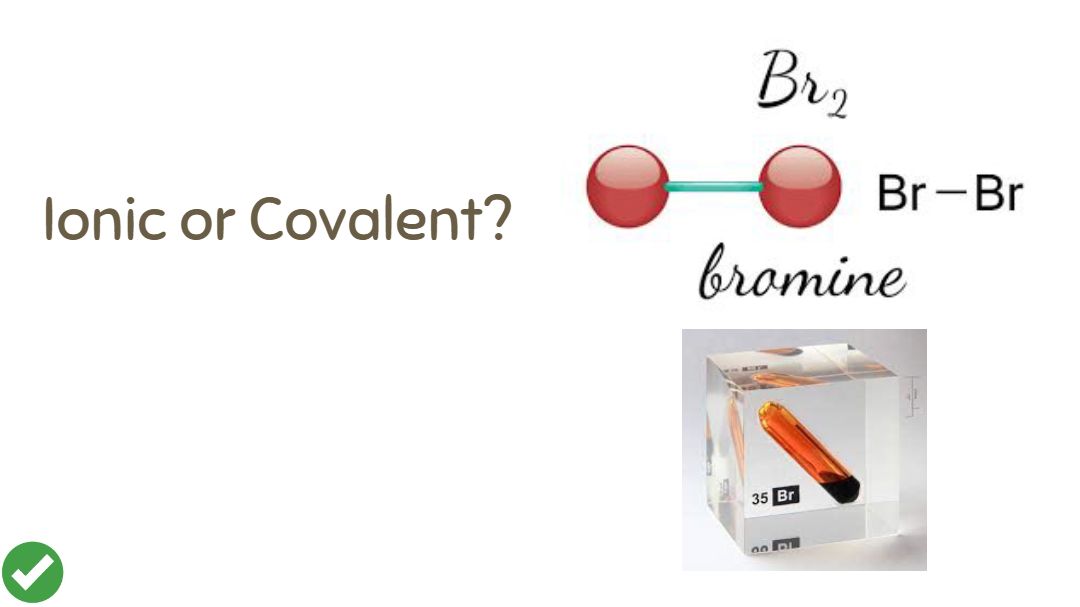
Is the bond in Br2 ionic or covalent?

1

Ionic

2

Covalent

3

Metallic

4

Hydrogen

19

media

20

Open Ended

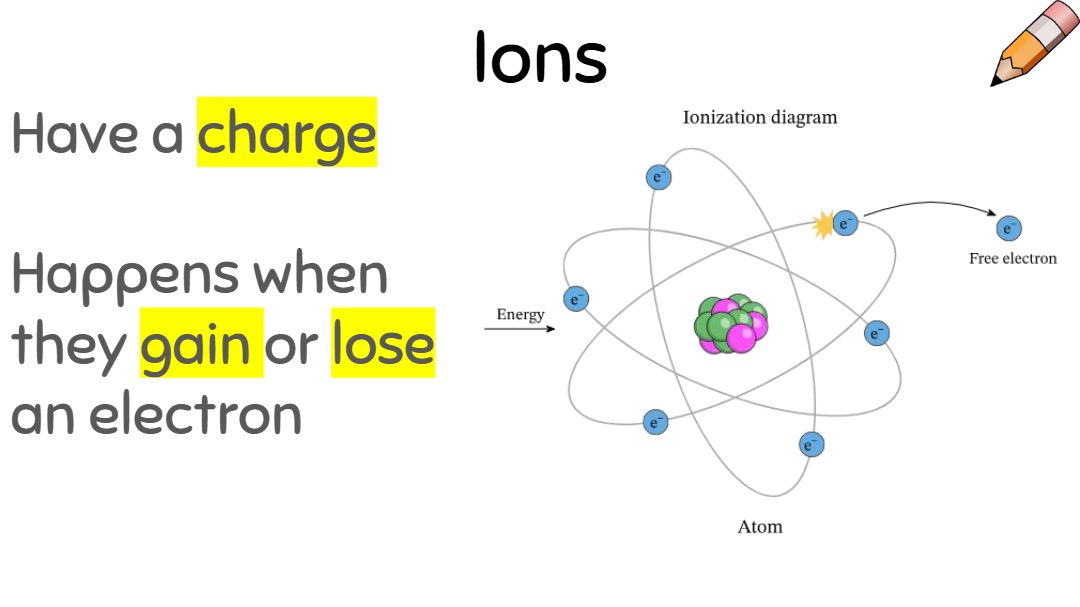
Explain how ions are formed based on the process shown in the ionization diagram.

21

media

22

Multiple Choice

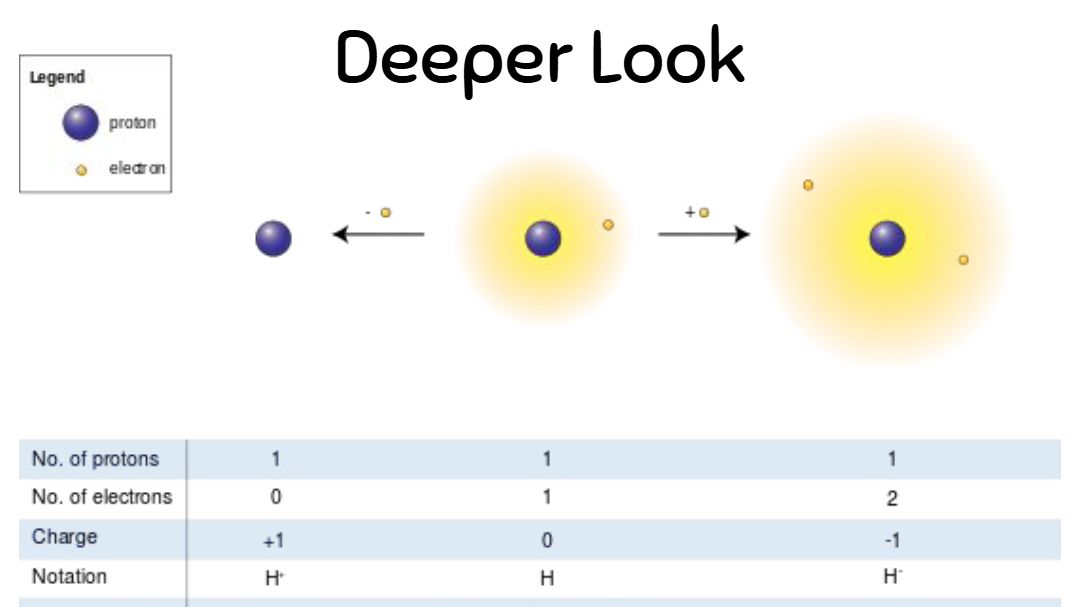
Which of the following statements about hydrogen ions is correct?

1

A hydrogen ion with no electrons has a charge of +1.

2

A hydrogen ion with two electrons has a charge of +1.

3

A hydrogen ion with one electron has a charge of +1.

4

A hydrogen ion with no electrons has a charge of -1.

23

media

24

Hotspot

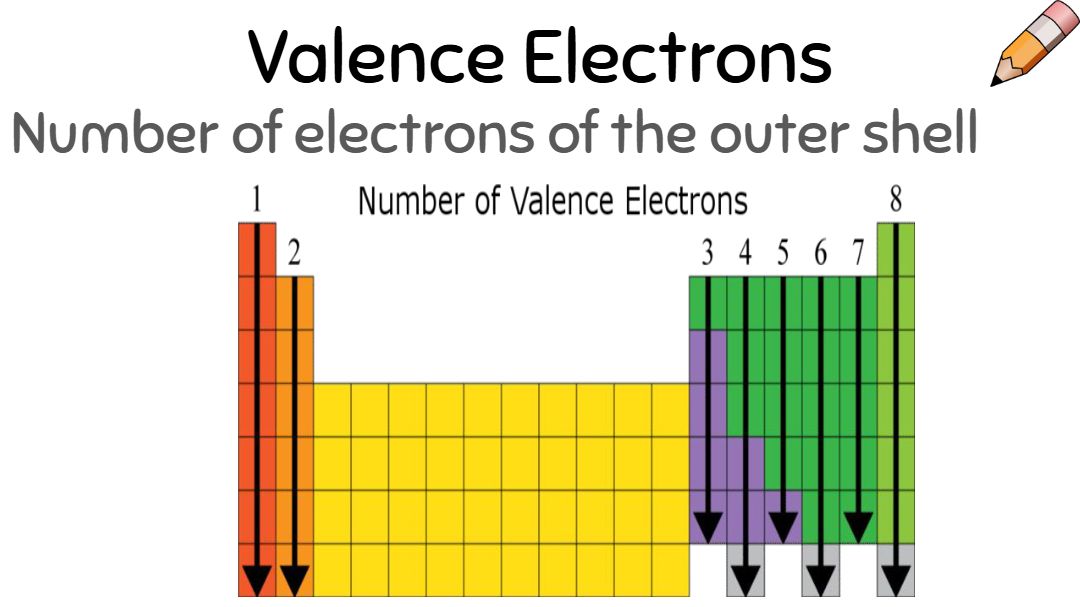
SELECT ALL groups that will lose electrons when becoming an ion:

25

Hotspot

SELECT ALL groups that will gain electrons when becoming an ion:

26

Multiple Choice

Which groups in the periodic table have elements with 1, 2, and 8 valence electrons, respectively?

1

Group 1, Group 2, Group 18

2

Group 2, Group 3, Group 17

3

Group 1, Group 17, Group 18

4

Group 2, Group 16, Group 18

27

media

28

Multiple Choice

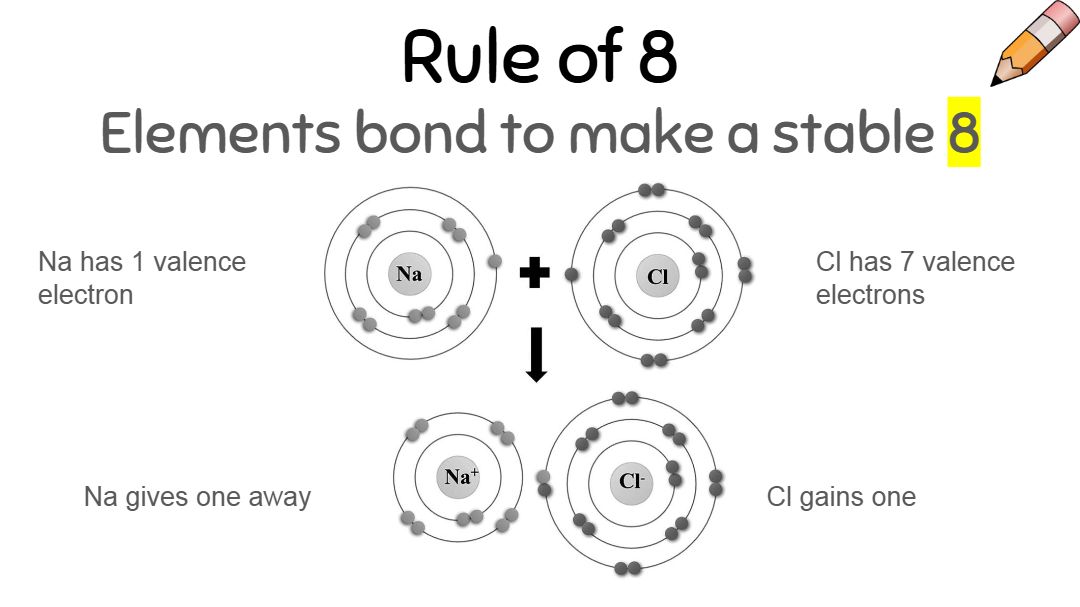
According to the rule of 8, what happens to sodium and chlorine atoms when they bond to form NaCl?

1

Sodium gains an electron, chlorine loses one

2

Sodium loses an electron, chlorine gains one

3

Both sodium and chlorine gain electrons

4

Both sodium and chlorine lose electrons

29

media

30

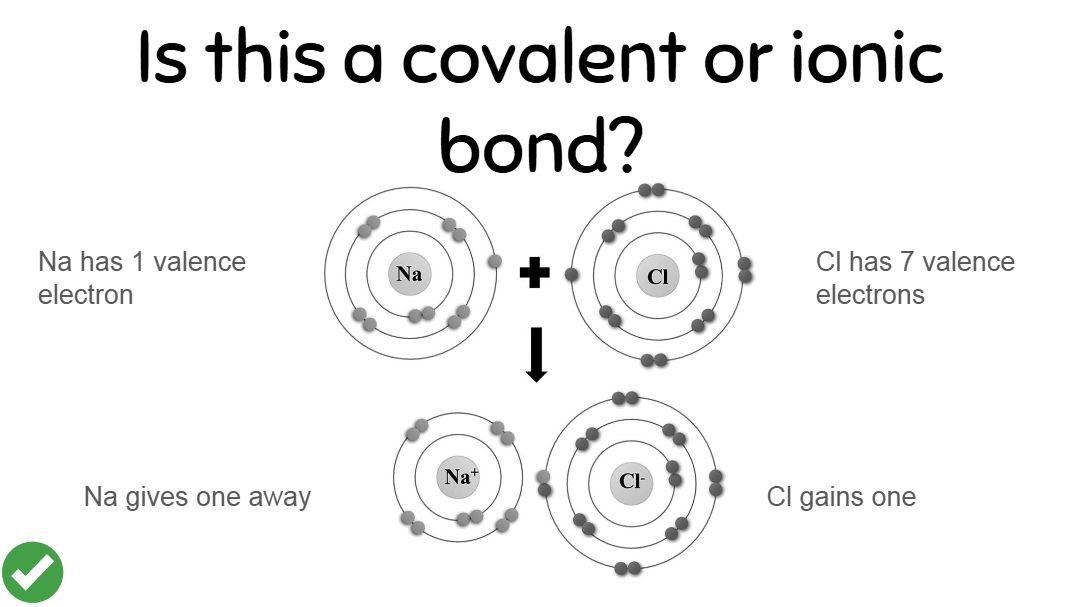
Multiple Choice

Is this a covalent or ionic bond?

1

Covalent

2

Ionic

3

Metallic

4

Hydrogen

31

media

32

Multiple Choice

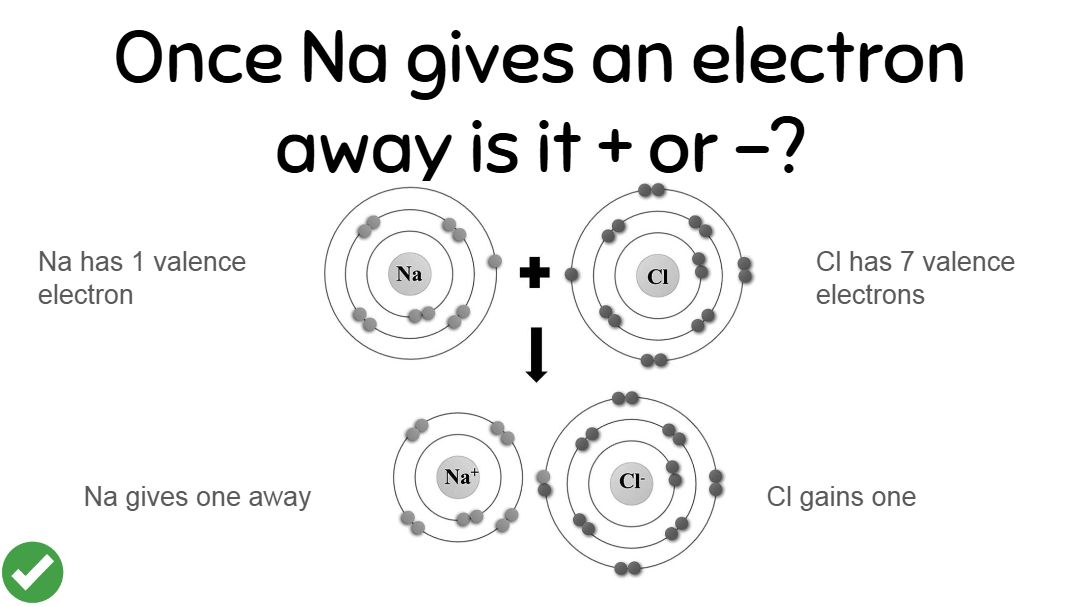
Once Na gives an electron away is it + or -?

1

+

2

-

3

neutral

4

it depends

33

media

34

Multiple Choice

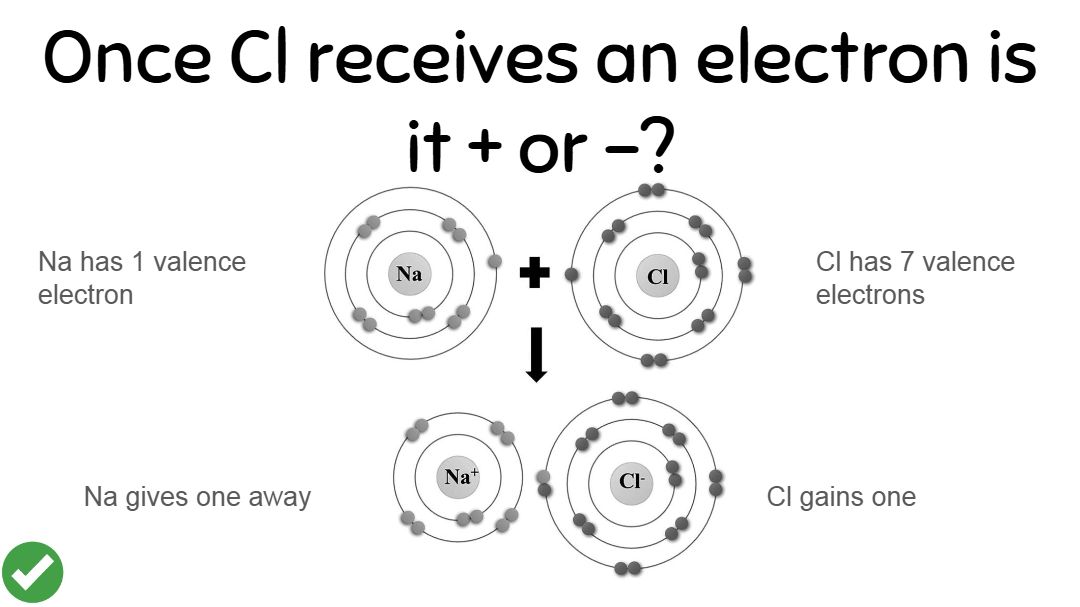
Once Cl receives an electron is it + or -?

1

+

2

-

3

neutral

4

it depends

35

media

36

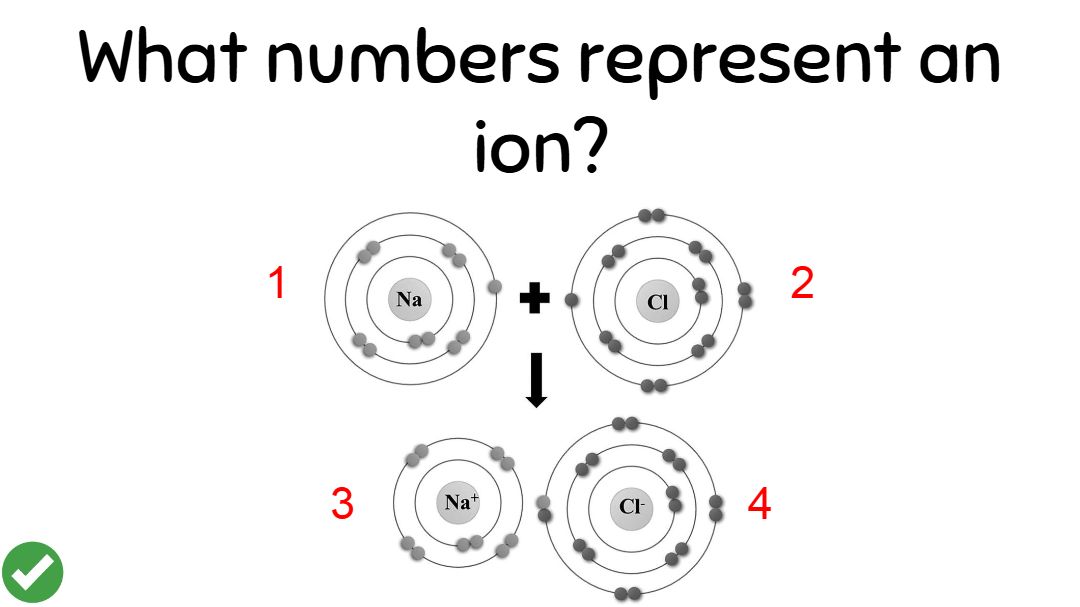
Multiple Choice

What numbers represent an ion?

1

1 and 2

2

3 and 4

3

1 and 3

4

2 and 4

37

media

38

Fill in the Blank

39

media

40

Open Ended

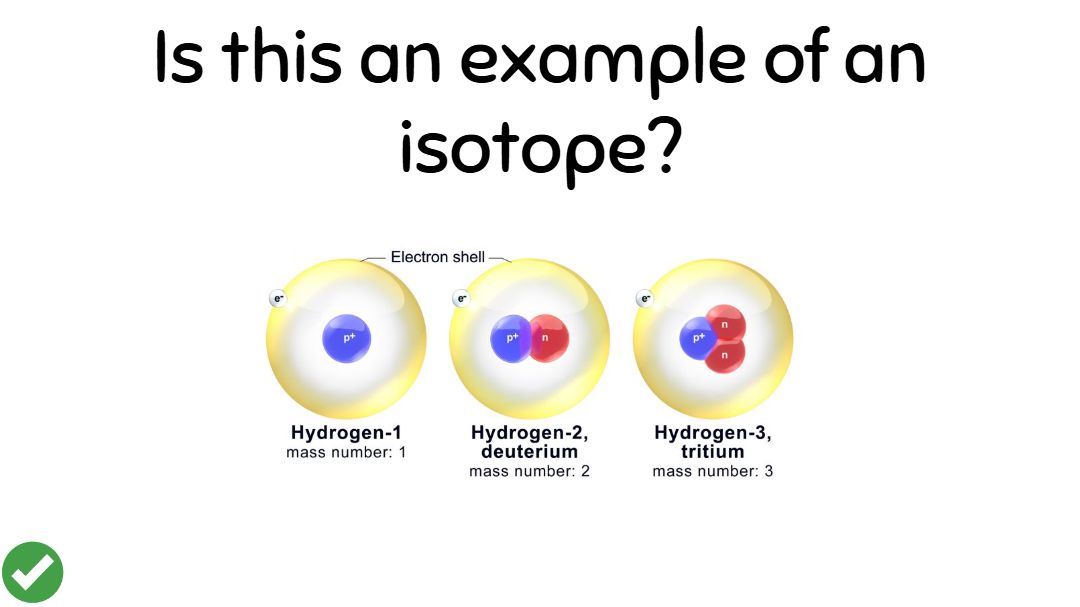
Explain why hydrogen can have more than one isotope, using the diagram as a reference.

41

media

42

media

43

Multiple Choice

How does the arrangement of protons, neutrons, and electrons in an atom influence the properties of substances and compounds?

1

It determines the color of the atom

2

It influences how atoms combine to form substances and compounds

3

It has no effect on the properties of substances

4

It only affects the mass of the atom

44

Open Ended

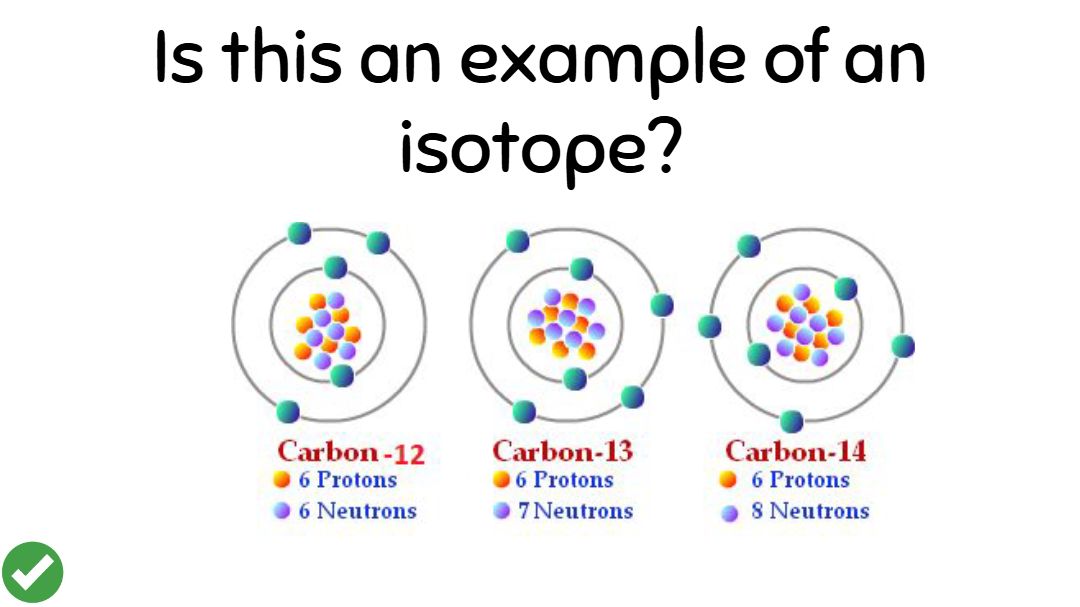
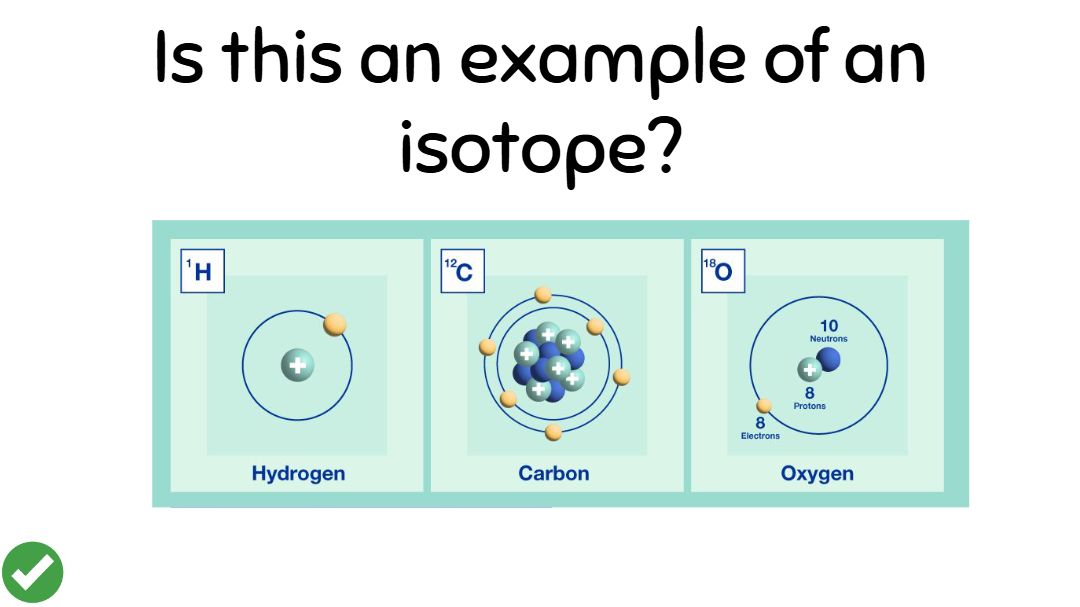
Is this an example of an isotope?

media

Show answer

Auto Play

Slide 1 / 44

SLIDE