Search Header Logo
  1. Resource Library
  2. Science
  3. Chemistry
  4. Chemical Bonding
  5. Physical Science 4 1: Electrons & Chemical Bonding
Physical Science 4-1: Electrons & Chemical Bonding

Physical Science 4-1: Electrons & Chemical Bonding

Assessment

Presentation

•

Science

•

9th - 12th Grade

•

Easy

•
NGSS
HS-PS1-1, MS-PS1-1, HS-PS1-3

+1

Standards-aligned

Created by

Abby Fancsali

Used 2+ times

FREE Resource

13 Slides • 19 Questions

1

​Electrons & Chemical Bonding

media

2

Multiple Choice

Question image
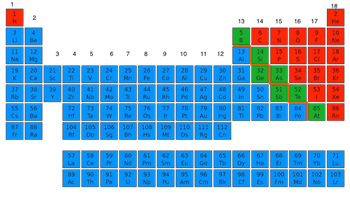
Where are the nonmetals located on the periodic table? 
1

Left side

2

Right Side

3

Center

4

They are scattered throughout the table

3

Drag and Drop

A row on the Periodic Table of Elements is called a

, while a column is called a ​
Drag these tiles and drop them in the correct blank above
period

row

isotope

group

4

Multiple Choice

What is the name of group 1 on the Periodic Table?

1

halogens

2

noble gases

3

alkali metals

4

alkaline earth metals

5

Multiple Choice

What group number are the halogens found?

1

18

2

1

3

2

4

17

6

Lesson Objectives

  • Describe what Chemical Bonding is

  • Identify what Valence Electrons are

  • Explain the role of valence electrons in Bonding

  • Draw an electron dot diagram

media

7

  • All Matter is made up of either individual atoms or molecules and compounds

    • Molecules and Compounds are held together by bonds

  • Chemical Bonding: The Joining of atoms to form a new stable substance

  • Chemical Bond: An interaction that holds atoms or ions together

    • Can act between different elements or the same type of element

  • All chemical bonds form when electrons in an atom interact

​What is a Chemical Bond?

8

  • Recall: Electrons in atoms arrange themselves in energy levels that can hold a certain number of electrons

    • Closest to the nucleus = 2 electrons

    • Every other level = 8 electrons

  • We split electrons into two main groups

    • Valence Electrons: The electrons on the outermost level of an atom

    • Core Electrons: The electrons on the inner and middle levels of an atom

  • Atoms are most stable when they have 8 valence electrons

    • Will react with other atoms to try and make it to 8

  • The types of bonds an atom forms depend on the number of valence electrons it has.

Electrons in Atoms

9

Multiple Choice

The interaction between atoms or ions that holds them together is a....

1

Mixture

2

Compound

3

Chemical Bond

4

Formula

10

Multiple Choice

Why do elements bond?
1
To be friends
2
To create a new element
3
To become stable
4

To be bigger

11

Multiple Choice

Atoms are most stable when their outer shell is complete.
1
true
2
false

12

Fill in the Blank

What is the maximum number of electrons that can be in an energy level other than the one closest to the nucleus?

13

  • Recall: The atomic number tells you how many protons are in an element

    • All elements are neutral, so they have to have the same number of electrons

  • When you draw a diagram of the atom, the electrons on the final ring are the valence electrons

Determining the Number of Valence Electrons

media

14

  • The group number of an element on the periodic table can be used to find the number of valence electrons it has

    • Elements in the same group have the same number of valence electrons

  • Group 1= 1 valence electron

  • Group 2= 2 Valence electrons

  • Groups 13-18= Group # -10

    • Exception: Helium only has two valence electrons

Using the Periodic Table to Find Valence Electrons

15

  • The closer an atom is to having 8 valence electrons in its outermost shell, the more likely it is to bond

    • Can get to 8 either by gaining or losing electrons

  • The Noble Gases already have 8 valence electrons, so they do not form bonds at all

Why Do Atoms Bond?

16

Multiple Choice

What is a valence electron?
1

An electron that is found in the outermost shell of an atom. 

2

An electron that is found in the innermost shell of an atom.

3

An electron that is found in the middle shell.

4

An electron that is found in the nucleus of the atom

17

Multiple Choice

Question image

This is a Bohr Diagram of Aluminum. How many valence electrons does Aluminum have?

1

3

2

4

3

5

4

8

18

Multiple Choice

Using your Periodic Table, How many valence electrons does Lithium (Li) have?

1

8

2

1

3

5

4

2

19

Multiple Choice

How many valence electrons does Tin (Sn) have?

1

8

2

7

3

5

4

4

20

Lewis Dot Structures

  • Sometimes we just want to diagram out the valence electrons in an atom

    • They are the most important in reactions

  • In order to do this, we draw Lewis Dot Structures

    • Show the element Symbol with the number of Valence Electrons

media

21

Electron Dot Diagrams Practice Problem 1

  • Draw the Lewis Dot Structure for the element Sodium

    • Step 1: Identify the number of Valence electrons

      • Sodium is in Group 1, so it has 1 Valence Electron

    • Step 2: Draw the Element Symbol

    • Step 3: Place the Valence electrons around the Symbol

      • Start at the top and add one to each side before doubling up

22

Electron Dot Diagrams Practice Problem 2

  • Draw the Lewis Dot Structure for the element Fluorine

    • Step 1: Identify the number of Valence electrons

      • For Groups 13-18: Valence electrons = Group # - 10

23

Fill in the Blank

Question image

How many Valence electrons does Fluorine have?

24

Electron Dot Diagrams Practice Problem 2

  • Draw the Lewis Dot Structure for the element Flourine

    • Step 1: Identify the number of Valence electrons

      • Sodium is in Group 17

        • Valence electrons = Group # - 10

    • Step 2: Draw the element Symbol

    • Step 3: Place the Valence electrons around the Symbol

      • Start at the top and add one to each side before doubling up

25

Electron Dot Diagrams Practice Problem 3

  • Draw the Lewis Dot Structure for the element magnesium

    • Step 1: Identify the number of Valence electrons

26

Fill in the Blank

Question image

How many Valence electrons does Magnesium have?

27

Electron Dot Diagrams Practice Problem 3

  • Draw the Lewis Dot Structure for the element magnesium

    • Step 1: Identify the number of Valence electrons

      • Magnesium is in group 2, so it has two valence electrons

    • Step 2: Draw the element Symbol

    • Step 3: Place the Valence electrons around the Symbol

      • Start at the top and add one to each side before doubling up

28

Multiple Choice

What determines the number of valence electrons an element it has.

1

period/row

2

group/column

3

Atomic Number

4

Atomic Mass

29

Multiple Choice

Question image

This is a correct dot diagram for nitrogen (N)

1

true

2

false

30

Multiple Choice

Question image

This is a correct dot diagram for neon (Ne)

1

true

2

false

31

Multiple Choice

Question image

Which Element could this be the dot diagram of

1
P
2
Ar
3
Na
4
B

32

Multiple Choice

What is the number of valence electrons needed for atoms to be stable?

1

1

2

2

3

8

4

18

​Electrons & Chemical Bonding

media

Show answer

Auto Play

Slide 1 / 32

SLIDE