

Joints

Presentation
•
Science
•
9th - 12th Grade
•
Easy

Barbara White
Used 1+ times
FREE Resource
19 Slides • 13 Questions
1

Joints
High School
2
Learning Objectives
Define a joint and explain its primary functions in the skeletal system.
Classify joints based on their movement and structural makeup.
Describe the features and types of fibrous, cartilaginous, and synovial joints.
Identify common joint inflammations and different types of arthritis.


3
Key Vocabulary
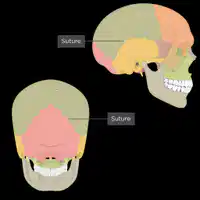
Synarthroses
Immovable, fixed joints that provide stability and protection, like the sutures found in the skull.
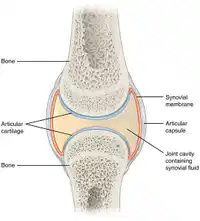
Diarthroses
Freely moveable joints, also known as synovial joints, which allow for a wide range of motion.
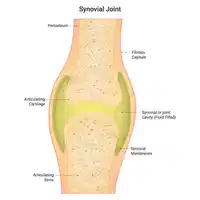
Synovial Joint
The most common and movable type of joint, featuring a fluid-filled cavity between articulating bones.
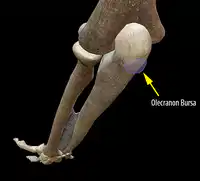
Bursae
Fibrous sacs lined with synovial membrane and filled with fluid to reduce friction between tissues.
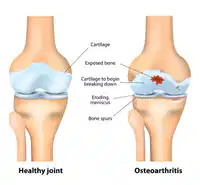
Arthritis
A group of over 100 diseases that cause damage and pain to the body's joints.
4
Introduction to Joints
What Are Joints?
Joints, also called articulations, are the crucial points in the body where two or more bones meet.
Their main roles are to hold the skeleton together and to provide the body with much-needed mobility.
Joints also make bone growth possible and allow for skeletal shape changes during a person's childhood.

Classifying Joints
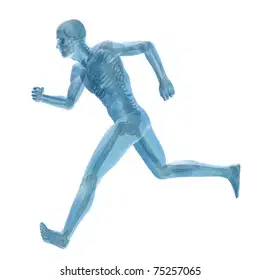
Joints are classified functionally based on the degree of movement that they allow between the articulating bones.
They are also classified structurally based on the type of connective tissue that binds the bones together.
This dual classification system helps us understand both a joint's structure and its potential range of motion.
5
Multiple Choice
What are the two primary ways that joints are classified?
By the types of bones they connect and their age
By their location and function
By their size and shape
By the amount of movement they allow and the tissue that binds them
6
Functional Classification of Joints
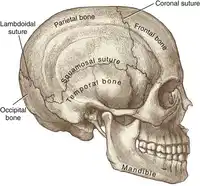
Synarthroses
These are immovable joints offering strong connections between bones.
They provide excellent protection for the body's vital organs.
An example is the suture joints found in the skull.
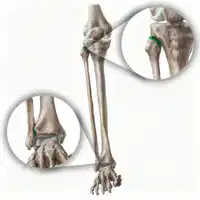
Amphiarthroses
These joints are slightly moveable, providing limited mobility.
They offer a balance of stability and some movement.
An example is the joint between the tibia and fibula.
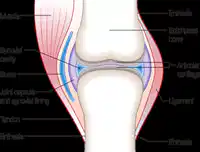
Diarthroses
These are freely moveable and are the most common joints.
They include all synovial joints, which are highly flexible.
These joints allow for a very wide range of motion.
7
Multiple Choice
Which functional classification describes a freely moveable joint, such as the shoulder or knee?
Synarthroses
Diarthroses
Amphiarthroses
Gomphosis
8
Types of Fibrous Joints
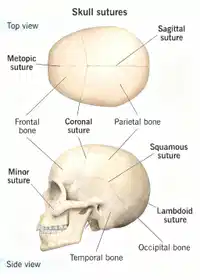
Sutures
These are immovable joints found between the flat bones of the skull.
The edges of the bones interlock for a very tight, secure connection.
They provide strength and protection for the brain within the skull.
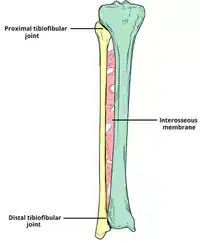
Syndesmosis
In this type, bones are connected by a sheet of fibrous tissue.
This joint allows for slight movement and is described as amphiarthrotic.
An example is the joint found between the tibia and the fibula.
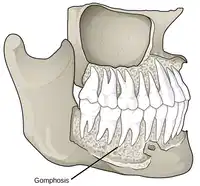
Gomphosis
This is a specialized 'peg-in-socket' joint found only in the jaw.
It securely anchors the root of a tooth into its bony socket.
Like sutures, this type of joint is completely immovable or synarthrotic.
9
Multiple Choice
A tooth held in its socket in the jaw is an example of which type of fibrous joint?
Suture
Syndesmosis
Condyloid
Gomphosis
10
Cartilaginous Joints
Bones are connected by either hyaline cartilage or fibrocartilage.
These joints are immovable or allow for slight movement.
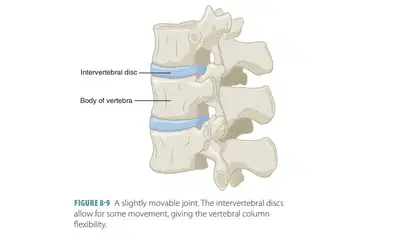
Intervertebral discs in the spine act as shock absorbers.
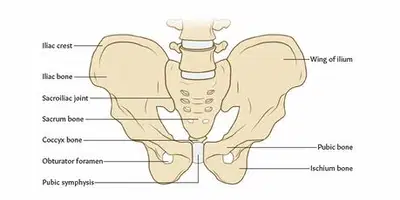
The pubic symphysis connects the hip bones with fibrocartilage.
11
Solved Example 1
A person's spine compresses by 6.5 mm under a 850 N load. If the spine has 23 intervertebral discs, what is the average compression per disc in micrometers?
Step 1: Analyze and Sketch the Problem
Goal: Calculate the average compression for a single intervertebral disc.
Knowns: Total compression = 6.5 mm; Number of discs = 23.
Unknown: Average compression per disc.
Formula: Average Compression = Total Compression / Number of Discs.
12
Solved Example 1
A person's spine compresses by 6.5 mm under a 850 N load. If the spine has 23 intervertebral discs, what is the average compression per disc in micrometers?
Step 2: Solve for the Unknown
13
Solved Example 1
A person's spine compresses by 6.5 mm under a 850 N load. If the spine has 23 intervertebral discs, what is the average compression per disc in micrometers?
Step 3: Evaluate the Answer
14
Multiple Choice
What type of tissue connects bones in a cartilaginous joint?
Adipose tissue
Dense connective tissue
Synovial fluid
Hyaline cartilage or fibrocartilage
15
Synovial Joints: Built for Movement
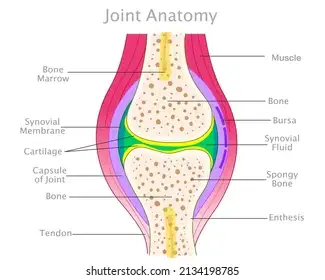
These are the most common and freely movable joints in the body.
Bone ends are covered by smooth articular cartilage within a fibrous capsule.
A synovial membrane secretes fluid to lubricate the joint and reduce friction.
Ligaments provide stability, while bursae and tendon sheaths give cushioning.

16
Multiple Choice
What is the primary function of synovial fluid in a synovial joint?
To provide oxygen to the muscles
To reduce friction between the articular cartilages
To produce new bone cells
To connect the bones together
17
Types of Synovial Joints
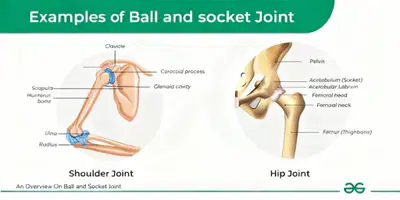
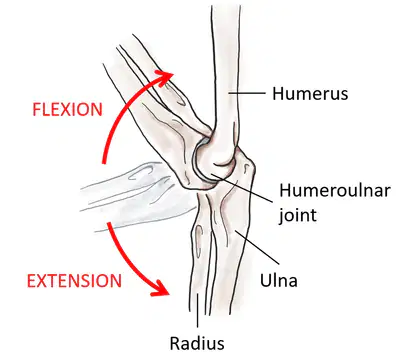
Synovial joints are grouped into six types based on their articulating surfaces.
Ball-and-socket (shoulder) offers wide motion; hinge joints (knee) move in one plane.
Plane joints (ankle) permit gliding; the thumb's saddle joint moves back and forth.
Pivot joints (C1/C2 vertebrae) allow rotation; condyloid joints (wrist) move in two planes.
18
Multiple Choice
The joint in the neck that allows the head to turn is an example of which type of synovial joint?
Hinge joint
Saddle joint
Pivot joint
Ball-and-socket joint
19
Joint Inflammatory Conditions
Bursitis
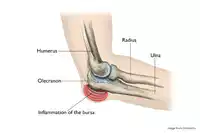
This is an inflammation of the bursa, a fluid-filled sac.
Bursae act as cushions for the joints to reduce friction.
It is often caused by a direct blow or repetitive motion.
Tendonitis
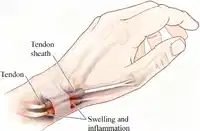
This is the inflammation of specialized bursae called tendon sheaths.
Tendon sheaths wrap around tendons to protect them from friction.
It is commonly caused by overuse, injury, or repetitive movements.
Arthritis
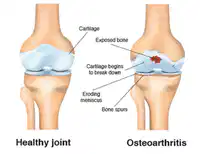
A term for over 100 diseases that damage the joints.
This condition directly affects the joint structure, causing inflammation.
Symptoms include pain, stiffness, and swelling of the joints.
20
Solved Example 2
A person's joint rotates 90 degrees in 0.5 seconds. What is the angular velocity of the joint in degrees per second?
Step 1: Analyze and Sketch the Problem
Goal: Calculate the angular velocity of the joint.
Knowns: angle of rotation = 90 degrees; time = 0.5 seconds.
Unknown: angular velocity = ?
Formula: angular velocity = angle of rotation / time
21
Solved Example 2
A person's joint rotates 90 degrees in 0.5 seconds. What is the angular velocity of the joint in degrees per second?
Step 2: Solve for the Unknown
The formula to find the angular velocity is: angular velocity = angle / time.
Substituting the values: angular velocity = 90 degrees / 0.5 s = 180 degrees/s
22
Solved Example 2
A person's joint rotates 90 degrees in 0.5 seconds. What is the angular velocity of the joint in degrees per second?
Step 3: Evaluate the Answer
Check: 180 degrees/s × 0.5 s = 90 degrees.
The answer is correct and the unit is appropriate.
23
Multiple Choice
What is the key difference between bursitis and tendonitis?
Bursitis affects the bone, while tendonitis affects the cartilage.
Bursitis is caused by aging, while tendonitis is an autoimmune disease.
Bursitis is a type of arthritis, while tendonitis is not.
Bursitis is inflammation of a bursa, while tendonitis is inflammation of a tendon sheath.
24
Clinical Forms of Arthritis
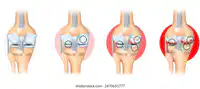
Osteoarthritis
This form is commonly called 'wear-and-tear' arthritis.
It is directly related to the normal process of aging.
It involves the slow breakdown of joint cartilage over time.
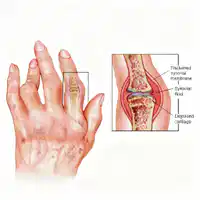
Rheumatoid Arthritis
This is an autoimmune disease where the body attacks its joints.
The immune system attacks and inflames the synovial joint membrane.
This condition can lead to severe and painful joint deformities.

Gouty Arthritis (Gout)
This form is caused by the buildup of sharp urate crystals.
High uric acid levels in the blood lead to crystal formation.
These crystals cause intense joint pain, swelling, and severe inflammation.
25
Multiple Choice
Which form of arthritis is an autoimmune disease where the body's immune system attacks the joints?
Bursitis
Osteoarthritis
Rheumatoid Arthritis
Gouty Arthritis
26
Common Misconceptions About Joints
Misconception | Correction |
|---|---|
All joints are movable. | Some joints, like skull sutures, are completely immovable. |
'Cracking' your knuckles causes arthritis. | The sound is from gas bubbles; there is no scientific link to arthritis. |
Arthritis only affects elderly people. | Rheumatoid arthritis can affect people of any age, including children. |
Exercise is bad for joints with arthritis. | Low-impact exercise strengthens muscles, improves flexibility, and reduces pain. |
27
Multiple Choice
How does the functional classification of a joint (e.g., diarthrosis) relate to its typical structural classification (e.g., synovial)?
Freely movable joints (diarthroses) are always structurally synovial joints because they require a fluid-filled cavity for movement.
Functionally immovable joints (synarthroses) are always structurally fibrous.
They are unrelated classifications.
Slightly movable joints (amphiarthroses) are always structurally cartilaginous.
28
Multiple Choice
What is the most likely immediate effect if the synovial membrane in a knee joint stopped producing synovial fluid?
Friction between the articular cartilages would increase, causing pain and restricting movement.
The bones would immediately fuse together.
The ligaments reinforcing the joint would break.
The joint would become inflamed due to an autoimmune attack.
29
Multiple Choice
A patient complains of severe joint pain. Lab tests show high levels of uric acid in their blood. What is the most probable diagnosis and underlying cause?
Osteoarthritis, caused by normal wear and tear on the joint cartilage.
Rheumatoid arthritis, caused by the immune system attacking the joint.
Bursitis, caused by inflammation of the fluid-filled sacs that cushion the joint.
Gouty arthritis, caused by the accumulation and deposition of urate crystals in the joint.
30
Multiple Choice
Based on their structural types, why does the shoulder (a ball-and-socket joint) have a greater range of motion than the elbow (a hinge joint)?
The ball-and-socket structure allows for movement in multiple planes, while the hinge structure primarily allows for movement in a single plane.
The elbow has more ligaments, which restricts its movement.
The elbow is a weight-bearing joint, which naturally limits its range of motion compared to the non-weight-bearing shoulder.
The shoulder contains more synovial fluid, making it more mobile.
31
Summary
Joints connect bones, provide stability, and are classified by structure and function.
Fibrous joints are immovable, cartilaginous are slightly movable, and synovial are freely movable.
There are six types of synovial joints that allow for different movements.
Common joint ailments include inflammatory conditions like arthritis and bursitis.
32
Poll
On a scale of 1-4, how confident are you with classifying joints and identifying their key features?
1
2
3
4
Joints
High School
Show answer
Auto Play
Slide 1 / 32
SLIDE
Similar Resources on Wayground

26 questions
Cell Cycle Regulation
Presentation
•
9th - 12th Grade
25 questions
Physical and Chemical Changes Review
Presentation
•
8th Grade
26 questions
Introduction to Matter
Presentation
•
9th - 12th Grade
23 questions
3.3 Fluids
Presentation
•
9th - 12th Grade
23 questions
Forensics: Observation pt 2
Presentation
•
9th - 12th Grade
28 questions
Evidence of Evolution
Presentation
•
9th - 12th Grade
24 questions
Earth's Resources
Presentation
•
9th - 11th Grade
24 questions
Food Label questions
Presentation
•
9th - 12th Grade
Popular Resources on Wayground
16 questions
Grade 3 Simulation Assessment 2

Quiz
•
3rd Grade
19 questions
HCS Grade 5 Simulation Assessment_1 2526sy
Quiz
•
5th Grade
10 questions
Cinco de Mayo Trivia Questions

Interactive video
•
3rd - 5th Grade
17 questions
HCS Grade 4 Simulation Assessment_2 2526sy
Quiz
•
4th Grade
24 questions
HCS Grade 5 Simulation Assessment_2 2526sy
Quiz
•
5th Grade
13 questions
Cinco de mayo
Interactive video
•
6th - 8th Grade
20 questions
Math Review
Quiz
•
3rd Grade
30 questions
GVMS House Trivia 2026
Quiz
•
6th - 8th Grade
Discover more resources for Science
100 questions
Biology EOC Review
Quiz
•
9th - 12th Grade
38 questions
Biology EOC Review Game
Quiz
•
10th Grade
25 questions
Biology EOC review Quiz
Quiz
•
9th - 12th Grade
20 questions
Human Impact on the Environment Review #2
Quiz
•
9th Grade
20 questions
Balancing Chemical Equations
Quiz
•
9th Grade
11 questions
EOC Domain 1: Cells
Presentation
•
9th - 10th Grade
14 questions
EOC Domain 2: Genetics
Presentation
•
9th - 10th Grade
10 questions
Exploring the Human Respiratory System
Interactive video
•
6th - 10th Grade