

8.ESS1.1-Earth's Place in the Universe

Presentation
•
Science
•
8th Grade
•
Easy
+25
Standards-aligned

Jessica Freeman
Used 1+ times
FREE Resource
40 Slides • 61 Questions
1

2

3

4

5
Multiple Choice

Extremely distant galaxies are moving away from us at ___
half the speed of light
almost the speed of light
the speed of light
speeds faster than light
6
Multiple Choice
What does the expansion of the universe refer to?
The movement of galaxies away from each other
The contraction of the universe over time
The oscillation of the universe between expansion and contraction
The rotation of galaxies within the universe
7

8

As the universe expanded, it also cooled down. Just like when you leave your hot cocoa to cool, things started to come together. Atoms formed, and those atoms gathered to create stars, galaxies, and all the incredible things.
Now, here's the cool part that scientists found: when they look at faraway galaxies, the light they see is a bit reddish which is a microwave background. This is called redshift, and it's like a cosmic clue that tells us the universe is still expanding!
What is REDSHIFT?
9


Shows us the way light is traveling.
REDSHIFT- traveling away
BLUESHIFT- traveling towards
Doppler Effect of Light
On a visible light spectra, absorption lines shifted towards the violet show a blue shift and absorption lines shifted towards the red show a redshift.
SPECTRA
10
Multiple Choice

The observed spectrum shows evidence of a shift in the light spectrum. What type of shift is being observed and what does it mean for the galaxies?
No shift because these are not the same galaxies.
Red-shift; this means that galaxies are moving towards us.
Blueshift; this means that galaxies are moving towards us.
Redshift; this means that galaxies are moving away from us.
11
Doppler Effect: Imagine An ambulance getting near you. What do you think it sounds like?
What if it gets farther away?
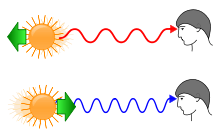
The frequency is higher when an object is getting nearer, but lower when it's getting farther away.


12
Open Ended

Challenging question. Which one is receiving more energy? (left or right?)
EXPLAIN your reasoning.
13

Blue - Blueshift- means more frequency which means more energy!
Red- Redshift- means less frequency and less energy!
THINK ALSO ABOUT FIRE: Which is hotter, blue or red fire?
Which color shows more energy?
14
Multiple Choice
A star is emitting red electromagnetic waves. What does this mean?
The star is getting closer to us
The star is getting farther away from us
The star is staying the same spot
The star is dying
15
Discuss with your partner. (3min)
What does redshift, microwaves, doppler effect, tells us about the universe and the big bang?

16
Approximately 14 billion years ago, the universe began from a point of singularity. There was no matter, no time, and no space. It was a single point that was infinitely hot and dense. It quickly expanded from a singular point to a large universe. As it expanded, it cooled and released electrons and particles, such as helium and hydrogen to form atoms. Atoms were pulled together by gravity to form matter, which makes up the celestial objects in the universe. This is how Earth and the Solar System were created. We have proof of the expansion because light is red-shifting. This is evidence that galaxies are moving away from each other and the universe is continuously expanding.

17
Multiple Choice
Which of the following is evidence of the Big Bang Theory?
Cavemen heard a loud bang at the beginning of time.
The universe isn't moving
The universe is expanding
The universe is getting smaller
18
Multiple Choice
As galaxies move away from our galaxy
a shift in the electromagnetic spectrum is noticed. This phenomena is
called _____________.
redshift
blueshift
19
Multiple Choice
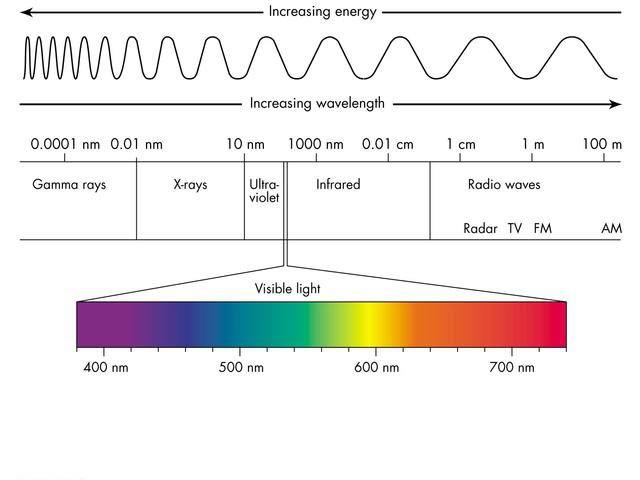
What is the correct order of the visible light spectrum starting with the longer wavelength?
Red, yellow, orange, blue, violet, indigo
Violet, indigo, blue, green, yellow, orange, red
Green, yellow, blue, indigo, red, orange
Red, orange, yellow, green, blue, indigo, violet
20

21
Multiple Choice

Is Galaxy A moving
Away
Towards
Stationary
22
Multiple Choice
True or False, the Universe is expanding?
True
False
23
Multiple Choice
What is the significance of observing a 'blue shift' in a galaxy's light spectrum?
It indicates the galaxy is moving away from us at high speed
It suggests the galaxy is moving towards us
It shows the galaxy is not moving but expanding
It implies the light from the galaxy is gaining energy
24
Multiple Choice
What is the relationship between redshift and the expansion of the universe?
Redshift has no relationship with the expansion of the universe, it is simply a result of the Doppler effect on light.
The relationship between redshift and the expansion of the universe is that as the universe expands, the light from distant galaxies gets stretched, causing their light to shift towards the red end of the spectrum, known as redshift.
The relationship between redshift and the expansion of the universe is that as the universe expands, the light from distant galaxies gets compressed, causing their light to shift towards the blue end of the spectrum, known as blueshift.
The expansion of the universe causes redshift in some galaxies, but not in others, so there is no direct relationship between the two.
25
Multiple Choice
What is a spectroscope used for?
A spectroscope is used for measuring the temperature of objects.
A spectroscope is used for capturing images of distant objects.
A spectroscope is used for detecting radio waves.
A spectroscope is used for analyzing the wavelengths of light.
26
Multiple Choice
How does a spectroscope work?
A spectroscope works by amplifying the intensity of light.
A spectroscope works by converting light into sound waves.
A spectroscope works by measuring the temperature of light.
A spectroscope works by separating light into its different wavelengths or colors.
27
Multiple Choice
What is the purpose of a prism in a spectroscope?
The purpose of a prism in a spectroscope is to disperse light.
The purpose of a prism in a spectroscope is to reflect light.
The purpose of a prism in a spectroscope is to amplify light.
The purpose of a prism in a spectroscope is to absorb light.
28
Multiple Choice
What is the difference between absorption and emission spectra?
Absorption spectra occur when atoms or molecules emit sound, while emission spectra occur when atoms or molecules emit light.
Absorption spectra occur when atoms or molecules do not interact with light, while emission spectra occur when atoms or molecules interact with light.
Absorption spectra occur when atoms or molecules absorb light, while emission spectra occur when atoms or molecules emit light.
Absorption spectra occur when atoms or molecules emit light, while emission spectra occur when atoms or molecules absorb light.
29
Multiple Choice
What is the significance of spectral lines in a spectrum?
Spectral lines in a spectrum are random variations in the intensity of light.
Spectral lines in a spectrum provide information about the composition and physical properties of the source.
Spectral lines in a spectrum are artifacts created by the measuring instrument.
Spectral lines in a spectrum are caused by interference from other sources.
30
Multiple Choice
What is the relationship between the color of a spectral line and the element that produces it?
The color of a spectral line is determined by the specific wavelength of light emitted or absorbed by the element.
The color of a spectral line is determined by the density of the element.
The color of a spectral line is determined by the size of the element.
The color of a spectral line is determined by the temperature of the element.
31

32
Multiple Choice
What is the main target of learning in the topic of Spectroscopy as mentioned in the slide?
To understand the spectrum of visible light
To explain the relation between emission and absorption lines and describe what we can learn from those lines
To study the intensity of light in spectroscopy
To analyze the different colors in the spectrum
33

34
Multiple Choice

What is a spectroscope?
A device that combines different frequencies of light into a single beam.
A device that amplifies light to see distant objects.
A device that detects the intensity of light.
A device that splits a beam of radiation into its component frequencies.
35

36

37
Multiple Choice
What are emission lines?
A full spectrum of light emitted by all atoms.
The colors visible in a rainbow.
Single frequencies emitted by specific atoms.
Patterns formed by the interference of light waves.
38
Shows us the way light is traveling.
REDSHIFT- traveling away
BLUESHIFT- traveling towards
Doppler Effect of Light
On a visible light spectra, absorption lines shifted towards the violet show a blue shift and absorption lines shifted towards the red show a redshift.
SPECTRA
39

Just as the visible light spectra shows how light travels, star spectra shows the composition of stars. Spectroscopes are devices that measure the spectrum of light. While helium and hydrogen are the most common elements found in stars, there are other elements that make up a star as well.
A shifted spectra shows which way the star is traveling.
This star is composed of the elements hydrogen and helium.
Star Spectra
40
Multiple Choice
A spectroscope is tool that is used to
see objects in far away galaxies
show how the stars are moving toward each other
show the composition of stars with spectral lines
see how stars go through different stages of life
41
Multiple Choice

Which elements are found in this star?
hydrogen, calcium, and magnesium
calcium, helium, and hydrogen
hydrogen, helium, and magnesium
magnesium, calcium, and helium
42
Multiple Choice

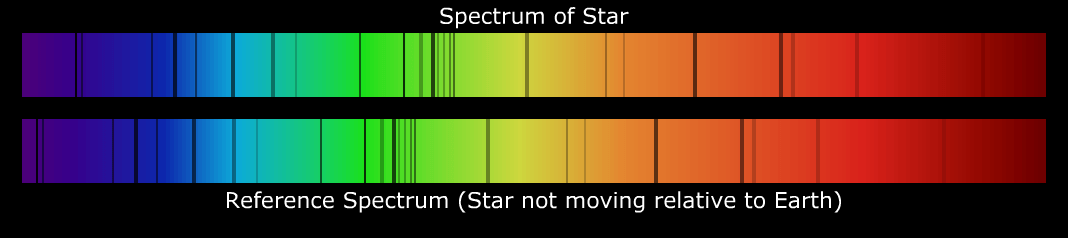
The top image is first. What does the change from the first image tell us?
There is no change from the first to the second image.
The second image has shifted more toward the blue wavelength.
The second image has shifted more toward the red wavelength.
43
Multiple Choice

Which elements are present in unknown star #272-B?
Helium, Hydrogen, Oxygen, Sulfur, Iron
Helium, Hydrogen, Sulfur, Iron, Gold
Helium, Hydrogen, Silver, Sulfur, Iron
Helium, Hydrogen, Oxygen, Silver, Iron
44
Multiple Choice

Which claim can you support based on the change from diagram 1 to 2?
Size of the galaxy is increasing.
The galaxy is moving toward Earth.
Temperature of the Sun is cooling.
The universe is expanding.
45
Multiple Choice
The observed spectrum shows evidence of a shift in the light spectrum. What type of shift is being observed and what does it mean for the galaxies?
No shift because these are not the same galaxies.
Red-shift; this means that galaxies are moving towards us.
Blueshift; this means that galaxies are moving towards us.
Redshift; this means that galaxies are moving away from us.
46
Multiple Choice

What happens during nuclear fusion?
Gravity fuses together hydrogen and helium atoms; light and heat is produced
Gravity fuses elements together to form celestial objects
A star explodes and releases particles into the universe.
A star burns fuel and dies out.
47
Multiple Choice
A spectroscope is tool that is used to
see objects in far away galaxies
show how the stars are moving toward each other
show the composition of stars with spectral lines
see how stars go through different stages of life
48
Multiple Choice
Which elements are found in this star?
hydrogen, calcium, and magnesium
calcium, helium, and hydrogen
hydrogen, helium, and magnesium
magnesium, calcium, and helium
49


Types of Telescopes (Light Funnel)
Reflecting Telescopes use curved
mirrors to collect light and direct them toward your eyes.
Refracting Telescopes use a lens to
collect light, which helps magnify the
image by focusing light waves to the
back of the telescope (toward your
eyes).
50


Types of Telescopes
Radio/Microwave Telescopes
X-Ray Telescope
IR/O/UV Telescope
51


Visible light can only help us see so much. Scientists have used other light wave telescopes to observe planets that visible light can’t transmit through in order to see their details.
52
Multiple Choice
Which of these types of light can't get through the Earth's atmosphere?
Gamma Rays
Visible Light
Microwaves
Radiowaves
53

Differentiating Light Waves
Scientists use a tool called a spectroscope that has a diffraction gradient to split apart the individual light waves and measure the wavelengths of light within the light.
Spectroscopes can be attached to telescopes/satellites in order to make observations of far away objects.
54

Different materials emit different spectrums of light, which we can compare to things off world. If an emission spectrum of an unknown substance matches a known substance, we can figure out what the unknown material is.
55


Applying spectra to the Doppler Effect
56

57

58

59
Multiple Choice
If a star is being observed from Earth and it's light has shifted towards the blue side of the electromagnetic spectrum it would be...
Moving towards the Earth
Moving away from the Earth
This is a trick question that cannot be answered
It isn't a star, it is a very large blueberry.
60

61
Multiple Choice
Where do LIGHT waves move the fastest?
vacuum
gas
liquid
solid
62


63

64


65
Multiple Choice

Which person would see a shorter wavelength of light waves?
A
B
66
Multiple Choice
Which person would see a red color to the light waves?
A
B
67

68
Multiple Choice

These data tables show the distance of various galaxies from Earth in millions of light-years (Mly) at different times. Which table supports the theory of expansion in the formation of the universe?
A
B
C
D
69
Multiple Choice

This star contains sodium. The lines don't line up because...
The star is red-shifted and moving away.
The star is red-shifted and moving towards.
The star is blue-shifted and moving away.
The star is blue-shifted and moving towards.
70
Multiple Choice
71
Multiple Choice
72
Multiple Choice

The picture below represents the line spectrum of hydrogen
Which of the following represents the spectrum of Hydrogen from a source moving away rapidly?
A
B
C
D
73
Multiple Choice
What does the 'Doppler Effect' demonstrate in the context of astronomy?
The change in frequency of light as objects in space move closer or further away
The rotation speed of planets in our solar system
The temperature variations of stars
The gravitational pull between galaxies
74
Multiple Choice
How does the Doppler Effect explain the observed blue shift in some galaxies?
It indicates that these galaxies are moving away from us at high speeds
It suggests that these galaxies are moving towards us
It shows that these galaxies are not moving but expanding
It proves that the light from these galaxies is losing energy
75
The Big Bang Theory is not the only theory that tries to explain the creation of the universe. However, it the most popular current theory. Scientists have discovered that galaxies are traveling away from Earth. Scientists know this by studying the color of light that the galaxies give off. Light from each galaxy appears to be shifted toward the red end of the electromagnetic spectrum. This means they are traveling away from Earth. This supports the idea of a
great expansion from the Big Bang.

76
Multiple Choice
What does it mean if a galaxy gives off light which has been shifted toward the red end of the electromagnetic spectrum?
The galaxy is much older than Earth.
The galaxy is moving away from Earth.
The galaxy is very hot and has not cooled down yet.
The remnants of an explosion are between the galaxy and Earth.
77
Multiple Choice
True or False:
The Big Bang Theory is the ONLY explanation for the origin of the universe.
True.
False.
78
Another piece of evidence that supports the Big Bang was found when scientists had
launched the Cosmic Background Explorer satellite. It precisely measured the temperature of the Cosmic Microwave Background radiation. Scientists had made temperature predictions based on starting with a hot Big Bang. The satellite found temperatures which matched with the predictions. Scientists believe this radiation is from the energy released during the first year of the Big Bang.

79
Scientists have estimated that the universe was formed over 13 billion years ago. In 1995,
scientists pointed the Hubble Space Telescope into an area of space that seemed empty.
The telescope collected light for 240 hours. The images that were sent back to Earth were
amazing. Many thousands of galaxies appeared in a space as small as a grain of sand.

If there are this many galaxies spread evenly through space, there could be over 50 billion galaxies in the universe. The farthest galaxies are over 13 billion light years away. This supports the Big Bang Theory by telling scientists how old our universe is.
80
Multiple Choice
The Big Bang Theory suggests that our universe originated hot long ago?
10 - 20 billion years ago
10 - 20 million years ago
10 - 20 thousand years ago
10 - 20 centuries ago
81

The universe’s creation is still a mystery to scientists. The Big Bang is just one theory that tries to explain the origins of the universe. Exactly how big is the universe? Where is it expanding to? These questions continue to fascinate scientists and non-scientists alike.
STEMSCOPES - 2013 Rice University.
82
Multiple Choice
As part of The Big Bang Theory of the formation of the Universe, scientists believe that over time, the universe is continually changing in what characteristic?
From more dense to less dense.
From rotating to stationary.
From cooler to hotter.
From very large to very small.
83
Multiple Choice
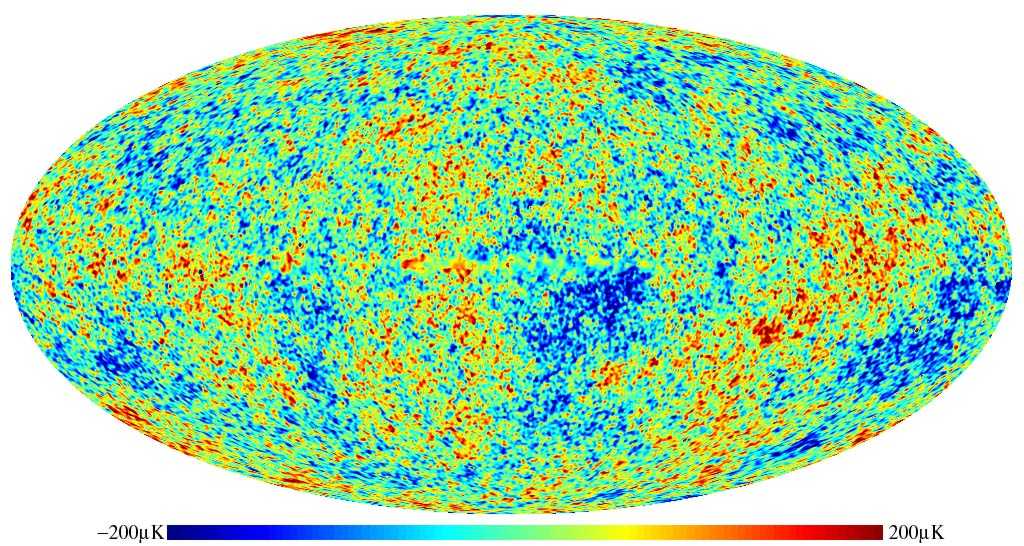
Cosmic Microwave Background Radiation (CMBR) is the term used to describe the residual microwave radiation observed everywhere in the universe that seems to have no single source. The observation of CMBR is used as evidence of The Big Bang Theory because it is believed to be -
The result of collisions between neighboring galaxies.
Particles of dust that have absorbed radioactivity.
Radiation left over from the rapid expansion of matter.
Light energy emitted from the source of The Big Bang.
84

85
Multiple Choice
Cosmic Microwave Background Radiation is a form of _________.
Matter
Energy
Visible Light
Water
86
Multiple Choice
The "afterglow" of the energy from the origin of the universe that we see today.
Cosmic microwave radiation
sunlight
Doppler effect
Cosmic explosions
87
Multiple Choice
What does CMB stands for?
Cell and Molecular Biology
Cosmic Microwave Background
Neither
Critical Mass Balance
88
Multiple Choice
89
Multiple Choice
90
Multiple Choice
91
Multiple Choice
92
Multiple Choice
How does Cosmic Microwave Background (CMB) Radiation support the Big Bang Theory?
CMB radiation is found everywhere in the universe.
CMB radiation occurred at the time of the Big Bang
CMB radiation are useful in our everyday lives
CMB radiation is found on only on the outer parts of the universe.
93
Multiple Choice
How is the "Big Bang" described?
an explosion
an expansion
a contraction
94
Multiple Choice
All the left over radiation left over from the big bang, is spread evenly throughout the universe
Cosmic Background Radiation
Universal Expansion
Radioactive Decay
Redshift/BlueShift
95
Multiple Choice
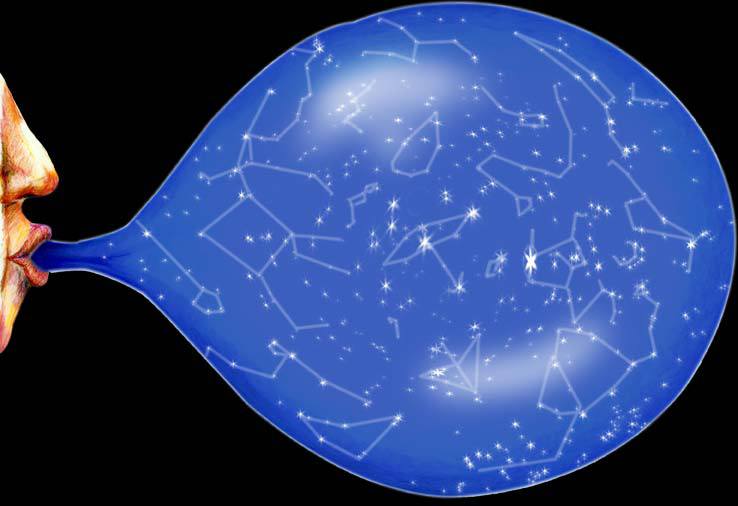
96
Multiple Choice
Which description is considered most accurate regarding what actually happened during the Big Bang?
Two galaxies collided causing an immense explosion as stars crashed into one another
All of what would become the universe was concentrated in a single small point, or singularity, which rapidly expanded into what is now stars, planets, galaxies, matter, and energy.
All matter emerged from a massive black hole at the center of the universe.
Parts of the sun were ripped off by massive internal explosions and were thrown into space where they cooled to become other things, like plants, comets, and other galaxies.
97

98

Big Bang
red shift
hydrogen Helium
Cosmic Background
Radiation (CBR)
99
Multiple Choice
What is one piece of evidence that supports the Big Bang theory?
Cosmic microwave background radiation
The existence of black holes
The phases of the Moon
The orbit of planets around the Sun
100
Open Ended
How do scientists know the universe began with a rapid expansion?
101

Show answer
Auto Play
Slide 1 / 101
SLIDE
Similar Resources on Wayground

93 questions
7.1.1-Substances & Mixtures
Presentation
•
6th - 8th Grade
96 questions
Introduction to Science, Animal cell and Plant cell
Presentation
•
7th Grade
98 questions
Training 2
Presentation
•
KG
90 questions
8.5(D) & 8.5(E) - Checkpoint 3 Review
Presentation
•
8th Grade
91 questions
Biology EOC Review
Presentation
•
9th Grade
92 questions
Math EOG
Presentation
•
8th Grade
95 questions
Illustrative Math Unit 4
Presentation
•
7th Grade
98 questions
US Preparation 1
Presentation
•
9th Grade
Popular Resources on Wayground
10 questions
Safety Day 2026 – Student Review

Quiz
•
9th Grade
21 questions
Continents and Oceans
Quiz
•
6th Grade
20 questions
Parts of Speech
Quiz
•
5th Grade
16 questions
Subject & Predicate
Quiz
•
5th Grade
25 questions
Multiplication Facts
Quiz
•
5th Grade
12 questions
Map Skills
Quiz
•
3rd Grade
22 questions
Continents and Oceans
Quiz
•
5th Grade
15 questions
Rounding Decimals
Quiz
•
5th Grade
Discover more resources for Science
20 questions
Newton's Laws of Motion
Quiz
•
8th Grade
15 questions
potential and kinetic energy
Quiz
•
8th Grade
21 questions
Newton's Laws of Motion
Quiz
•
8th Grade
20 questions
Elements, Compounds and Mixtures
Quiz
•
8th Grade
10 questions
Exploring Chemical and Physical Changes

Interactive video
•
6th - 10th Grade
20 questions
Physical vs Chemical Changes
Quiz
•
8th Grade
20 questions
Conduction, convection, and Radiation Practice
Quiz
•
8th Grade
21 questions
Waves and Wave Properties
Quiz
•
6th - 8th Grade