Search Header Logo
PS A Semester Test Review

PS A Semester Test Review

Assessment

Presentation

Science

9th - 12th Grade

Practice Problem

Medium

NGSS
MS-PS1-5, MS-PS1-2, MS-PS1-4

+9

Standards-aligned

Created by

Rebecca Cmelik

Used 1+ times

FREE Resource

11 Slides • 17 Questions

1

​Physical Science A
End-of-semester review

Text was AI-generated and edited by the teacher

2

Multiple Choice

Question image

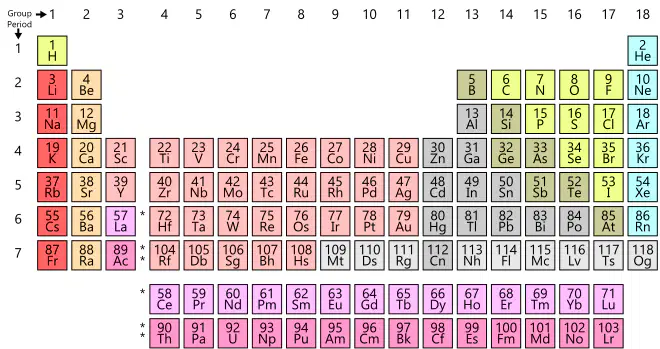
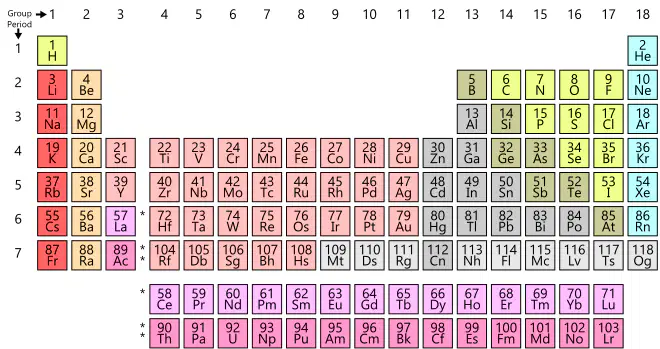
Two elements are in the same group (column) on the periodic table. These elements most likely have the same...

1

atomic mass

2

number of energy levels

3

number of valence electrons

4

state of matter at room temperature

3

Multiple Choice

Question image

Which element is most likely to react in a similar way as fluorine (F)?

1

sodium (Na)

2

aluminum (Al)

3

argon (Ar)

4

chlorine (Cl)

4

Parts of an atom

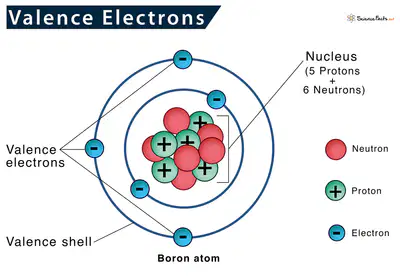
Positive protons and neutral neutrons in the nucleus (center of atom)

Negative electrons in energy levels outside nucleus

Valence electrons are in the outermost energy level

media

5

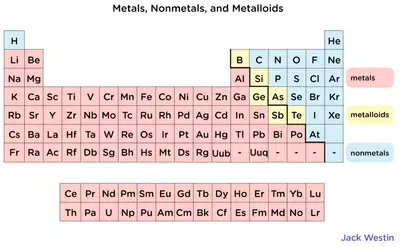
Periodic table patterns

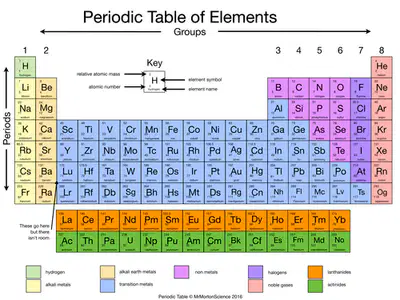
Elements are arranged by atomic number (number of protons)

Same group (column) = same number of valence electrons

Valence electrons help predict reactivity and properties

media

6

Multiple Choice

Question image

Which pair of elements is most likely to form an ionic compound?

1

nitrogen with nitrogen (N)

2

oxygen (O) and sulfur (S)

3

boron (B) with carbon (C)

4

lithium (Li) with chlorine (Cl)

7

Multiple Choice

Question image

How will carbon (C) react with oxygen (O)?

1

carbon will transfer valence electrons to oxygen

2

oxygen will transfer valence electrons to carbon

3

carbon and oxygen will share valence electrons

4

carbon and oxygen will form a sea of shared valence electrons

8

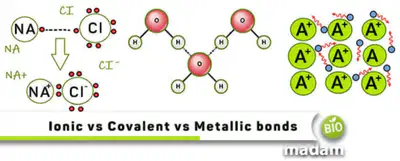
Why reactions happen

Atoms react to get full valence shells

In ionic bonds, metals transfer valence electrons to nonmetals

In covalent bonds, nonmetals share valence electrons

In metallic bonds, metals share a sea of valence electrons with each other

media
media

9

Multiple Choice

Question image

Which substance likely has the weakest electrical forces between particles?

1

diamond

2

salt

3

liquid water

4

oxygen gas

10

Multiple Choice

Question image

A substance is very hard and melts at a very high temperature.
What does this suggest about the forces between its particles?

1

They are weak

2

They are strong

3

They only exist at low temperatures

4

They are temporary

11

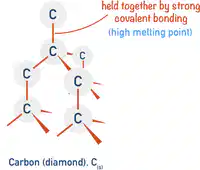
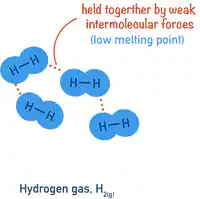
Structure → properties

Strong forces of attraction between particles lead to solids and high melting points. Examples include diamonds and table salt.

Weak forces of attraction between particles lead to gases and low melting points. Examples include carbon dioxide (dry ice) and oxygen gas.

media
media

12

Multiple Choice

Question image

A reaction feels cold to the touch. What does this indicate?

1

Energy was released by the reaction

2

Energy was absorbed by the reaction

3

No chemical bonds changed

4

Energy was destroyed

13

Drag and Drop

Question image
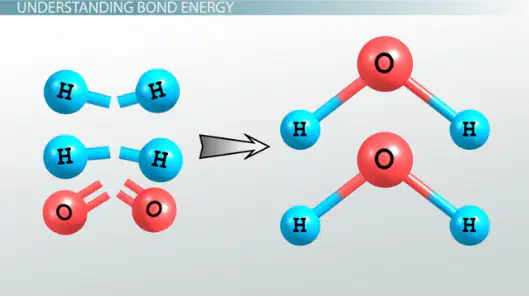
Breaking chemical bonds ​
energy and making new chemical bonds​
energy.
Drag these tiles and drop them in the correct blank above
releases
absorbs
creates
destroys

14

Energy in reactions

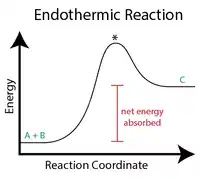
It requires energy to break chemical bonds.

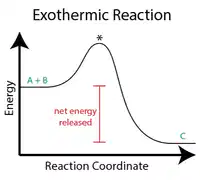
Making new chemical bonds releases energy.

Exothermic reaction = more energy released than absorbed

Endothermic reaction = more energy absorbed than released

media
media

15

Multiple Choice

Question image

Which of these would probably slow down a chemical reaction?

1

Increasing the temperature

2

Decreasing the size of solid particles

3

Decreasing the temperature

4

Increasing the concentration of a reactant

16

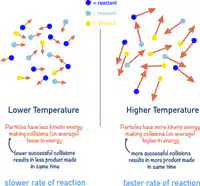
Reaction Rates

Temperature: Higher temperatures usually increase the rate of a reaction

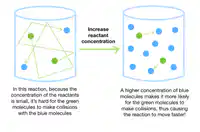
Concentration: Higher concentrations of a reactant usually increase the rate of a reaction

Surface area: Crushing solid reactants into smaller particles increases their surface area, which usually increases the rate of a reaction

media
media

17

Multiple Choice

Is this chemical equation balanced?

Na + Cl₂ → NaCl

1

Yes

2

No

18

Multiple Choice

Is this chemical equation balanced?

C + O₂ → CO₂

1

Yes

2

No

19

Chemical equations

Mass and atoms are not created or destroyed in chemical reactions.

Balanced equations show that the total number of each type of atom is the same before and after a reaction.

media

20

Multiple Choice

Question image

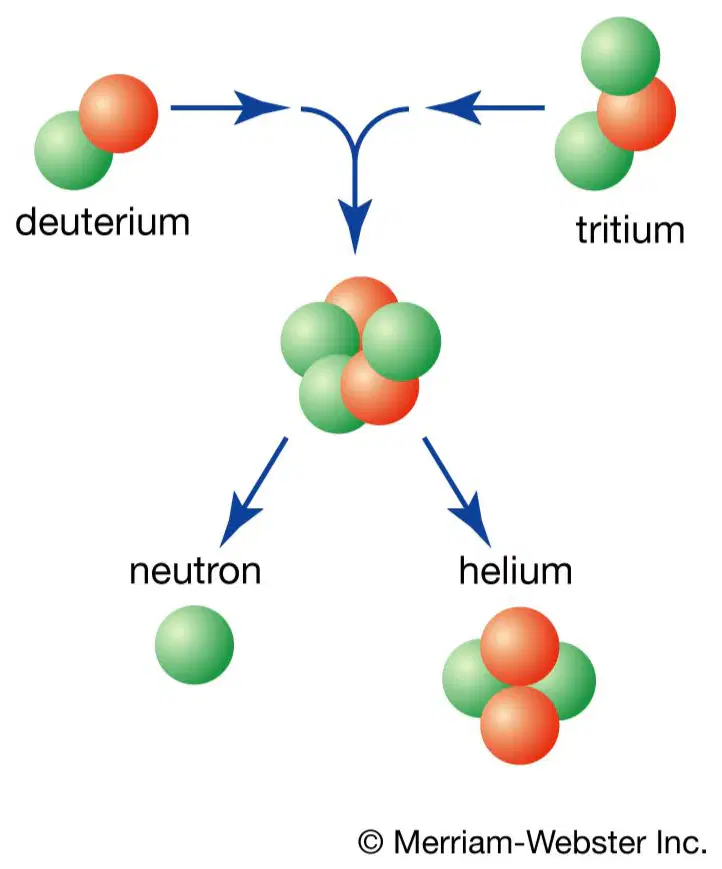
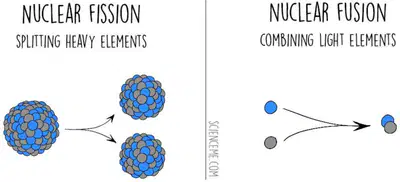
What type of reaction is happening in this picture?

(2 small atoms combining to form a larger atom)

1

nuclear fission

2

nuclear fusion

3

radioactive decay

4

chemical reaction

21

Multiple Choice

Question image

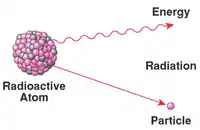
What type of reaction is happening in this picture?

(an atom releasing a particle)

1

nuclear fission

2

nuclear fusion

3

radioactive decay

4

chemical reaction

22

Nuclear reactions

Nuclear reactions involve changes to the nucleus of atoms. In nuclear reactions, tiny amounts of mass get converted into HUGE amounts of energy.

Fusion: Small atoms → larger atom + energy

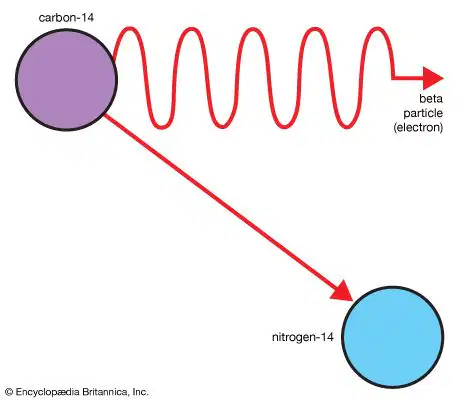
Fission: Large atom → smaller atoms + energy


Nuclear decay: Nucleus releases particles and/or energy

media
media

23

Multiple Choice

Question image

What forces are acting on TV sitting on a desk?

1

No forces because the TV isn't moving

2

Gravity is pulling down

3

Gravity is pulling down and the table is pushing up

24

Multiple Choice

Question image

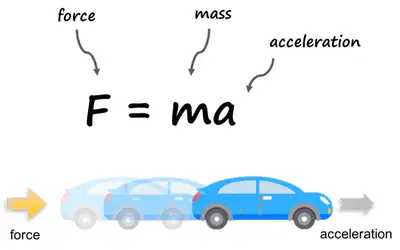
How much force is required to accelerate a car with a mass of 1,000 kg and an acceleration of 4 m/s²?

1

250 N

2

1,000 N

3

4,000 N

25

Force, mass, and acceleration

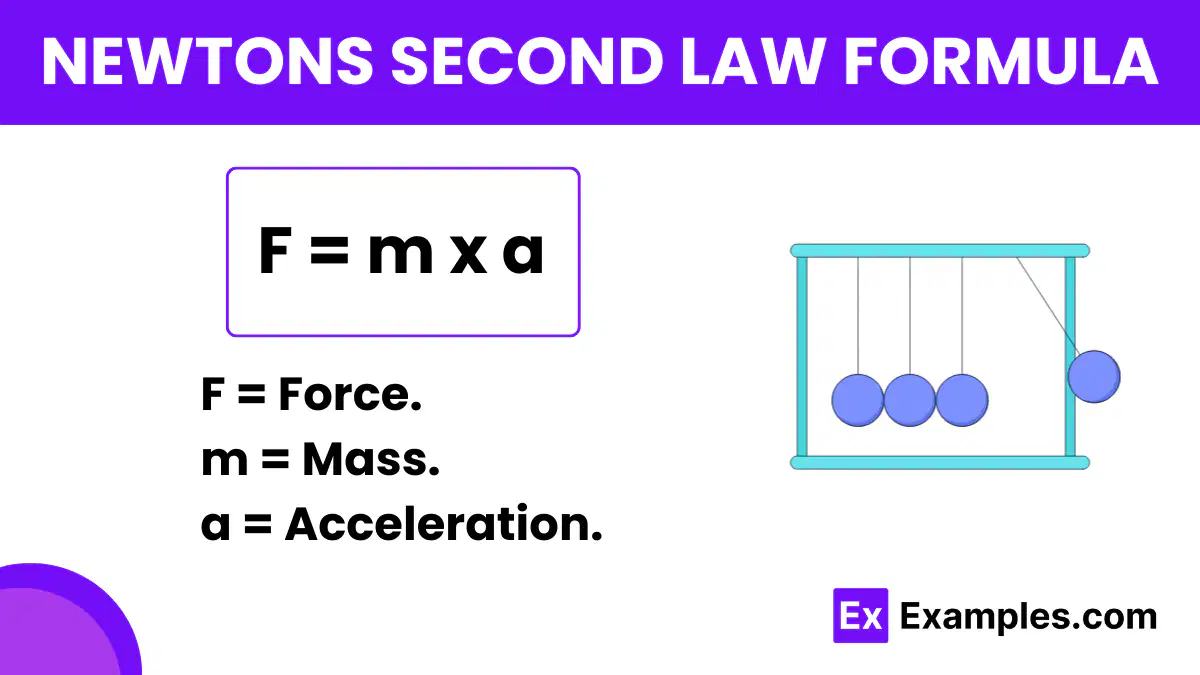
A force is a push or pull (Newtons, N). Mass is the amount of stuff an object has (kilograms, kg). Acceleration is how an object's motion changes (meters per second squared, m/s²).

Force = mass × acceleration

media

26

Multiple Choice

Question image

Which object has more momentum, a flying bird or a parked jet?

1

The flying bird

2

The parked jet

3

They have the same momentum.

4

It's impossible to tell from this information.

27

Multiple Choice

Question image

Object A: 5 kg and +5 m/s

Object B: 10 kg and -2 m/s

What is the total momentum of objects A and B?

1

+25 kg × m/s²

2

-20 kg × m/s²

3

+5 kg × m/s²

4

-5 kg × m/s²

28

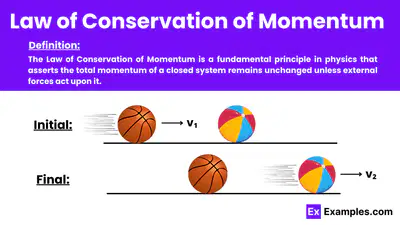
Conservation of momentum

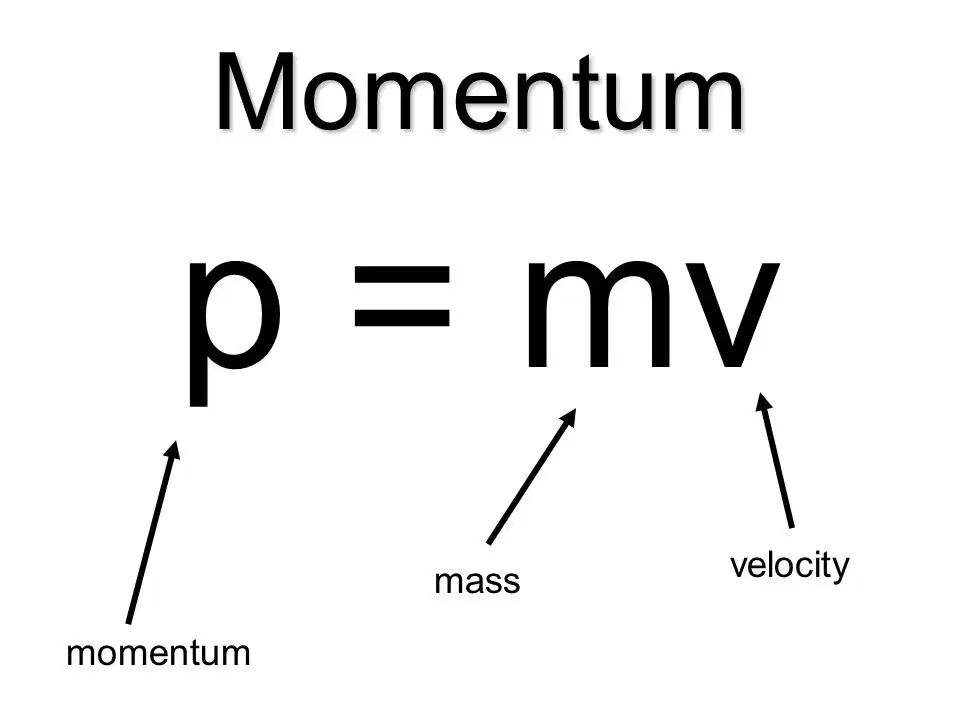
Momentum (p) = mass (m) × velocity (v)

Momentum of a closed system stays the same, even if objects in the system collide and change their velocity.

media

​Physical Science A
End-of-semester review

Text was AI-generated and edited by the teacher

Show answer

Auto Play

Slide 1 / 28

SLIDE