Search Header Logo
Weather Climate Hurricanes and Cyclones

Weather Climate Hurricanes and Cyclones

Assessment

Presentation

Science

8th Grade

Easy

NGSS.MS-ESS2-5, NGSS.MS-ESS2-6, TEKS.SCI.8.10A

+8

Standards-aligned

Created by

R P

Used 14+ times

FREE Resource

13 Slides • 76 Questions

1

media

2

media

3

Multiple Choice

How does solar energy affect the temperature of the Earth's surface?

1

It cools the surface by reflecting heat.

2

It warms the surface by absorbing heat.

3

It has no effect on surface temperature.

4

It only affects the temperature at night.

4

Multiple Choice

Question image

Which line of latitude receives the most DIRECT sunlight?

1

90 degrees N

2

90 degrees S

3

0 degrees at the equator

4

none of the above

5

Multiple Choice

What is the primary source of energy that drives weather patterns on Earth?

1

The Moon

2

The Sun

3

The Earth's core

4

Ocean currents

6

Multiple Choice

What source of energy is the most important in driving the water cycle and evaporation?

1

Thermal

2

Kinetic

3

Chemical

4

Mechanical

7

Multiple Choice

Question image

What part of the world usually gets the least direct sunlight?

1

The equator

2

The North and South Poles

3

Shue-Medill Middle School

4

Newark, DE

8

Multiple Select

Question image

Which letter(s) show the MOST INDIRECT light? (Select all correct answers)

1

A

2

B

3

C

4

D

5

E

9

media

10

Multiple Choice

How does the Sun's energy contribute to the formation of wind?

1

By heating the Earth's core

2

By causing differences in air pressure

3

By melting polar ice caps

4

By creating ocean waves

11

Multiple Choice

Question image

Air leaving the equator cools, becomes more dense, and sinks forming a pattern of smaller ____________________ cells.

1

conduction

2

convection

3

radiation

12

Multiple Choice

What is the initial source for global winds and convection in the atmosphere?

1

continental deflection

2

the rotation of the Earth

3

Moon's gravity

4

unequal heating of the Earth by the sun

13

Multiple Choice

Question image

Which statement correctly defines wind?

1

Wind is the movement of air from areas of low pressure to areas of high pressure

2

Wind is the movement of air to a colder area in the atmosphere.

3

Wind is the movement of air from areas of high pressure to areas of low pressure.

4

Wind is the movement of air pushed around and bouncing off Earth's surface.

14

Multiple Choice

Question image

The breeze in this picture will blow in the opposite direction tonight causing .......

1

a sea breeze will form because the land will be warmer than the ocean.

2

a land breeze will form because the land will be cooler than the ocean.

3

the humidity will drop because warm and cold air make steam.

4

the wind speed will decrease because land and water temperatures remain the same.

15

Multiple Choice

Cold air is ____________ than warm air and ___________.

1

more dense; sinks

2

less dense; rises

3

more dense; rises

4

less dense; sinks

16

Multiple Choice

Warm air is ____________ than cold air and ___________.

1

more dense; sinks

2

less dense; rises

3

more dense; rises

4

less dense; sinks

17

Multiple Choice

Which one heats and cools fastest?
1
land
2
sea
3
both are the same rate
4
air

18

Multiple Choice

The transfer of heat involving the vertical movement of warmed masses of air into cooler regions in the atmosphere. (18.11)

1

What is convection?

2

What is conduction?

3

What is radiation?

4

What is electromagnetic energy?

19

Multiple Choice

Which of the following best describes the interaction between the Sun's energy and the Earth's atmosphere?

1

The Sun's energy is completely absorbed by the Earth's surface.

2

The Sun's energy is reflected back into space without any effect.

3

The Sun's energy heats the atmosphere, influencing weather and climate.

4

The Sun's energy only affects the Earth's core.

20

media

21

Multiple Choice

Which of the following is a direct result of the Sun's energy interacting with the Earth's hydrosphere?

1

Formation of mountains

2

Ocean currents

3

Volcanic eruptions

4

Earthquakes

22

Multiple Choice

What happens to MOST of the energy absorbed by the ocean?

1

Converted into mechanical energy

2

Transferred to the seafloor

3

Used to power ocean currents

4

Released locally to the atmosphere to regulate temperture.

23

Multiple Choice

What happens to the energy that is not released to the atmosphere?

1

Energy that is not released to the atmosphere is stored in the mesosphere.

2

Energy that is not released to the atmosphere is converted into electrical energy.

3

Energy that is not released to the atmosphere is converted to potential energy.

4

Energy that is not released to the atmosphere is transported to currents in other areas.

24

Multiple Choice

Question image

Why is water warmer near the equator?

1

Because the equator receives less direct sunlight

2

Because of the deserts located there

3

Because the equator receives more direct sunlight

4

Because the equator has warmer wind currents

25

Multiple Choice

Which of the following is the result of the Sun unevenly heating air in the atmosphere and water in the ocean?

1

Hurricanes and earthquakes

2

Wind and ocean currents

3

Weathering and Erosion

4

Cold fronts and warm fronts

26

Multiple Choice

Question image
Ocean currents move energy in the form of
1
Salt
2
Water
3
Heat
4
Oxygen

27

Multiple Choice

Question image
Ocean currents bring warm water from the equator towards Earth's
1
Southern Hemisphere
2
Continents
3
Equator
4
Poles

28

Multiple Choice

How does the water in the ocean interact with most of the heat from the sun?

1

The water reflects the heat

2

The water absorbs the heat

3

The two do not interact

29

Multiple Choice

How would climate be impacted if there were no surface ocean currents?

1

Climate would not be impacted

2

The hot regions would be less hot, the cold regions would be less cold

3

The hot regions would be more hot, the cold regions would be more cold

30

Multiple Choice

How does the Sun's energy influence the hydrosphere?

1

It causes water to freeze.

2

It drives the water cycle through evaporation and precipitation.

3

It has no influence on the hydrosphere.

4

It only affects freshwater sources.

31

Multiple Choice

Which process is responsible for the movement of water from the Earth's surface to the atmosphere?

1

Precipitation

2

Evaporation

3

Condensation

4

Infiltration

32

media

33

Dropdown

Climate is the average
conditions for a particular
over a long period of time, ranging from
to thousands or millions of
.

34

Multiple Choice

Explain how the Sun's energy affects the water cycle.

1

It causes water to freeze and form ice.

2

It evaporates water, which then condenses to form clouds.

3

It directly creates ocean currents.

4

It has no effect on the water cycle.

35

Multiple Choice

Describe how the Sun's energy influences climate patterns.

1

It causes the Earth's rotation to speed up.

2

It provides heat that affects atmospheric and oceanic circulation.

3

It has no impact on climate patterns.

4

It only affects the climate at the poles.

36

Multiple Choice

Which is a true statement about temperature and latitude?

1

the closer to the equator the colder the temperatures

2

the closer to the equator the warmer the temperatures

3

the closer to the north pole the warmer the temperatures

4

the closer to the south pole the warmer the temperatures

37

Multiple Choice

Question image

The higher the latitude (further north from the Equator), the

1

Higher the temperature

2

Lower the temperature

3

More direct sunlight

4

Higher the solar angle

38

Multiple Choice

Explain the role of the Sun in the Earth's climate system.

1

It provides energy that drives atmospheric and oceanic circulation.

2

It has no role in the Earth's climate system.

3

It only affects the climate during the day.

4

It causes the Earth's magnetic field.

39

Multiple Choice

The earth's surface absorbs most of the original incoming radiant energy and converts it to __________________ energy. (18.11)

1

thermal

2

potential

3

kinetic

4

electromagnetic

40

media

41

media

42

Dropdown

What is the primary factor that initiates the formation of a tropical cyclone?

43

Drag and Drop

Which of the following best describes the role of warm ocean currents in the development of tropical cyclones?

Drag these tiles and drop them in the correct blank above

They cool the surrounding air masses.

They provide the necessary heat and moisture.

They create high-pressure systems.

They deflect the path of cyclones.

44

Multiple Choice

How do air masses interact with ocean currents to produce tropical cyclones?

1

Air masses cool down over warm ocean currents.

2

Air masses gain heat and moisture from warm ocean currents.

3

Air masses remain unaffected by ocean currents.

4

Air masses create cold fronts over warm ocean currents.

45

Dropdown

What is the main difference between a typhoon and a hurricane?

46

Drag and Drop

Which of the following statements is true about the impact of air masses on tropical cyclones?

Drag these tiles and drop them in the correct blank above

Cold air masses strengthen tropical cyclones.

Warm, moist air masses weaken tropical cyclones.

Warm, moist air masses strengthen tropical cyclone

Air masses have no impact on tropical cyclones.

47

media

48

Multiple Choice

Question image

What is one condition that is necessary for a hurricane to form?

1

Warm ocean water

2

A strong cold front

3

Cold ocean water

4

A strong warm front

49

Multiple Choice

Which is the most likely cause of tropical storms?

1

Water runoff from the land fuels storm clouds.

2

High-pressure air causes storm clouds to form.

3

Sea breezes close to shore push storm clouds together.

4

Warm water evaporates, rises quickly, and interacts with a colder air mass.

50

Multiple Choice

Why do hurricanes form more often at the end of summer?

1

The ocean water is cooling off and creating more moisture in the air.

2

The ocean water is cooling off and creating less water vapor in the ocean.

3

The ocean water is much warmer which fuels the water cycle and creates lower air pressure.

4

The ocean water is much warmer which fuels an increase in water vapor on the ocean's surface.

51

Multiple Choice

What is required for a tropical cyclone to form?

1

warm water

2

cool water

3

warm air over land

4

cool air over land

52

Hotspot

Using the temperature map of the Earth, click on the area that is most likely to see a potentially strong and violent storm, such as a hurricane, based on temperature.

53

media

54

Multiple Choice

Question image

What type of Tropical storm can be found near Japan?

1

typhoon

2

cyclone

3

Hurricane

55

Multiple Choice

Question image

What type of Tropical storm can be found near Australia?

1

cyclone

2

typhoon

3

hurricane

56

Multiple Choice

Question image

What type of Tropical storm can be found near China?

1

hurricane

2

cyclone

3

typhoon

57

Multiple Choice

Question image

What type of Tropical storm can be found near United states?

1

hurricane

2

typhoon

3

cyclone

58

Multiple Choice

Question image

What type of Tropical storm can be found near Mexico?

1

cyclone

2

hurricane

3

typhoon

59

Multiple Choice

In which ocean are Typhoons formed?

1

Atlantic

2

Pacific

3

Arctic

4

All of the answers

60

Multiple Choice

Why do hurricanes weaken when they hit land?

1

Because they cannot suck up any more water.

2

Because they lose their source of energy

3

Because there is not enough moist air.

4

All of the answers.

61

Multiple Choice

What is the primary factor that causes ocean currents to form?

1

Wind

2

Earth's rotation

3

Salinity

4

Temperature

62

Multiple Choice

What is the main difference between a hurricane and a typhoon?

1

Their size

2

Their wind speed

3

Their location

4

Their duration

63

Multiple Choice

What is the difference between a hurricane and a typhoon?

1

Typhoons are large waves that can cause flooding. Hurricanes are like tornadoes on water.

2

Hurricanes are typically warm, wet storms with a lot of rain. Typhoons are cold and dry storms with a lot of wind and little rain.

3

Both form when warm water evaporates, rises quickly, and creates an area of low pressure. The names are different based on location.

4

Typhoons form when warm air meets cold water, and hurricanes form when warm air meets warm water.

64

media

65

media

66

Multiple Choice

Where do MARITIME air masses form?

1

Over water

2

Over land

67

Multiple Choice

Where do CONTINENTAL air masses form?

1

Over water

2

Over land

68

Multiple Choice

Which type of air mass is HOT and DRY?

1

Maritime Polar

2

Maritime Tropical

3

Continental Polar

4

Continental Tropical

69

Multiple Choice

Which type of air mass is HOT and HUMID?

1

Maritime Polar

2

Maritime Tropical

3

Continental Polar

4

Continental Tropical

70

Multiple Choice

Which type of air mass is COLD and HUMID?

1

Maritime Polar

2

Maritime Tropical

3

Continental Polar

4

Continental Tropical

71

Multiple Choice

Which type of air mass is COLD and DRY?

1

Maritime Polar

2

Maritime Tropical

3

Continental Polar

4

Continental Tropical

72

media

73

Multiple Choice

A front is
1
where warm air is cooling at earth's surface
2
a line where hot and cold air are separating
3
a line where two different air masses meet
4
where cold air is rising and forming rain clouds

74

Multiple Choice

Question image
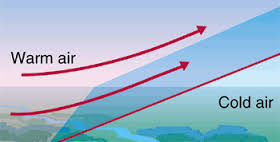
Which type of front is pictured?
1
Cold front
2
Warm front
3
Occluded front
4
Stationary front

75

Multiple Choice

Question image

A _____________ weather front occurs when a cold air mass moves forward, pushing the warm air mass up.

1

Cold

2

Warm

3

Stationary

4

Occluded

76

Multiple Choice

Question image

What type of front is shown?

1

Warm Front

2

Cold Front

3

Occluded Front

4

Stationary Front

77

media

78

Multiple Choice

Question image
What symbol is this?
1
warm front
2
cold front
3
stationary front
4
occluded front

79

Multiple Choice

Question image
This is the symbol for which type of front?
1
cold front
2
warm front
3
stationary front
4
occluded front

80

Multiple Choice

Question image

What type of front is over Texas?

1

warm front

2

cold front

3

stationary front

4

occluded front

81

Match

Question image

Match the following front to its description

Warm Front

Cold Front

Stationary Front

Occluded Front

When warm, less dense air replaces cold, more dense air.

When cold, more dense air replaces warm, less dense air.

When neither cold or warm air are strong enough to replace the other

When two cold air masses converge on a warm air mass forcing it to quickly rise.

82

Multiple Choice

Low Pressure is associated with this type of weather...
1
Cloudy/Overcast Weather
2
Cold Weather
3
Warm Weather
4
Fair Weather

83

Multiple Choice

High Pressure is associated with this type of weather...
1
Cloudy/Overcast Weather
2
Cold Weather
3
Warm Weather
4
Fair Weather

84

Labelling

Identify the type of fronts on this weather map.

Drag labels to their correct position on the image

cold front

stationary front

warm front

85

Multiple Choice

Question image
name this symbol
1
warm front
2
cold front
3
stationary front
4
occluded front

86

Labelling

Label the cold and warm front on the weather map.

Drag labels to their correct position on the image

estationary front

warm front

cold front

occluded front

87

Hotspot

Which cities has the cold front already passed through?

Select TWO correct answers.

88

Match

Match the following

High pressure

Low pressure

Cold Front

Warm Front

Stationary Front

Good weather

Cloud formation and storms

Cold; heavy precipitation possible

Warm; light precipitation possible

Same weather for days in a row

89

Match

Match the description to the image of weather fronts.

cold front - cold air pushes under warm air causing heavy rain and a drop in temperature

warm front - warm air pushes cold air out causing light rain and a rise in temperature

stationary front - cold air and warm air collide causing clouds and maybe rain to stick around

occluded front - cold air catches up with warm air combining to cause light rain

media

Show answer

Auto Play

Slide 1 / 89

SLIDE