3 Lessons from Leaders & Educators Making Gains on State Tests

Introduction
Across the country, school leaders are under mounting pressure to boost state test results without burning out teachers or students.
While test prep has long been synonymous with stress, these leaders built systems that put data in teachers’ hands, matched practice to real test formats, and made the whole experience more approachable.
Three districts offer three proven paths for how leadership, data, and smart instructional design can work together to transform outcomes.
1. Redefine Preparation: From Guesswork to Precision
When Dr. Michael Garza took over Sam Houston Collegiate Prep Elementary in Midland ISD, his challenge was one many leaders face: how to sustain growth and reverse a slide in state accountability scores.
By embedding data checks into every lesson and using real-time analytics from Wayground (formerly Quizizz), Garza and his team replaced intuition with precision. Teachers could instantly see which standards students struggled with and tailor instruction in the moment.
“I knew exactly where to move kids based on every single standard,” said fifth-grade science teacher Denise Sanchez.
The school climbed from a C (71) to an A (91) on Texas’s accountability ratings, with 90% of students meeting or exceeding growth targets on NWEA MAP.
Their key lesson? Make data visible, actionable, and owned by teachers — not just administrators.

2. Build Systems That Mirror the State Test (Before It Counts)
At Henderson County High School in Kentucky, Crystal Weber and Jill Stallings faced another familiar challenge: students who knew the content but couldn’t show it on the test.
With 22.5% of their school’s accountability rating tied to state assessments, the Algebraic Data and Measurement (ADM) team needed to close the gap between instruction and test design.
Using Wayground’s AI-powered assessment creation and 18+ state-aligned question types, they created common assessments that looked and felt like the real test, from graphing and categorization to math-response formats.
“We were so limited before,” Crystal explained. “Now, students don’t see the question format for the first time on test day.”
The shift transformed their PLCs: manual data prep vanished, replaced by color-coded, standards-based reports that made it clear whether gaps were content-based or technical. Assessment creation time dropped from hours to minutes, and teachers gained the confidence to identify and fix performance barriers early.
“They know it, but they didn’t know how to type it in properly,” Crystal noted. “We solved one of the issues that might keep them from getting questions right on the state test.”
.avif)
3. Turn Test Prep Into a Culture of Belonging
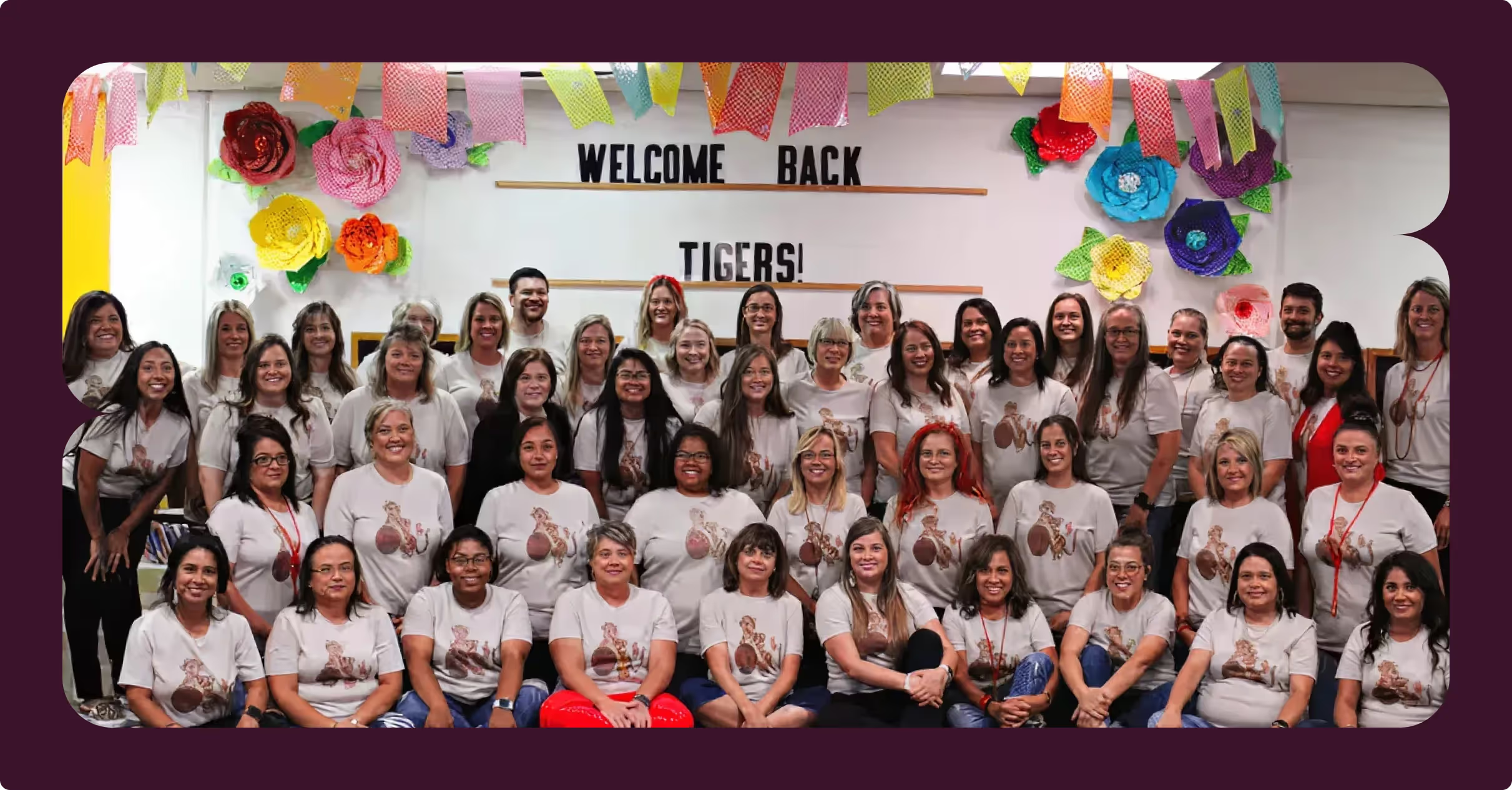
While data and design drive outcomes, Anson ISD in Texas proved that culture matters as much as curriculum. Facing test anxiety among students and burnout among teachers, Digital Coach Amber Jobe led the creation of the House Party Challenge — a playful, evidence-based approach rooted in belonging and low-stakes practice.
Each Friday, the school transformed test prep into a celebration:
- Students joined “Houses” with chants and team shirts.
- The guidance counselor kicked off the day with music or a dance.
- Students practiced 10 minutes per subject using Wayground’s state-aligned question formats projected live on leaderboards.
“We wanted to take away the pressure and make it fun,” Jobe said. “Wayground gave students repeated exposure to state test question types, so they could focus on the content — not the stress.”
The payoff: less anxiety, more engagement, and significant growth in STAAR performance over the previous year.
Leader Takeaways: How to Replicate Their Results
- Create alignment between daily instruction and progress on standards with data checks.
- Plan low-stakes exposure with authentic test question types early and often.
- Empower teachers with common assessments that fuel instant insights for PLCs.
- Reframe test prep as belonging work, not just academic prep.
- Measure both progress and confidence — what students know and how they feel showing it.
Across all three districts, the pattern holds: when teachers own the data and students recognize the format, test days stop being a surprise–and start showing what kids actually know.