From Hackathon to Production: How We Built Anti-Cheating Feature at Wayground
We won our internal hackathon with "Eye See You", a privacy-first cheat detection system for online quizzes. Six months later, the core ideas are live in production, protecting millions of quiz sessions. Here's the story of how a 48-hour prototype became a real product feature.
The Problem
Every teacher using online quizzes faces the same dilemma: How do you maintain assessment integrity without turning students' devices into surveillance tools?
Students have gotten creative with Google Lens to snap questions, tab-switching to search engines, copy-pasting into ChatGPT, browser extensions that auto-solve quizzes. Traditional proctoring solutions respond with webcams, screen recording, and lockdown browsers. But these tools are invasive, expensive, and create friction that undermines the learning experience.
We asked a different question: What if the browser itself could tell you everything you need to know?
The Hackathon: 48 Hours, 3 Engineers, 1 Wild Idea
Our hackathon prototype "Eye See You" combined two layers of detection:
Layer 1: DOM-Based Screen Recording
Instead of capturing pixels via screen-share APIs (which require explicit permissions and are easy to deny), we recorded the DOM state of the quiz tab itself. We have captured a visual replay of exactly what happened inside the quiz: no webcam, no microphone, no student permission prompts.
Layer 2: Behavioral Signal Collection
In parallel, we captured a stream of behavioral events, tab switches, copy/paste actions, dev tools usage, window resizes, answer timing patterns and fed everything into an AI model that produced a timestamped integrity report with a weighted risk score.
The scoring formula was deliberately opinionated:
- 70% weight on screen analysis (what the student actually did)
- 30% weight on behavioral metadata (how they did it)
The demo worked. The judges loved it. We won.
From prototype to production: What we kept, what we cut
Shipping a hackathon project is an exercise in ruthless prioritization. Here's what real engineering looked like.
What we shipped:
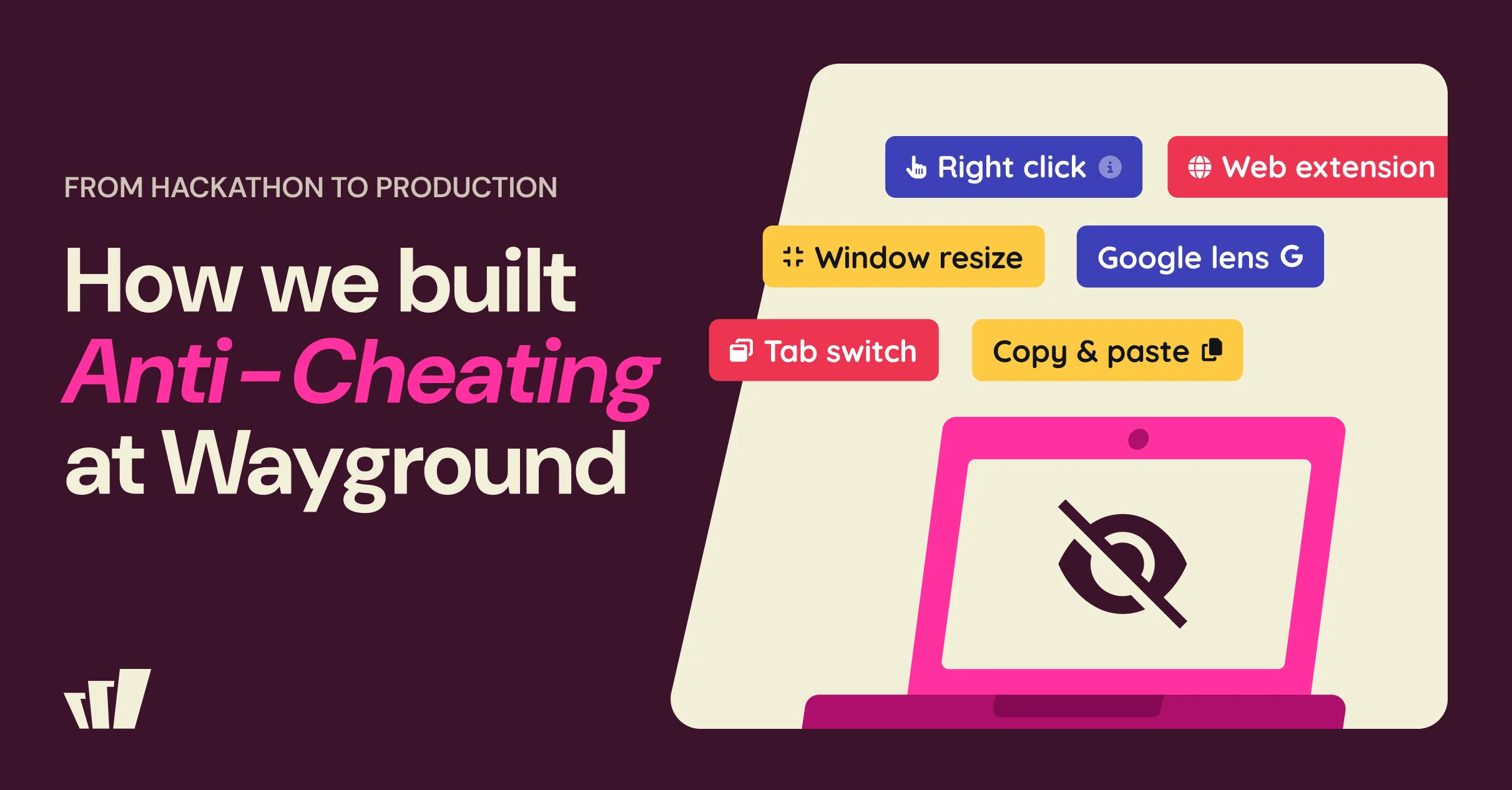
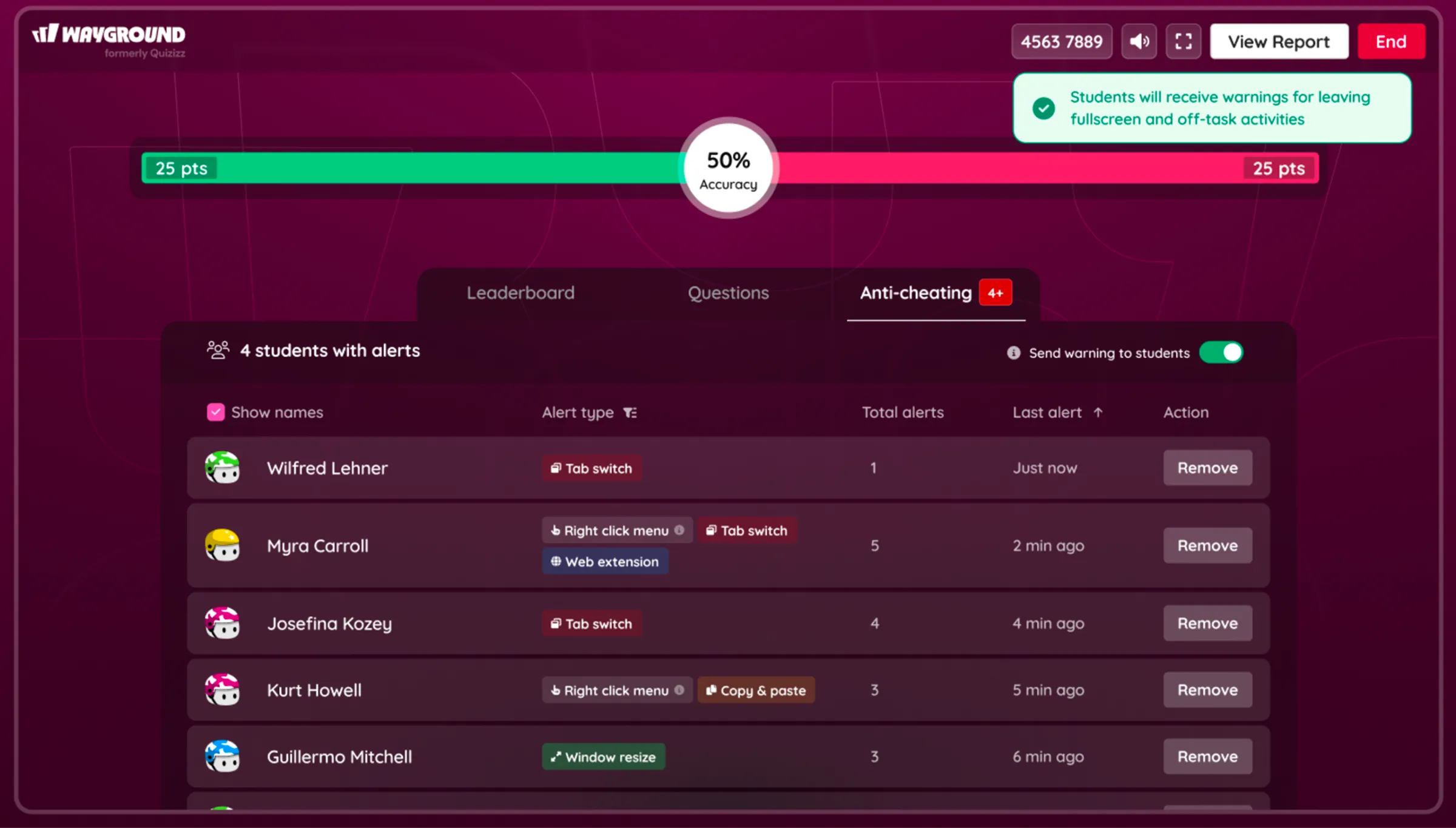
The behavioral detection layer went to production almost entirely but with significantly more engineering rigor than the hackathon version. The production system tracks:
- Tab switches
- Copy/paste detection
- Right-click tracking
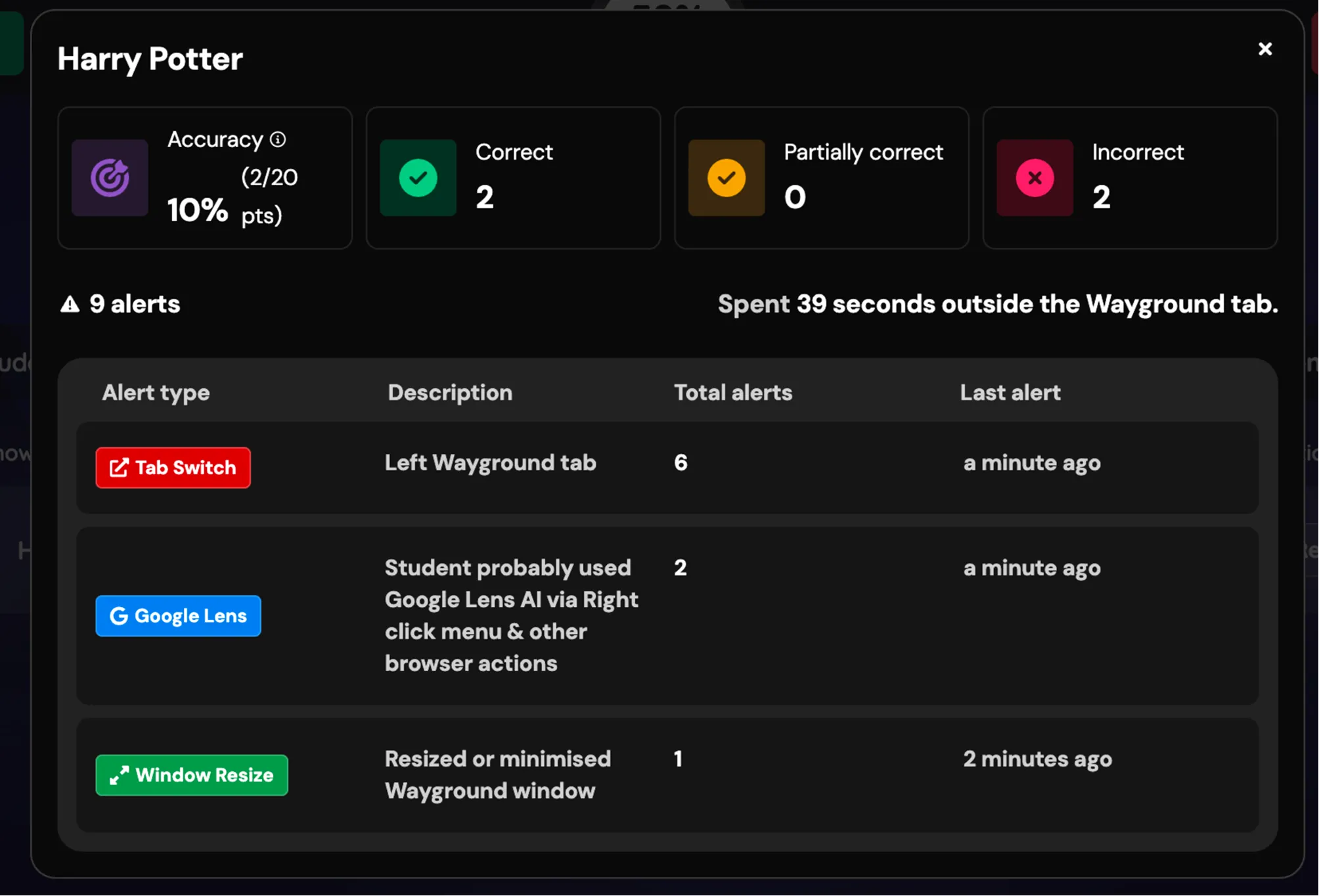
- Google Lens detection this was our proudest engineering moment.. We built a heuristic that catches this with high accuracy
- Window resize detection and fullscreen transition awareness
- Browser extension detection targeting known quiz-solver extensions like Quiz Solver AI and Question AI
- Fullscreen exit tracking
Each infraction is reported to the teacher's live dashboard in real-time, with per-question attribution and device metadata. Teachers see an Anti-Cheating Tab with filterable infraction types, player cards showing violation counts, and the ability to auto-warn students.
We also built Focus Mode a complementary system that enforces fullscreen during quizzes, manages wake locks to prevent screen sleep, handles iOS tablet edgecases, and reconnects infraction queues when socket connections drop.
What we didn't ship (and why):
The DOM-based screen recording the flashiest part of the hackathon demo didn't make it to production. The reasons were practical:
- Cost at scale: Recording and storing DOM replays for millions of concurrent quiz sessions would have been prohibitively expensive
- AI analysis overhead: Running vision models on every session's recording wasn't viable at our scale
- The behavioral layer was sufficient: In production testing, the metadata signals alone caught the vast majority of cheating patterns with high confidence
This is the part nobody talks about in hackathon-to-production stories: sometimes the best engineering decision is knowing what not to build.
The Architecture That Made It Work
A few technical decisions that made the difference:
Queue-based infraction reporting: Every detected event goes through a queue system that batches API calls, survives temporary socket disconnections, and replays pending infractions when connectivity resumes. In a classroom of 35 students, you can't afford to drop signals.
Smart false-positive filtering: The system adapts to how students actually behave across desktop browsers, mobile web, iOS tablets, and React Native webviews, because what looks suspicious on one platform is completely normal on another.
Real-time teacher controls: Teachers can toggle detection, enable auto-warnings, and adjust settings mid-game.
What We Learned
- Privacy-first doesn't mean detection-last.
By constraining ourselves to browser-native signals, we built something students don't even notice and that's exactly the point. The best integrity system is one that doesn't change the test-taking experience. - Heuristics beat heavy ML for edge detection.
Our Google Lens detector is a simple state machine, not a neural network. It's fast, deterministic, and debuggable. Not everything needs AI. - Hackathon code teaches you what to build. Production code teaches you what to handle.
The hackathon prototype had zero edge cases. The production system handles a lot of edge cases. That's where real engineering lives.
Ship the boring parts first. The screen recording was the demo showstopper. But the tab-switch detector, running quietly in production, has flagged more integrity issues in a single week than the AI video analysis ever could have at reasonable cost.
Impact
The anti-cheating system is now live across Wayground, used by millions of teachers worldwide. It runs silently during quizzes, requires zero setup from students, collects zero audio or video, and gives teachers a clear, real-time view of assessment integrity.
What started as 48 hours of late nights, real-time Slack debugging, and a demo that barely came together in time is now protecting the integrity of assessments at global scale.
The best hackathon projects don't just win prizes, they solve real problems. Ours just happened to solve one for millions of teachers and students.
Built by a team of 3 at Wayground. From hackathon trophy to production feature.