Enhance Year 3 students' understanding of affixes with Wayground's comprehensive collection of free phonics worksheets, featuring engaging printables, practice problems, and answer keys in convenient PDF format.
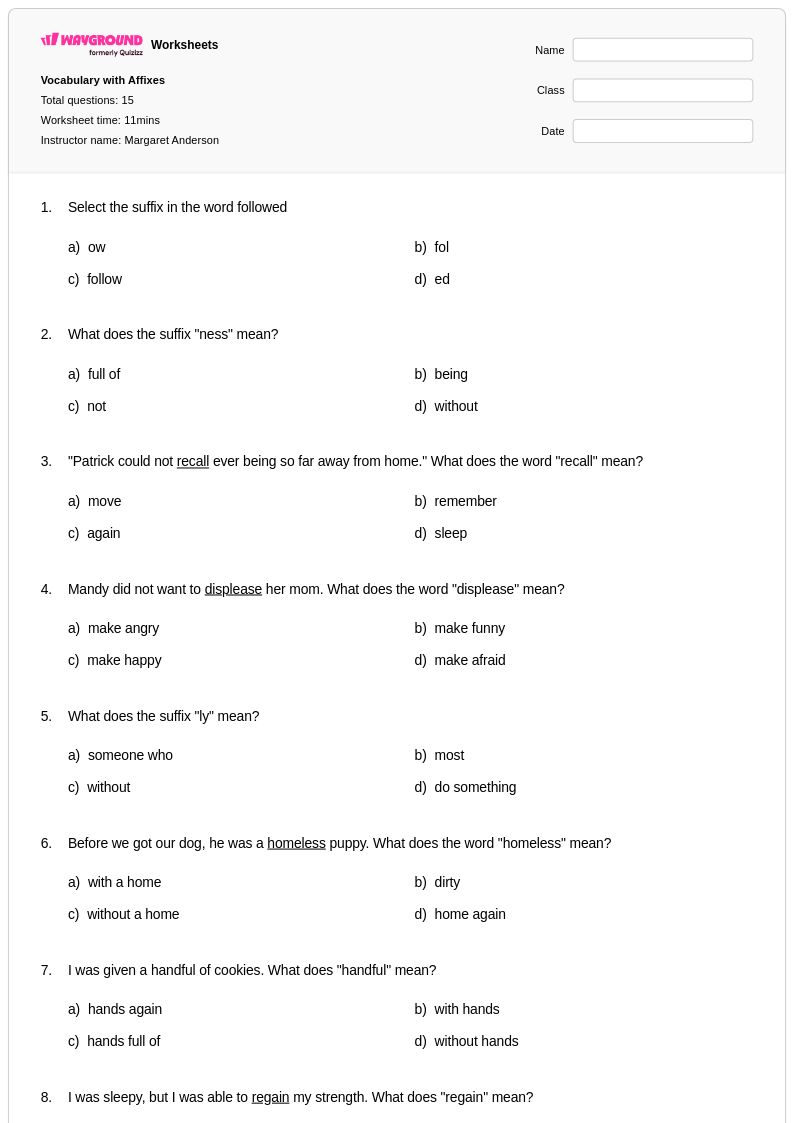
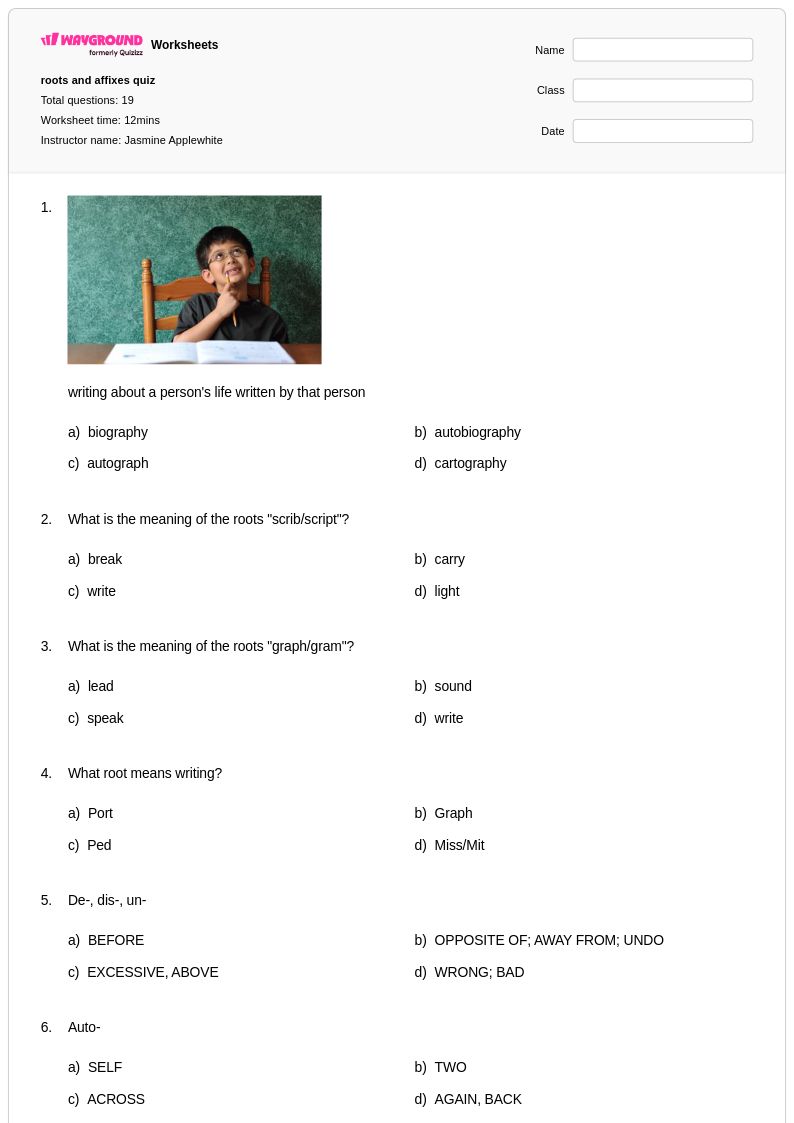
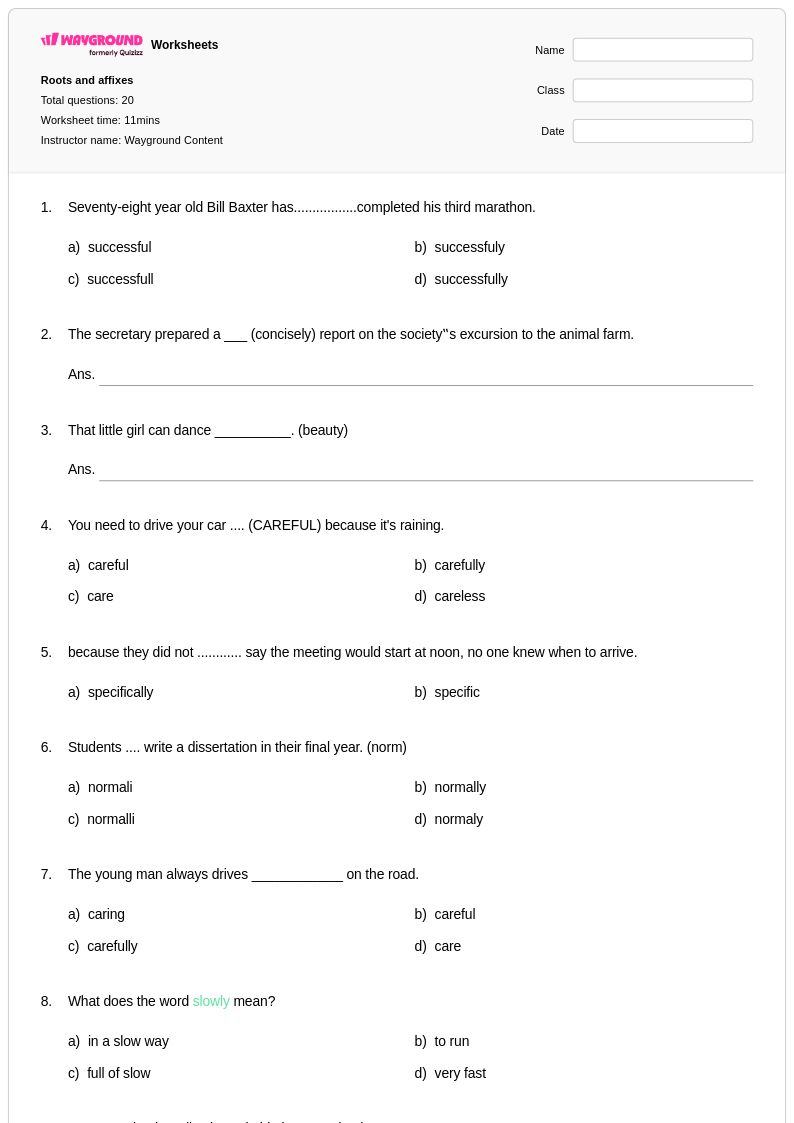
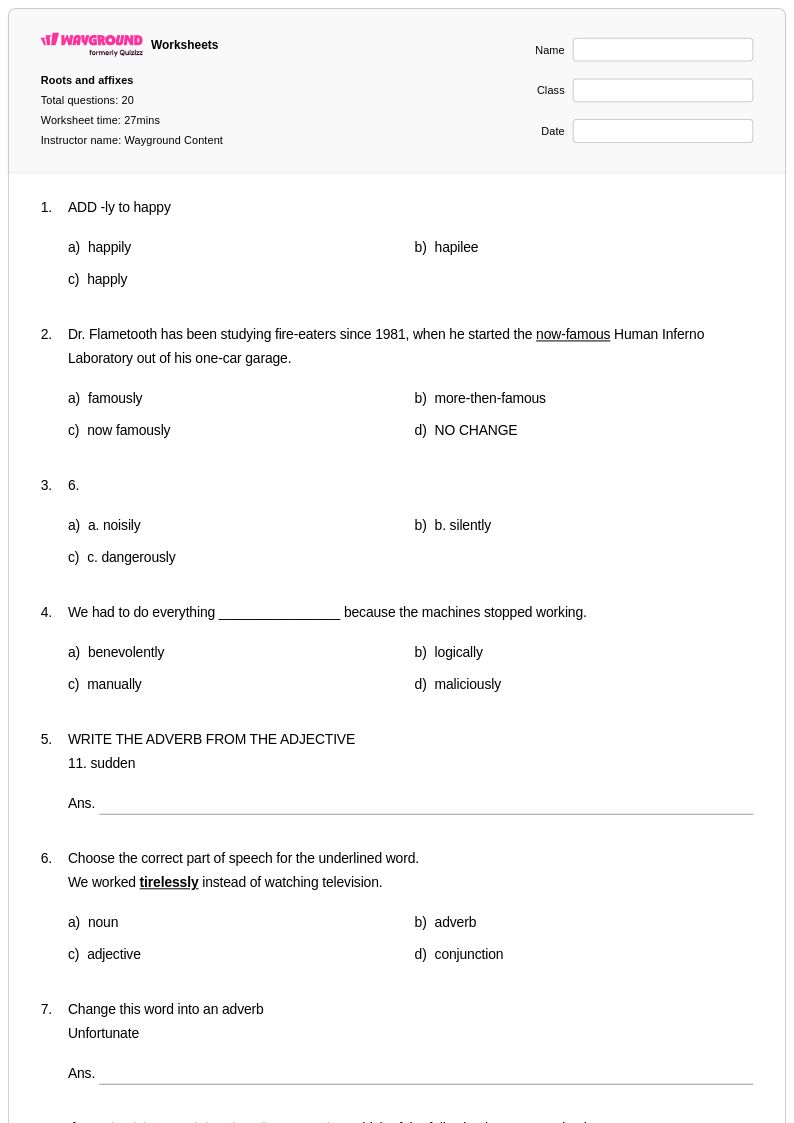
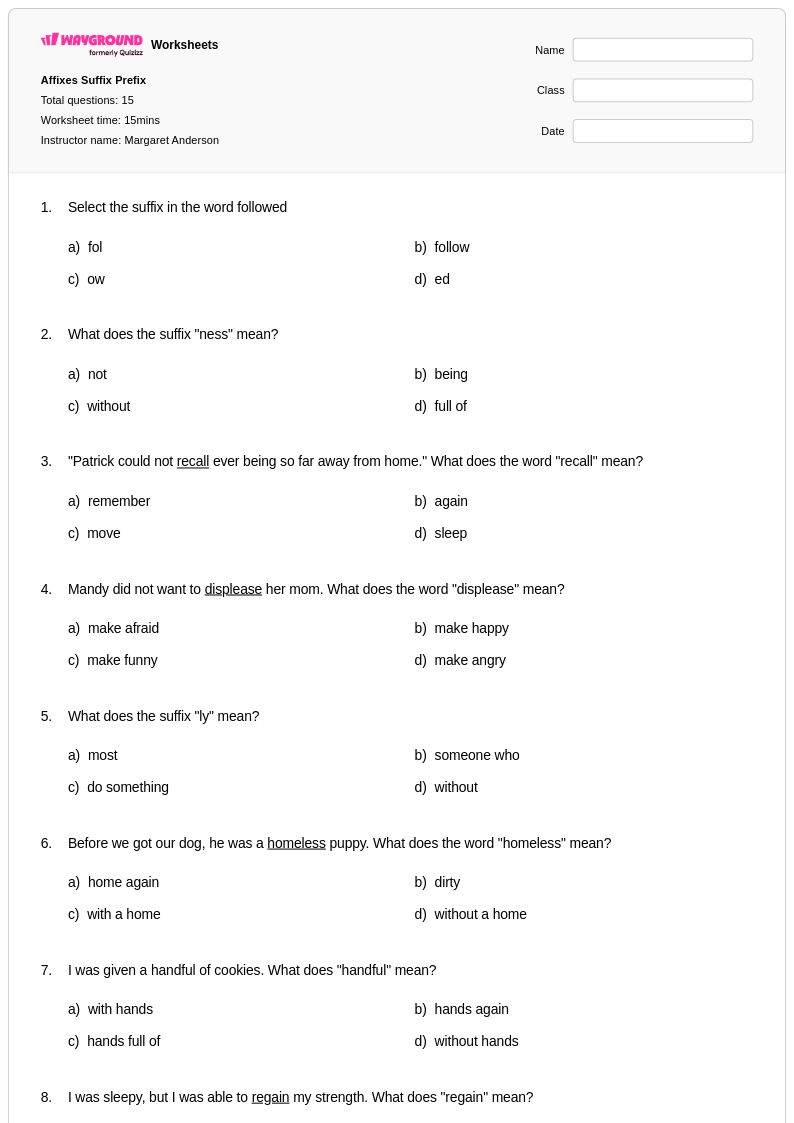
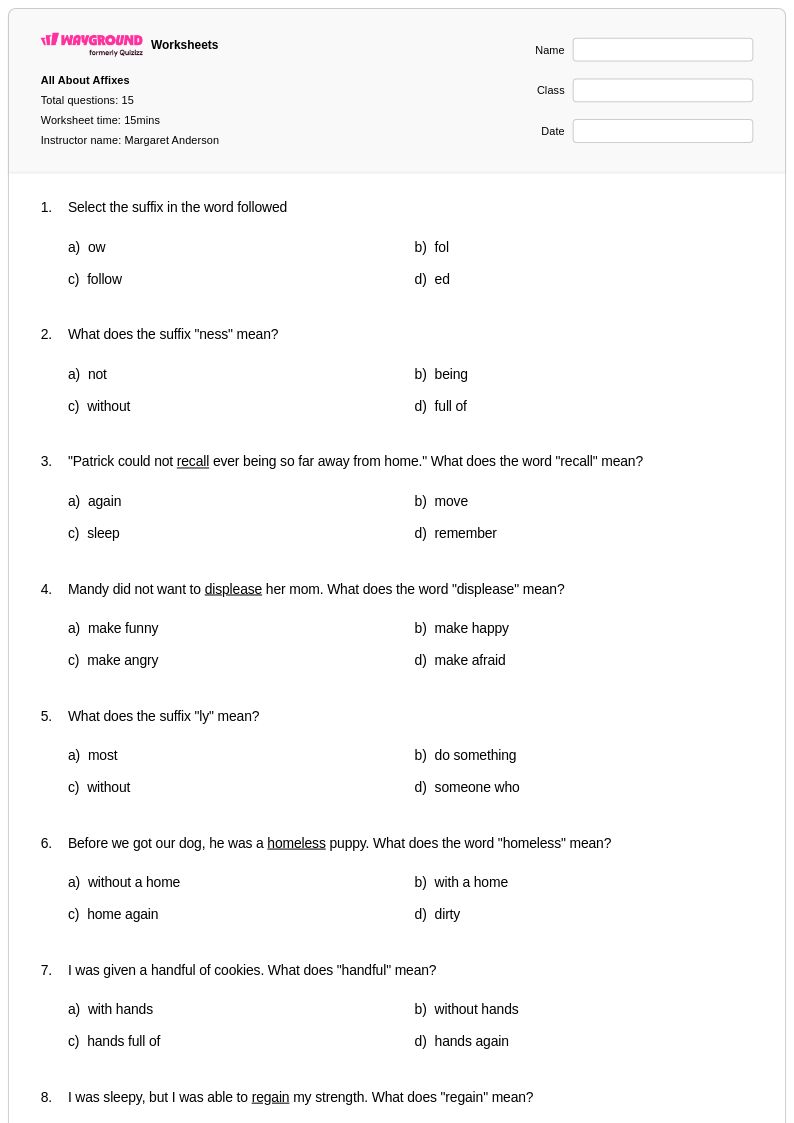
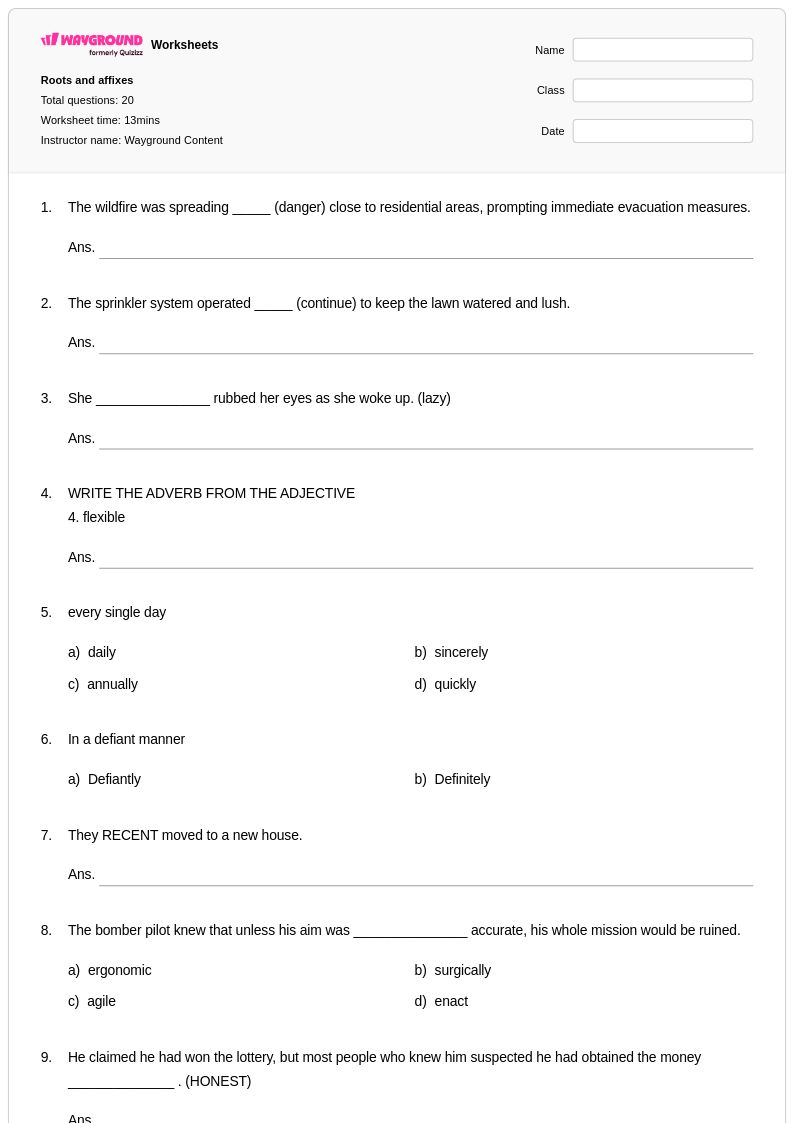
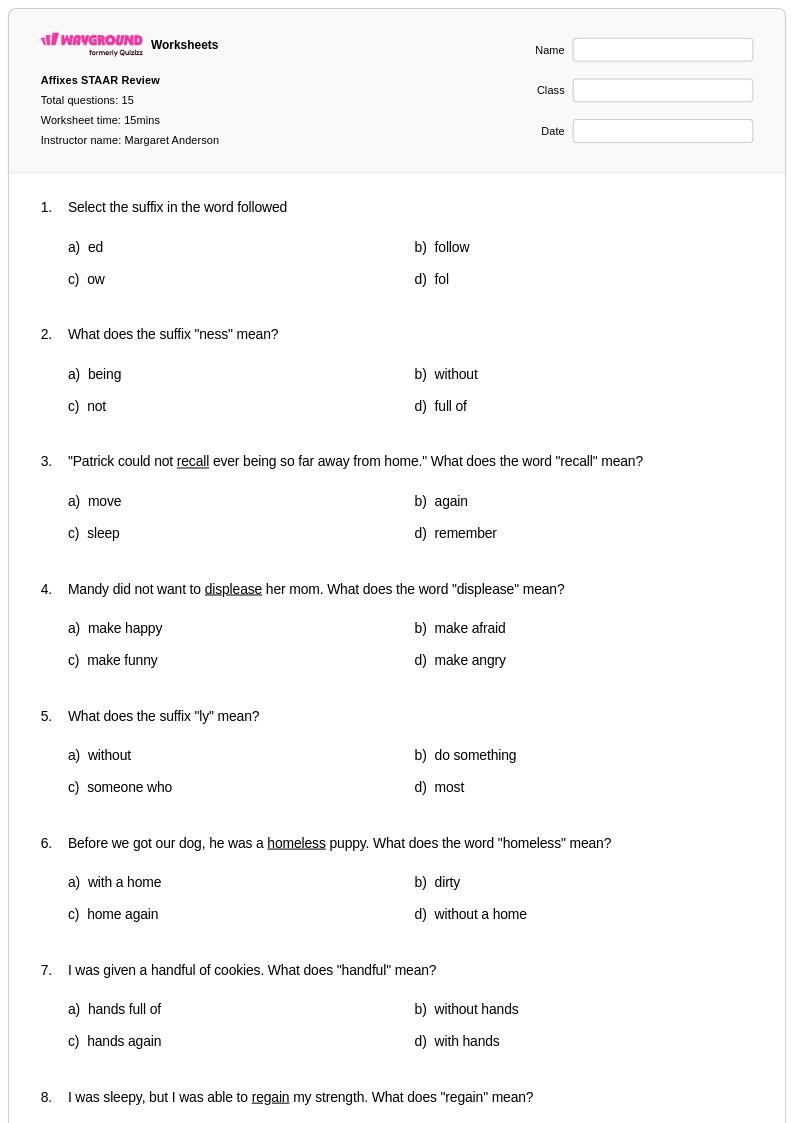
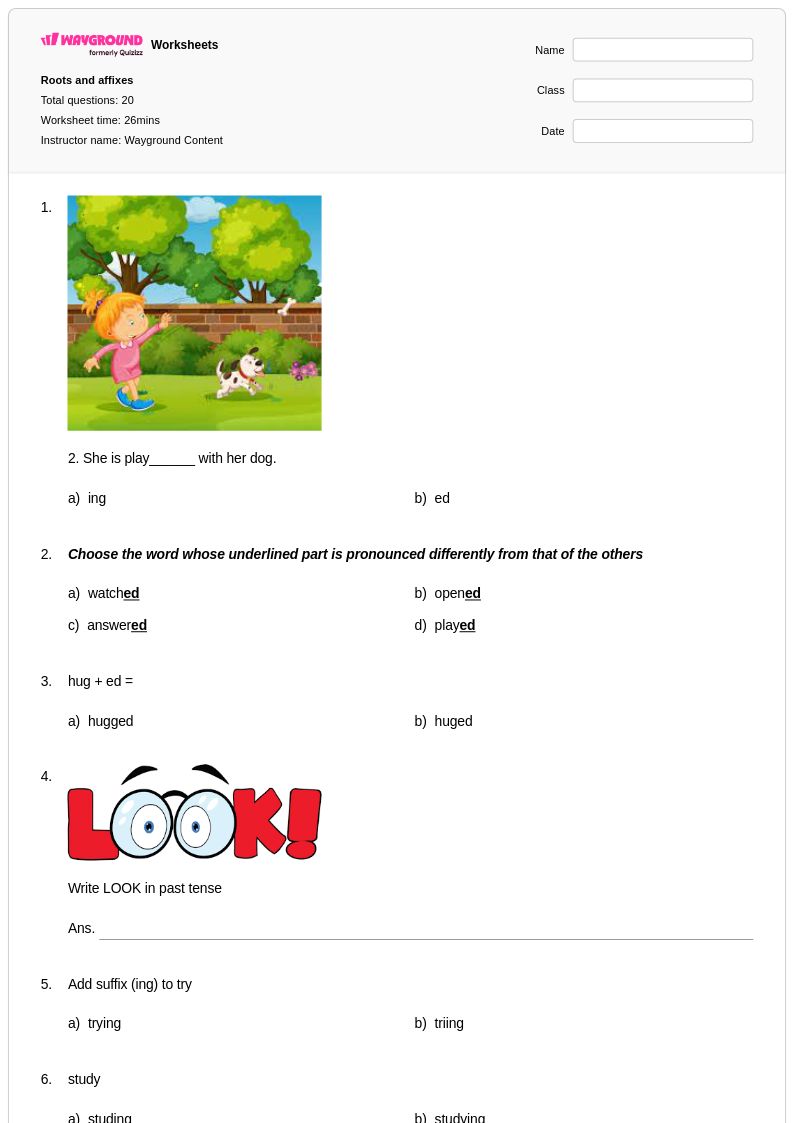
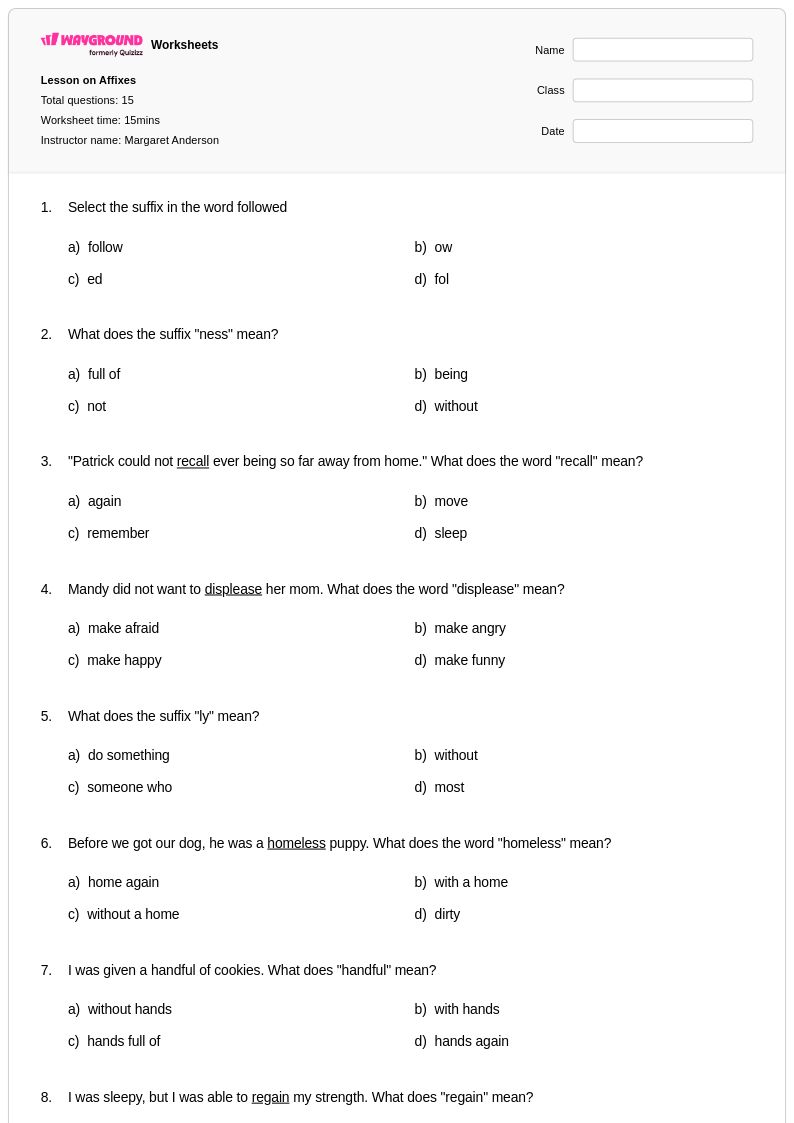
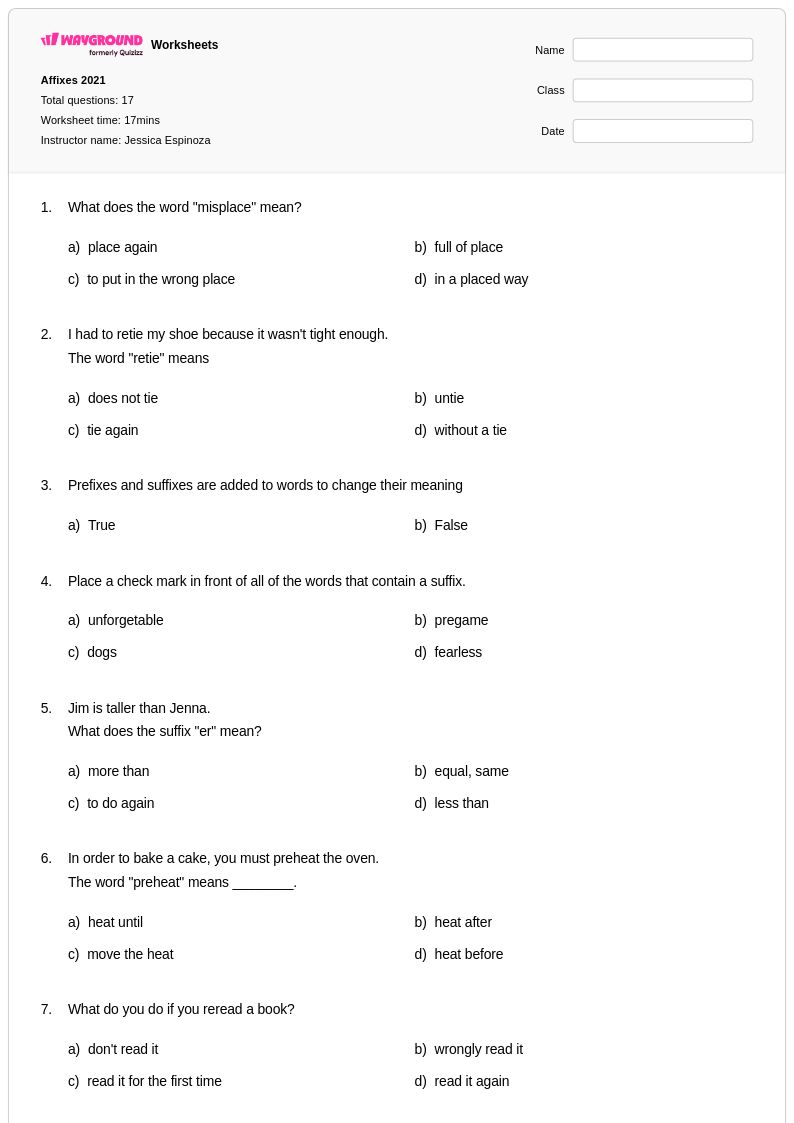
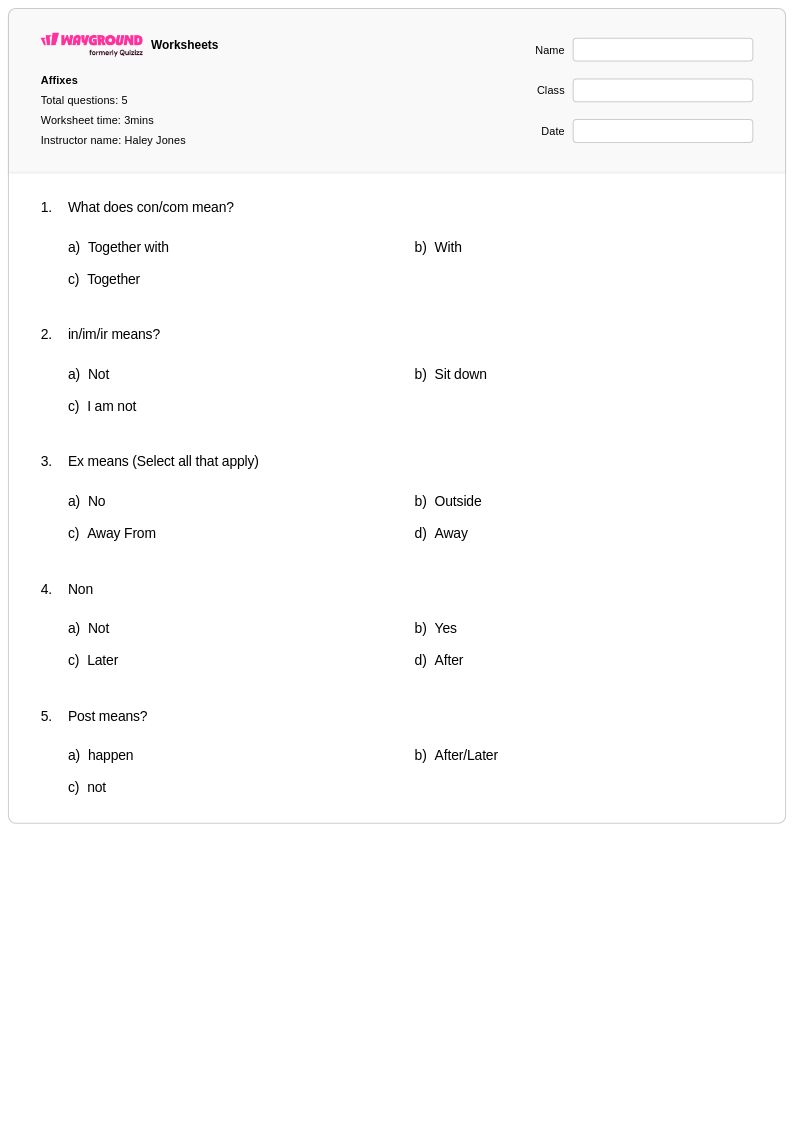
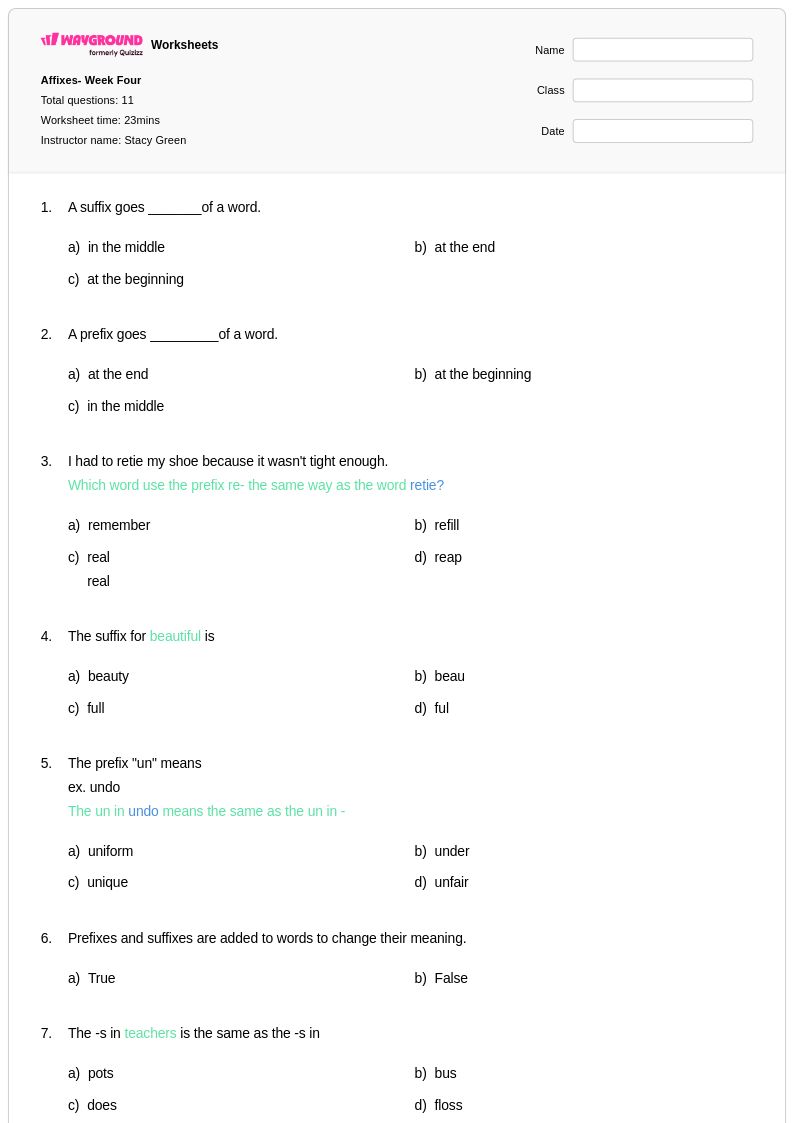
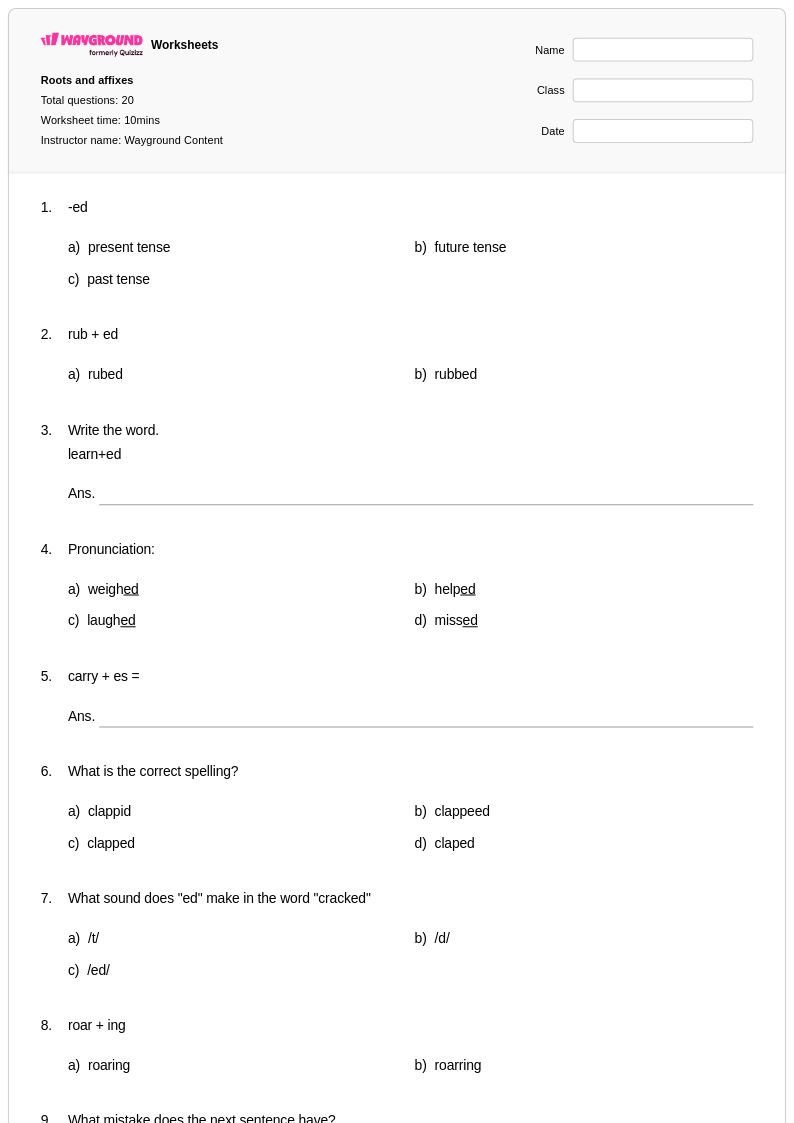
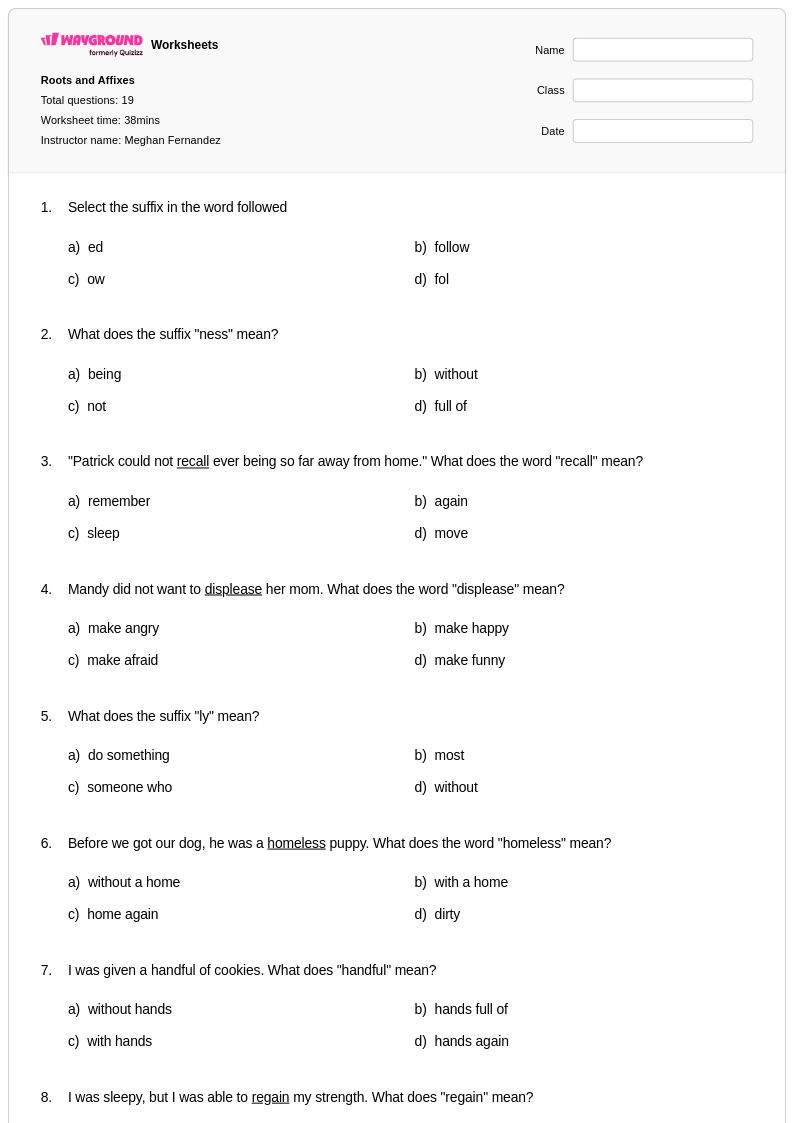
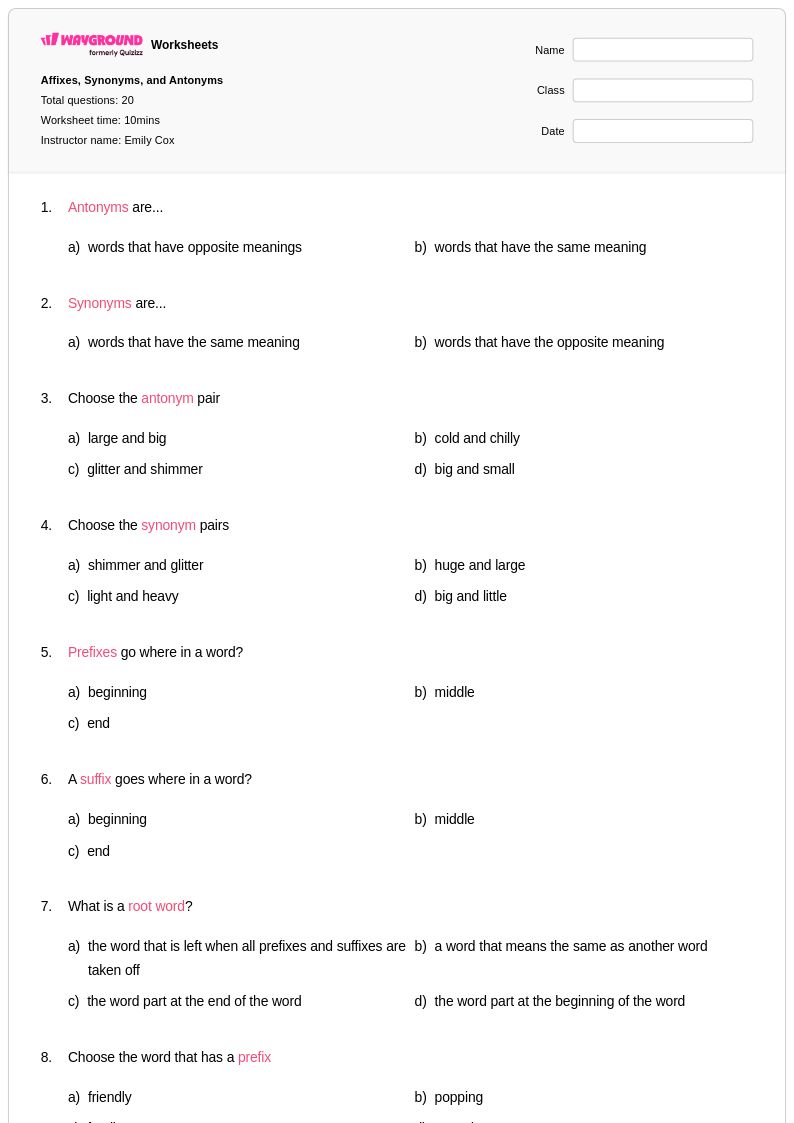
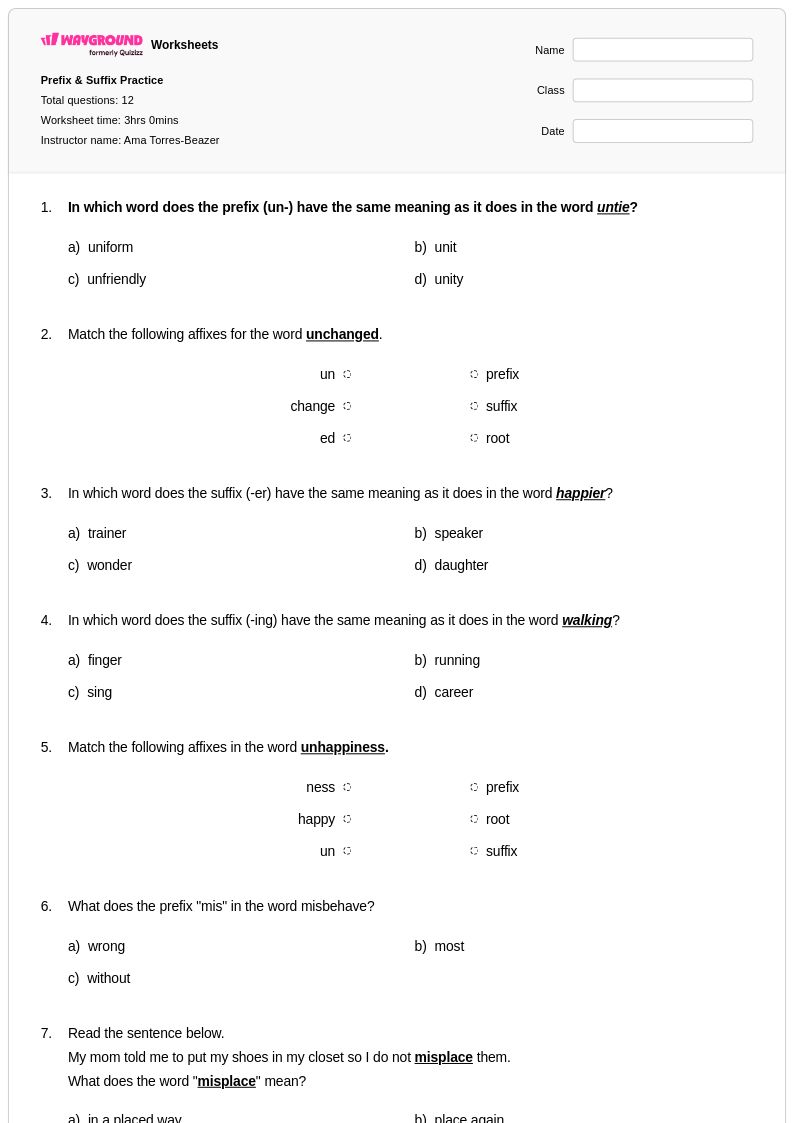
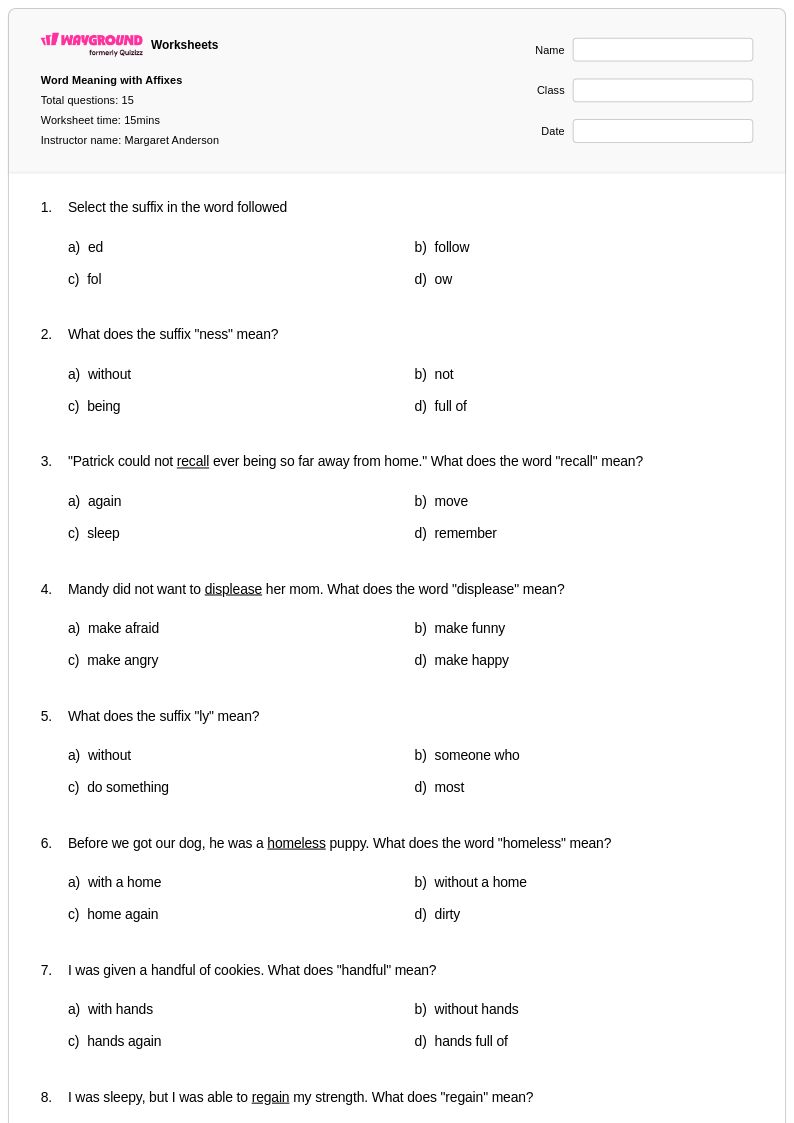
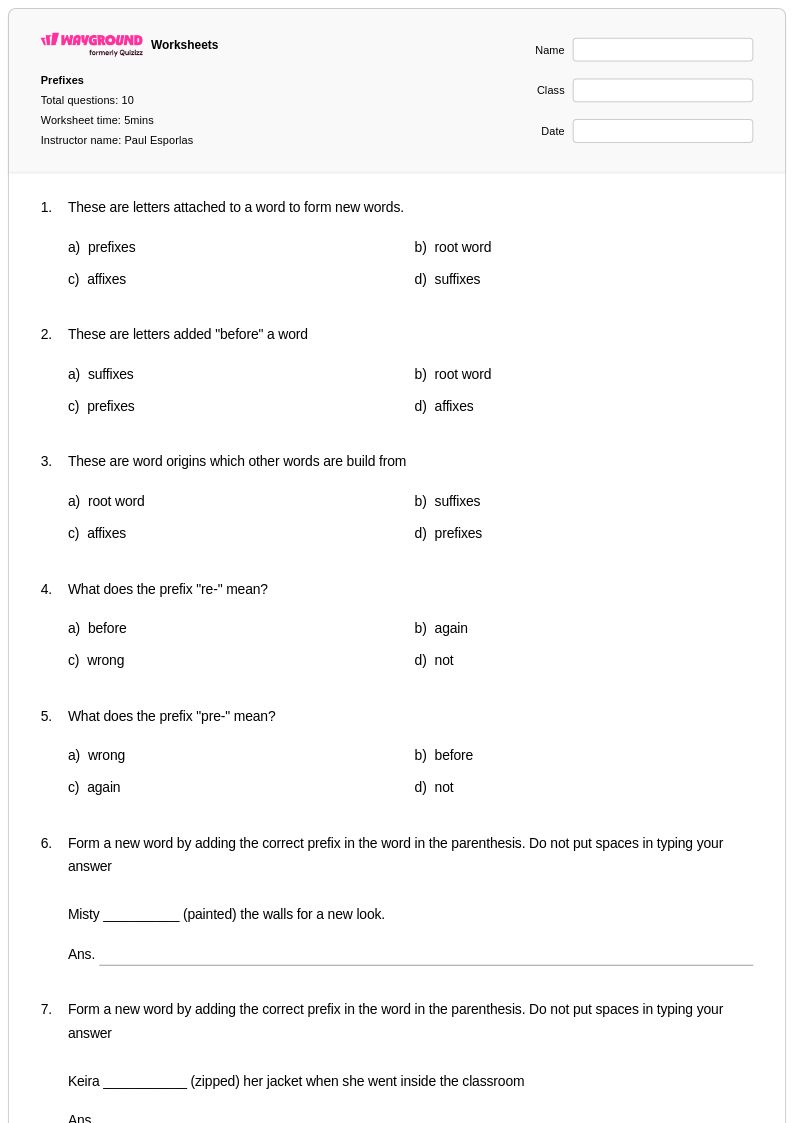
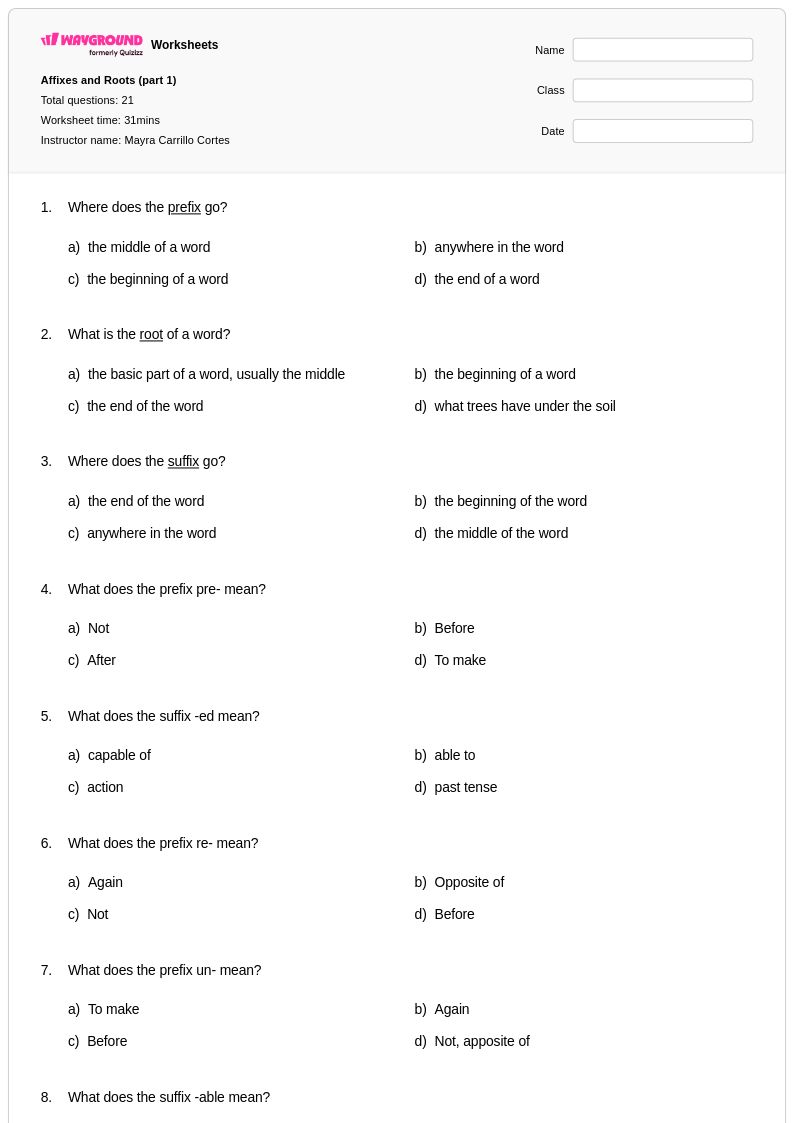
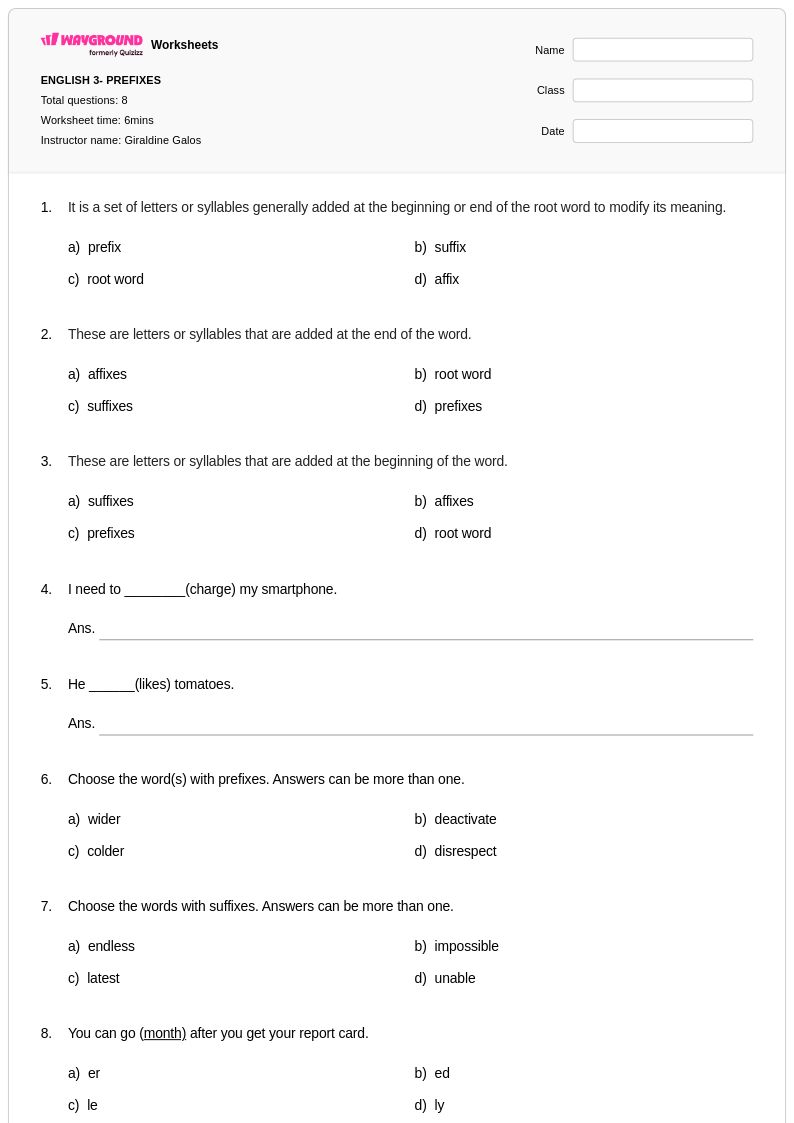
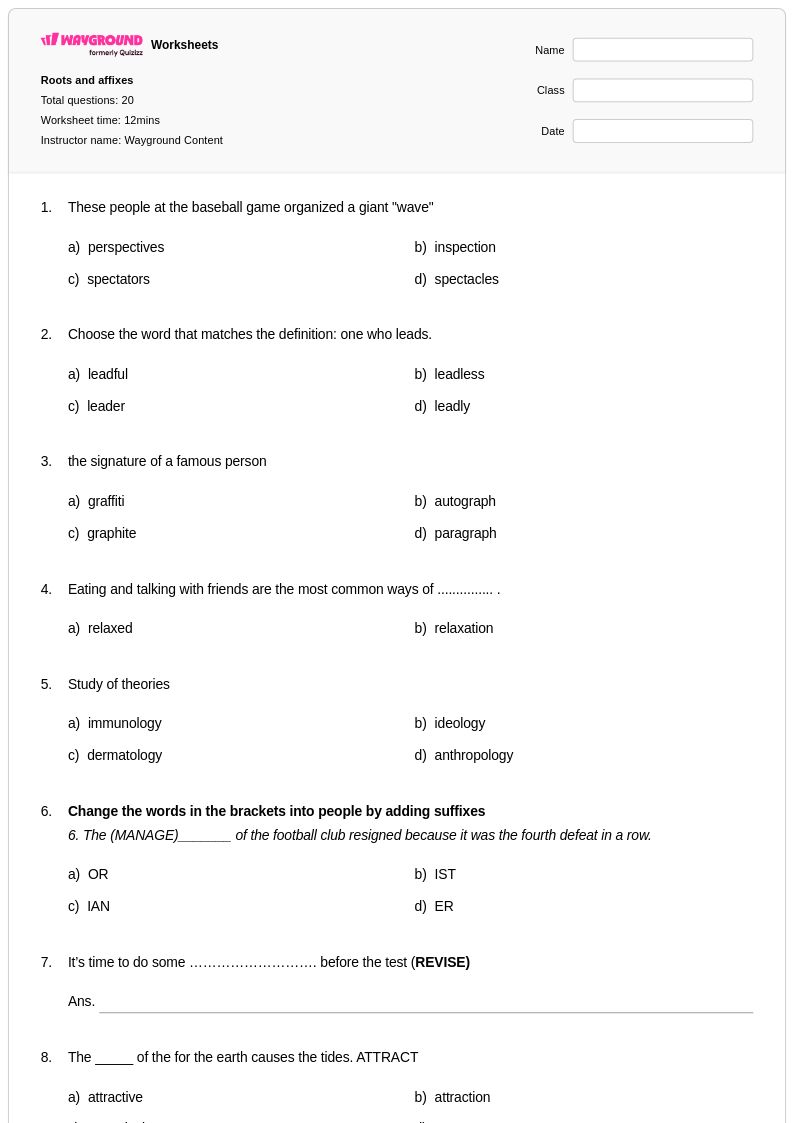
Affixes worksheets for Year 3 students available through Wayground (formerly Quizizz) provide comprehensive practice with prefixes and suffixes that form the foundation of advanced reading and vocabulary skills. These carefully designed printables help third-grade learners recognize common word parts like un-, re-, pre-, -ing, -ed, and -ly, enabling them to decode unfamiliar words and understand how affixes change word meanings. Each worksheet collection includes systematic practice problems that guide students through identifying root words, adding appropriate prefixes and suffixes, and understanding how these word parts affect pronunciation and definition. Teachers can access complete answer keys and free pdf downloads that support both independent practice and guided instruction, making these resources invaluable for building phonics mastery during this critical developmental stage.
Wayground (formerly Quizizz) empowers educators with millions of teacher-created affix worksheets specifically aligned with Year 3 phonics standards and learning objectives. The platform's robust search and filtering capabilities allow teachers to quickly locate materials that match their students' specific needs, whether for initial instruction, remediation, or enrichment activities. These differentiation tools enable customization of worksheet difficulty levels and content focus, ensuring that every student receives appropriately challenging practice with prefixes, suffixes, and root words. Available in both printable and digital formats including downloadable pdfs, these comprehensive worksheet collections streamline lesson planning while providing the flexibility teachers need to address diverse learning styles and support systematic phonics skill development throughout the academic year.
FAQs
How do I teach affixes to students effectively?
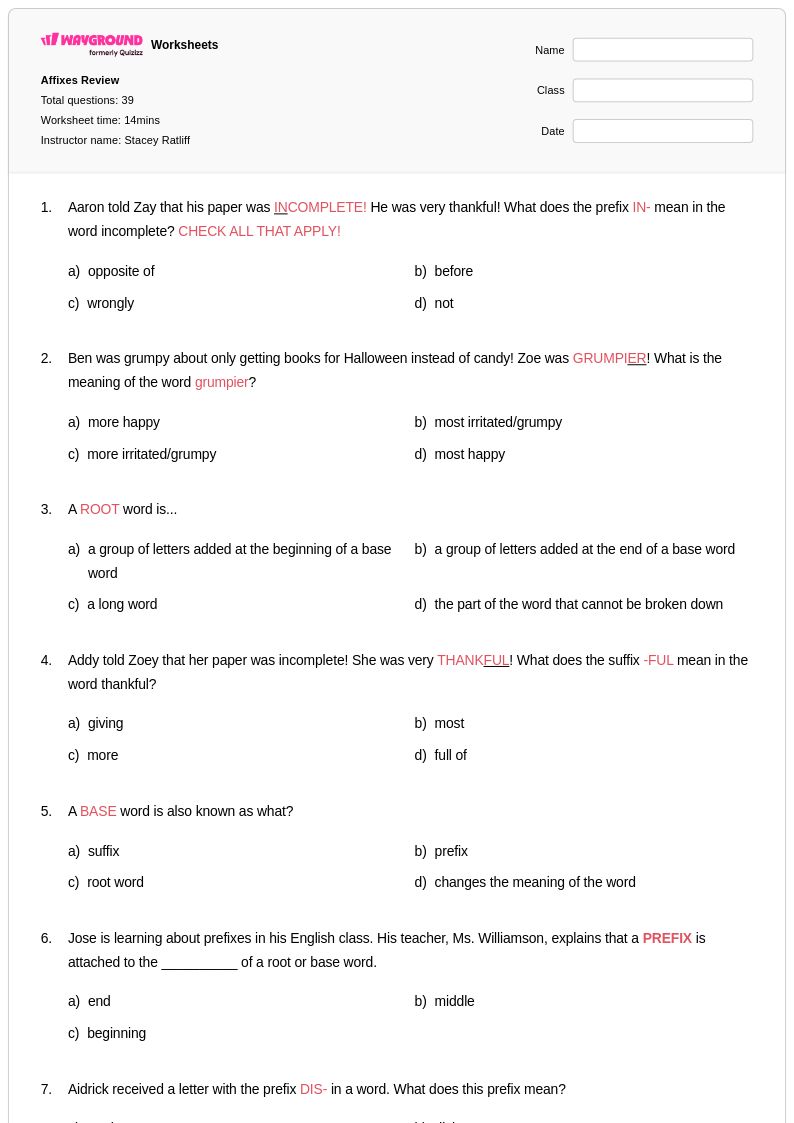
Teach affixes by introducing one word part at a time, starting with high-frequency prefixes like 'un-' and 're-' before moving to suffixes like '-ing,' '-ed,' and '-tion.' Use real word examples students already know, then show how adding an affix changes meaning or function. Building a classroom word wall organized by prefix or suffix families helps reinforce recognition across subjects and reading contexts.
What exercises help students practice identifying prefixes and suffixes?
Effective practice exercises include word-sorting activities where students group words by shared prefixes or suffixes, fill-in-the-blank sentences requiring the correct affix, and word-building tasks where students attach affixes to base words to generate new vocabulary. Decoding unfamiliar words in context is especially valuable because it mirrors real reading demands and reinforces transfer of skills.
What mistakes do students commonly make when working with affixes?
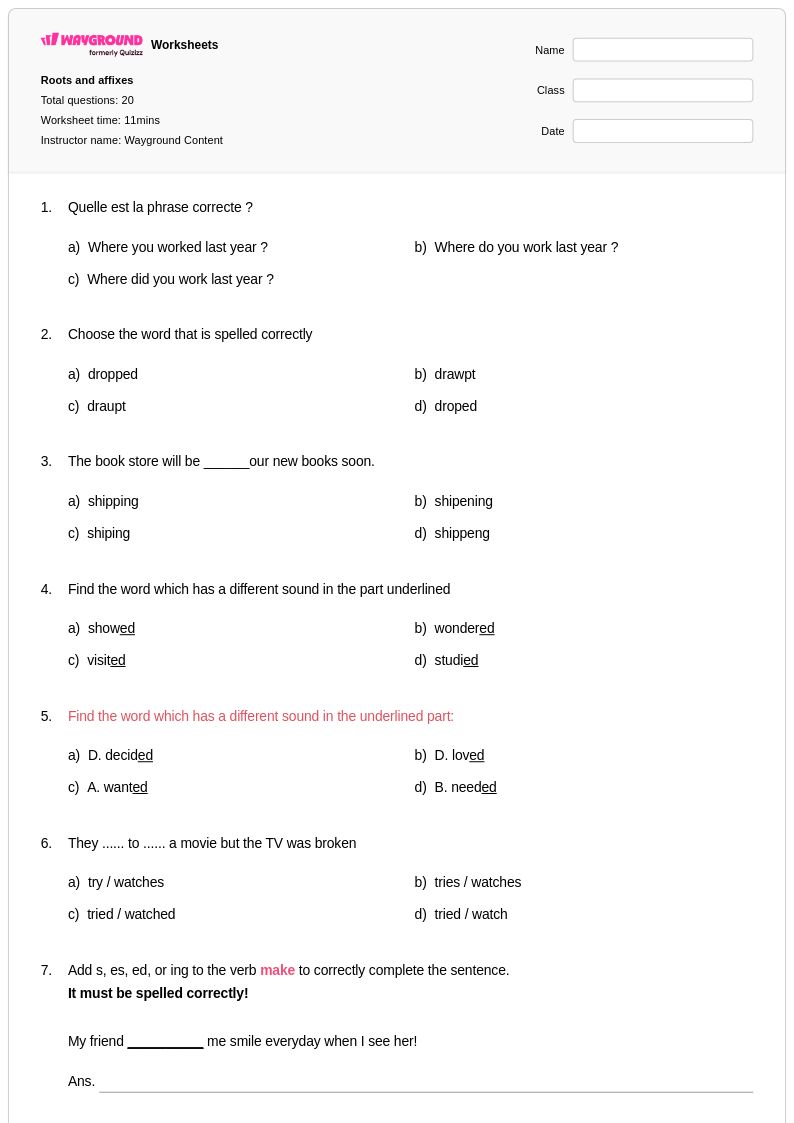
A frequent error is misidentifying letter strings as affixes when they are actually part of the root word — for example, treating 'un' in 'uncle' as the prefix 'un-.' Students also struggle with spelling changes at the boundary between a base word and suffix, such as dropping a final 'e' before '-ing' or doubling a consonant before '-ed.' Explicitly teaching these boundary rules alongside affix meanings reduces these errors significantly.
How can affix worksheets help students improve reading comprehension?
Knowing common prefixes and suffixes gives students a reliable strategy for decoding unfamiliar words without relying on context alone or stopping to look up every word. When students can recognize that 'mis-' signals incorrect action or '-less' signals the absence of something, they can infer meaning on the fly during reading. This automaticity reduces cognitive load and improves overall comprehension and reading fluency.
How do I use Wayground's affixes worksheets in my classroom?
Wayground's affixes worksheets are available as printable PDFs for traditional classroom distribution and homework assignments, as well as in digital formats for technology-integrated or remote learning settings. Teachers can also host worksheets as a quiz directly on Wayground, allowing for interactive online practice with instant feedback. Complete answer keys are included with every worksheet, making grading and formative assessment efficient and straightforward.
How can I differentiate affix instruction for students at different skill levels?
For students who are still developing foundational skills, focus on a small set of the most common prefixes and suffixes and provide sentence-level context for each word. More advanced students can be challenged with multisyllabic words, Latin and Greek roots, or tasks requiring them to generate original sentences using newly formed words. On Wayground, teachers can apply individual accommodations such as reduced answer choices or read-aloud support to adjust the difficulty and accessibility of digital worksheet sessions for specific learners.