
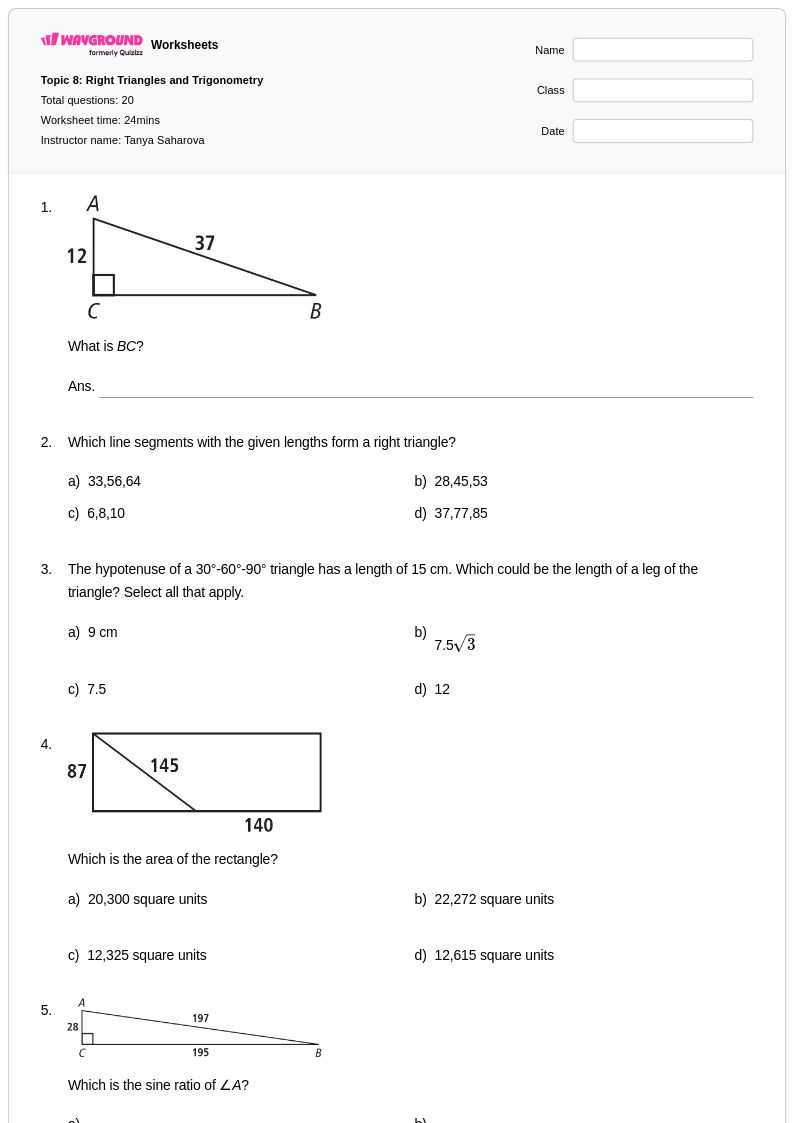
20 Q
10th
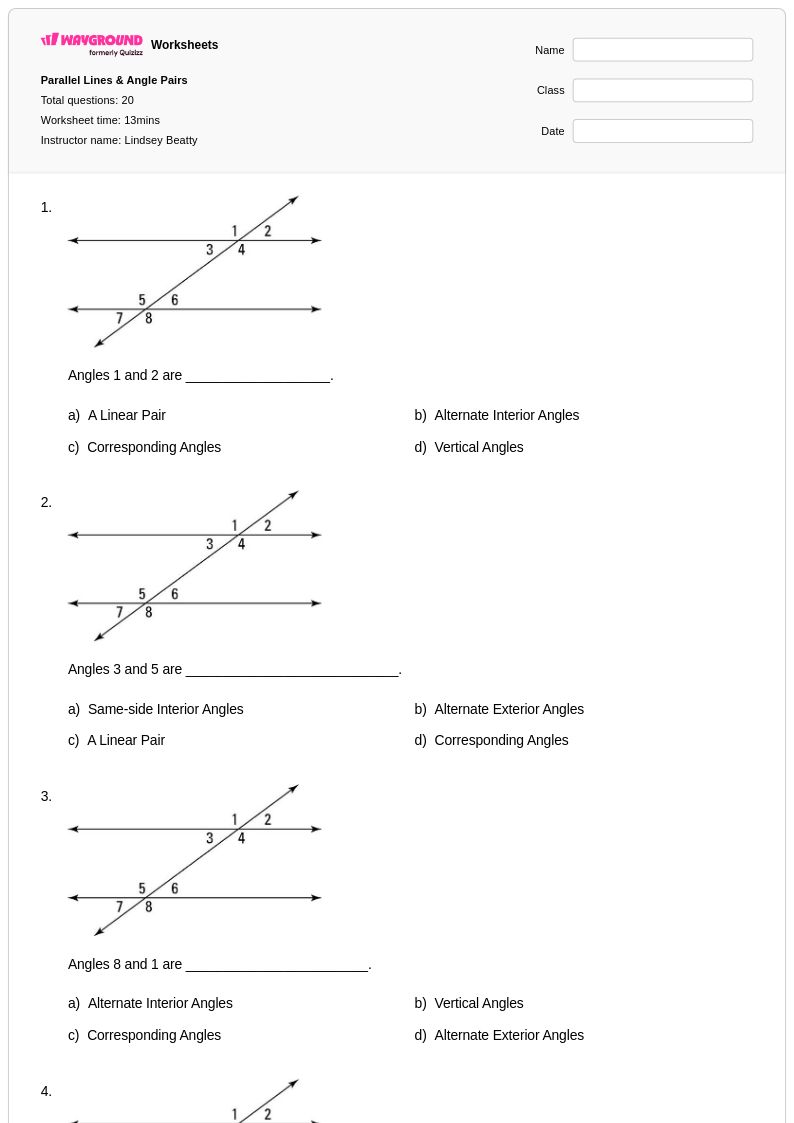
20 Q
9th - 12th
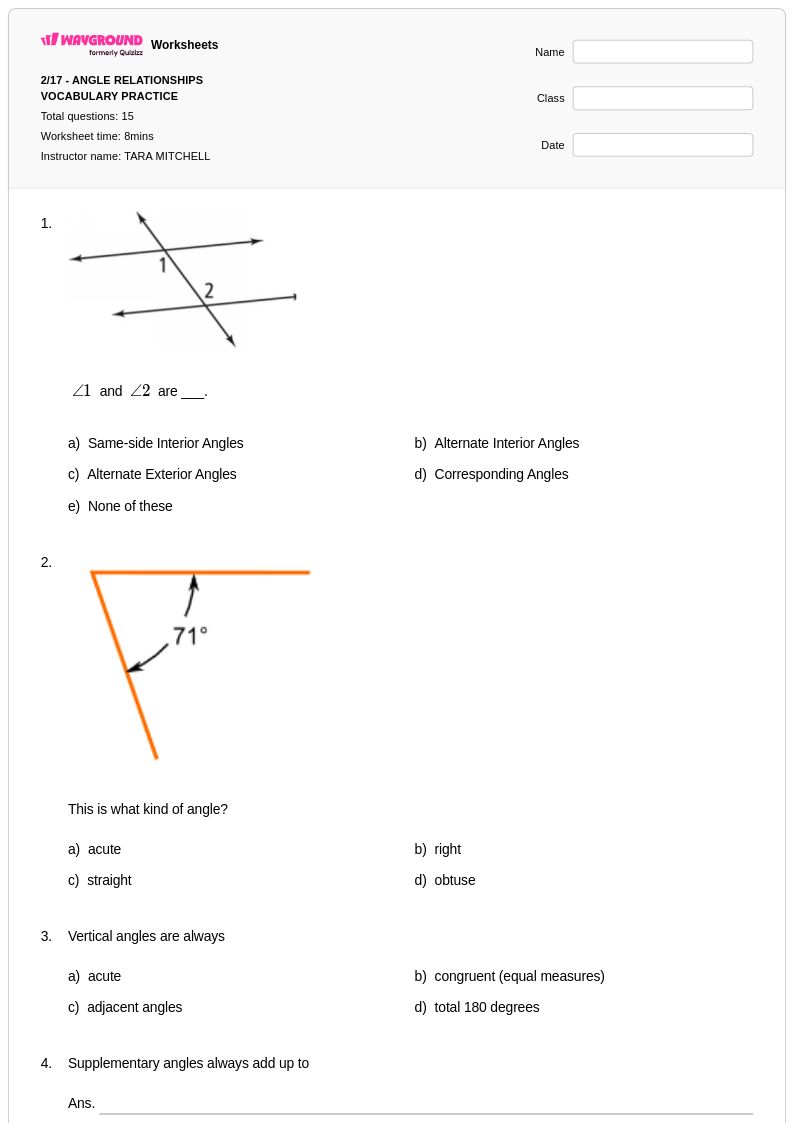
15 Q
8th
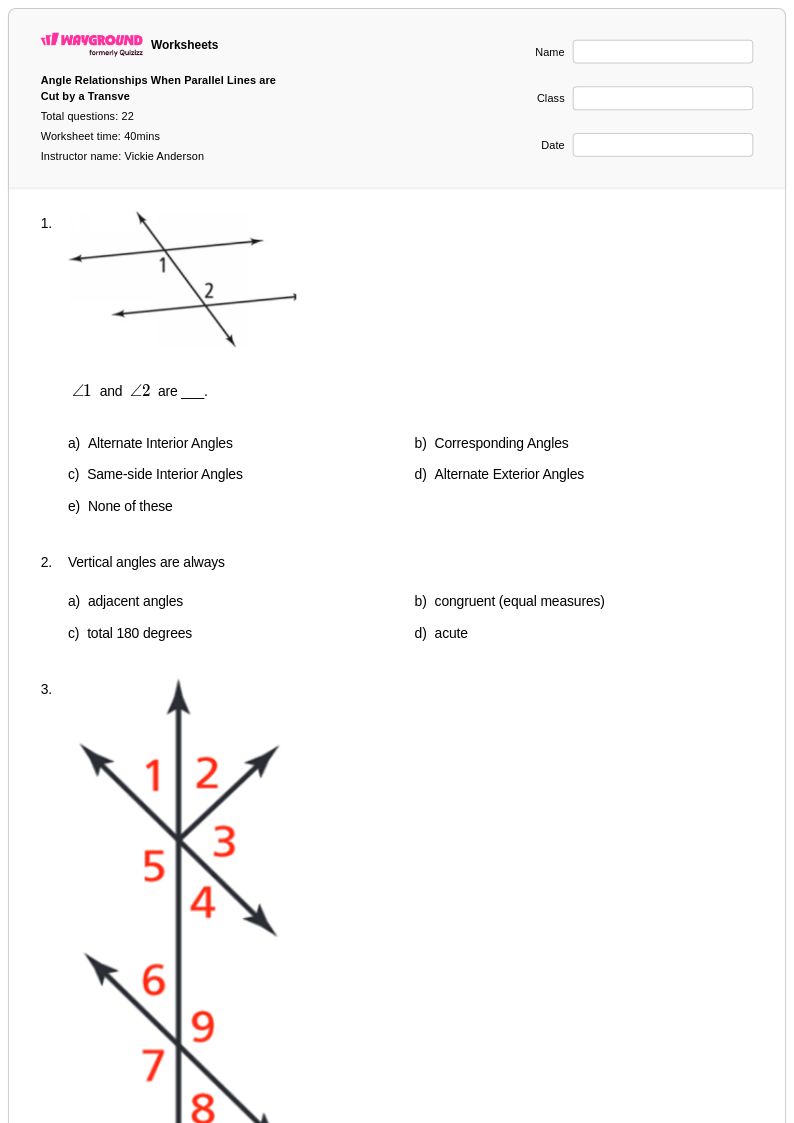
22 Q
8th
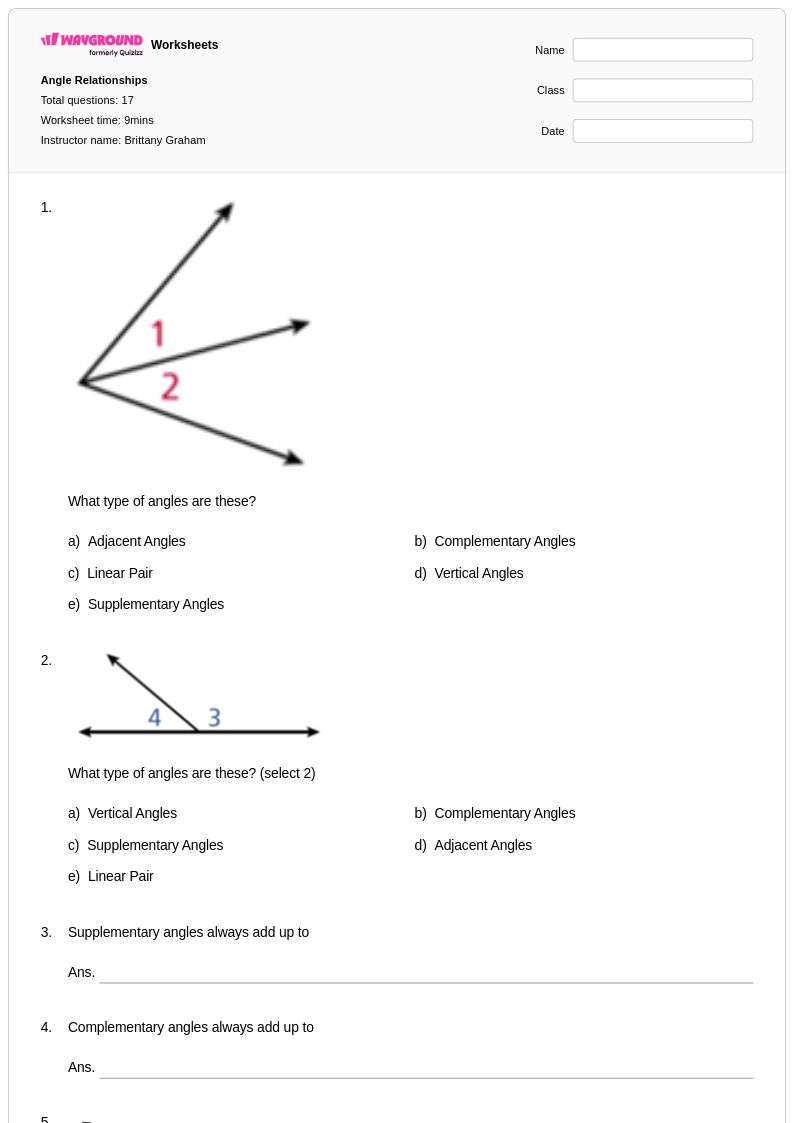
17 Q
9th - 10th
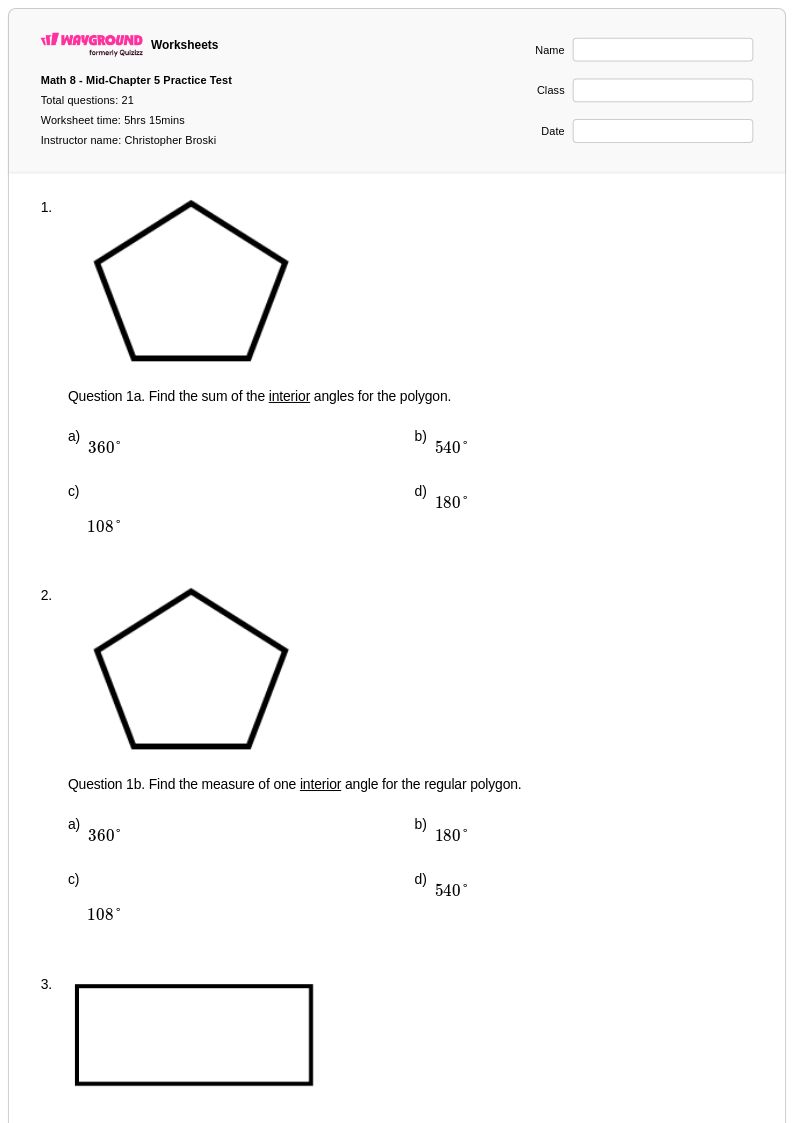
21 Q
8th
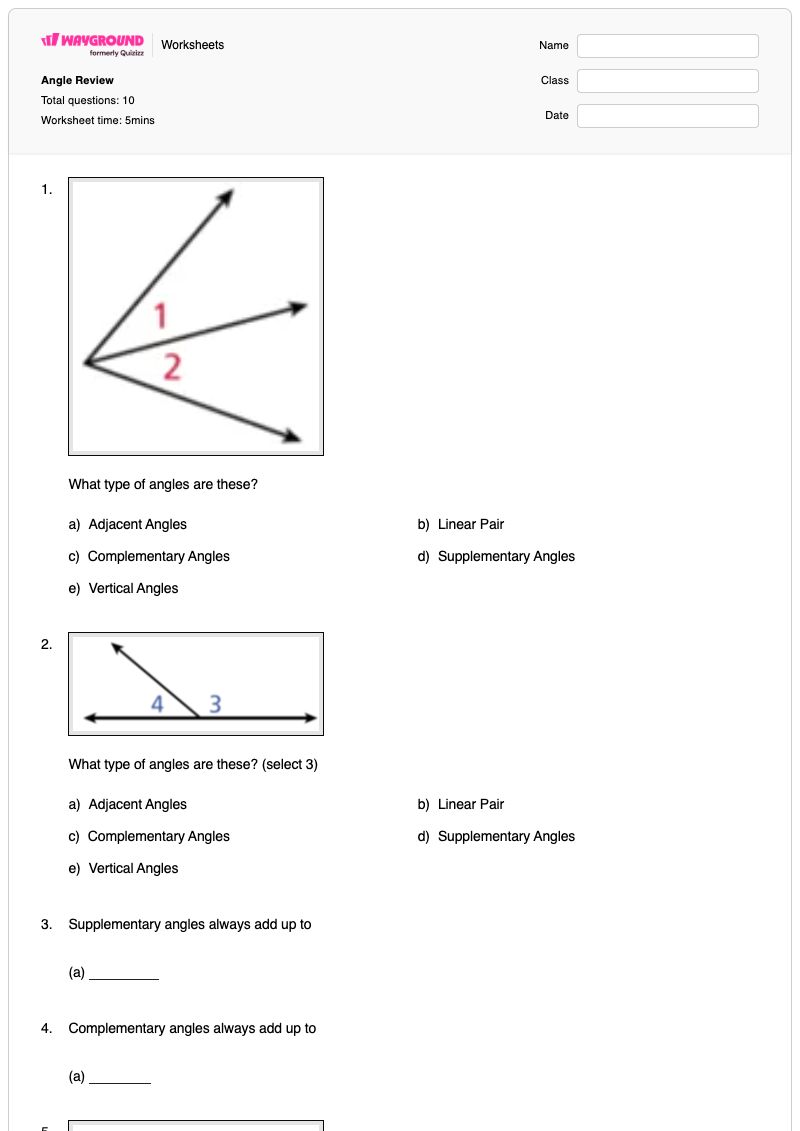
10 Q
9th - 10th
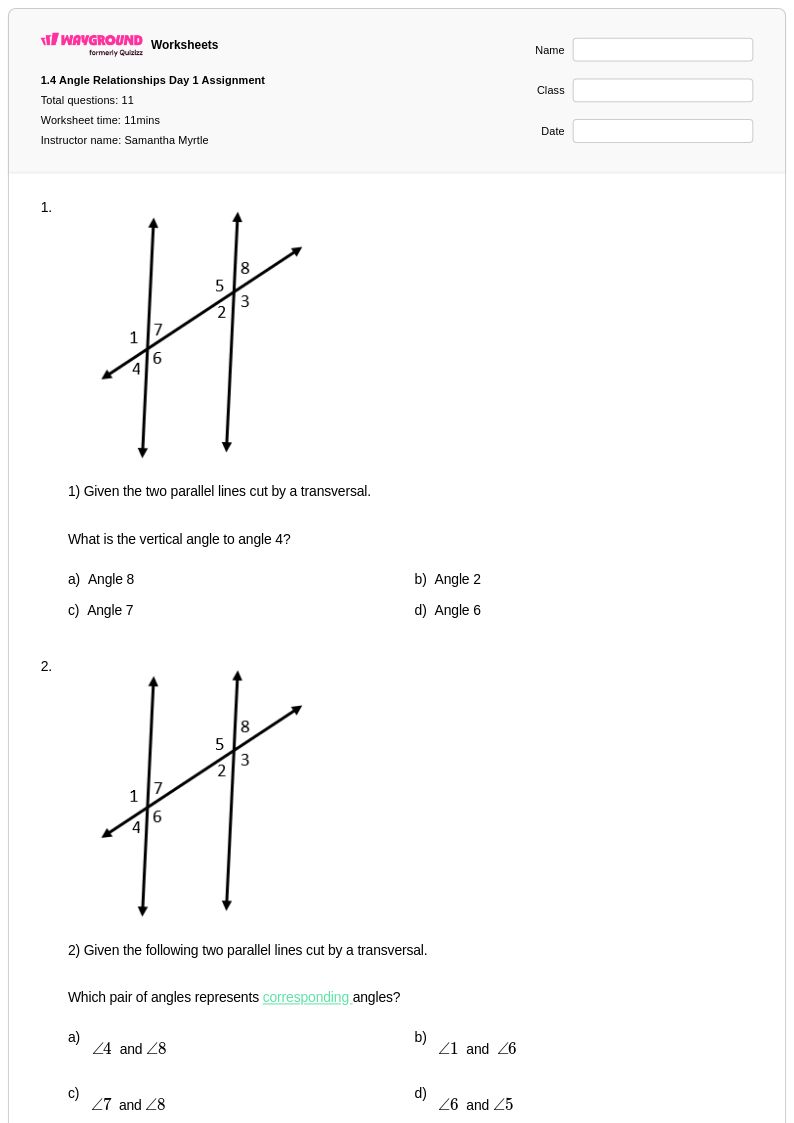
11 Q
9th - 12th
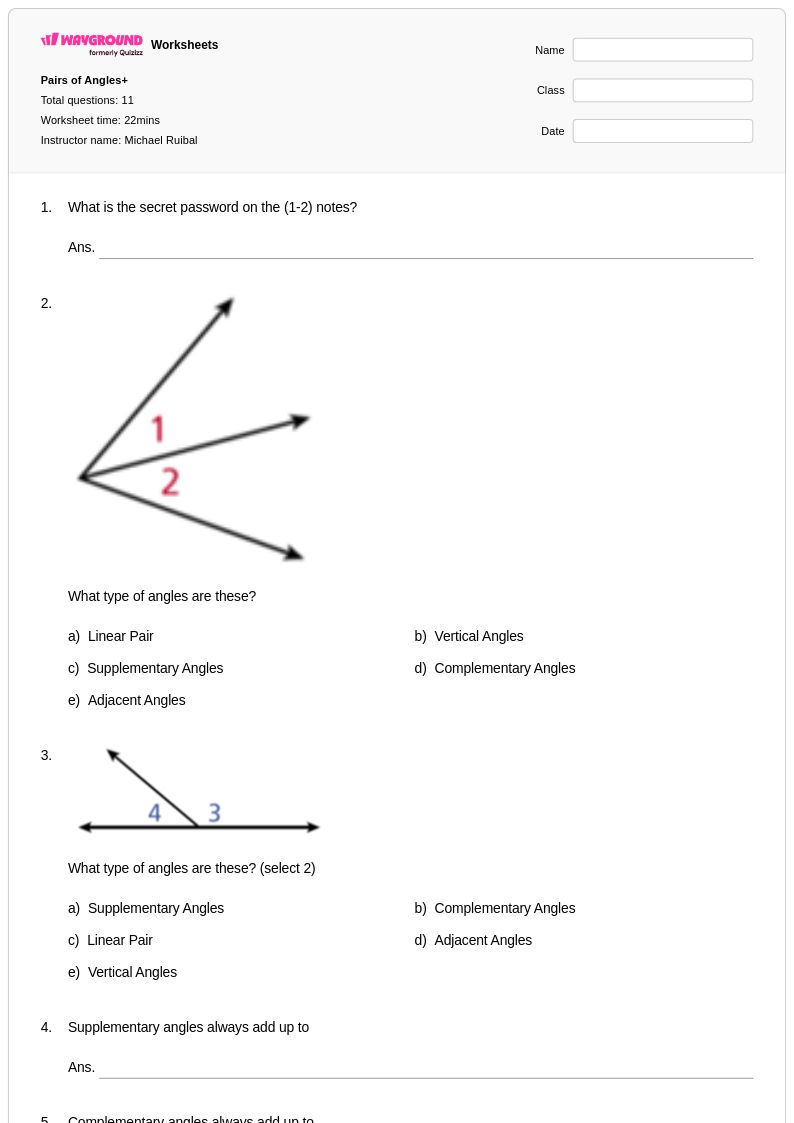
11 Q
10th - 12th
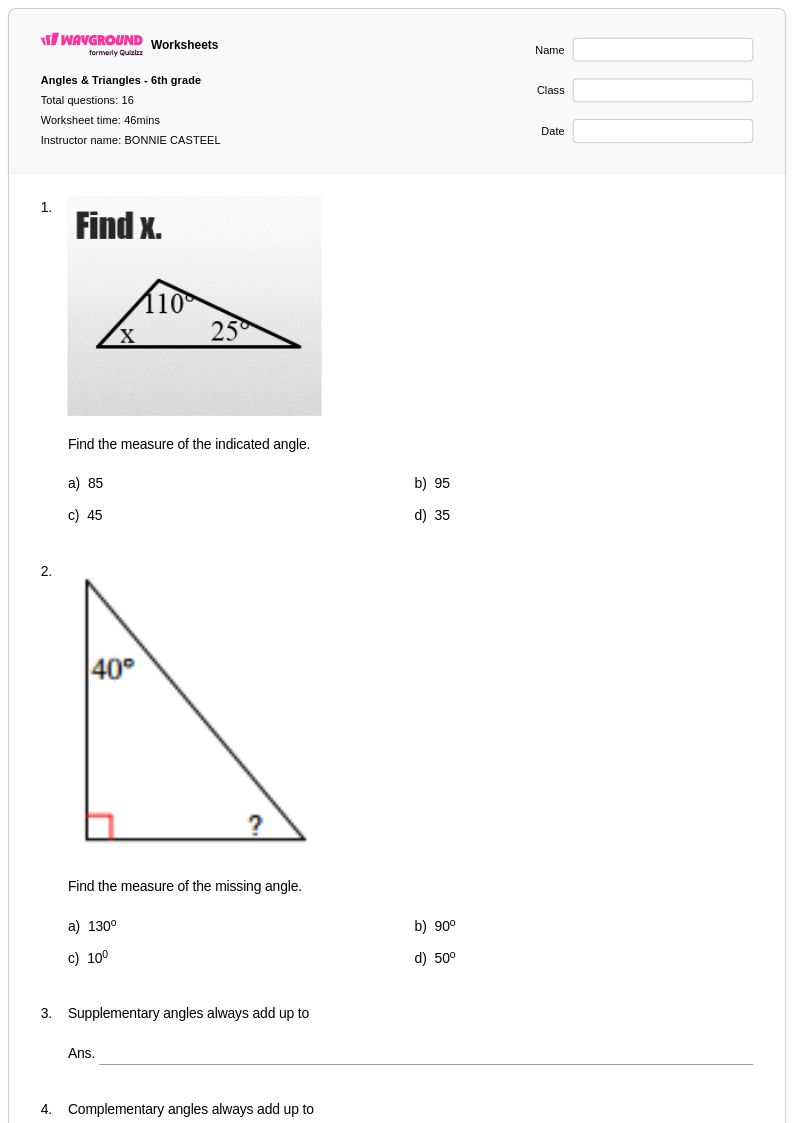
16 Q
6th
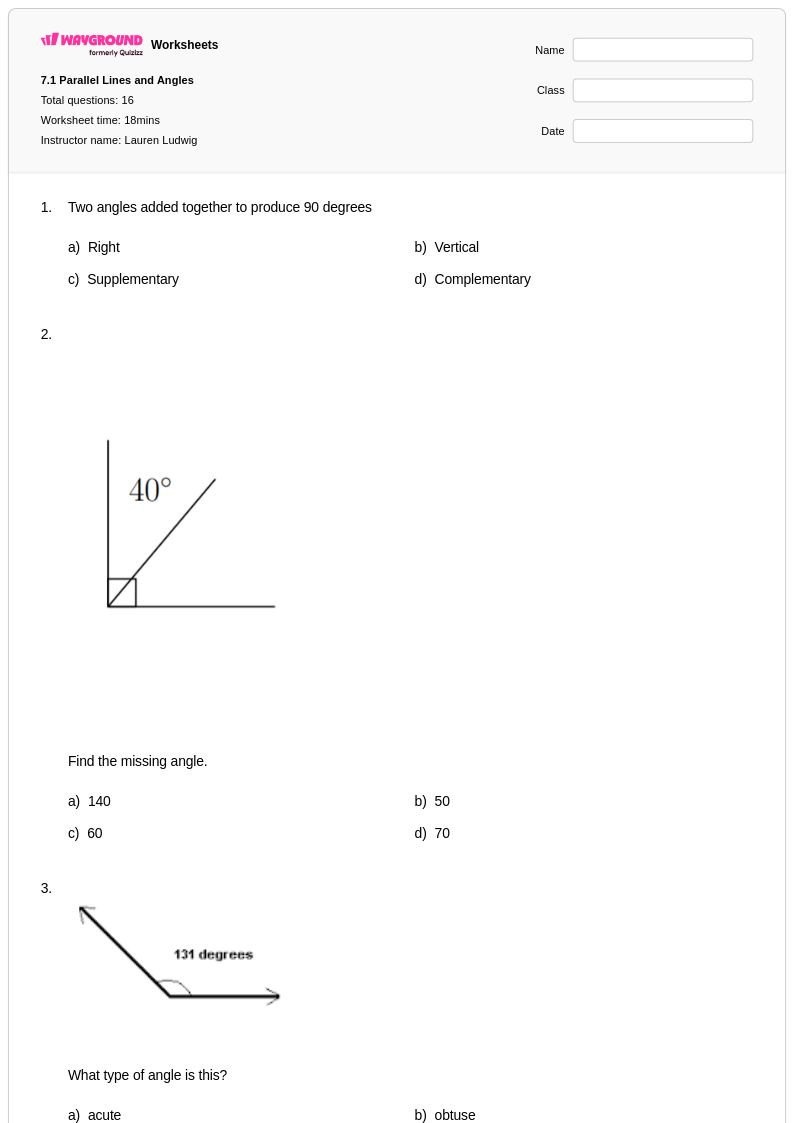
16 Q
9th
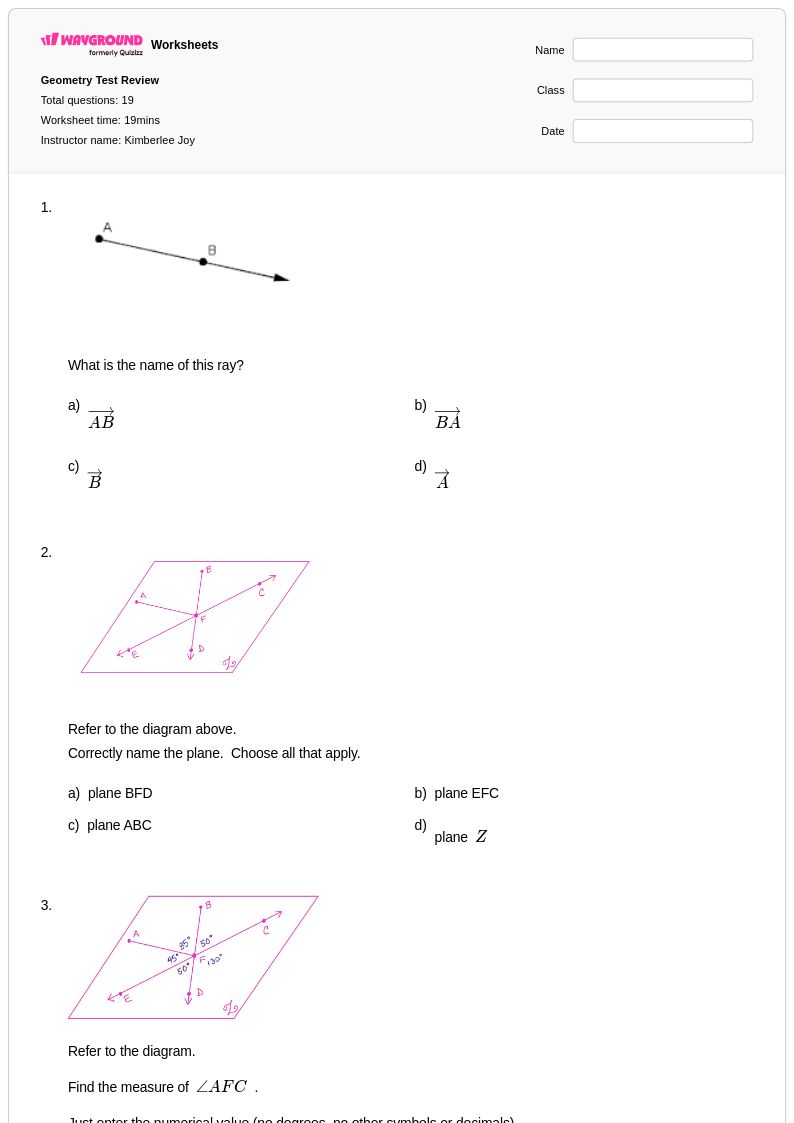
19 Q
9th
10 Q
10th - 11th
11 Q
9th - 10th
14 Q
7th - 10th
20 Q
8th
19 Q
10th
15 Q
7th - Uni
15 Q
9th
17 Q
6th - 7th
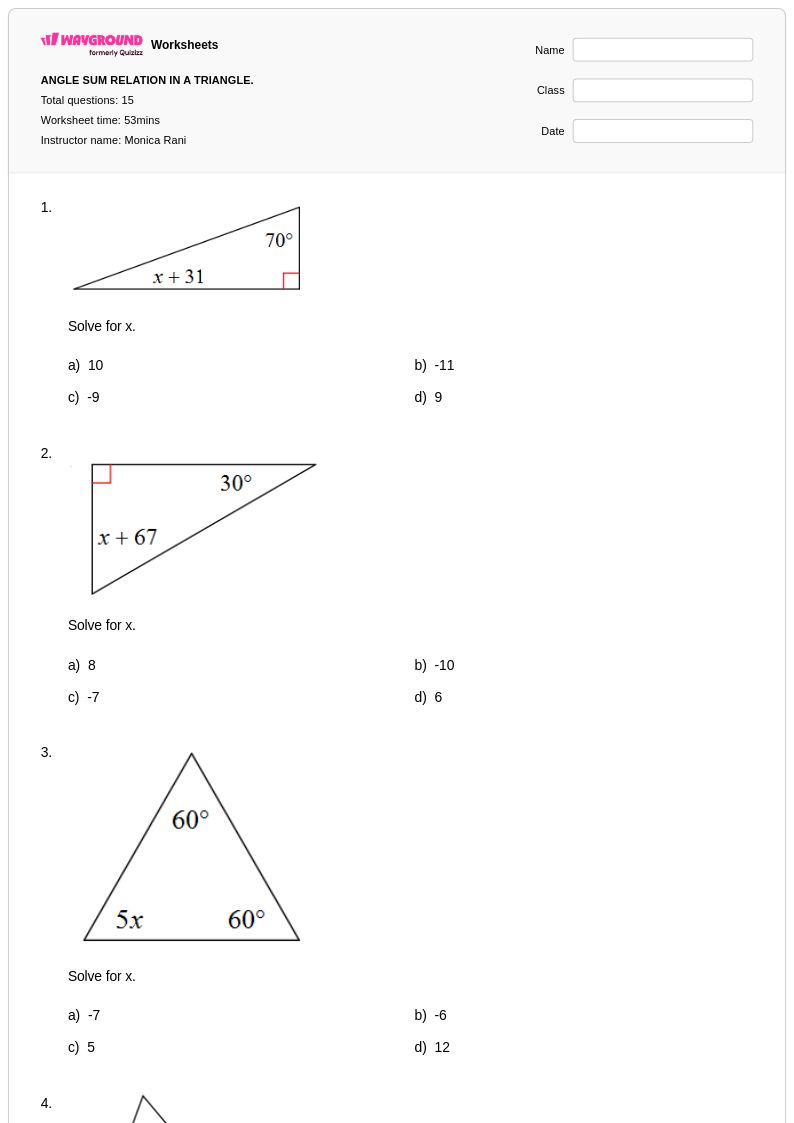
15 Q
8th
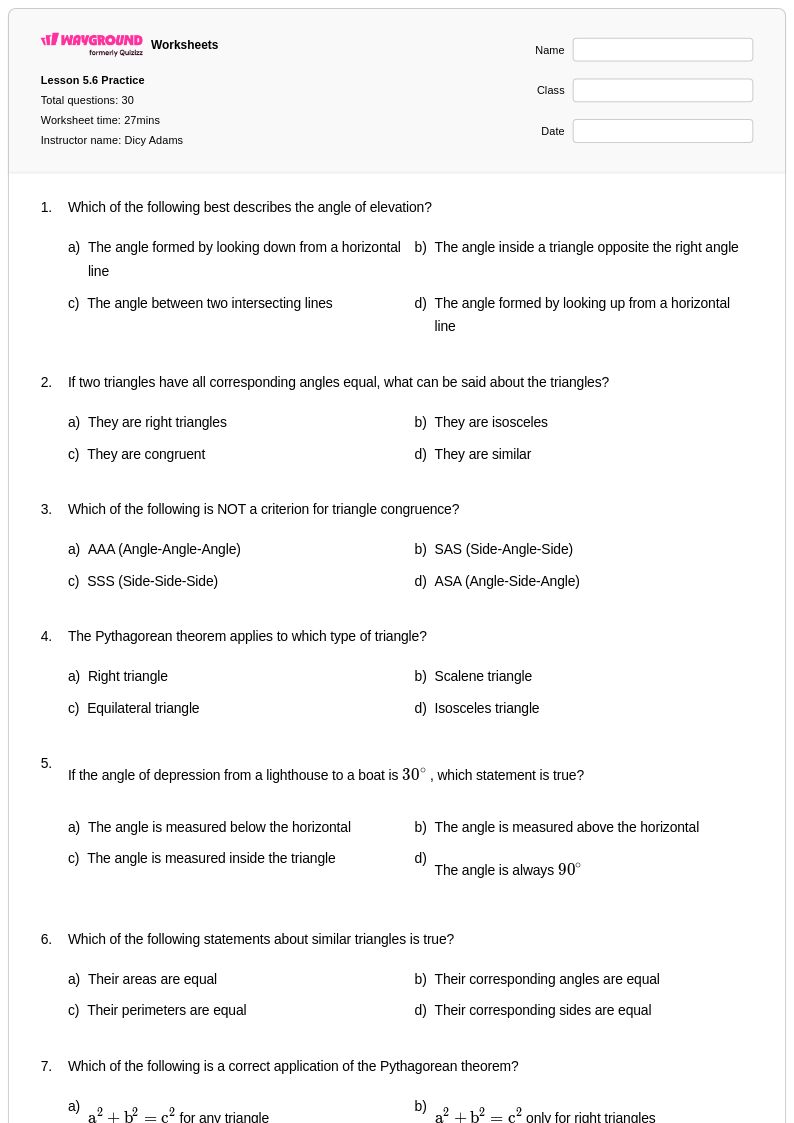
30 Q
10th
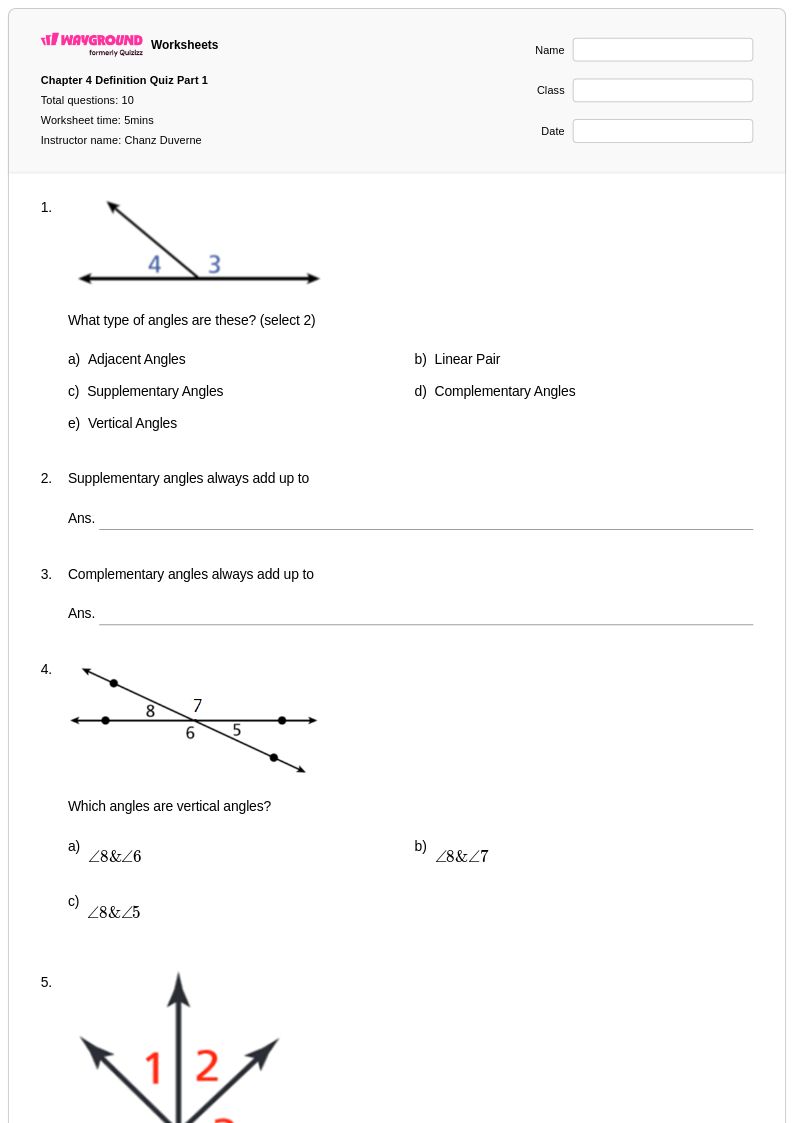
10 Q
10th
Explore Worksheets by Subjects
Explore printable Angle of Elevation and Depression worksheets
Angle of elevation and depression worksheets available through Wayground (formerly Quizizz) provide students with comprehensive practice in applying trigonometric principles to real-world scenarios involving vertical angles and line-of-sight calculations. These expertly designed resources strengthen essential skills including identifying reference angles, calculating distances and heights using sine, cosine, and tangent ratios, and interpreting word problems that involve observers looking up or down at objects. Students work through systematic practice problems that build proficiency in drawing accurate diagrams, labeling angle relationships correctly, and selecting appropriate trigonometric functions to solve for unknown measurements. Each worksheet collection includes detailed answer keys and is available as free printables in convenient pdf format, allowing educators to seamlessly integrate these materials into classroom instruction and homework assignments.
Wayground (formerly Quizizz) empowers mathematics teachers with access to millions of teacher-created resources specifically focused on angle of elevation and depression concepts, featuring robust search and filtering capabilities that help educators quickly locate worksheets aligned with their curriculum standards and student needs. The platform's differentiation tools enable teachers to customize problem difficulty levels and provide targeted practice for diverse learning abilities, while flexible formatting options support both printable pdf distribution and interactive digital assignments. These comprehensive worksheet collections facilitate effective lesson planning by offering scaffolded practice sequences that progress from basic angle identification to complex multi-step problem solving, making them invaluable for initial skill development, remediation support, and enrichment activities that challenge advanced learners to apply trigonometric concepts in increasingly sophisticated real-world contexts.
FAQs
How do I teach angles of elevation and depression?
What exercises help students practice angles of elevation and depression?
What mistakes do students commonly make with angles of elevation and depression?
How can I use an angle of elevation and depression worksheet in class?
How do angles of elevation and depression fit into the Common Core math progression?
How can I differentiate elevation-and-depression problems for a mixed-ability class?