Enhance students' understanding of assets and liabilities with Wayground's free economics worksheets featuring comprehensive practice problems, printable PDFs, and detailed answer keys for effective financial literacy learning.
Explore printable Assets and Liabilities worksheets
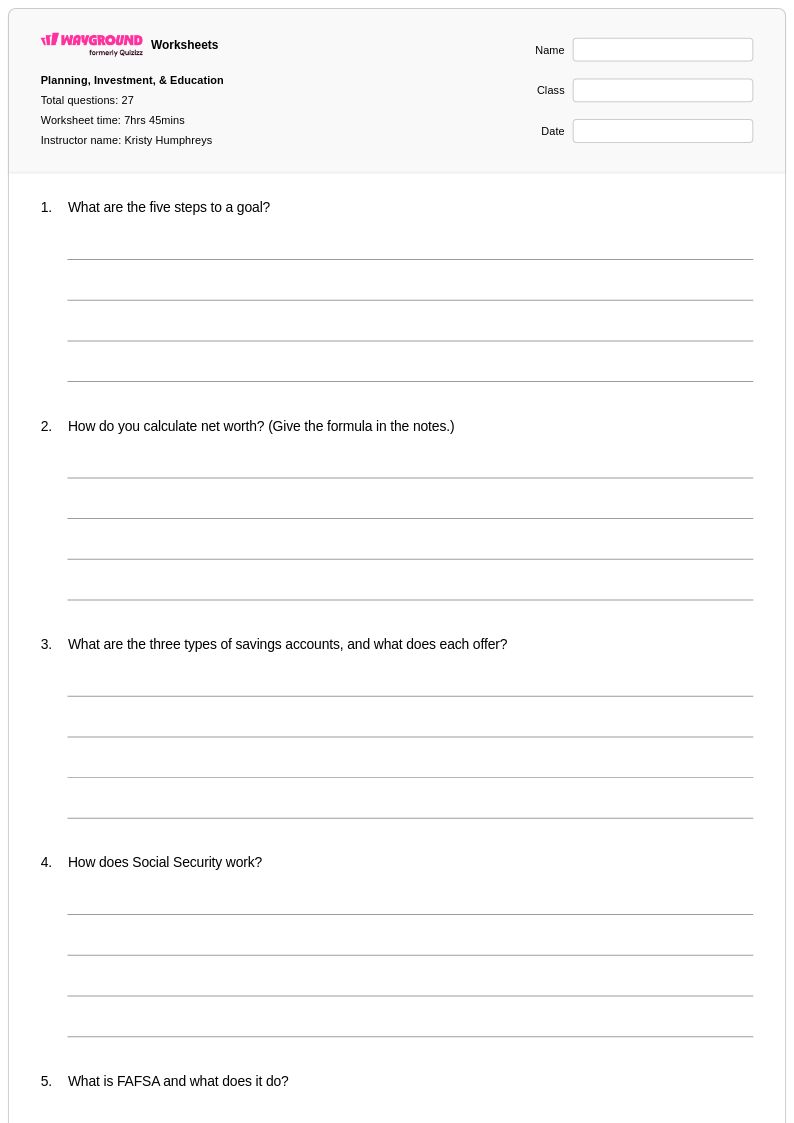
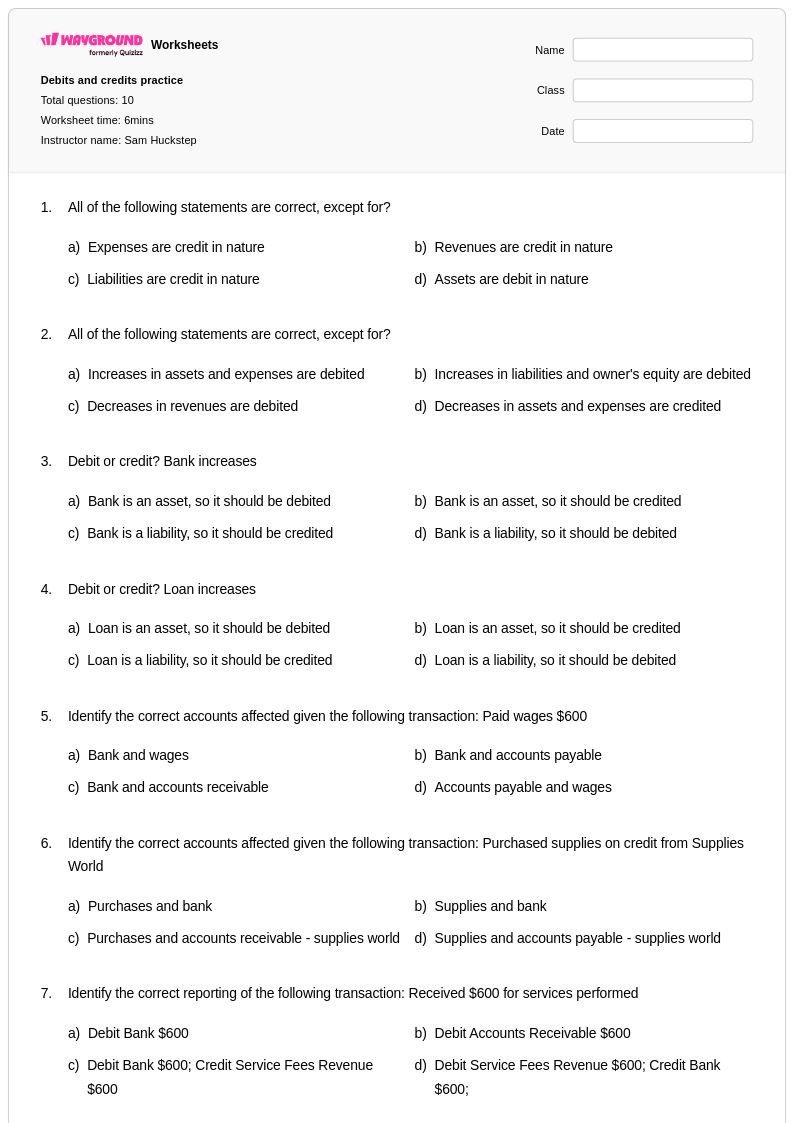
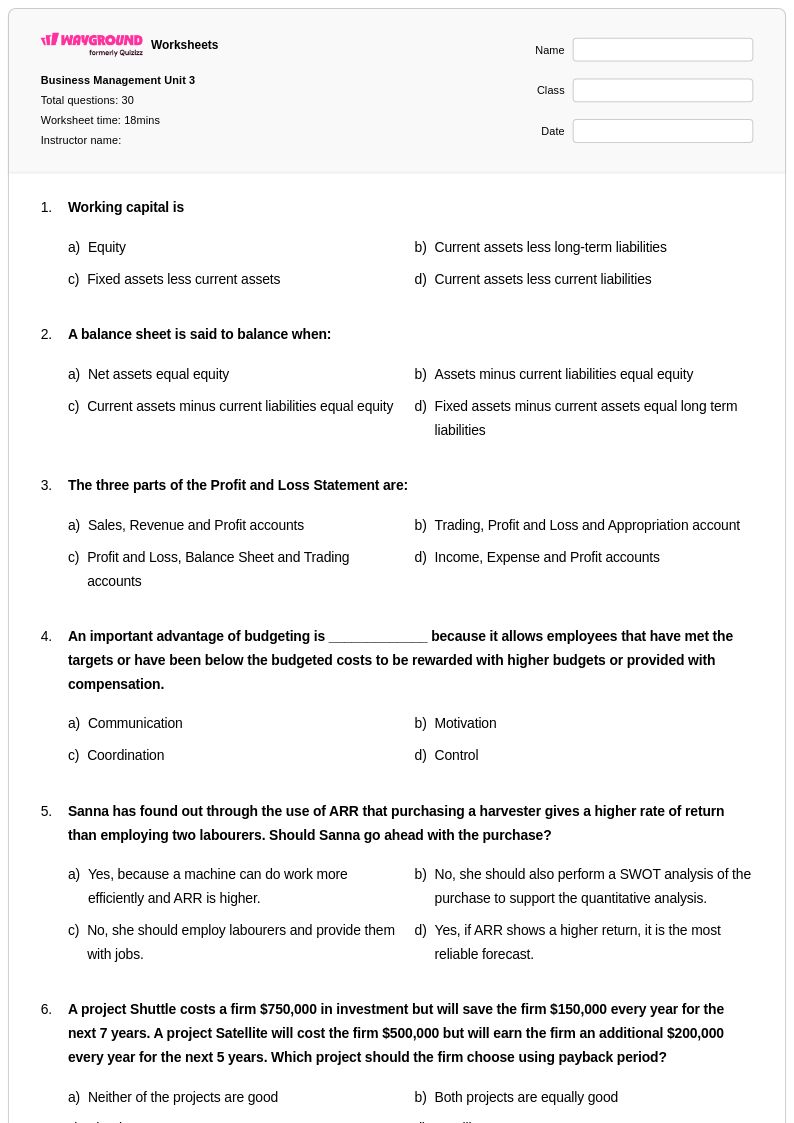
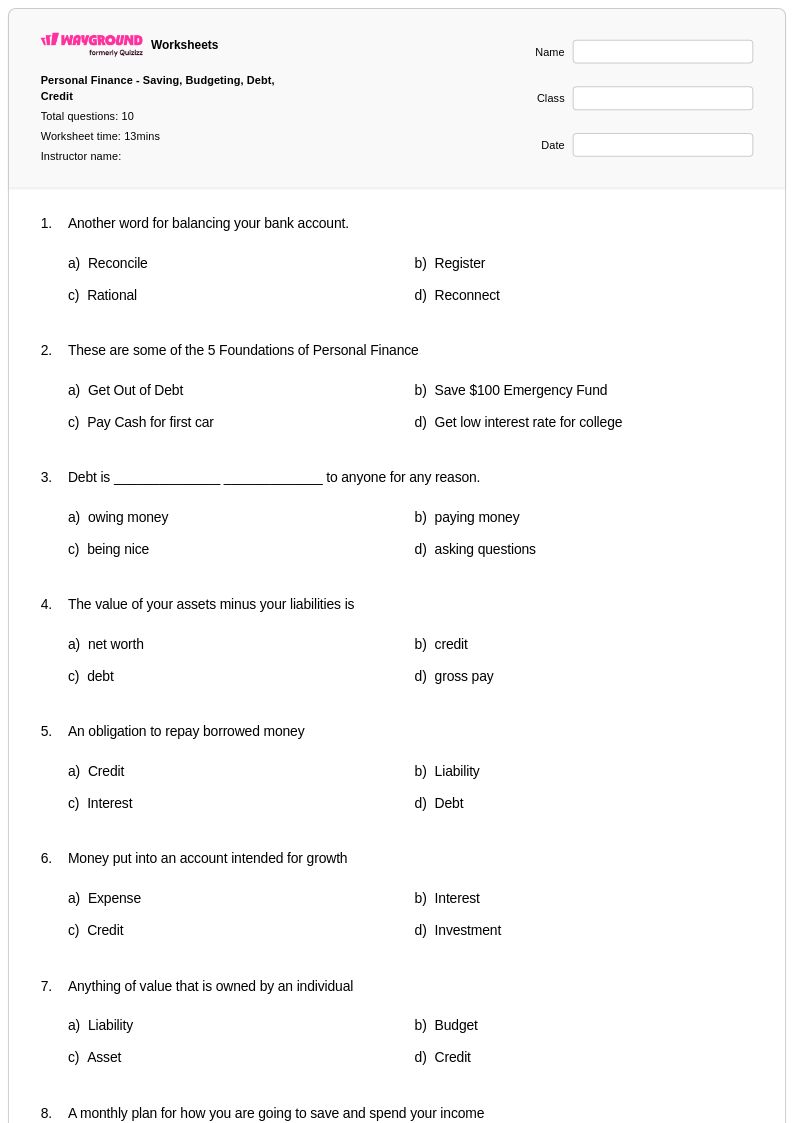
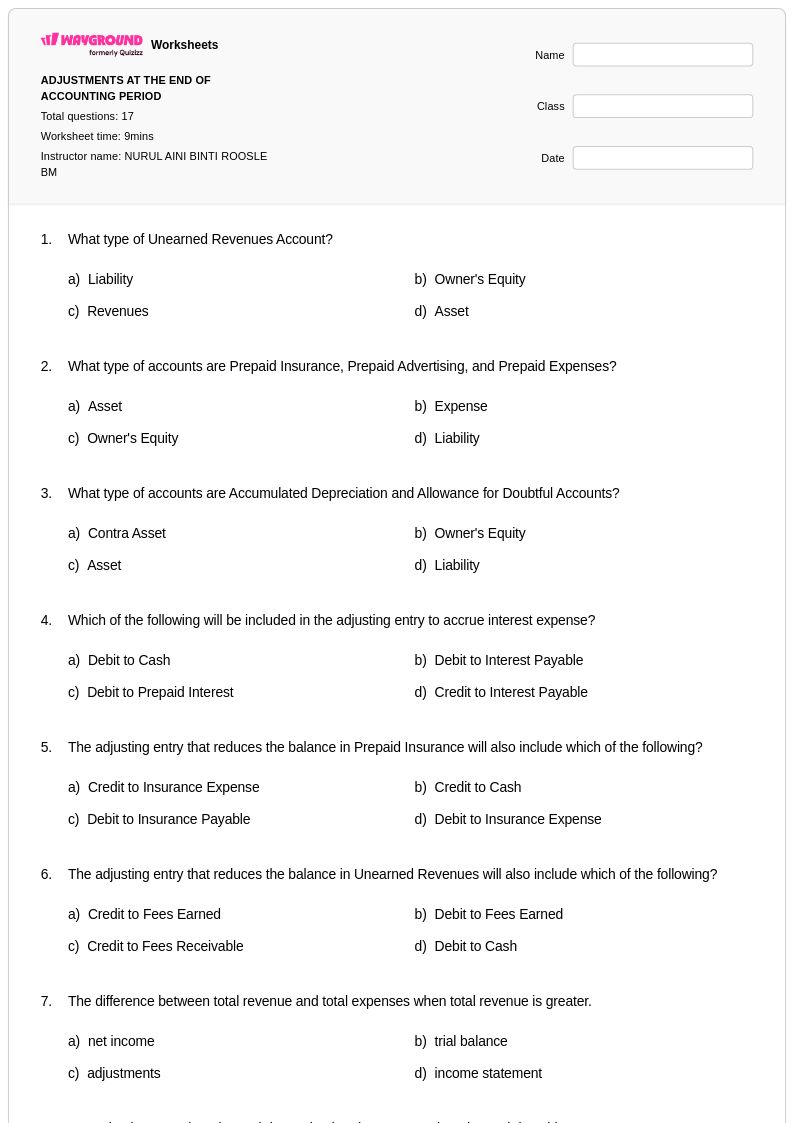
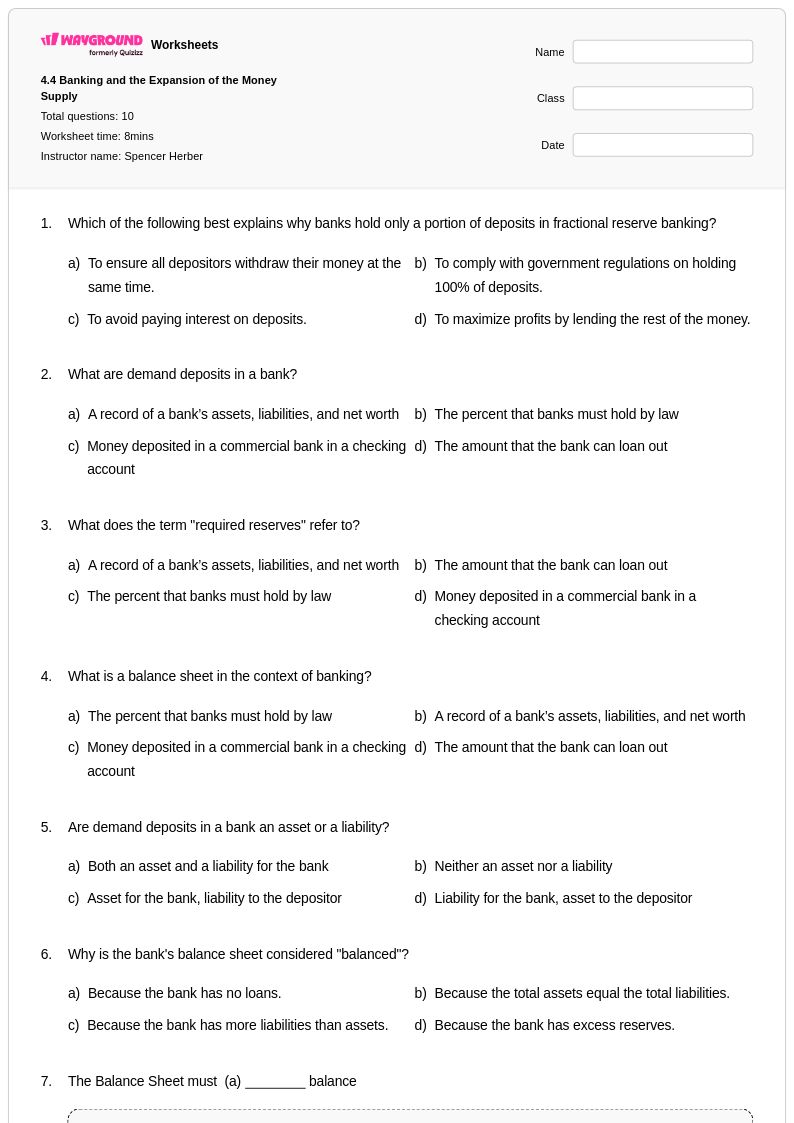
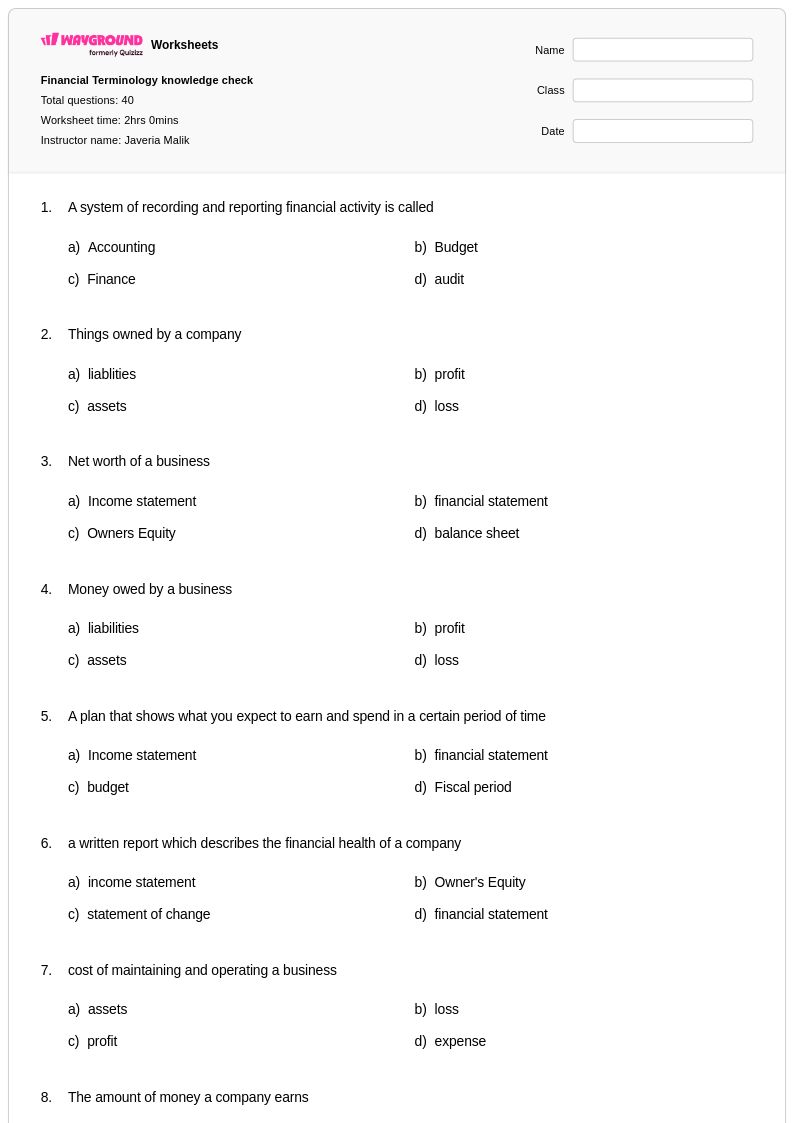
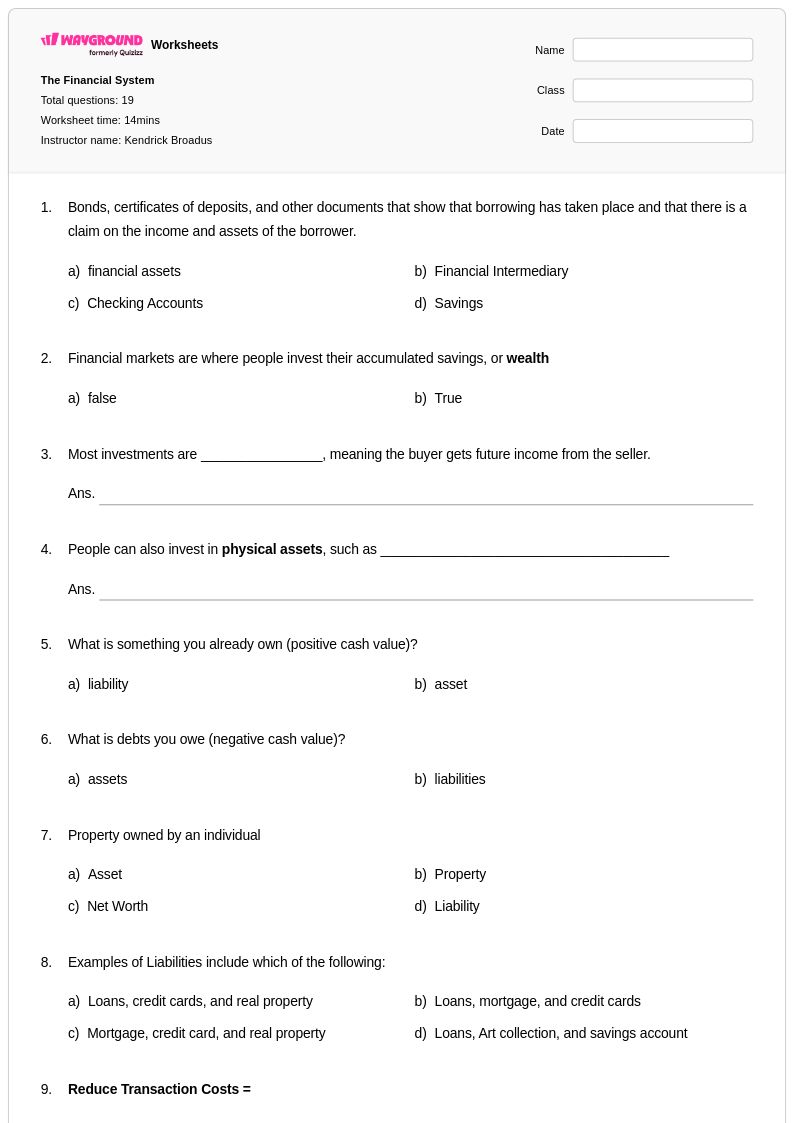
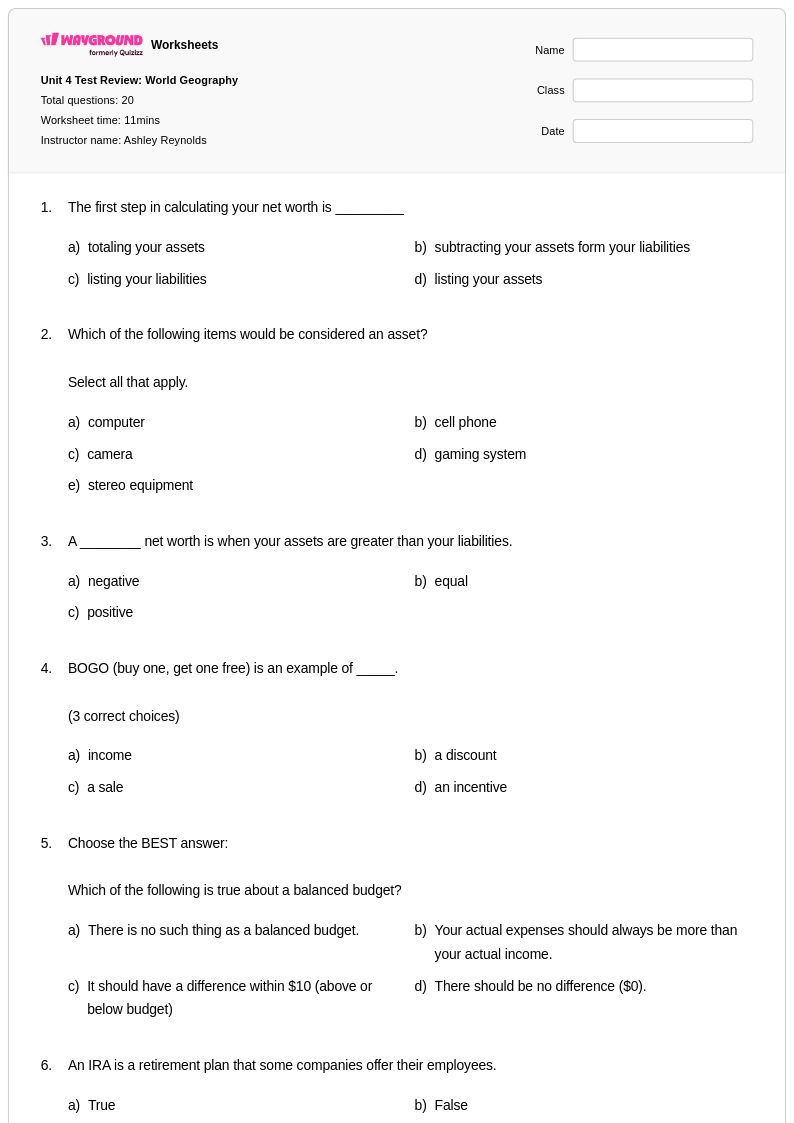
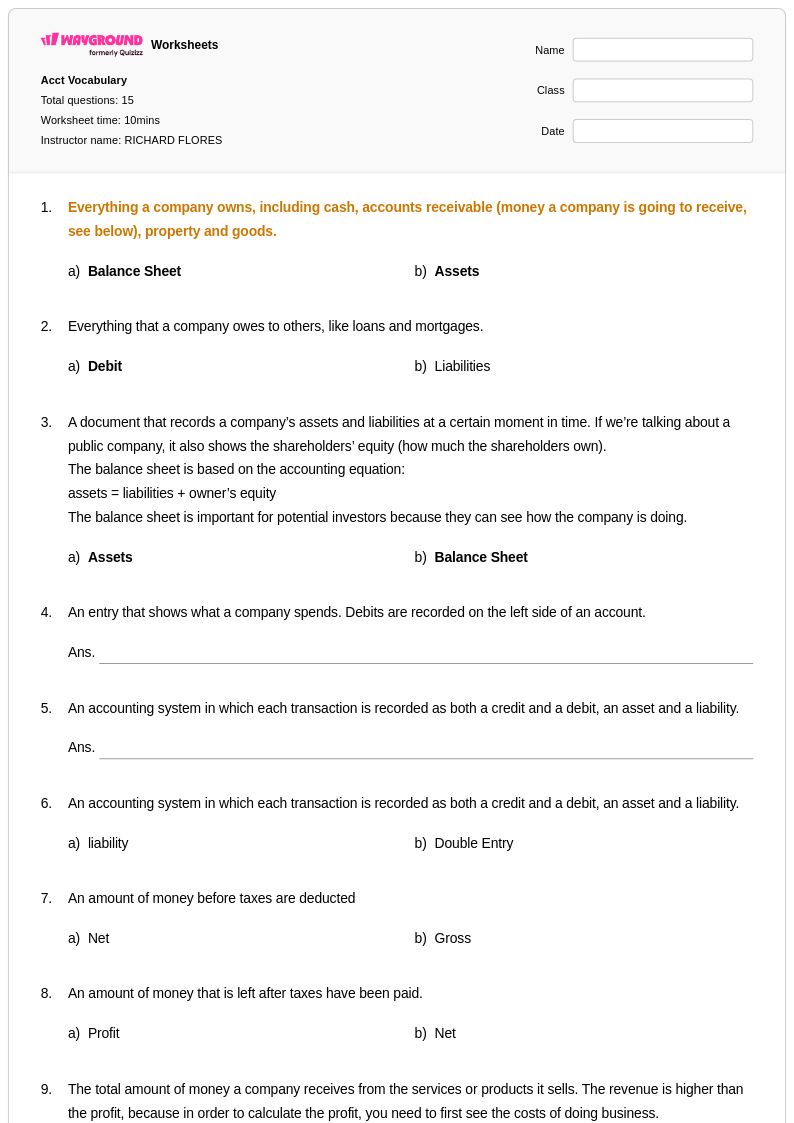
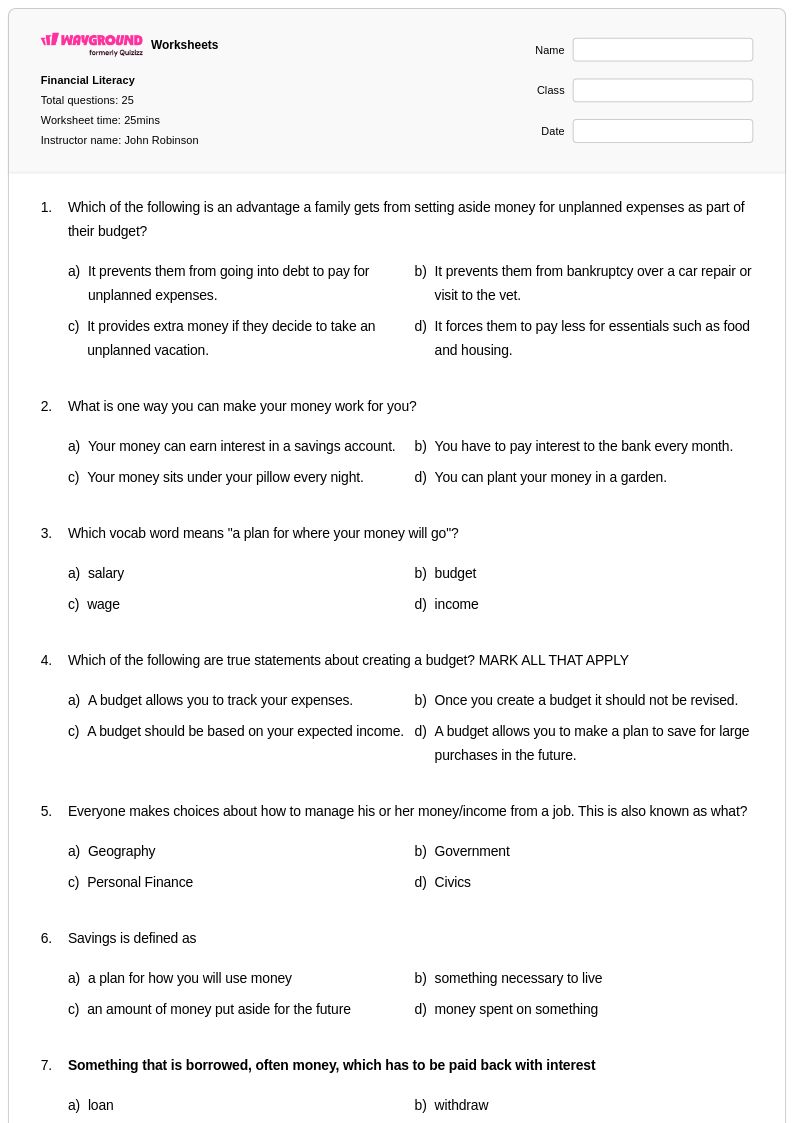
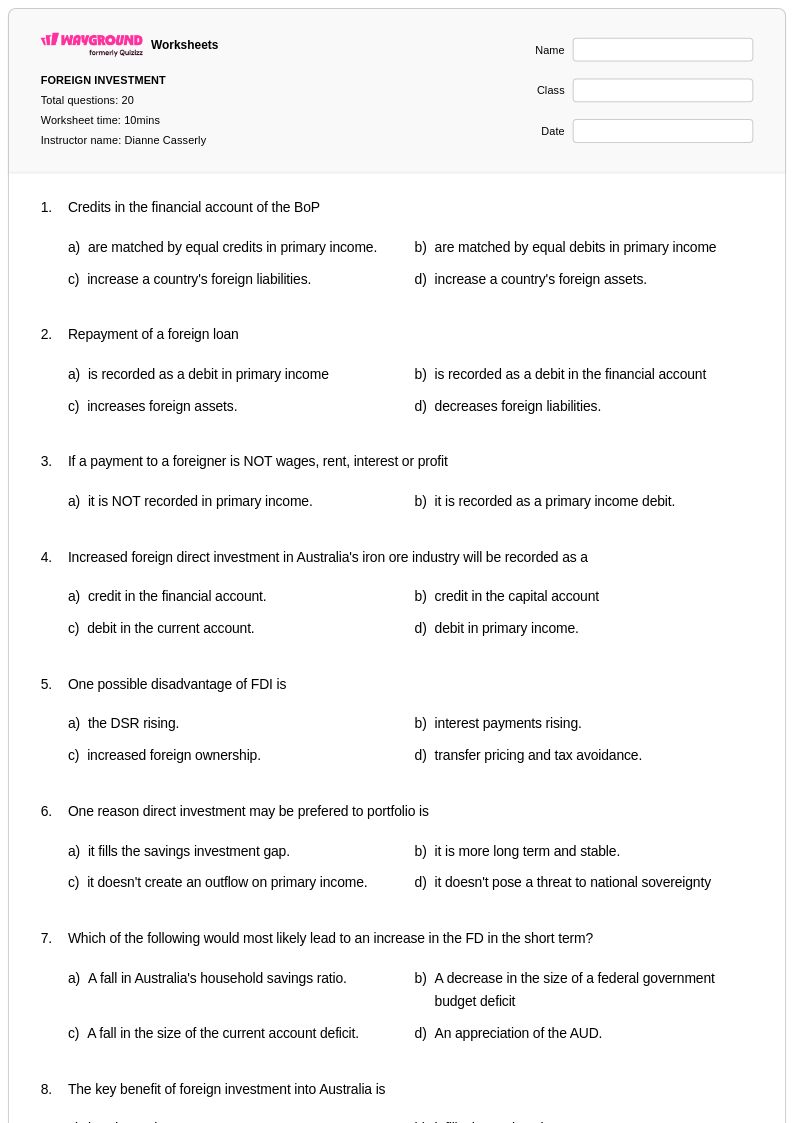
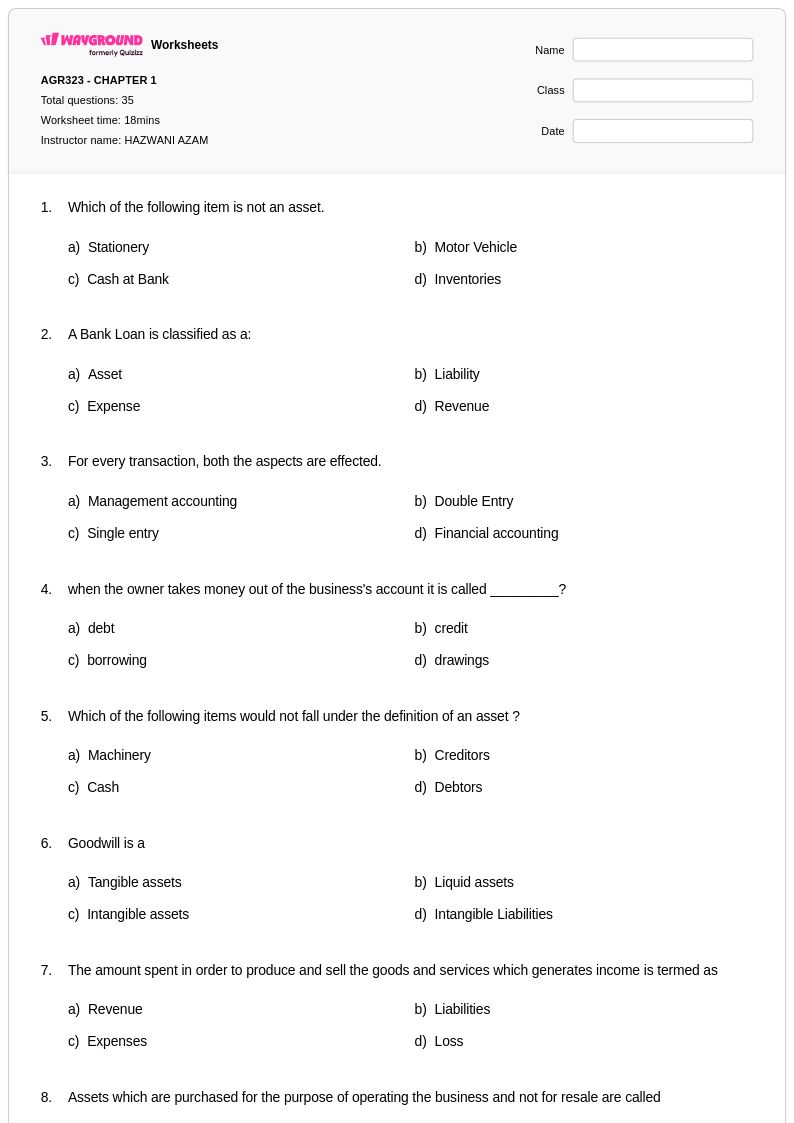
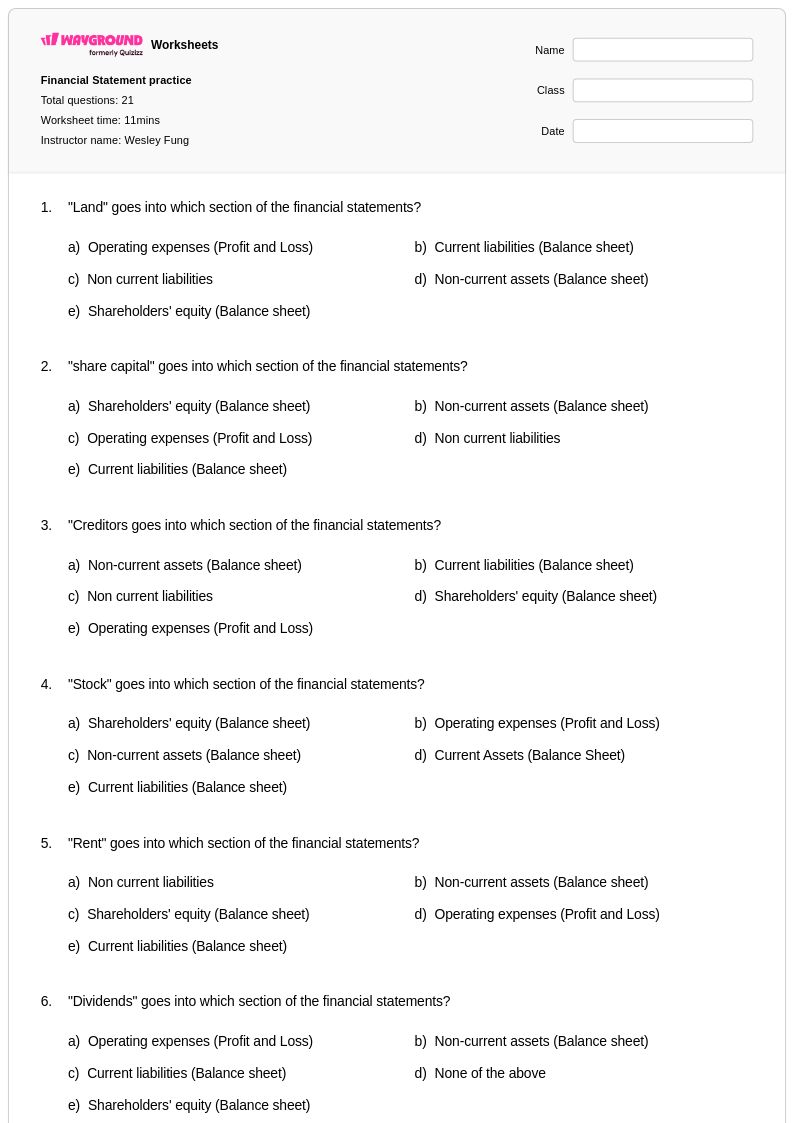
Assets and liabilities worksheets available through Wayground (formerly Quizizz) provide comprehensive practice in understanding the fundamental financial concepts that form the foundation of personal and business economics. These educational resources strengthen students' ability to distinguish between what individuals and organizations own versus what they owe, developing critical financial literacy skills through hands-on classification exercises, real-world scenarios, and analytical problem-solving activities. The worksheet collection includes practice problems that guide learners through identifying tangible and intangible assets such as cash, property, and investments, while contrasting these with various types of liabilities including loans, mortgages, and credit card debt. Each worksheet comes with a detailed answer key and is available as free printable pdf resources, enabling educators to seamlessly integrate these materials into their economics curriculum while providing students with structured opportunities to master essential financial vocabulary and conceptual understanding.
Wayground (formerly Quizizz) supports educators with an extensive library of millions of teacher-created assets and liabilities worksheets that can be easily accessed through robust search and filtering capabilities designed to match specific instructional needs and standards alignment requirements. The platform's differentiation tools allow teachers to customize content difficulty levels and modify worksheet formats to accommodate diverse learning styles and academic abilities, while the availability of both printable and digital pdf formats provides maximum flexibility for classroom implementation. These comprehensive features streamline lesson planning by offering ready-to-use materials for skill practice, targeted remediation for students struggling with financial concepts, and enrichment opportunities for advanced learners seeking deeper exploration of economic principles. Teachers can efficiently locate age-appropriate content that progresses from basic asset and liability identification to more complex scenarios involving financial decision-making and balance sheet analysis, ensuring comprehensive coverage of this essential economics subtopic.
FAQs
How do I teach the difference between assets and liabilities to students?
Start by grounding students in concrete, relatable examples before introducing abstract financial terms. A car a student's family owns is an asset; the car loan they're still paying off is a liability. Once students can reliably classify familiar items, introduce business-context examples like equipment, accounts receivable, mortgages, and lines of credit. Building from personal finance to business economics helps students transfer the concept across real-world contexts.
What exercises help students practice identifying assets and liabilities?
Classification exercises are the most effective starting point — give students a list of financial items and have them sort each into assets or liabilities with written justification. From there, real-world scenario problems that ask students to construct a simple personal or business balance sheet reinforce how the two categories interact. Worksheets that progress from tangible assets like cash and property to intangible ones like intellectual property, and from simple loans to complex liabilities like mortgages, build the scaffolding students need for deeper financial analysis.
What mistakes do students commonly make when classifying assets and liabilities?
The most common error is confusing ownership with value — students often assume that because something is expensive, it must be an asset, without recognizing the associated debt. For example, a house with a mortgage is both an asset and a source of liability, and students frequently classify it as one or the other rather than understanding the distinction. Students also struggle with intangible assets, since items like brand reputation or patents don't have a physical form. Targeted practice with mixed-category scenarios helps students slow down and apply definitional criteria rather than relying on intuition.
How do I introduce balance sheets using an assets and liabilities framework?
Begin with the core accounting equation — assets equal liabilities plus equity — and use it as the structural anchor for every balance sheet exercise. Have students build simple personal balance sheets first, listing what they own and what they owe, before moving to business balance sheets with line items like inventory, accounts payable, and retained earnings. Repeated practice with this equation reinforces why the two sides must always balance, which is the conceptual foundation students need before tackling more advanced financial statements.
How can I use assets and liabilities worksheets to support students at different skill levels?
For students who are still building foundational understanding, start with worksheets that focus on simple identification and classification using familiar personal finance scenarios. More advanced students benefit from problem sets that require them to calculate net worth, analyze changes in a balance sheet over time, or evaluate business financial health. On Wayground, teachers can apply accommodations such as reduced answer choices or read-aloud support for individual students, and can customize content to match difficulty levels across the class without disrupting the workflow for other learners.
How do I use Wayground's assets and liabilities worksheets in my classroom?
Wayground's assets and liabilities worksheets are available as both printable PDFs and in digital formats, making them practical for traditional classroom instruction as well as technology-integrated or hybrid learning environments. Teachers can assign them directly to students as digital activities or host them as a quiz on Wayground for immediate feedback. Each worksheet includes a complete answer key, so they work equally well for guided instruction, independent practice, or formative assessment without requiring additional prep.